Location
Mount Vernon, WA 98274

Location
Mount Vernon, WA 98274

A recent milestone in space-based quantum key distribution promises unbreakable encryption channels by exploiting entanglement and space-time phenomena. While the technology could revolutionize secure communications, experts warn it also risks enabling unprecedented covert surveillance by state and nonstate actors.
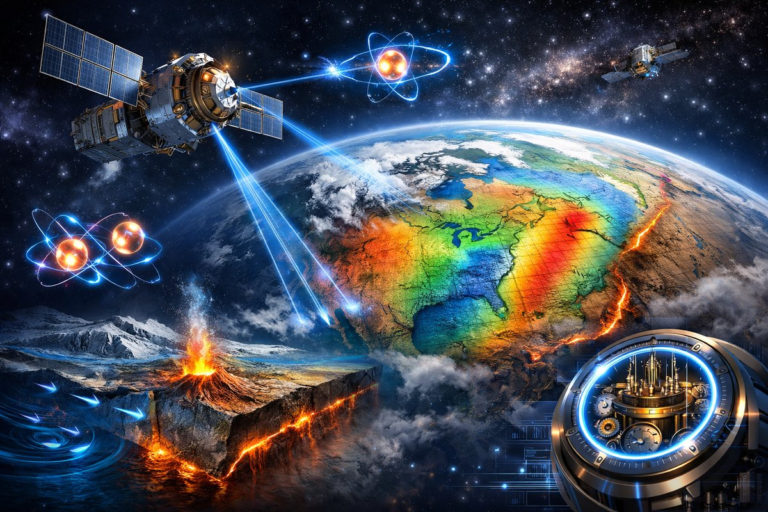
Earlier this year, a consortium of leading space agencies and research institutions announced the successful demonstration of a quantum key distribution (QKD) link between a ground station and a high-altitude quantum communications satellite prototype. This breakthrough exploits quantum entanglement and subtle effects in space-time to generate encryption keys that cannot be intercepted without detection. The network could transform secure communications for governments, financial institutions, and critical infrastructure, but experts warn that without proper oversight, space-based quantum links may become a new frontier for covert espionage and geopolitical competition.
Quantum key distribution leverages the laws of quantum mechanics-particularly the phenomenon of entanglement-to exchange cryptographic keys in a way that any eavesdropping attempt disturbs the quantum state and alerts the communicating parties. On Earth, fiber-optic QKD systems have matured over the last decade, but distance and signal loss limit their range to a few hundred kilometers. By moving the exchange into space, researchers can span continents with a single satellite acting as a relay, bypassing terrestrial limitations and dramatically extending the reach of quantum-secure channels.
The interplay between quantum mechanics and space-time curvature offers unique benefits. In a vacuum above the atmosphere, photons travel with lower loss, and precise timing corrections account for relativistic effects. This ensures that the entangled particle pairs remain coherent over longer distances. The satellite’s orbital motion through varying gravitational potentials also provides natural tests of quantum field theory in curved space-time, deepening our understanding of fundamental physics even as we build practical encryption tools.
In the recent demonstration, ground teams at two stations separated by thousands of kilometers established a secure link via a low-Earth orbit (LEO) test satellite. The satellite acted as a trusted node, distributing encryption keys encoded in the polarization states of entangled photons. All quantum states were monitored for anomalies that would indicate an interception attempt. Over successive passes, data transfer rates reached several kilobits per second-enough to securely exchange symmetric keys for conventional high-throughput encryption protocols.
Proponents celebrate the project as a milestone for digital privacy. Financial institutions could shield transactions across borders; healthcare organizations could protect patient records in transit; government agencies could fortify diplomatic communications against increasingly sophisticated cyberthreats. Unlike classical encryption, whose security relies on computational complexity, quantum encryption promises security grounded in immutable physical laws, resistant to advances in algorithm design or brute-force attacks from future quantum computers.
Yet the same attributes that make space-based QKD alluring for privacy also spark concerns about an arms race in surveillance capabilities. State actors with access to quantum satellites could eavesdrop on rivals’ terrestrial fiber networks by intercepting and replicating entangled states. In effect, untraceable surveillance channels might be established, undetectable with current monitoring tools. This raises fears that diplomatic negotiations, commercial secrets, and personal communications could fall under a new veil of cosmic-scale espionage.
Covert operations could exploit the global reach of a QKD satellite network to slip under the radar of domestic and international regulators. Traditional oversight mechanisms that track radio-frequency transmissions or internet backbones are ill-equipped to detect quantum signals in orbit. Observers note that the entangled photons used for key exchange are indistinguishable from background cosmic radiation to untrained detectors, making unauthorized interceptions virtually invisible without dedicated quantum sensors.
The dual-use nature of space-based quantum communications underscores the importance of transparency and multilateral governance. Some experts advocate for an international registry of quantum satellites and automated cross-checks of orbital keys to detect anomalies. Others argue for open-source protocols and shared ground station networks, ensuring that no single actor monopolizes the technology. They point to precedents in civilian space monitoring and frequency allocation as models for quantum-era regulation.
Beyond cryptography, the deployment of QKD satellites advances fundamental research on quantum phenomena in curved space-time. By measuring how entanglement evolves under relativistic motion and varying gravitational fields, physicists test the intersection of quantum mechanics and general relativity. These experiments could reveal subtle violations of established theories or uncover new particles that mediate quantum gravity-insights that may open fresh theoretical vistas and inspire unforeseen technologies.
Space-time research also informs the design of next-generation quantum hardware. Understanding how time dilation affects qubit coherence guides the development of resilient quantum memory modules capable of operation in space. Engineers apply these lessons when building terrestrial hardware that must withstand harsh environments or maintain stability over long durations. This cross-pollination between astrophysics and engineering accelerates progress in both fields.
In light of these opportunities and risks, international bodies are wrestling with how to update treaties written long before quantum technologies emerged. The United Nations Committee on the Peaceful Uses of Outer Space has scheduled working groups on quantum communications, aiming to draft guidelines for transparency, data sovereignty, and responsible disclosure of quantum key distribution nodes. Yet reaching consensus among major spacefaring nations-each keen to protect strategic advantages-remains a diplomatic challenge.
At the same time, regional blocs and national standard-setting bodies are developing certification programs for quantum-secure channels. These frameworks address hardware accreditation, software compliance, and periodic audits of satellite operators. Some governments propose offering spectrum and orbital slots only to operators who adopt open-source quantum protocols, ensuring interoperability and reducing the chances of clandestine systems emerging unchecked.
Commercial players are watching closely. Technology startups are pitching turnkey ground station packages, integrating optical tracking systems, adaptive optics, and quantum photonics modules. Telecom carriers are exploring hybrid networks that combine fiber QKD for backhaul with satellite relays for global reach. Investment funds are allocating capital to quantum cybersecurity firms, anticipating a surge in demand for hardware and consultancy services once commercial QKD moves beyond pilot projects.
Organizations evaluating their own risk profiles should begin planning for a quantum-secure future. Conducting an inventory of critical communications, assessing the lifespan of existing encryption keys, and mapping data flows across borders are essential first steps. Information security teams can pilot QKD services offered by emerging providers and integrate them into hybrid encryption architectures. Meanwhile, embedding privacy-by-design principles ensures that quantum enhancements do not introduce new vulnerabilities in software or hardware stacks.
Individuals can also prepare. Adopting end-to-end encrypted messaging apps and hardware-encrypted storage devices provides interim protection against evolving threats. Staying informed about quantum developments and supporting transparency initiatives helps maintain public pressure for responsible governance. For those with technical backgrounds, exploring open-source quantum software libraries or contributing to citizen science projects in quantum astrophysics bridges the gap between professional researchers and curious enthusiasts.
Looking ahead, the synergy of quantum mechanics and space-time exploration promises innovations beyond communication. Concepts such as quantum-enhanced telescopes, gravitational wave detectors leveraging entanglement, and deep-space navigation systems based on quantum clocks are already on drawing boards. As humanity ventures further into the cosmos, safeguarding privacy and preventing misuse of powerful technologies will remain central to maintaining trust, security, and cooperation among nations.
Ultimately, the dawn of quantum space-time satellites invites us to reconcile our aspirations for unbreakable privacy with the imperative of transparent, ethical stewardship. Balancing national security, individual rights, and scientific advancement in this new frontier will require a mix of technical safeguards, international agreements, and public engagement. The choices made today will shape the future of secure communications and determine whether the vastness of space becomes a haven for privacy or a playground for unchecked surveillance.
Experts agree that the path forward lies in open collaboration between scientists, policymakers, industry, and civil society. By aligning technical standards with values of accountability and human dignity, we can harness the power of quantum and cosmic phenomena without sacrificing the privacy rights we cherish. In the evolving tapestry of space-time and encryption, the next chapter will depend on collective decisions that transcend borders and stand firm on principles of trust, transparency, and mutual respect.