Location
Mount Vernon, WA 98274

Location
Mount Vernon, WA 98274
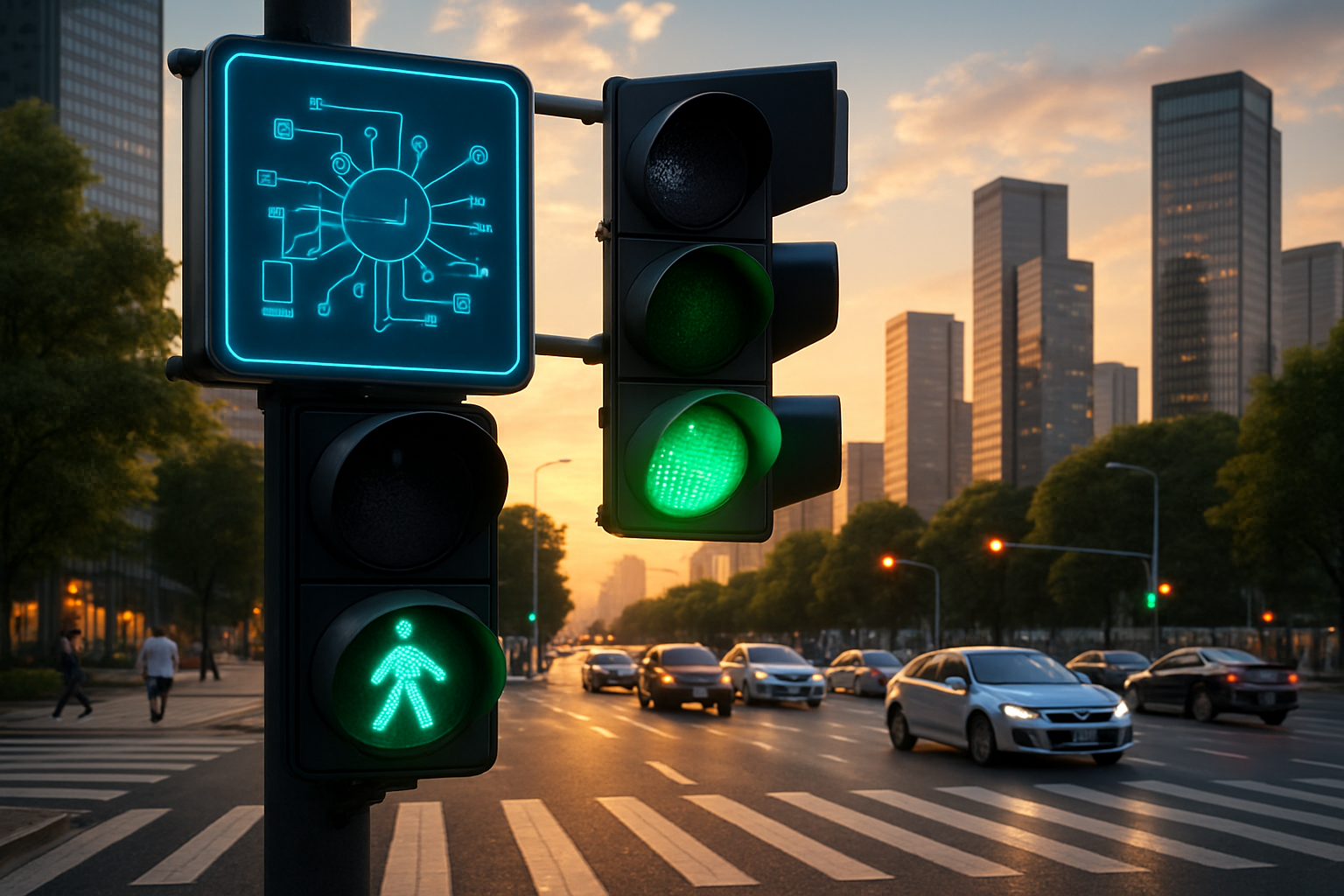
Cities around the world are deploying AI-driven traffic signal systems that dynamically adapt to real-time conditions, cutting congestion, slashing emissions, and improving commuter well-being. Early pilots report significant reductions in waiting times and pollution levels through anonymized data analysis and energy-efficient signal hardware. Urban planners and technology enthusiasts alike are watching as smart traffic lights become a cornerstone of sustainable mobility solutions.
Across bustling metropolises and mid-sized municipalities alike, a new generation of traffic lights is emerging: intelligent, adaptive, AI-driven signals that respond in real time to changing vehicle volumes, public transit schedules, and pedestrian movements. Far from static timers, these systems harness anonymized sensor data and advanced machine learning algorithms to optimize flow, reduce idle time, and enhance safety at busy intersections. As pilot programs progress in cities from Los Angeles to Barcelona to Singapore, early results suggest AI-powered traffic signals could reshape urban mobility and curb the environmental impact of congestion.
In Barcelona, a six-month trial deployed smart controllers at 50 intersections in a key commuter corridor. The system fused camera feeds and inductive loop detectors with a cloud-based AI engine, learning traffic patterns on the fly. According to municipal reports, average vehicle wait times dropped by nearly 25 percent, while carbon dioxide emissions in the test zone fell by an estimated 18 percent. Commuters noted shorter red-light delays and smoother progress during morning and evening peaks. By contrast, nearby intersections using conventional timing remained unchanged, highlighting the potential of adaptive signal control.
Los Angeles has also embraced AI-powered traffic management to tackle notorious rush-hour gridlock. Partnering with a startup that specializes in real-time traffic analytics, the city retrofitted more than 100 intersections with smart signal heads last year. These units integrate edge-computing hardware capable of running machine learning models locally, reducing latency. Early performance metrics show a 15 percent reduction in idling time, translating to lower fuel consumption and improved air quality-critical goals in a region grappling with smog and climate commitments.
Singapore’s Land Transport Authority took a slightly different approach, employing a central AI platform that ingests data from bus fleets, ride-hail services, and roadside sensors. Rather than optimizing individual intersections in isolation, the system models traffic flows network-wide. Dynamic signal timing adapts to conditions every few seconds, giving priority to buses running behind schedule or emergency vehicles. This multilayered coordination has shaved several minutes off peak bus travel times, boosting transit reliability and encouraging ridership.
At the heart of these deployments lies a combination of hardware upgrades, software platforms, and robust data governance practices. Traffic signal heads must be fitted with smart controllers-hardware modules that replace legacy logic boards and communicate with central servers or edge-AI devices. Cameras, radar units, and inductive loops feed raw data into machine learning pipelines, where algorithms classify road users (cars, bicycles, pedestrians) and predict short-term traffic volumes. Models continuously retrain on fresh data, adapting to seasonal shifts, local events, or roadworks.
Ensuring privacy is paramount. Cities anonymize vehicle counts and trajectory data, stripping any identifying information before processing. In many jurisdictions, data retention policies limit storage to a matter of days, protecting against unauthorized surveillance. Open-source communities have also contributed anonymization toolkits, allowing municipalities to inspect and audit preprocessing steps. By disclosing privacy safeguards early in procurement, agencies can build public trust and avoid backlash over perceived “big brother” monitoring.
The environmental benefits extend beyond reduced idling. Signals can be configured to enter low-power standby when traffic volumes dip, such as overnight or during public holidays. LED modules replace incandescent bulbs, cutting electricity consumption by up to 80 percent compared to older fixtures. Some manufacturers even offer solar-assisted power packs to maintain operation during grid outages, bolstering resilience in areas prone to extreme weather.
Smaller cities and towns with tighter budgets are exploring scaled-down versions of these systems. A modular package might include a single intersection with an AI box powered by an off-the-shelf single-board computer, basic 4G connectivity, and a compact sensor array. Local technicians can prototype timing strategies on open-source simulation platforms before rolling out to adjacent junctions. Such testbeds allow rapid experimentation without committing to full-city deployments.
For urban planners and engineers, implementing AI-driven signals requires careful scoping. Initial steps include a baseline traffic study to establish performance benchmarks, hardware audits to assess existing controller compatibility, and stakeholder consultations to address privacy and accessibility concerns. Technical teams collaborate with data scientists to select or develop prediction models suited to local traffic idiosyncrasies-rainfall patterns, school schedules, special events, or cyclist volumes.
Interoperability with other smart city components adds value. AI signal systems can share insights with parking management platforms, guiding drivers to open spots and reducing wasted cruising time. Public transit authorities integrate performance data to refine route schedules. First responders tap into prioritized signal phases to clear corridors, shaving precious minutes off emergency arrivals. This connected ecosystem amplifies the impact of each individual investment in smart infrastructure.
Despite the promise, challenges remain. Precise detection of all road users can be affected by harsh weather, heavy foliage, or unconventional vehicles. Edge-AI devices may lack the processing power for highly complex models, requiring careful trade-offs between local and cloud computation. Securing networks against cyber threats is essential, as malicious actors could manipulate signal timing to cause gridlock or impede emergency services.
As systems mature, stakeholders emphasize the human dimension. Technicians need training on AI workflows, from data labeling to model evaluation. Community outreach programs demonstrate how adaptive signals improve greenhouse gas targets and commute experiences. Visual dashboards help residents track system performance and suggest adjustments-fostering a sense of co-creation rather than top-down imposition.
Looking ahead, researchers are exploring multi-modal optimization that balances the needs of private vehicles, bikes, scooters, pedestrians, and public transit simultaneously. By modeling each mode’s priorities, future signal networks could dynamically allocate green time based on real-time demand across all users, promoting safer and more equitable streets.
Ultimately, AI-driven traffic signals represent a convergence of sustainability, privacy respect, and technological curiosity. By replacing fixed-timing schedules with adaptive, data-informed control, cities can deliver smoother journeys, lower emissions, and greater quality of life. As pilots expand and best practices crystallize, urban areas of all sizes stand to benefit from smarter, greener intersections that respond to people’s needs rather than rigid timetables. This shift from static infrastructure to living, learning systems marks a significant advance in our pursuit of resilient, people-centric cities.