Location
Mount Vernon, WA 98274

Location
Mount Vernon, WA 98274

From rooftop farms to digital twins, today's urban innovators are weaving sustainability, community input, and cutting-edge technology into the fabric of city life. This article explores how modular prefabrication, biophilic architecture, and citizen-driven planning are reshaping metropolitan landscapes into resilient, inclusive places.
Cities are living entities-ever shifting, expanding, contracting under the forces of climate change, population growth, and economic flux. Today’s urban landscapes face an array of competing demands: the urgent need to reduce carbon footprints, the drive to accommodate denser populations, and the desire to cultivate vibrant communities where residents feel seen and heard. Architecture and planning professionals are responding by ripping up the old rulebook and pioneering new models that treat cities less as static grids and more as dynamic systems in constant dialogue with their inhabitants.
At the heart of this transformation lies the digital revolution. Municipalities around the globe are deploying digital twins-high-resolution virtual replicas of city districts that simulate traffic flows, energy consumption, and even microclimatic shifts. Urban planners use these tools to run millions of hypothetical scenarios: What happens to air quality if a boulevard is pedestrianized? How does a green corridor alter wind patterns and urban heat islands? In Helsinki’s eastern districts, a BIM-based city model enabled officials to test stormwater management strategies before committing to construction, saving millions in retrofits. Architects are also tapping augmented reality headsets on site, overlaying proposed façades onto existing buildings so stakeholders can experience designs at full scale before ground breaks.
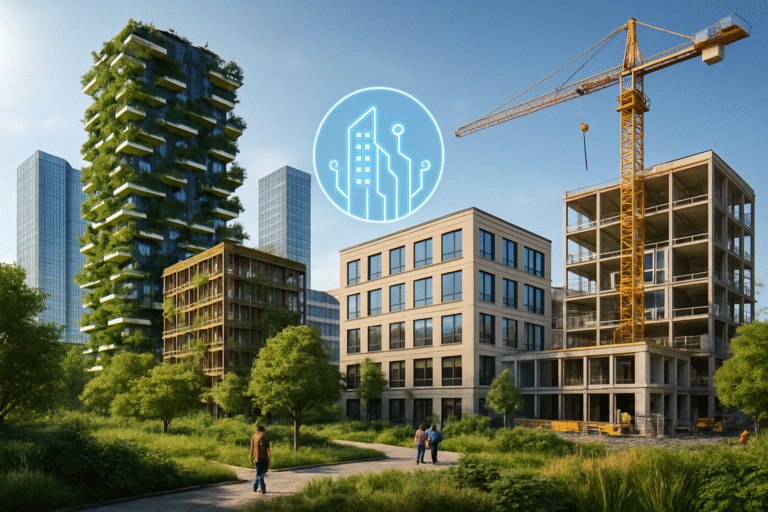
Hardware is catching up to software as well. Modular prefabricated elements-manufactured off-site in climate-controlled facilities-arrive on location ready to assemble. This method shrinks construction timelines, cuts waste, and ensures rigorous quality control. In a dense coastal enclave, an experimental housing project used interlocking timber modules factory-built with integrated insulation panels. Erected in little more than three weeks, the complex now houses young families at below-market rates, thanks to material savings and reduced labor costs. Beyond timber, steel frame units and shipping-container conversions are lending themselves to pop-up community centers, art studios, and micro-retail hubs, turning overlooked parking lots into catalytic neighborhood amenities.
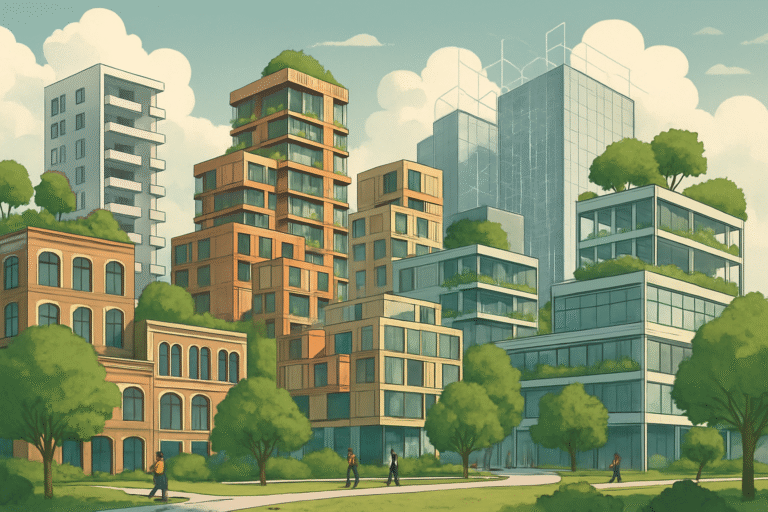
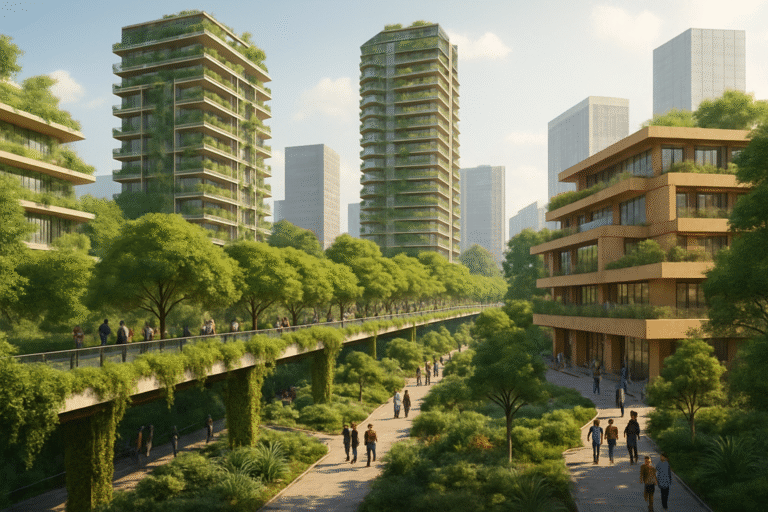
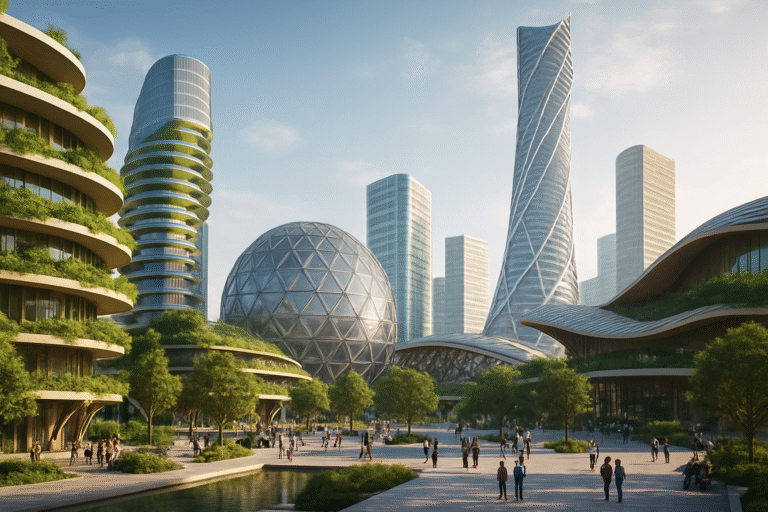
Meanwhile, designers are reaching skyward-and inward-to reintroduce nature into concrete canyons. Biophilic architecture, a design approach that prioritizes plants, water features, and natural textures, has evolved into a mainstream strategy for improving mental health, reducing energy use, and strengthening urban biodiversity. A mid-rise office block in a major financial district now sports vertical planter walls on every façade, supporting native vines and pollinator gardens. Rooftop farms are cropping up above apartment towers, supplying co-op gardens where residents harvest fresh produce. These living systems do far more than decorate: they absorb rainwater, mitigate peak summer temperatures, and foster informal gathering spots that stitch together disparate communities.
Equally transformative is the rise of participatory planning. Rather than presenting polished schemes for critique at a single public hearing, forward-thinking councils are embedding local voices from the earliest design stages. Pop-up design charrettes in shopping malls, mobile mapping workshops that deploy GPS-enabled apps, and evening storytelling sessions in community halls allow residents to surface memories, aspirations, and pain points. When a historic neighborhood threatened demolition, an open call invited families to map cherished places-a favorite bocce court, a street-corner barber, a weathered bench-ensuring preservationists and developers grounded their proposals in lived experience. This civic-driven approach yields new trust, smooths regulatory hurdles, and often sparks hybrid solutions that serve both heritage and density targets.
Resourceful adaptation of existing structures is another growing trend. Industrial warehouses, long abandoned when manufacturing shifted overseas, are finding second lives as innovation districts, maker spaces, and cultural complexes. The high ceilings and robust frames of these buildings lend themselves to creative recombination: coworking lofts, ceramic studios, public libraries with performance stages. By recycling what’s already there, projects slash their embodied carbon and honor local history. One former rail depot, reborn as a vertical greenhouse, now cultivates mushrooms and herbs while powering its own climate controls through rooftop solar panels.
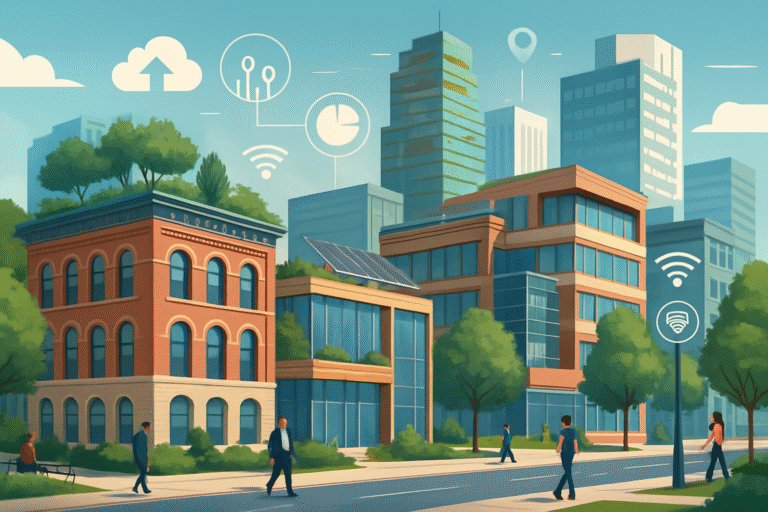
Smart infrastructure, fueled by the Internet of Things, underlies many of these shifts. Networks of street-side sensors measure foot traffic, noise levels, air pollutants, and waste bin capacity. Data dashboards guide municipal staff in adjusting bus schedules, optimizing streetlighting, and targeting litter patrols. In one pilot district, sensors embedded in pavement detected micro-vibrations from passing trams and automatically adjusted nearby crosswalk signals, improving safety and reducing delays. These systems require robust data-privacy safeguards, but when governed transparently, they unlock efficiencies that were unimaginable just a decade ago.
As architects and engineers challenge the status quo, material innovation is taking center stage. Mycelium composites derived from fungal root networks offer lightweight, fire-resistant insulation panels grown in agricultural waste. Engineered timber products, like cross-laminated lumber, now reach heights that rival steel and concrete skyscrapers while sequestering carbon. Local startups are grinding down construction debris-concrete, glass, tile-into aggregate for new modular blocks. These regenerative techniques not only trim project footprints but also catalyze circular economies, turning byproducts into raw materials for the next build.
The “15-minute city” concept has also won adherents among policy-makers eager to reduce reliance on cars. By clustering housing, workplaces, schools, healthcare, and recreation within comfortable walking or cycling distances, planners aim to foster healthier lifestyles, lower emissions, and strengthen neighborhood bonds. Parisian pilots have transformed traffic arteries into leafy promenades where children bike safely to school and elders set up chess tables in sunlit squares. Mixed-use zoning and flexible ground floors-geared to host markets, clinics, or pop-up exhibitions-help prevent mono-functional districts from turning into ghost towns after business hours.
In climates prone to extreme weather, designers are embracing resilience as a core principle. In a northern port city facing rising sea levels and fierce winter storms, neighborhood planners raised street levels on adjustable hydraulic platforms that can lift entire plazas above floodwaters. Wood-clad pavilions, anchored on stilts, open onto amphitheaters that double as stormwater retention basins. Green berms line coastal edges, absorbing wave energy and harboring salt-tolerant plant species. These adaptive strategies underscore a shift from purely defensive floodwalls toward living, layered buffers that add public amenity while absorbing shocks.
Underlying all these innovations is an emotional thread: a desire to foster belonging and civic pride. Architecture, at its best, tells stories-of local craft traditions, immigrant heritages, community struggles, and collective triumphs. Whether through adaptive reuse of century-old brick mills, interactive digital kiosks that archive neighborhood stories, or ephemeral art installations in newly minted plazas, design can amplify voices that have long gone unheard. Residents who feel represented are more likely to care for public space, volunteer for maintenance teams, and advocate for equitable policies.
The future of cities lies not in monolithic skyscrapers but in quilted, ever-evolving tapestries of interventions-digital platforms alongside green alleys, factory-built modules next to lovingly restored heritage façades, sensor-driven transit flows crossing community-mapped walking routes. Architects, developers, policy-makers, and citizens are converging around a shared principle: urban design must serve both people and planet. By weaving together modular construction, biophilic systems, inclusive engagement, and material regeneration, today’s visionaries are forging cities that are not only resilient in the face of change but also ripe with possibility.
As the stone, steel, and timber of tomorrow’s neighborhoods take shape, the most important element remains the human one: the stories we share, the connections we forge, and the responsibilities we shoulder for one another and for the living world outside our windows. In that spirit, every new block, path, and park is a chance to redefine what it means to inhabit a city-one where adaptability, empathy, and creativity guide each brick laid and each policy drafted.