Location
Mount Vernon, WA 98274

Location
Mount Vernon, WA 98274

A new wave of artists and designers are merging projection mapping with sustainable substrates to turn concrete facades and forgotten corners into living canvases. From nighttime projections on repurposed shipping containers to solar-powered interactive murals, these installations invite communities to engage with urban space in dynamic, environmentally conscious ways.
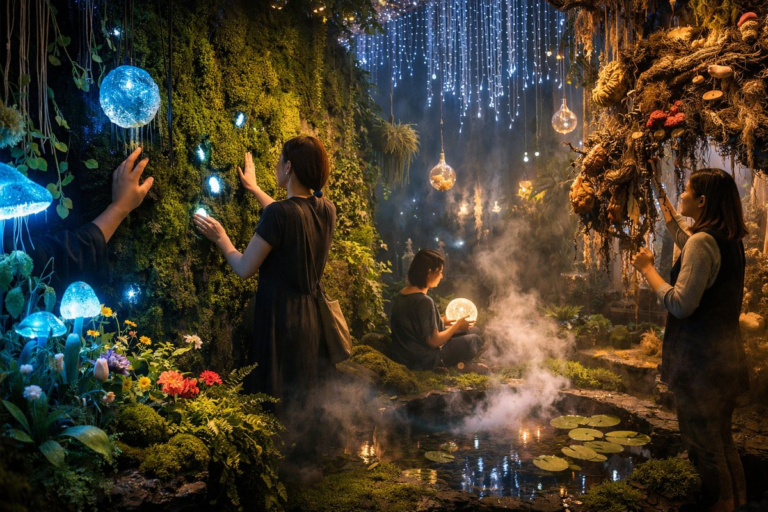
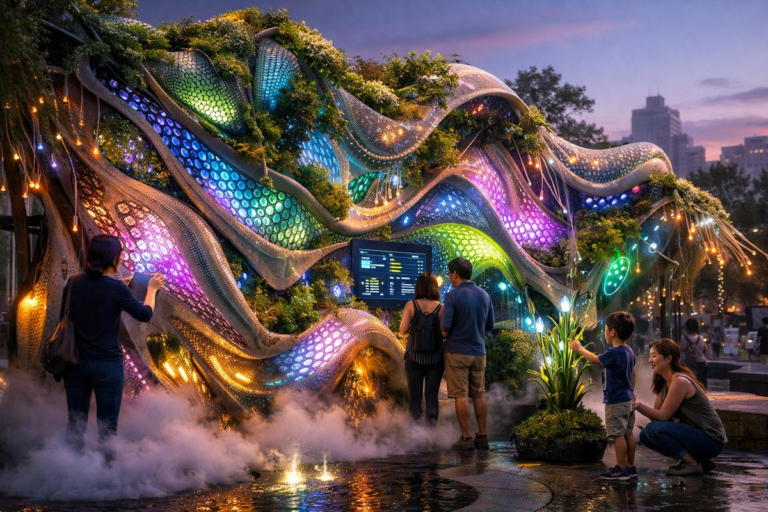
Across cities worldwide, an increasing number of creative teams are turning blank walls and underused plazas into shimmering stages for projection mapping experiments. At a recent festival in Durham, giant projections danced across a decommissioned factory, bringing its rusted girders and broken windows to life. Not far away, a pop-up park of repurposed shipping containers was reimagined through layered video, data-driven visuals and living plant walls-an approach that blends technology and ecology to communicate urgent messages about climate resilience.
This convergence of digital art and sustainability is more than a stylistic trend. It represents a shift in how designers, technologists and local communities collaborate to reclaim public space. By combining interactive visuals with environmentally friendly materials-such as biodegradable projection screens, recycled wood panels and even solar-charged LED arrays-these immersive installations are redefining the relationship between art, architecture and urban ecosystems.
One standout example emerged at a waterfront activation in Antwerp. A local collective installed a series of foldable screens made from a plant-based polymer derived from agricultural waste. During the day, the panels resembled abstract sculptures. After dusk, they became canvases for dynamic, motion-sensitive animations that responded to the flow of pedestrians and cyclists along the quay. As individuals passed by, ripples of color and particle trails followed their movements, creating a shared sense of presence and agency in an otherwise transient environment.
Behind the scenes, open-source software like TouchDesigner and openFrameworks has played a pivotal role. These tools allow artists to turn real-time sensor data-from proximity beams, accelerometers or smartphone accelerometers-into generative visuals. In one recent project in Seoul, for example, infrared-based motion detectors triggered bursts of geometric motifs projected onto moss-covered walls. The effect was both intimate and large scale: as visitors strolled through narrow alleys, each gesture produced a subtle bloom of light and color overhead, making the passage feel like a living digital garden.
Sustainability extends beyond the screen surface. Power demands for high-lumens projectors and LED arrays can be significant. To address this, several teams have integrated portable solar generators and energy-efficient LEDs. In a trial at an open-air exhibition in Barcelona, organizers installed lightweight photovoltaic panels on nearby rooftops to feed a network of battery banks. These batteries in turn powered low-wattage projectors and addressable LED strips embedded in reclaimed scaffolding. The result: a fully off-grid installation that ran through the night with minimal carbon footprint.
Material innovation has also been critical. Traditional projection mapping often relies on rigid, heavy structures or expensive aluminum trussing. New approaches favor flexible, bio-resin films that can be draped over irregular surfaces-think curved concrete beams or peeling brick walls-without extensive mounting hardware. After the event, these films can be composted or reused for future activations, reducing both waste and logistical costs.
The audience experience has shifted as well. Instead of passively watching a predetermined video sequence, visitors are invited to become co-creators. Mobile apps, gesture controls and touch-sensitive panels allow real-time customization of color palettes or pattern density. In one community-driven piece in São Paulo, local teens used a tablet interface to upload street art motifs, which were then algorithmically integrated into a larger projection. This participatory model not only fosters a sense of ownership but also sparks conversations about how technology can amplify underrepresented voices.
Yet technical hurdles remain. Achieving crisp images on textured urban surfaces requires careful calibration: keystone correction, edge blending and color balancing must all be meticulously tuned. Weather can be unforgiving, too. Wind-blown screens or sudden downpours have forced last-minute adjustments. To mitigate these challenges, some teams are experimenting with semi-permeable fabrics that resist tearing and allow airflow, while still providing a stable projection plane.
Long-term maintenance is another concern. Outdoor LED fixtures and sensors require rugged enclosures to withstand moisture and temperature fluctuations. Preventive strategies-such as self-healing epoxy coatings on circuit boards-are borrowed from the realm of industrial design. Meanwhile, modular components enable rapid swap-outs: if a particular LED module fails, it can be replaced without dismantling the entire array.
Behind every installation lies a network of collaborators: city officials who grant permits, sustainability consultants who vet materials, engineers who design rugged enclosures, and local businesses that sponsor the power supply. This multidisciplinary cooperation has led to a new kind of urban stewardship, where art installations become temporary infrastructure that animates neglected corners and encourages residents to reimagine their surroundings.
The ripple effects extend beyond the visual spectacle. In Indianapolis, a projection-mapped mural that highlighted water-quality data spurred a neighborhood cleanup campaign focused on a nearby canal. In Melbourne, an interactive façade installation sparked planning discussions around traffic safety, as passing cars triggered fleeting halos of light that drew attention to pedestrian crossings. These installations prove that art infused with data and interactivity can serve as a catalyst for civic dialogue and environmental action.
Looking ahead, the next frontier may involve the convergence of augmented reality (AR) and projection mapping. Imagine visitors wearing lightweight AR glasses that overlay additional digital layers onto physical projections, creating a multi-sensory tapestry of sound, smell and haptic cues. Early experiments in a Japanese garden demonstration used ultrasonic speakers to generate directional soundscapes that complemented projected animations of wind-swept blossoms, offering an immersive meditation on seasonal change.
Meanwhile, the rise of generative artificial intelligence promises to turbocharge visual content. AI-driven pattern generators can adapt motifs to local architectural styles, blending cultural heritage with futuristic aesthetics. At a design symposium in Montreal, an experimental installation used a neural network trained on historic mural archives to produce evolving projections that honored a neighborhood’s past while imagining its future.
For designers, technologists and urban planners, these trends offer new possibilities: dynamic branding for public transit hubs, data-driven art that tracks air-quality improvements over time, or pop-up therapeutic environments where soothing projections and aromatic diffusers create restful retreats amid city bustle.
Despite the optimism, questions linger. Who owns the nighttime sky when it becomes an ever-shifting canvas? How do cities balance artistic freedom with concerns over light pollution or neighborhood disruption? And how can we ensure that eco-friendly approaches remain accessible to small cultural institutions with limited budgets? Answering these will require ongoing dialogue and creative problem-solving.
Still, the momentum is clear. As projection mapping hardware becomes more affordable and sustainable materials more readily available, the barriers to entry are falling. DIY enthusiasts are already experimenting with salvaged projectors and home-brewed biofilms, hosting street-corner showcases that rival major festivals in ambition. These grassroots efforts underscore a broader lesson: art and design thrive when they respond to real-world challenges, engage communities and embrace ecological responsibility.
By turning city surfaces into living, adaptive canvases, artists and designers are expanding how we perceive-and participate in-the urban environment. From glowing shipping-container parks to sensor-driven murals on heritage façades, these installations spark wonder and provoke reflection. In the process, they demonstrate that sustainability and creativity need not be at odds; instead, they can work in concert to illuminate both our public spaces and our collective imagination.