Location
Mount Vernon, WA 98274

Location
Mount Vernon, WA 98274
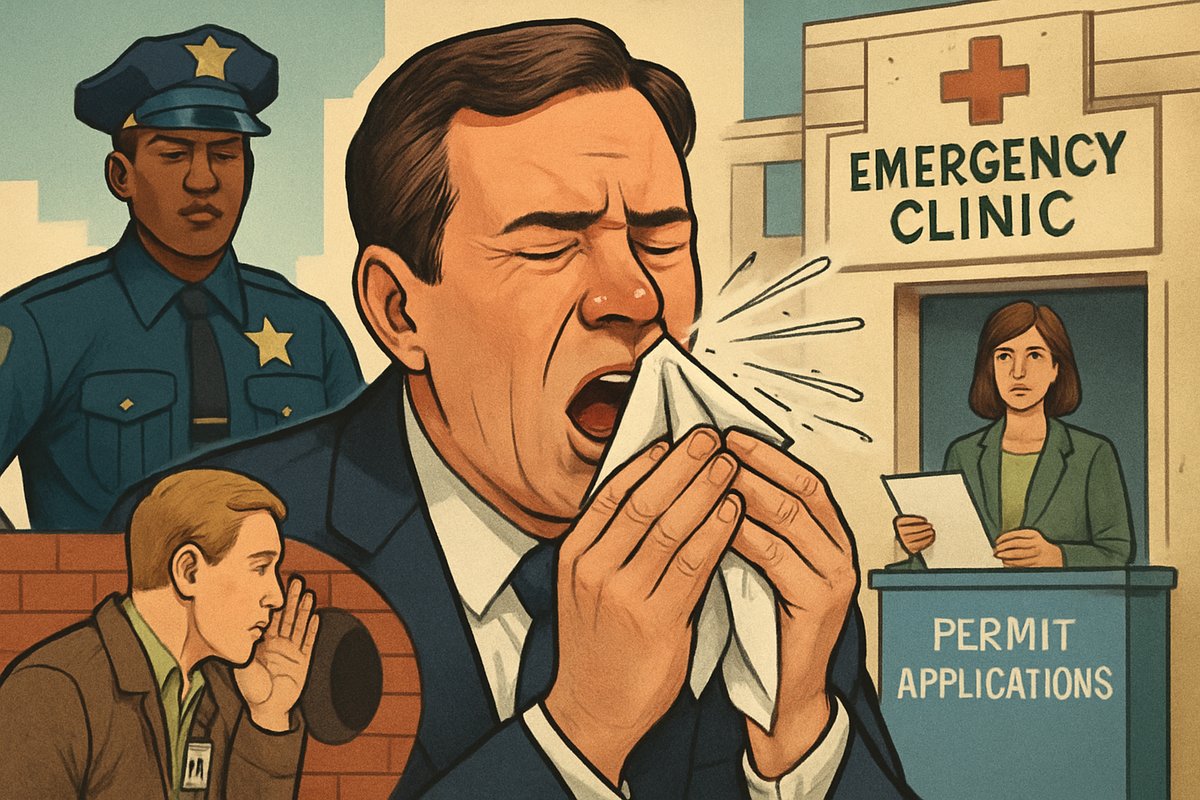
In Claremont Heights, local officials have passed the Sneeze Frequency Control Act, requiring every resident to apply for an annual permit before any involuntary nasal explosion. The community's sneeze quotas, underground "sneeze black markets," and emergency sneeze amnesty clinics have turned a simple reflex into a full-blown civic crisis.
Residents of Claremont Heights woke up yesterday to find that their most basic biological reflex-sneezing-had been elevated to the level of high-stakes bureaucracy. The City Council unanimously approved the Sneeze Frequency Control Act (SFCA), a sweeping ordinance mandating that every citizen secure an annual sneeze permit, complete with tiered sneeze allowances based on medical records, lifestyle surveys, and a mandatory three-day online training course titled “Good Sneeze Practices and You.” Officials claim the new regulations will reduce airborne pathogens and promote civic mindfulness, but locals argue they’ve simply created a sneeze-themed dystopia.
Under the SFCA, each citizen starts with a baseline allocation of 50 sneezes per year. Sneezing beyond this allowance triggers a cascade of penalties: fines, temporary suspension of public transit privileges, and potential enrollment in compulsory “Sneeze Rehabilitation Workshops.” Tier 1 permit holders-classified as “Occasional Sneezer”-can purchase up to 10 additional sneeze credits for a fee, while Tier 2 “Frequent Sneezer” applicants must provide a doctor’s note and undergo a nasal stress test to qualify. Tier 3 status is reserved for those with diagnosed chronic allergies, asthma, or a long family history of seasonal hacking.
At City Hall, the newly appointed Registrar of Sneezing, Ms. Rowena Quibler, explained the rationale behind this unprecedented policy. “We’re simply ensuring that sneezes are intentional, dignified, and socially responsible,” she stated during yesterday’s press conference. “Unregulated sneezing has led to public nuisances, spiked absenteeism, and a sharp uptick in mask shortages. By allocating sneeze credits, we empower individuals to manage this powerful bodily function with respect to their neighbors.” When asked how emergency sneezes-such as those sudden Tay-Sachs-induced explosions or surprise pepper-triggered eruptions-would be handled, Quibler produced a laminated Emergency Sneeze Voucher. “Citizens can redeem these at any sneeze authorization kiosk downtown,” she explained. “They’ll be valid for three uncounted sneezes.”
The response has been immediate and chaotic. Lines have formed outside the Department of Nasal Affairs, where citizens juggle symptom diaries, address proofs, and digital fingerprints just to renew their permits. Some residents have reported waiting upwards of four hours, only to be told their allergy test results are expired by two days and they must return next week. “I just want to sneeze without worrying I’ll end up with a fine and a community service sentence,” one tearful applicant told reporters. “My permit application got rejected because I used the wrong font on my supporting documents. This is tyranny!”
Meanwhile, an underground economy in sneeze credits is brewing. On social media, residents advertise “sneeze credit bundles” for sale: ten credits for twenty dollars, with discounts for bulk purchases. Rumor has it that an anonymous group called the Sneak-Through Six-fans of large nasal expulsions-has begun smuggling central nervous system stimulants into earplugs to trigger unsanctioned sneeze events. When caught, they’re not only fined but also publicly shamed in an online registry titled “The Sneeze Hall of Shame,” complete with their mugshot and personal sneeze trajectory data.
Local businesses have scrambled to adapt. Coffee shops now offer “Permit Checkpoints” at the door, glancing at customers’ permit levels before serving a steaming latte. Bakeries post signs reading, “Please Confirm Your Sneeze Credits Before Ordering Extra-Dusty Muffins.” A handful of enterprising entrepreneurs have opened “Sneeze Credit ATM” machines that allow citizens to refill sneeze allowances on the spot. City Councilmember Darvin Prowse, the ordinance’s primary sponsor, claims these ATMs are a model of modern convenience. “It’s really no different from topping up your transit card,” he tweeted. “Plus, the location at the corner of Main and Elm has free Wi-Fi.”
Not every sector is profiting, though. The neighborhood elementary school shut down its annual spring fair after students blew through their collective class permit during an impromptu pepper-handling demonstration. Parents were furious, accusing the school board of draconian micromanagement. “They literally disciplined my seven-year-old for producing a too-loud sneeze in line at the cotton candy stand,” lamented one mother. The PTA has drafted an emergency petition demanding “spontaneous sneeze allowances” for children, citing ethical concerns around policing involuntary physiological responses. As of press time, the petition has garnered over 1,200 signatures.
Advocacy groups have also arisen in response. The newly formed Coalition for Unfettered Nasal Expulsions (CUNE) staged a protest in front of City Hall, brandishing placards that read, “Stop the Sneeze Oppression!” and “I Can’t Breathe-Literally!” Their rally featured a choreographed sneeze flash mob, culminating in a mass release of Earl Grey tea bags to simulate potential allergens. The spectacle drew a crowd of several hundred sympathizers. Local police, citing SFCA restrictions, handed out citations for excessive public sneezing-though they later rescinded the tickets amid growing public outcry.
Online forums have become a vital lifeline for permit-challenged citizens. Reddit threads like r/SneezeCredits and Discord channels devoted to Over-Sneeze Amnesty Discussions offer sympathy, survival tips, and fill-in-the-blank apology templates for accidentally exceeding allowances in crowded elevators. A popular DIY tutorial teaches residents how to compost dried pepper flakes and release controlled irritants in private sneeze sanctuaries, where breaches of permit rules incur no penalties, as long as the sanctuaries remain off the official radar.
At the heart of this sneeze saga is a single question: How far should government reach into our bodily autonomy? Legal scholars have weighed in, comparing the SFCA to historical examples of sumptuary laws-those medieval regulations dictating what citizens could wear, eat, or possess. “Sneeze licensing is the newest incarnation of sumptuary legislation,” says Professor Eliza Mantle of the Claremont Heights Law School. “While the ostensible goal is public health, the real effect is to restrict personal freedoms and funnel fines into municipal coffers.” City officials, unsurprisingly, dispute this interpretation, pointing to a documented 12 percent drop in reported flu cases since the act’s implementation.
The science behind the sneeze crackdown remains contested. Local epidemiologists claim that unregulated sneezes do contribute to pathogen transmission, but many argue that mask mandates and vaccination campaigns are more effective interventions. A petition by the Institute for Common-Sense Hygiene Practice calls for an immediate repeal of the SFCA and the redirection of resources toward free flu shots and public sanitation stations.
In an ironic twist, the SFCA has spawned a lucrative service for travelers. The Claremont Heights International Airport now offers temporary sneeze permits for departing passengers, with a surcharge for “in-flight complimentary sneezes.” Airlines have responded by installing sneeze surveillance cameras and offering cushioned “Sneeze-Free Zone” seats where passengers pay extra for the assurance that neighbors have remaining sneeze credits.
Yet for all the complications and absurdities, some residents have found silver linings. One local performance artist, Renata Cruz, has launched a series of gallery exhibitions titled “The Beauty of the Unannounced Sneeze,” displaying high-speed photographs of nasal expulsions. Gift shops downtown sell novelty spoons engraved with “My Precious Sneezes,” sold alongside miniature sneeze jars for collectors to “capture” each personal expulsion (strictly metaphorical, of course).
As the community grapples with its new sneeze-centric reality, one thing is clear: Claremont Heights has turned an involuntary human reflex into a labyrinthine showcase of modern bureaucracy. Whether this will stand as a cautionary tale about government overreach or fade into history as just another weird ordinance remains to be seen. For now, citizens are advised to check their sneeze balance daily, avoid pepper-heavy snacks, and prepare for the next City Council hearing-rumored to address the regulation of yawning and hiccups in its upcoming session.
In a city where even the smallest bodily function comes with paperwork, the simple act of letting a sneeze slip can feel like committing a federal offense. But as long as the Emergency Sneeze Vouchers remain valid, the line at the permit office might just move a bit faster-and Claremont Heights will continue its march toward a future where every gasp, cough, and sneeze is accounted for.