Location
Mount Vernon, WA 98274

Location
Mount Vernon, WA 98274
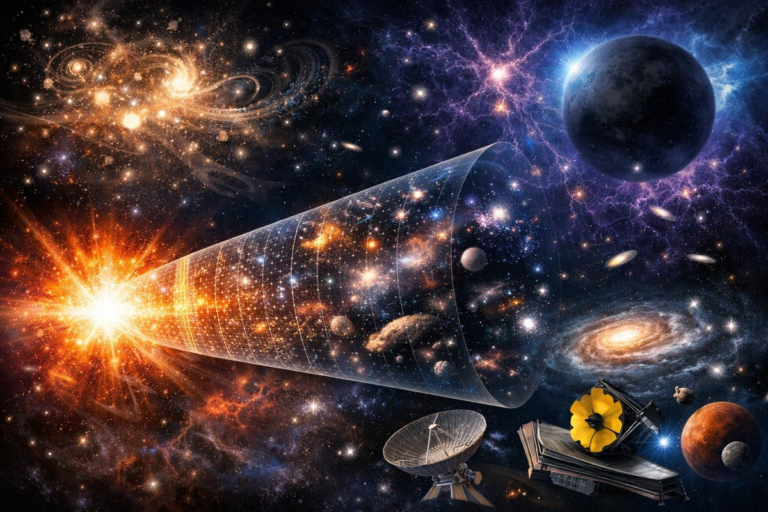
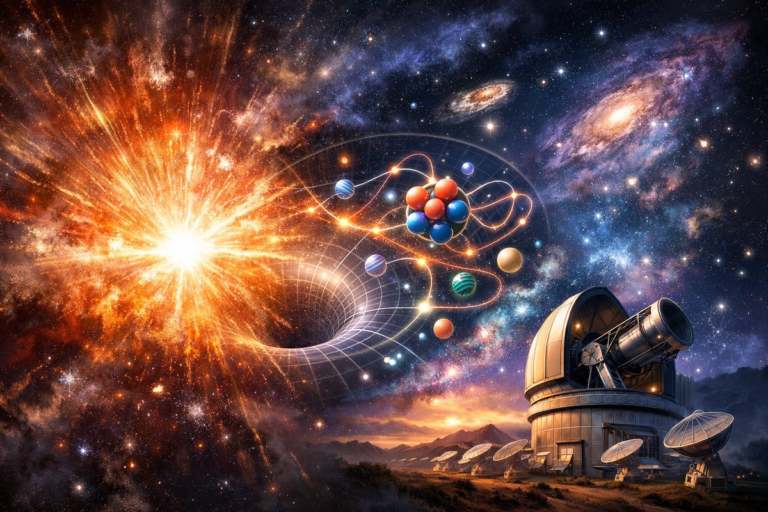
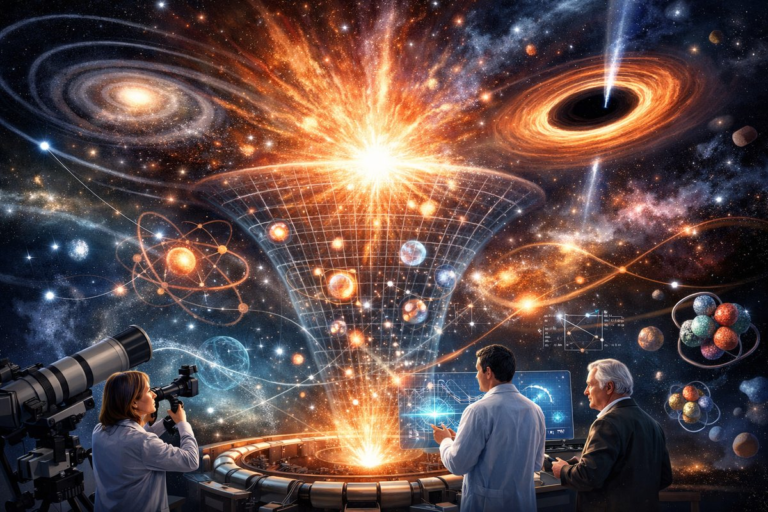
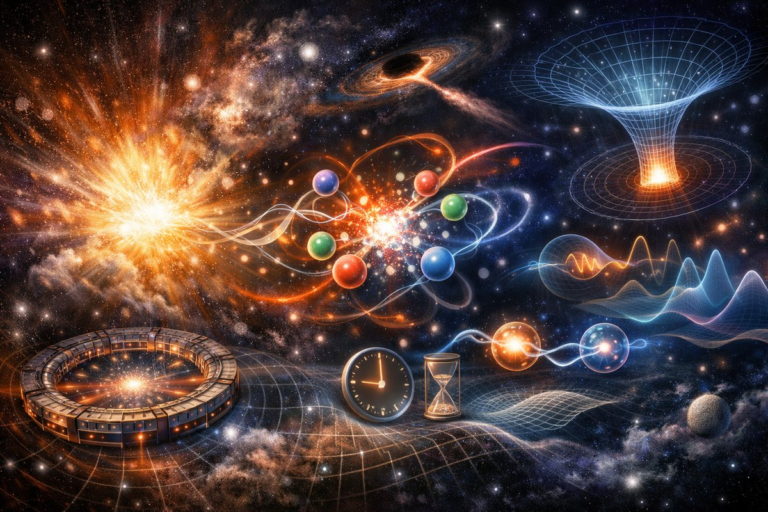
Recent observations and theoretical breakthroughs are reshaping our understanding of how the cosmos emerged from the void. From faint whispers in the cosmic microwave background to the first flickers of primordial galaxies, researchers are piecing together the universe's earliest moments.
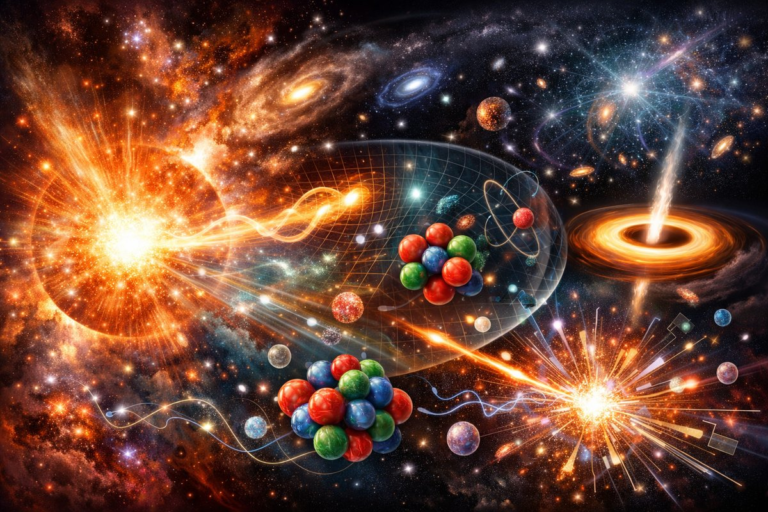
In the past year, telescopes and detectors around the world have delivered a cascade of data that pushes back the boundaries of what we know about the universe’s infancy. Instruments tuned to infrared, microwave and neutrino signals are revealing subtle fingerprints left over from the moment space, time and matter sprang into being. These findings not only refine long-standing models but also pose tantalizing puzzles about the mechanics of creation itself.
Perhaps the most vivid glimpse of those early epochs comes from the newest infrared observatories. By capturing light that traveled for 13.4 billion years, they have identified nascent galaxy candidates at record-high redshifts. These faint smudges of starlight betray the first stellar nurseries emerging only a few hundred million years after the initial expansion. Detailed spectroscopy shows surprisingly mature chemical signatures-carbon, oxygen and even dust grains-that challenge standard timelines for how quickly the first generations of stars could forge heavy elements.
Meanwhile, precision maps of the cosmic microwave background (CMB) continue to sharpen our view of the post-Big Bang plasma. The latest release from a high-resolution microwave mission refines measurements of tiny temperature fluctuations by a factor of two. These ripples trace density variations seeded by quantum fluctuations during an early inflationary phase, informing estimates of the universe’s shape and overall density. Yet slight anomalies in certain sky regions hint at deeper physics-perhaps relic imprints of exotic fields or even collisions with other expanding domains.
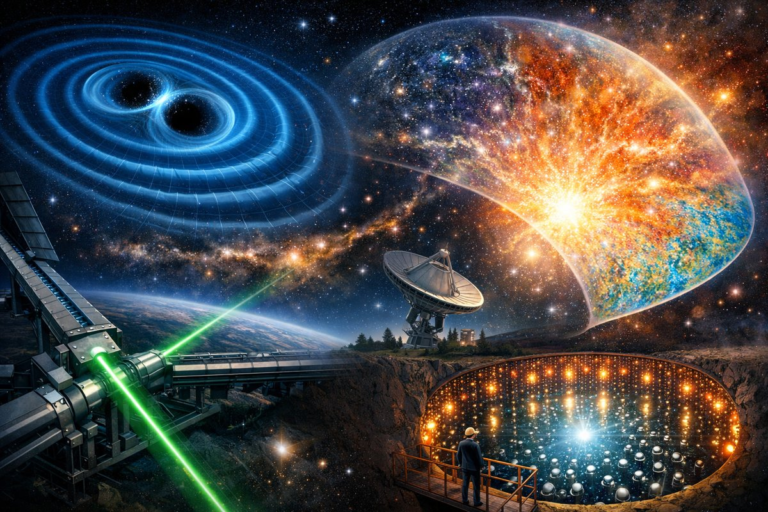
Beyond photons, the cosmic neutrino background remains a ghostly frontier. New underground detectors have improved sensitivity to ultra-low-energy neutrinos that would have decoupled milliseconds after the Big Bang. While direct detection remains elusive, indirect evidence from big data analyses of beta decay spectra suggests that these relic particles may soon be within reach. Confirming their existence would complete our picture of primordial particle soup and offer a fresh lens on events too energetic to reproduce in any laboratory.
On the theoretical side, some researchers are revisiting alternatives to standard inflation. Bouncing cosmology models propose that our expanding universe followed a prior contraction phase, avoiding an initial singularity. Other frameworks explore cyclic scenarios, where epochs of expansion and collapse repeat indefinitely. Though mathematically intricate, these ideas aim to address unanswered questions about entropy buildup and the nature of space at Planck-scale energies. High-energy particle experiments and tabletop quantum gravity tests could provide future constraints on these bold proposals.
One of the most enduring mysteries stemming from cosmic origins is the matter-antimatter asymmetry. If the Big Bang created equal quantities of particles and antiparticles, they should have annihilated completely, leaving nothing but radiation. Yet today’s universe is overwhelmingly composed of matter. Recent experiments studying subatomic decay processes in precision particle accelerators have detected minute differences in behavior that may tip the scales. While they fall short of explaining the full imbalance, these measurements tighten the net on potential new physics that could have skewed the early mix.
Then there is the twin puzzle of dark matter and dark energy. Accounting for about 95 percent of the universe’s total content, these unseen components govern the expansion rate and the growth of cosmic structure. Advanced gravitational lensing surveys and deep galaxy catalogs have refined dark energy’s equation of state, revealing subtle hints of evolution over cosmic time. At the same time, cutting-edge detectors buried deep underground are narrowing the parameter space for weakly interacting dark matter candidates. If a signal emerges, it will shed light on how that invisible mass influenced galaxy formation from the universe’s first billion years onward.
Multi-messenger astronomy has become a cornerstone for cosmic origin studies. By combining electromagnetic observations with gravitational wave signals and neutrino detections, scientists can probe high-energy events that shaped the young universe. For instance, collisions of the earliest black hole seeds could release bursts of gravity waves carrying information about local environmental conditions. Coordinated alerts between space telescopes, ground-based observatories and neutrino detectors ensure that no fleeting signal goes unnoticed.
This surge of data is also spurring public engagement through citizen science platforms. Online initiatives invite amateur astronomers and enthusiasts to scan telescope archives for transient objects, align sky images to hunt for faint galaxies, and even help train machine learning models to classify cosmic patterns. Digital sky maps and virtual reality tools allow anyone with an internet connection to point and zoom through deep-field mosaics, experiencing firsthand the tapestry of cosmic history.
Academics and educators are harnessing this momentum to bring cosmic origins into classrooms and community centers. Interactive workshops, 3D-printed models of early universe structures, and open-access simulation software empower learners of all ages to experiment with inflating spacetimes or generate synthetic CMB maps. Such hands-on approaches bridge the gap between abstract theory and tangible insight, nurturing the next generation of cosmologists and astrophysicists.
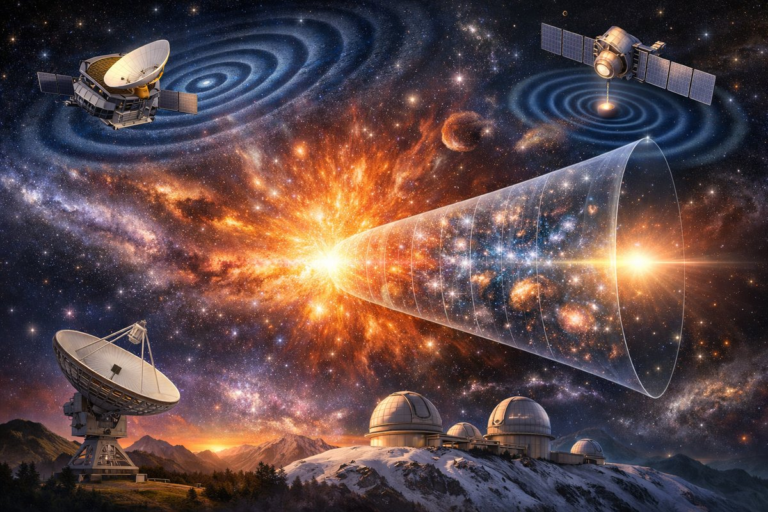
Looking ahead, a fleet of planned missions promises to extend our reach even further back in time. A space-based survey telescope scheduled for launch soon will chart billions of galaxies with unprecedented depth, probing dark energy’s influence across cosmic epochs. Ground-based radio arrays proposed for remote sites will map neutral hydrogen through the cosmic dawn era, potentially pinpointing the emergence of the first stars. Additional gravitational wave observatories in space will hunt for primordial signals from inflationary ripples imprinted on spacetime itself.
We stand at a pivotal moment in our quest to understand where we came from. Each new observation tightens the weave of the cosmic narrative, revealing both harmonious patterns and dissonant notes that compel us to refine our theories. As technology marches on and collaboration deepens across disciplines, the story of cosmic origins will only grow richer. Whether we ultimately confirm the standard Big Bang model in every detail-or discover an altogether different genesis-the journey promises to transform our view of the universe and our place within it.
On the Horizon