Location
Mount Vernon, WA 98274

Location
Mount Vernon, WA 98274

A breakthrough quantum communications satellite has taken to orbit, promising unhackable encryption across continents. This article dives into the technology of quantum key distribution in space, its potential to thwart digital surveillance, and the broader implications for privacy, ethics, and a future quantum internet.
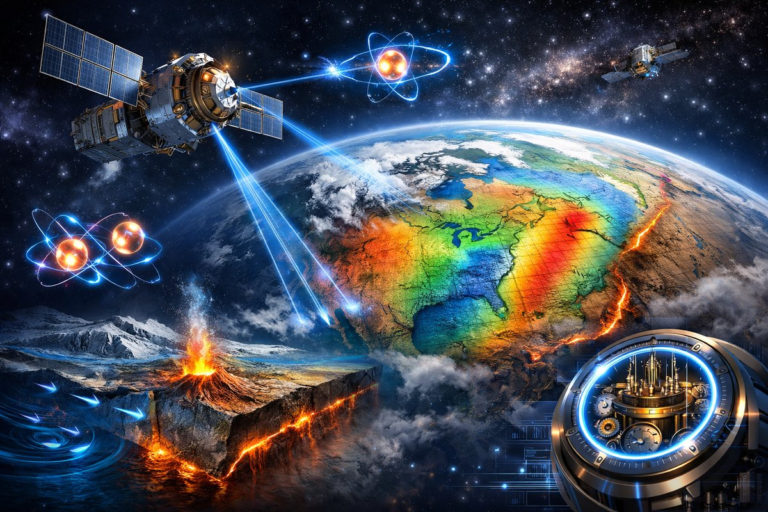
Europe’s latest quantum communications satellite soared into orbit atop a heavy-lift rocket just days ago, ushering in a new chapter for secure global networks. Named Q-Link II, the spacecraft carries advanced quantum key distribution (QKD) hardware designed to transmit encryption keys using individual photons across thousands of kilometers. Unlike classical encryption methods that rely on mathematical complexity, QKD draws on the fundamental unpredictability of quantum particles-any attempt to intercept the key irreversibly alters its state, immediately alerting both sender and receiver to eavesdropping.
Quantum communications has long been a tantalizing promise for bolstering digital security, but sending single photons through optical fibers on Earth faces limits imposed by optical losses and noise. By moving QKD to space, satellites like Q-Link II can bridge these gaps. Once in orbit, the spacecraft will establish secure links between ground stations separated by remote distances-linking research facilities in Scandinavia with financial hubs in southern Europe, and later extending connections across the Mediterranean and North Africa.
At the heart of the system lies a tunable entangled-photon source operating at near-infrared wavelengths. Entangled photons share a quantum bond so profound that measuring one instantaneously influences the other, no matter how far apart they are. In practical terms, this means two distant ground stations can each receive one photon from a paired source onboard the satellite. Through coordinated measurements and a classical communications channel to reconcile their observations, the stations derive an identical string of random bits-a cryptographic key-without ever having to transmit the key through vulnerable conventional channels.
Q-Link II builds upon lessons learned from its predecessors, featuring improved single-photon detectors, adaptive optics to compensate for atmospheric turbulence, and faster onboard processing to handle higher key generation rates. Engineers have also hardened key electronic components against space radiation, a common threat in low Earth orbit that can degrade performance over time. By combining these advances, the mission targets average key rates ten times higher than the first-generation quantum satellites, enough to support encrypted video calls, financial transaction backbones, and other bandwidth-sensitive applications.
Though Asia has led the field with early experiments, including ground-to-satellite QKD trials, the European Union’s coordinated approach under the Quantum Flagship program aims to integrate quantum communications into public and private infrastructures. Member states are pooling investments to deploy a constellation of at least six satellites over the next five years. This pan-continental strategy underscores a broader shift: quantum encryption is no longer a laboratory curiosity but a strategic asset for governments, utilities, and enterprises concerned about data sovereignty.
The applications extend far beyond classified government messages. Financial institutions, healthcare providers, and critical infrastructure operators stand to benefit from keys that cannot be cracked by even the most powerful classical or quantum computers. In an era of rising ransomware attacks and data breaches, unconditionally secure key exchange offers a powerful deterrent. It also allows organizations to maintain compliance with strict data-protection regulations, since the key material never travels in plaintext.
For individual users and privacy advocates, spaceborne QKD represents a formidable bulwark against mass surveillance and illicit data harvesting. Modern spyware and interception tools target endpoints-the devices we carry-exploring every vulnerability to siphon unencrypted data. But if the encryption keys themselves are safeguarded by the laws of quantum mechanics, adversaries lose their ability to mount man-in-the-middle attacks. No matter how sophisticated a malware implant or signal interceptor becomes, it cannot bypass the physics that underpin quantum key distribution.
This capability directly addresses the challenge of spyware detection and countermeasures. While cybersecurity teams use network scanners and forensic methods to unmask hidden intrusions, QKD flips the paradigm by making interception attempts inherently self-defeating. Organizations no longer need to spend millions on intrusion detection systems in order to guarantee that secret keys remain uncompromised. Instead, they adopt an end-to-end encryption fabric secured in orbit, shifting the emphasis from relentless monitoring to proactive physics-based protection.
At the same time, ethical considerations abound. Transparency around how quantum-secure networks are governed, who controls access to key distribution stations, and how rights to encrypted communications are protected is vital. Civil liberties groups warn that any powerful encryption technology can be misused if oversight is lacking. The European Union’s inclusion of digital-rights frameworks alongside its quantum initiative signals an intention to balance national security, law-enforcement needs, and individual privacy. International bodies are already drafting protocols to regulate cross-border quantum key exchanges, ensuring no one nation can unilaterally intercept or block secure channels.
Scaling quantum communications to a global network faces practical hurdles. Orbital dynamics limit the windows when satellites and ground stations are in line of sight. Daylight and weather conditions can degrade free-space optical links. Ground infrastructure must be widely distributed, equipped with optical telescopes, cryogenic cooling for detectors, and secure facilities to handle key material. Integrators are exploring hybrid architectures that blend space, airborne platforms, and fiber networks-switching between satellite and terrestrial links to maintain a continuous quantum channel.
Several European nations have begun constructing quantum ground stations along their coastlines and mountain ranges to maximize coverage. In parallel, private-sector telecommunication companies are retrofitting existing fiber backbones with quantum repeaters-devices that preserve entanglement across long distances-allowing the seamless handoff of keys between space and land. Researchers anticipate that by 2028, interconnected quantum networks will span every continent, forming the foundation of a secure “quantum internet.”
Looking ahead, satellite constellations equipped with QKD payloads could enable inter-satellite entanglement distribution. In such a network, satellites share entangled photon pairs with each other, extending quantum links without ever returning to a ground station. This mesh of entangled nodes would provide continuous, global key distribution, immune to jamming or ground-based attacks. Prototypes of inter-satellite quantum links have already been tested in low Earth orbit, hinting at an even more resilient architecture.
Beyond encryption, quantum communications satellites open doors to novel scientific experiments. Entanglement tests over unprecedented distances can probe the very foundations of quantum mechanics and spacetime. Precise time synchronization enabled by quantum clocks in orbit enhances Earth observation, navigation, and tests of general relativity. In effect, secure communications and fundamental physics research advance hand in hand, pushing the boundaries of both practical applications and cosmic inquiry.
As Q-Link II begins its operational phase, stakeholders around the world are watching closely. Governments will assess how quantum-secure links reshape diplomacy, intelligence sharing, and electoral resilience. Corporations will evaluate cost-benefit trade-offs between classical encryption upgrades and quantum networks. Privacy advocates will lobby for guaranteed access to quantum tools without infringing on lawful surveillance safeguards. The ultimate outcome may redefine what it means to be secure in a hyperconnected world.
A decade from now, we may look back and recognize this era as the turning point when encryption moved beyond code-breaking wars into the immutable realm of quantum physics. From the cosmic stage of satellites orbiting high above to the encrypted devices in our hands, a new shield is being woven-one built not just on silicon and code, but on the fundamental principles of nature itself.