Location
Mount Vernon, WA 98274

Location
Mount Vernon, WA 98274

A recent mission has dispatched a constellation of miniature satellites equipped with quantum accelerometers to map shifts in ocean mass and reveal hidden patterns of plankton blooms. Early data are already reshaping climate forecasts by linking microscopic marine life to global carbon flows.
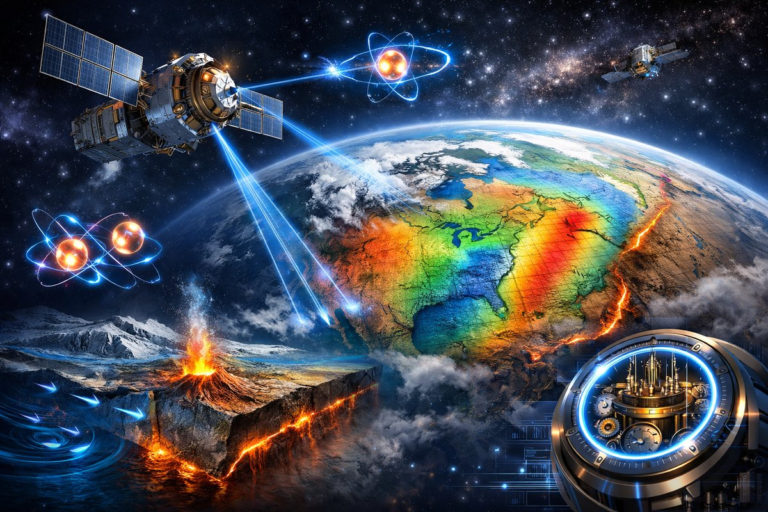
In a milestone for both space science and marine ecology, a fleet of palm-sized satellites has begun transmitting data that capture the subtle ebb and flow of the ocean’s living biomass. These CubeSat platforms carry quantum-enabled inertial sensors capable of detecting minute variations in Earth’s gravitational field-variations driven in part by seasonal surges in plankton and other marine organisms. By turning cosmic technology back toward our home planet, researchers hope to unlock a high-resolution picture of ocean productivity and its role in sequestering carbon.
The mission, spearheaded by a coalition of universities and environmental institutes, launched its first dozen units into low Earth orbit just months ago. Each satellite weighs under four kilograms and measures 10×10×30 centimeters, yet packs an array of miniature lasers and superconducting circuits that maintain sustained quantum coherence. In simple terms, those circuits let scientists record gravitational fluctuations at precisions far beyond classical accelerometers, making it possible to observe changes in water mass associated with life forms invisible from conventional optical sensors.
Quantum sensors have long been touted for applications in navigation, geology, and fundamental physics experiments. In this project, the sensors track tiny shifts in local gravity. When a massive plankton bloom arises off the coast of Africa or whale migrations concentrate biomass in polar waters, the additional living mass alters the weight distribution of the ocean column by fractions of a microgal (a unit of gravitational acceleration). By correlating those readings with satellite-based ocean color imagery and sea-surface temperature maps, scientists reconstruct both where and when marine organisms are proliferating.
Within weeks of deployment, the CubeSats began to pick up seasonal blooms in the North Atlantic and Southern Ocean. Data showed a clear gravitational signature roughly ten days before a detectable chlorophyll spike appeared in traditional multispectral images. That advance notice is critical: phytoplankton blooms can fuel fisheries but also drive oxygen depletion and harmful algal events. Armed with an earlier warning system, coastal communities and resource managers gain precious time to adapt.
Back on the ground, data streams flow into an open-source analytics platform where machine-learning algorithms fuse the quantum readings with environmental variables-nutrient levels, wind patterns, and ocean currents. Early results indicate that quantum-enhanced gravity mapping can fill gaps in regions plagued by persistent cloud cover or extreme weather, where optical sensors often fail. The system is already being tested in the monsoon-affected seas of Southeast Asia, where sudden plankton surges can have outsized effects on local fisheries and carbon budgets.
One of the most exciting breakthroughs is the improved tracking of deep chlorophyll maxima-subsurface layers rich in photosynthetic microbes that lie tens of meters beneath the surface. Traditional satellites only see the top layer, but the quantum accelerometers detect the mass of these hidden blooms by their gravitational imprint. Unlocking that hidden dimension refines estimates of how much carbon is drawn down from the atmosphere and stored in the deep ocean-a key unknown in climate models.
The international team behind this effort emphasizes collaboration at every level. Oceanographers, quantum physicists, data scientists, and policy experts hold weekly video conferences, sharing preliminary findings and refining algorithms. Regional research stations contribute in-situ measurements-water samples, plankton counts, and acoustic surveys-to ground-truth the satellite signals. The mission’s open-data ethos ensures that any researcher can download raw gravity maps and build upon them.
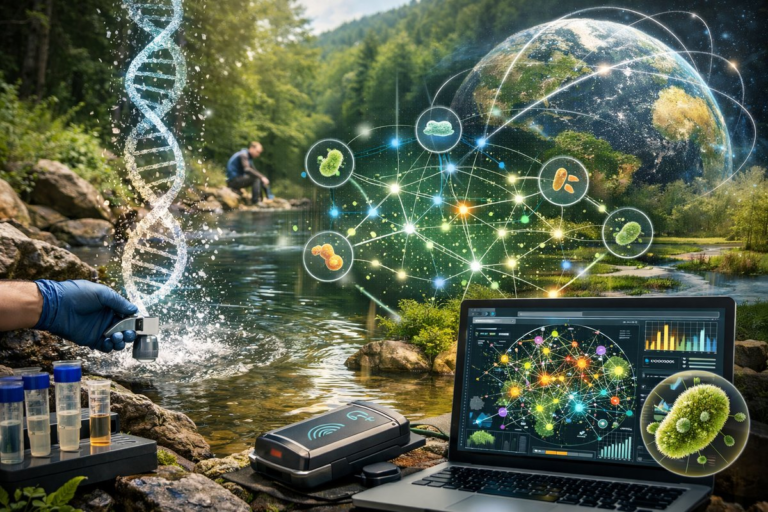
Beyond professional scientists, citizen scientists are joining in. A network of coastal volunteers uses simple water-sampling kits, GPS trackers, and smartphone apps to record surface conditions when a public alert flags a potential bloom. That on-the-ground feedback loop sharpens the satellite interpretations and fosters community involvement in marine stewardship. Local schools even integrate the data into classroom projects, inspiring a new generation to view quantum physics and ocean health as intrinsically linked.
Policy makers are taking note, too. Early adopters of the technology include island nations vulnerable to ocean changes and carbon-trading programs exploring marine carbon credits. High-precision biomass mapping could underwrite new sustainable-fishing certifications and seawater carbon‐capture initiatives. With more trustworthy data, stakeholders aim to strike a balance between harnessing ocean resources and protecting fragile marine ecosystems.
Looking ahead, the project plans to expand from a dozen satellites to a constellation of fifty within the next two years. That larger network will reduce revisit times to under twelve hours for most of the globe, capturing diurnal patterns and fast-moving blooms. Researchers are also developing next-gen payloads that add onboard AI processors, enabling real-time anomaly detection and autonomous retargeting toward emerging hotspots.
There is a poetic flourish to the endeavor: tools born from quantum experiments in pristine laboratories now drift above blue-green expanses to decode life’s hidden rhythms. It’s a reminder that curiosity often leads us full circle, leveraging the smallest scales of physics to illuminate planetary-scale wonders. As data continues to pour in, the fuzzy boundary between the cosmic and the microscopic grows ever more intertwined.
This fusion of quantum technology with environmental monitoring heralds a new chapter in Earth system science-one where precision sensors and open collaboration chart a path toward more resilient, informed stewardship of our blue planet. Every tiny satellite buzzing overhead becomes a beacon of awe and possibility, proof that seemingly abstract research can yield tangible benefits for ecosystems and communities around the world.
Whether you’re a coastal researcher tracking an unfolding bloom, a data enthusiast exploring near-real-time gravity maps, or simply someone marveling at the ingenuity of quantum-powered CubeSats, the message is clear: when we look deeper, we discover that life at all scales is connected by patterns waiting to be unlocked.