Location
Mount Vernon, WA 98274

Location
Mount Vernon, WA 98274
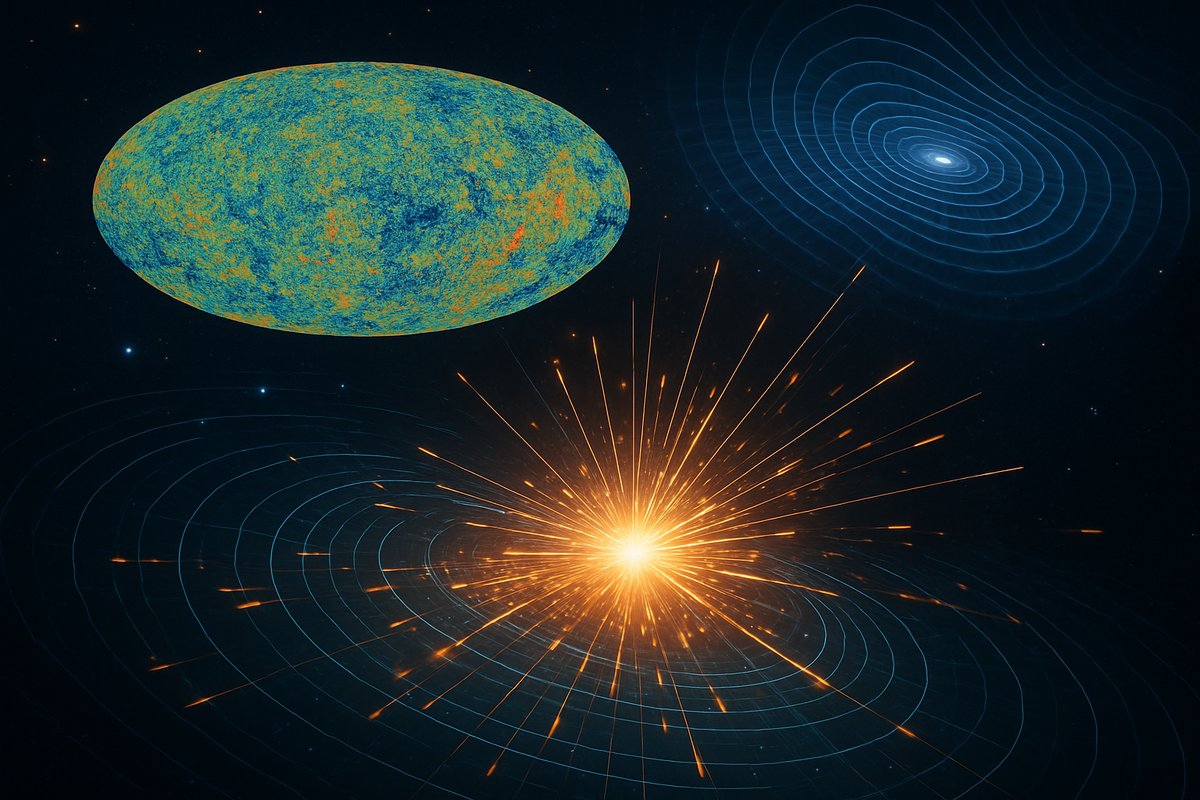
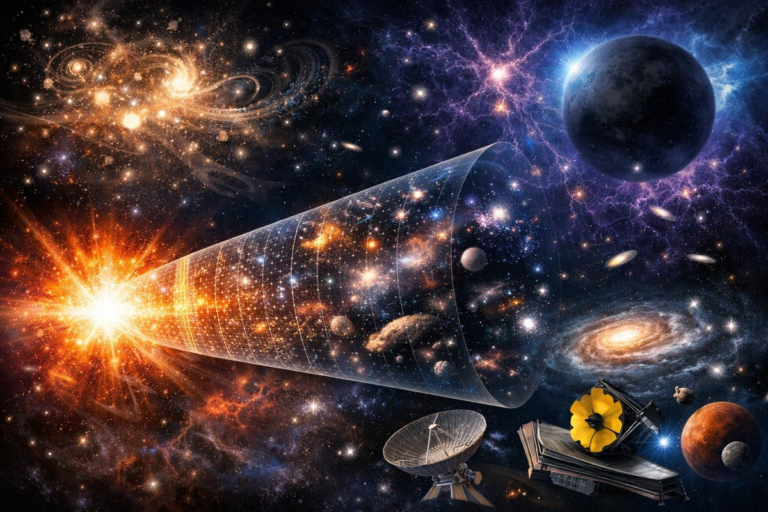
By combining ultra-precise measurements of cosmic microwave background ripples with high-energy particle collision data, scientists are piecing together a richer narrative of the universe's first instants. Subtle signals in gravitational waves and quantum fluctuations are challenging established models and illuminating fresh questions about dark matter, inflation, and the very structure of space-time.
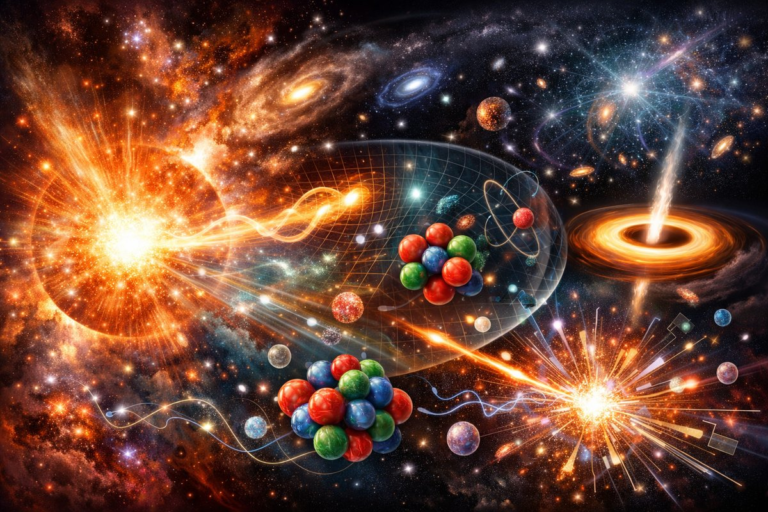
Every photon registered by our most sensitive instruments carries a fragment of the universe’s origin story. In recent months, teams analyzing the cosmic microwave background have reported unexpected patterns in temperature and polarization that hint at fleeting quantum events during the first trillionths of a second after the Big Bang. These anomalies emerge as slight asymmetries-cold and hot spots distributed in ways that escape standard inflationary models. Far from dismissing them as noise, researchers are treating these signatures as possible windows into exotic physics: could rapid phase transitions in a primordial field or interactions with a dark sector particle leave a detectable imprint so early in cosmic history?
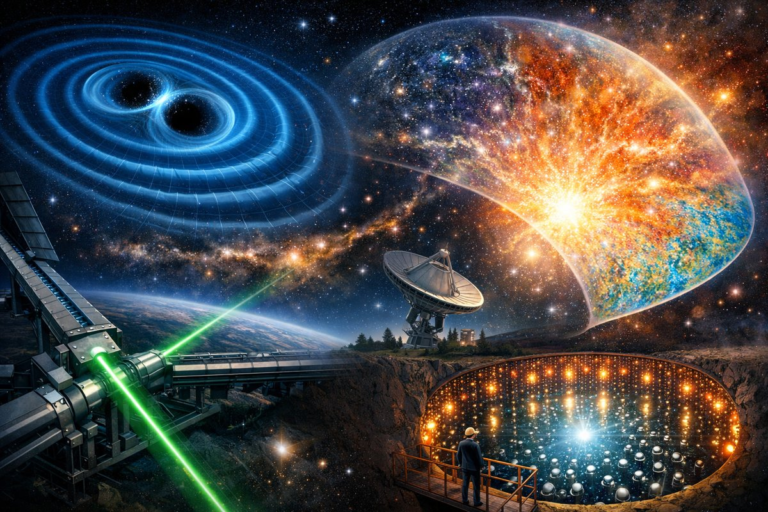
Meanwhile, deep underground particle detectors tuned to elusive neutrinos have begun to register high-energy events with origins too energetic to be traced back to supernovae or our sun. At facilities shielded by kilometers of rock, scientists are tracking neutrinos that appear to bear the hallmark of processes occurring in the very first seconds after the universe’s fireball cooled enough for protons and neutrons to form. Each neutrino detection refines models of baryogenesis, the mysterious mechanism that tipped the balance away from equal amounts of matter and antimatter. If confirmed, these findings could finally explain why anything at all exists today rather than a sea of pure radiation.
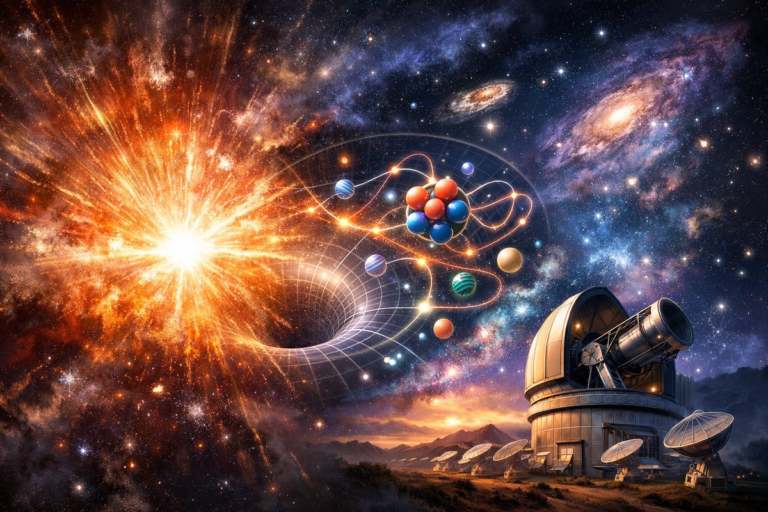
On the experimental frontier, the latest run of a major particle collider has probed energy scales never before reached in terrestrial labs. Researchers smashed protons together at record center-of-mass energies and scanned for fleeting micro black holes or exotic scalar bosons that would signal new physics beyond the Standard Model. Although no dramatic new particle has yet emerged, subtle deviations in collision cross-sections and angular distributions have sent theorists back to their chalkboards. Some propose that a hidden symmetry breaking at ultra-high energies could have shaped the inflationary phase, effectively linking the smallest particles with the grandest cosmic expansion.
Gravitational wave observatories have joined the hunt for primordial clues by tuning their detectors below the frequencies associated with black hole or neutron star mergers. A tentative background chirp has been reported, consistent with a stochastic gravitational wave spectrum produced by quantum fluctuations in the fabric of spacetime itself during inflation. If future runs confirm this faint hum, it will open a new window on physics at energy scales approaching the Planck regime. The challenge now lies in distinguishing this primordial background from noise generated by cosmic dust, terrestrial vibrations, and distant compact binary systems.
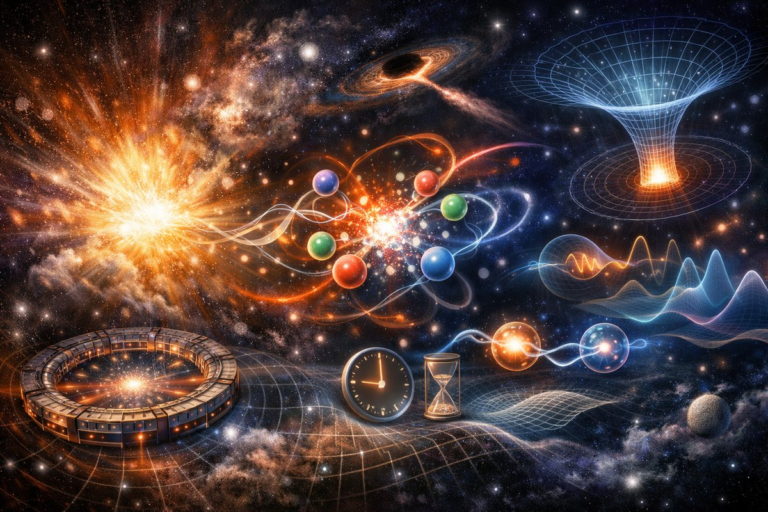
Theoretical frameworks are racing to keep pace. Traditional slow-roll inflation models are being reevaluated in light of new data, prompting fresh interest in alternatives such as cyclic cosmologies and emergent space scenarios. In cyclic models, the universe undergoes an endless series of expansions and contractions, sidestepping questions about initial singularities. Other approaches draw on insights from quantum gravity, invoking discrete space-time networks or higher-dimensional branes that collide to spark each cosmic epoch. While mathematically rich, these theories must increasingly confront the hard demands of empirical evidence as observations grow more precise.
Key puzzles remain unresolved. Dark matter is still a ghostly presence, detected only through its gravitational pull on galaxies and clusters. Some cosmologists speculate that a dark matter field could have driven a secondary inflationary phase, leaving telltale oscillations in the primordial background. Similarly, the possibility of primordial black holes seeding large-scale structures remains on the table. Though lensing surveys have ruled out these objects as the dominant form of dark matter across many mass ranges, there is growing interest in a narrow window of sub-lunar masses that may still evade detection.
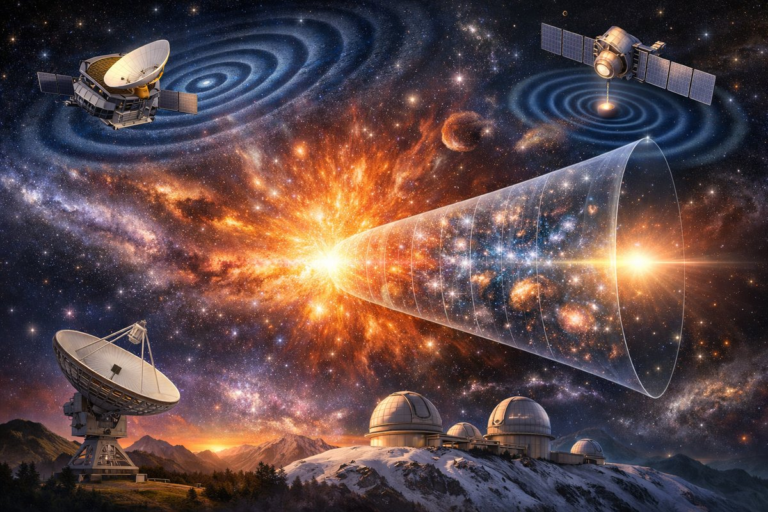
Forthcoming instruments promise to sharpen this picture. Next-generation cosmic microwave background observatories plan to map polarization with ten times greater sensitivity, hunting for B-mode patterns that would confirm primordial gravitational waves. A proposed collider experiment aims to reach multi-PeV energy scales, potentially unlocking direct access to the physics of unification. Meanwhile, neutrino telescopes under the polar ice cap and in deep oceans will expand their volume by an order of magnitude, boosting the odds of catching the rare cosmic neutrino born in the universe’s first heartbeat.
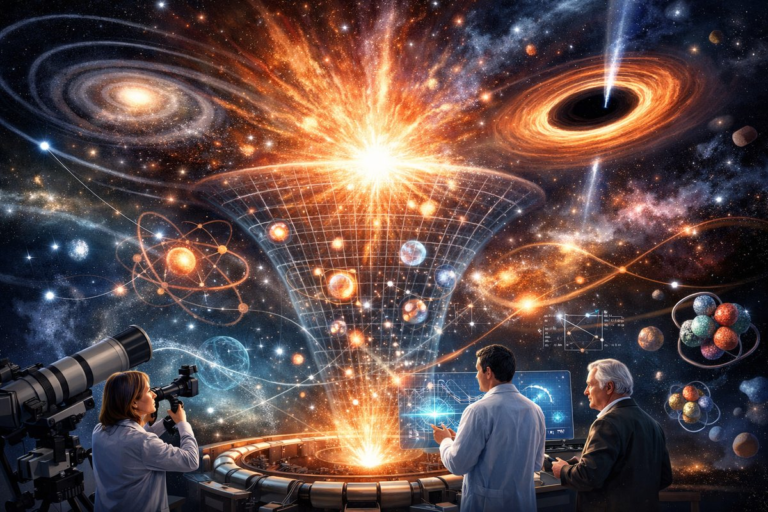
Amid this torrent of technical progress, a human story unfolds. Researchers describe moments of exhilaration when data diverge from expectations, triggering a cascade of brainstorming sessions. They speak of late-night runs at control consoles, euphoric head-slaps over unexpected peaks in detector readings, and the camaraderie of shared eureka moments. These personal dimensions remind us that science progresses not only through equations and apparatus but also through curiosity, creativity, and the stubborn refusal to accept what seems impossible.
As we stand at the edge of what we can observe and compute, we glimpse the profound complexity of cosmic origins. Each new anomaly is both a challenge and an invitation-to refine our theories, to design more precise experiments, and to expand our imagination. Whether the answers lie in subtle quantum effects, exotic particles, or extra dimensions, one thing is certain: the universe still holds secrets that can reshape our understanding of space, time, and existence itself. The next decade of observations and colliders may well usher in a revolution in our conception of the cosmos, answering age-old questions while inevitably raising new ones.
In the end, this journey to the beginning is as much an exploration of our own curiosity as it is a quest for cosmic truth. By probing the faint echoes of the primordial fire, we seek not only to understand how everything began but also to discover where we fit in the vast tapestry of reality. The universe does not yield its secrets easily, but with each incremental breakthrough, we move closer to the moment when the flicker of creation becomes a clear signal-a story told in particles, forces, and paradoxes that shaped everything we know and all we have yet to imagine.