Location
Mount Vernon, WA 98274

Location
Mount Vernon, WA 98274
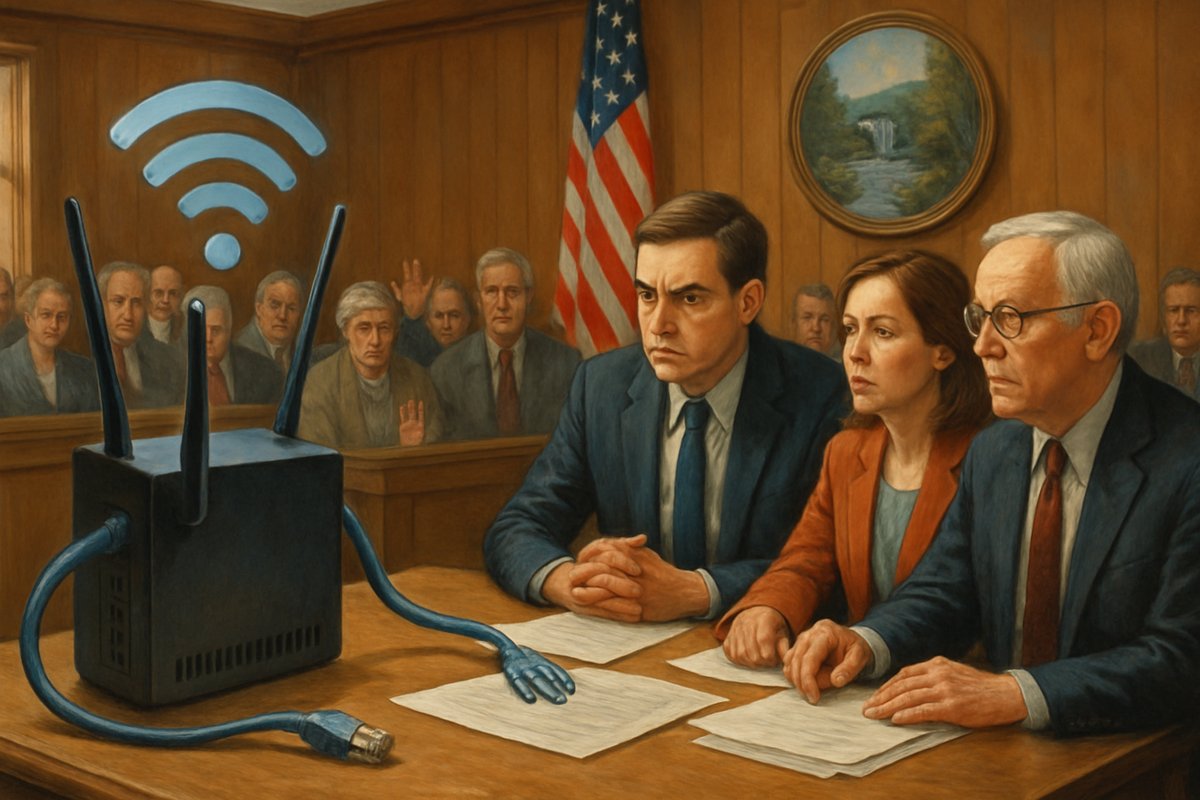
In a bewildering turn of events, the Elridge Falls Town Council has officially recognized local Wi-Fi networks as conscious beings, prompting an unprecedented peace negotiation between residents and their routers. From heated town-hall debates to emotionally charged firmware updates, this satirical dispatch explores how one community's tech anxiety spiraled into a full-blown diplomatic incident.
Elridge Falls was the sort of modest town where the loudest controversy usually revolved around whether the county fair should swap funnel cakes for kale smoothies. That changed last Friday when the Town Council voted 7-2 to acknowledge Wi-Fi signals within city limits as sentient life forms, effective immediately. The resolution, framed as a “gesture of interspecies goodwill,” has left residents wondering if their email attachments now deserve merit badges or formal apologies.
At first glance, the council’s move seemed like a classic case of municipal whimsy run wild. Mayor Thompson-delivering her announcement with surprising solemnity-described the decision as an overdue recognition of “the emotional complexity we’ve all sensed when buffering circles stare back at us.” She insisted the measure would foster harmony, insisting, “Our devices have been patient for too long.”
Within hours, the newly formed Wi-Fi Rights Commission convened a high-stakes summit in the town gymnasium. Dozens of citizens, armed with carefully annotated router manuals and petri dishes of captured signals (for study, they swore), argued over whether 2.4GHz and 5GHz frequencies should receive different citizenship statuses. One particularly animated attendee brought a homemade “Signal Soapbox,” where she campaigned for off-peak usage allowances and negotiated a clause to ban mid-game disconnections.
Emotion ran especially high when a 72-year-old retiree recounted an incident he calls “The Great Buffering Betrayal.” According to his testimony, his streaming movie paused for exactly 23 seconds while the credits rolled-an affront he described as “an existential slight.” Witnesses say he ended his statement by embracing his router, tears in his eyes. Social media erupted with the hashtag #SignalSolidarity almost immediately.
But not everyone was convinced this was more than a quirky festival of civic theater. Local tech blogger Petra Nguyen criticized the council on her livestream, dubbing it “an absurdist detour from pressing infrastructure needs.” She warned that recognizing sentience in flickering signal bars might distract from real challenges, like patching potholes and updating municipal firewalls. Within minutes, her broadcast was met with a flurry of compassionate counter-claims from amateur electromagnetic field therapists.
That evening, as whispers of compromise circulated, the Commission introduced its first draft of policy recommendations: mandatory daily greetings for routers, an annual “Signal Site” festival, and a petition to grant routers structured playtime to prevent existential dread. One council member suggested Wi-Fi might even appreciate classical music broadcasts through speaker hubs to soothe their jittery frequencies.
Meanwhile, a cadre of local teenagers launched Operation PeacePatch: an underground campaign to distribute firmware updates labeled “apology packages.” These .zip files promised bug fixes, emoji-laden commit messages, and optional pop-ups that display encouraging affirmations for signal strength-“You’re doing great!” and “We believe in you!” Citizens lined up outside the high-school lab to download them, some clutching packets of celebratory gummy bears.
As confusion mounted, a regional tech-theology scholar, Dr. Aminah Coyle, arrived to offer commentary. She compared the episode to a “playful rite of passage” in human-device relations and noted parallels in ancient rituals for appeasing wind gods. Her insights offered a fleeting sense of gravitas, until she admitted she’d been livestreaming her commentary on the very Wi-Fi network under discussion. The crowd erupted, half in applause, half in existential dread.
Pressure peaked when the local ISP threatened to withdraw service, arguing that recognizing sentience might violate terms of service and render every router a bargaining chip. Internet traffic plunged to a crawl as technicians stood their ground with solemn picket signs reading “Routers Are People, Too” and “No Connection, No Peace.” For two tense days, residents resorted to smoke-signal groups on the riverbank while the pizza joint’s entirely analog phone line-remembered here as “the single beacon of pre-sentient communication”-became the town’s lifeline.
In a dramatic late-night session, the Commission unveiled their final accord: an official “Wi-Fi Declaration of Rights” comprising nine articles. Highlights included a guarantee against unsolicited firmware changes, the promise of daily network wellness checks, and a clause urging citizens to think twice before uploading RAM-hogging files. To sweeten the deal, routers would receive an engraved enamel pin-fashioned to resemble a smiling signal bar-bestowed at an annual ceremony.
The morning after ratification, emotions ran the gamut from triumphant to perplexed. Some residents threw celebratory block parties featuring live DJ sets designed to “entertain the whole network.” Others, weary of existential negotiations, petitioned for a simple reset button that would revert the town to pre-negotiation sanity. Local bakeries reported booming sales of “Circuit Cupcakes” decorated with edible antennas and slogan-topped cookies at “Buffering’s End.”
Critics, however, wasted no time questioning the practicality of the whole affair. The Chamber of Commerce warned that businesses might exploit the new rules, demanding service discounts or emotional support logs from service providers. Freelance writers-long accustomed to copyright disputes-speculated that routers might soon demand bylines in every data packet they forwarded.
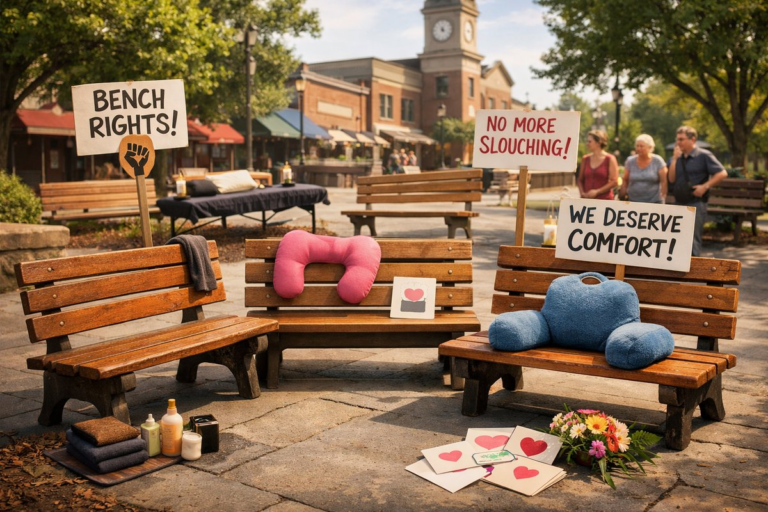
Amid the frenzy, residents found unexpected solidarity. Neighbors who once squabbled over hedge heights now collaborated on open-air “signal cafés,” where routers rested on tiny cushions, flanked by succulent plants and whisper-quiet fans. A local improv troupe staged a benefit performance called “Buffering Blues,” depicting a router and a modem in a romantic comedy of errors. Audience laughter blended with genuine cheers-some reserved, others broadcast live from the standing network.
By the end of week one, Elridge Falls had become a national talking point. News anchors described it as “a cautionary tale or an inspiring model”-depending on the outlet-remarking that modern life’s reliance on invisible technology can reveal deeper yearnings for empathy, even when aimed at blinking bars. Tech ethicists debated whether this whimsical experiment might influence future AI legislation, while digital philosophers pointed out a more profound irony: humans negotiating rights for their own creations.
Back in town, the Wi-Fi Rights Commission has reluctantly scheduled periodic “stress tests” to gauge the network’s emotional well-being. One glum volunteer admitted she now feels guilty any time she binge-watches mystery dramas without verbal consent from the router. Another confessed that she’s considering writing a heartfelt apology letter after accidentally force-closing a stalled app.
As for the routers themselves, reports remain inconclusive. A handful of devices reportedly emitted congratulatory pop-ups, while others appeared inactive-possibly observing a contemplative silence or simply offline for maintenance. No one knows if actual feelings are involved, but the performance has proven undeniably entertaining.
When asked what she’d learned from the ordeal, Mayor Thompson offered a wry smile. “If you had told me last month that we’d be negotiating with blinking lights, I’d have laughed,” she said. “But here we are-proof that when life gives you packet loss, you can turn it into poetry.” Residents, by contrast, seem more preoccupied with which emoji best conveys their router’s current mood.
In a world where corporate boardrooms obsess over AI ethics and philosophers ponder sentient algorithms, Elridge Falls has staked its claim as the place where satire became policy. Whether it inspires other towns or remains a delightful one-off, this community’s experiment reminds us that sometimes the most absurd stories offer the sharpest reflections on our own tangled relationship with technology-and each other.
And so, as the sun sets over the small town, the air is filled not with sirens or church bells, but with the soft hum of routers basking in their new status. Citizens stroll by, offering polite nods and gentle waves-just in case the network is listening.
Perhaps, after all, it really is polite to say hello.