Location
Mount Vernon, WA 98274

Location
Mount Vernon, WA 98274

Recent breakthroughs in quantum clock synchronization and cosmic observation are converging to reshape our understanding of time and space. From entangled atomic clocks spanning continents to new exoplanet detections, this synergy opens pathways for precision navigation, fundamental physics tests, and a deeper cosmic perspective.
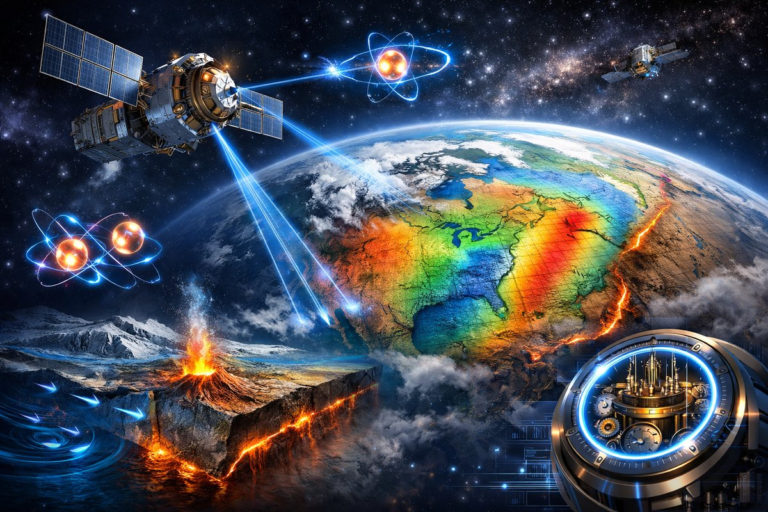
In laboratories and observatories around the world, two strands of scientific inquiry have begun to intertwine in unexpected ways. High-precision quantum clocks-once the exclusive domain of national metrology institutes-are now finding applications alongside powerful space telescopes and radio arrays. This convergence promises not only incremental improvements in navigation and communications but the prospect of fundamentally new experiments that probe the structure of spacetime itself. By synchronizing clocks via quantum entanglement and correlating their readings with observations of distant stars and galaxies, researchers are establishing a playground for curiosity, precision, and awe at scales from the subatomic to the cosmic.
The evolution of atomic clocks over the past decade has been extraordinary. Once operating at accuracies of one second in millions of years, the latest optical lattice clocks now drift by less than a second over the entire age of the universe. These marvels trap thousands of atoms in a laser grid and measure the vibrations of electrons with astonishing clarity. But beyond sheer precision, the real breakthrough lies in linking two such devices through quantum entanglement. Last year, a team demonstrated record-high fidelity in entangling strontium-based clocks located hundreds of kilometers apart. This step toward a quantum network of clocks opens the door to timekeeping that is simultaneously global, secure, and immune to certain sources of technical noise.
The entanglement of quantum clocks isn’t merely a laboratory curiosity. Researchers have begun to distribute pairs of clocks across city centers, mountain labs, and even underground bunkers, all interconnected by fiber-optic links and free-space optical channels. In one recent demonstration, synchronized clocks in two national metrology institutes bridged an alpine valley with more than 100 kilometers of fiber, preserving entanglement well beyond what any earlier experiment achieved. This network allowed researchers to compare the passage of time across different gravitational potentials, offering a direct test of general relativity with sensitivity surpassing that of classical clock comparisons.
At the same time, cosmic observatories are reaching new heights. The latest generation of space-based infrared telescopes is measuring the atmospheric composition of exoplanets orbiting nearby stars, detecting water vapor, methane, and carbon dioxide in worlds that could resemble early Earth. Neutrino observatories buried deep beneath ice sheets are tracking ghostly particles born in supernovae and colliding black holes. Radio telescopes on every continent are being linked by fiber to perform very-long-baseline interferometry (VLBI), synthesizing an Earth-sized lens with resolution sharp enough to image the shadow of a supermassive black hole in a distant galaxy.
Uniting quantum clocks with these cosmic ventures offers a tantalizing vision: arrays of telescopes whose timestamps are so precisely aligned that they effectively become coherent single instruments stretched across space and time. Consider next-generation VLBI observations aiming to measure minute fluctuations in a black hole’s accretion flow. With quantum-synchronized clocks, each radio antenna’s data could be co-registered with attosecond accuracy, vastly improving the dynamic range and image fidelity. Fluctuations that were once drowned in timing jitter might come into focus, revealing the turbulent dance of plasma at the edge of an event horizon.
Beyond black hole imaging, quantum timing networks could revolutionize navigation in deep space. Traditional spacecraft rely on radio signals from Earth-based stations, with round-trip delays and timing uncertainties limiting real-time control and localization. If a constellation of quantum-synchronized clocks were deployed on satellites or planetary orbiters, spacecraft could triangulate their position with unprecedented precision, even in regions where the geometry of Earth-based signaling becomes unfavorable. This capability would be essential for missions to the outer planets, asteroids, or future lunar gateways, where delays of minutes or hours complicate routine operations.
Meanwhile, the marriage of quantum timing and cosmic observation is already yielding fundamental tests of physics. Experiments comparing clock rates at different altitudes can detect gravitational redshift effects predicted by general relativity. By integrating a network of entangled clocks across mountainous terrain and then comparing their readings while pointing space-based telescopes at pulsars and quasars, scientists can cross-reference ground-based time dilation with signals that have traversed billions of light-years. Any discrepancy between the two could hint at physics beyond Einstein’s theory, such as subtle violations of Lorentz invariance or the influence of exotic dark matter fields coupling to time.
Citizen scientists, too, are getting involved. A growing number of open-source hardware initiatives offer affordable lab kits for building mini optical clocks or interferometers. Hobbyist amateur astronomers are deploying backyard telescopes equipped with GPS-disciplined clocks to record meteors, occultations, and light curves. By collaborating through online platforms, participants contribute timing marks that feed into larger networks, helping to correlate transient events like gamma-ray bursts or near-Earth asteroid passes with professional observatories. This democratization of precision tools is fostering a culture of shared discovery and hands-on learning.
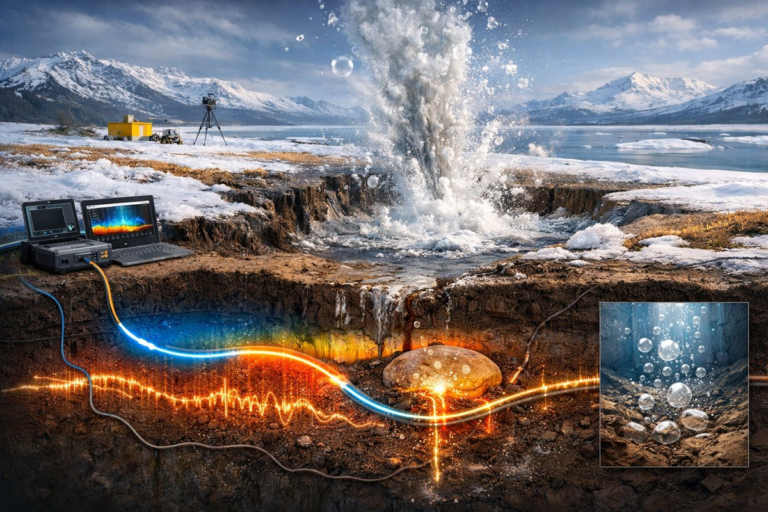
On the planetary scale, the same quantum sensing techniques can be repurposed to study Earth’s environment. Portable optical clocks, when transported to glacier sites, tropical forests, or desert plateaus, provide real-time measurements of gravitational potential variations caused by mass redistribution-melting ice sheets, groundwater depletion, or volcanic magma movements. These measurements complement satellite gravimetry data and ground-based seismometers, offering a high-resolution picture of how natural and human-driven processes are reshaping our planet. Such insights are invaluable for climate science, hazard mitigation, and sustainable resource management.
The fusion of quantum clocks and cosmic observation also raises important philosophical questions. When timekeeping approaches the theoretical limits set by quantum mechanics, what does it mean to say that an event occurred at a specific instant? If entanglement ties together clocks separated by hundreds of kilometers, does the concept of local time dissolve into a global quantum state? Some physicists suggest these new experiments could shed light on the nature of temporal order, the arrow of time, and the relationship between entanglement and causality. In this sense, the initiative becomes not just a technological leap but a profound inquiry into the foundations of reality.
Of course, the road ahead is filled with challenges. Maintaining quantum coherence across continental distances requires mitigating thermal noise, fiber losses, and environmental disturbances. Space-based implementations of entanglement distribution face the rigors of launch, radiation, and limited payload budgets. Integrating these systems with existing observatories demands new standards for data formats, synchronization protocols, and security measures. Yet, if history is any guide, overcoming such hurdles often leads to transformative innovation-just as past generations turned electronic oscillators into GPS and turned telescopes into space stations.
Collaboration will be key. National metrology institutes, space agencies, university labs, and private research groups must work together to align technical roadmaps, share experimental platforms, and co-develop open protocols for entangled timekeeping. Initiatives like the Quantum Internet Alliance and the International VLBI Service for Geodesy & Astrometry provide templates for cross-disciplinary coordination. Funding agencies are taking note, with several recent grants specifically targeting quantum-enhanced space science missions and ground-based quantum networks.
As prototypes mature into operational infrastructure, we can expect a proliferation of applications. Ultra-precise timekeeping will underpin next-generation financial networks and secure communications, while synchronized observation campaigns will capture fleeting astrophysical events with fidelity never before possible. Planetary probes guided by quantum timing could navigate through the gravity wells of Jupiter or Saturn with minimal ground intervention. And on Earth, environmental monitoring with quantum clocks will track subtle shifts in mass distribution-clues to melting ice sheets or the flow of underground aquifers.
Ultimately, this new frontier unites the quantum and the cosmic in a single endeavor: to measure, map, and understand the universe’s most elusive dimensions. It invites scientists, engineers, and curious minds everywhere to think deeply about what time means and to discover boldly how it shapes reality from the smallest atom to the farthest galaxy. In doing so, we stand poised to witness the next revolution in science, where precision and imagination converge to reveal the hidden symphony of spacetime.