Location
Mount Vernon, WA 98274

Location
Mount Vernon, WA 98274
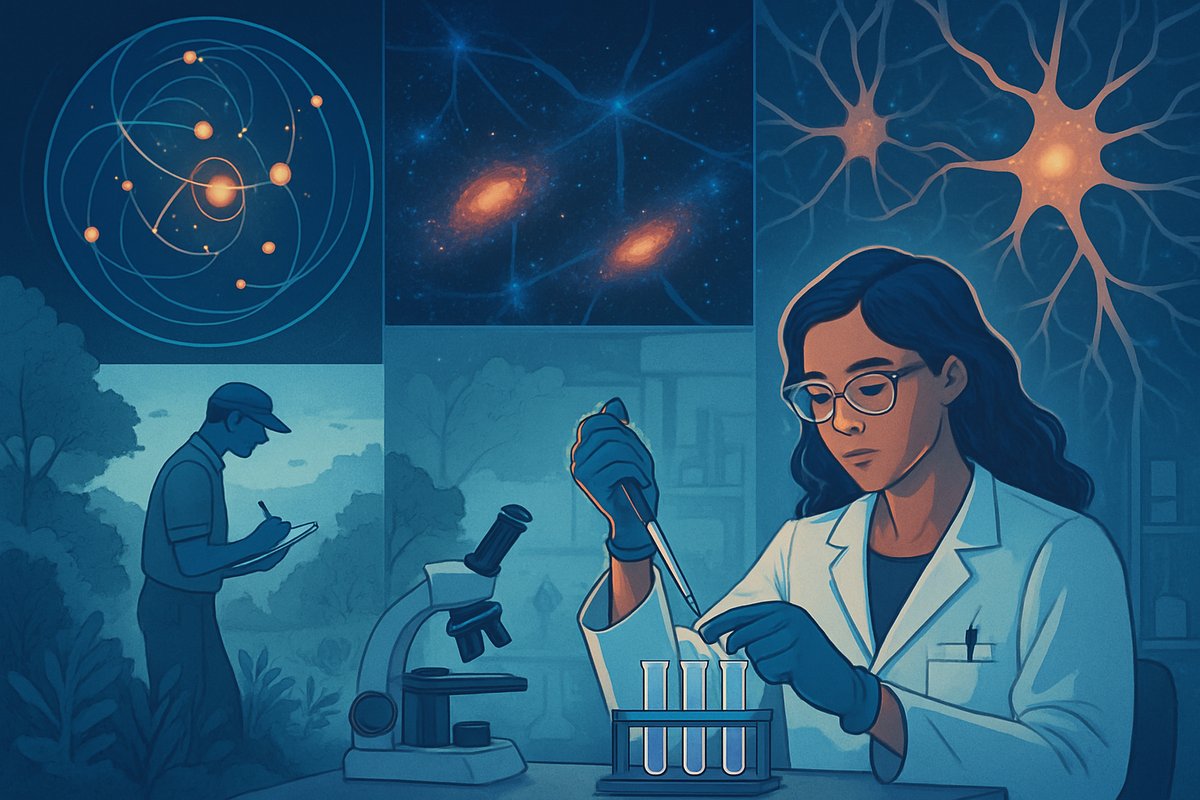
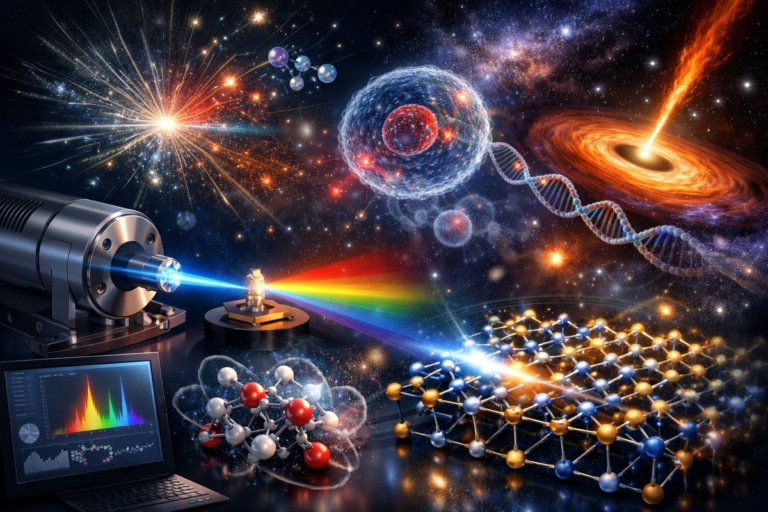
Science is the act of leaning into wonder and translating curiosity into discovery. From probing the subatomic dance of quarks to charting the filaments of galaxies, each experiment and observation peels back a layer of the unknown. Whether exploring ecosystems in the field or decoding neural circuits in the lab, science invites us to measure precisely, question boldly, and imagine expansively.
Science is both a method and a mindset-a blend of precision and possibility that spans scales from the infinitesimal to the infinite. It asks us to frame questions we never thought to ask, to build instruments that reveal new realms, and to trust that evidence, however confounding, can reshape our understanding of reality.
At the smallest scales, quantum mechanics upends our classical intuition. Particles behave like waves, exist in multiple states at once, and become entangled across distances unimaginable in everyday life. Recent advances in quantum computing harness these bizarre properties to perform calculations that would take today’s fastest supercomputers lifetimes to complete. By encoding information in qubits-quantum bits that can represent zero and one simultaneously-researchers are exploring algorithms for materials design, cryptography, and even simulating molecular interactions to accelerate drug discovery.
These breakthroughs rest on painstaking laboratory work. Maintaining qubits in a coherent state requires near-absolute-zero temperatures, isolated from magnetic fields and stray vibrations. Technicians fine-tune dilution refrigerators, microwave pulse sequences, and superconducting circuits until error rates fall below usable thresholds. Each incremental improvement, whether shaving off a fraction of a percent in decoherence or optimizing error-correction protocols, brings quantum processors closer to practical applications.
Shift your gaze upward, and the same drive for precision fuels milestones in observational cosmology. Gravitational wave observatories have transformed how we detect ripples in spacetime from colliding black holes and neutron stars. Interferometers spanning kilometers measure distortions smaller than a proton’s width, confirming predictions that Einstein made a century ago. Every detection rings with both triumph and new puzzles: the rate of mergers, the unexpected masses of certain black holes, the faint hum of a stochastic background yet to be fully characterized.
Meanwhile, space telescopes equipped with increasingly sensitive detectors map the cosmic microwave background with exquisite detail. Tiny fluctuations in temperature across the sky-mere millionths of a degree-encode the earliest seeds of structure in the universe. By analyzing these patterns alongside galaxy surveys tracing millions of light-years, cosmologists refine models of inflation, dark matter, and dark energy. The result is a cosmic history that hinges on measurements so delicate they would be lost in the noise if not for redundant instruments, rigorous calibration, and global collaboration.
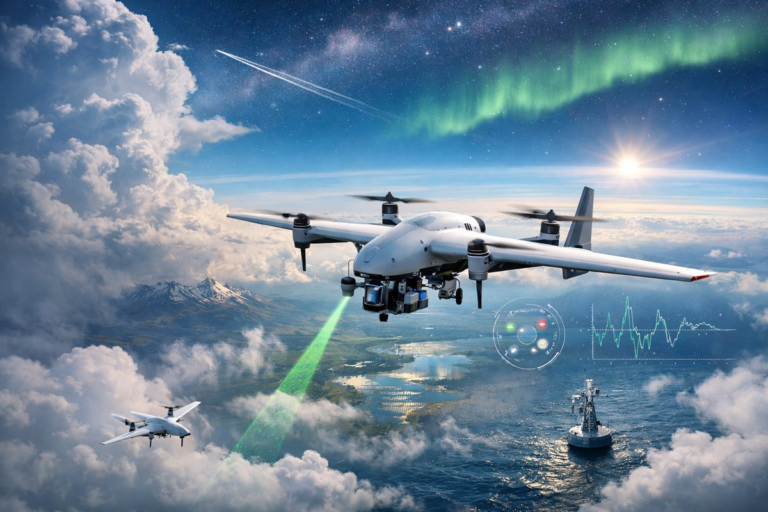
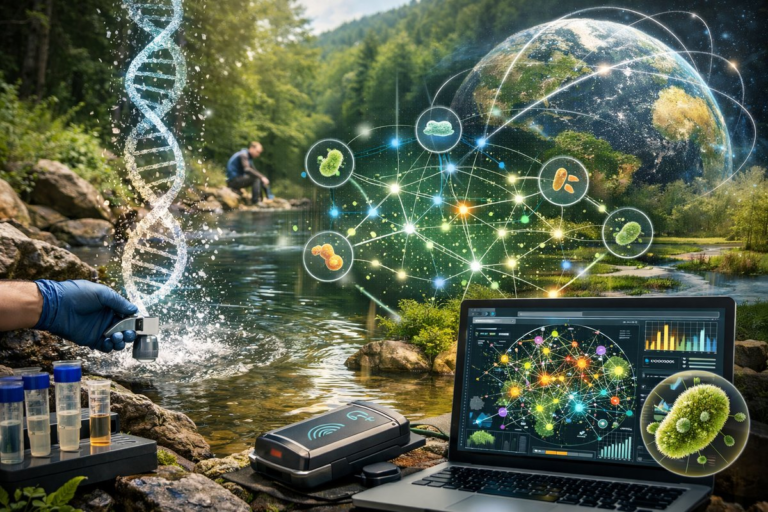
Back on Earth, the ethos of measurement meets the living world in ecology and environmental science. Remote sensing satellites monitor deforestation, melting ice caps, and shifts in land use with daily revisits and meter-scale resolution. Drones equipped with multispectral cameras hover over fragile ecosystems to assess biodiversity, soil health, and water quality. Citizen science platforms recruit volunteers to record bird migrations, track insect populations, or sample urban air pollutants. Aggregating millions of data points helps researchers build dynamic models of climate impact, informing conservation policies and community resilience strategies.
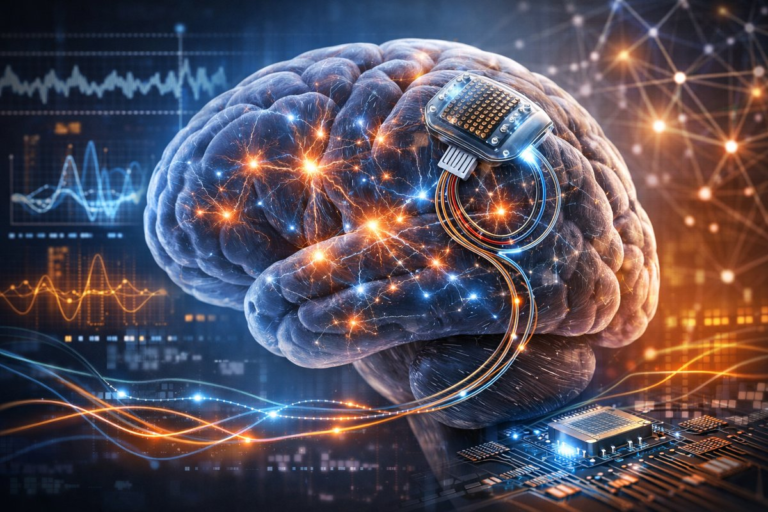
At every scale, science advances through novel tools and interdisciplinary bridges. Synthetic biology fuses engineering principles with genetic code, enabling microbes to produce biofuels or detect environmental toxins. Neural implant technology melds electronics with living tissue, offering new treatments for neurological disorders and insights into consciousness. Artificial intelligence accelerates pattern recognition in massive datasets-from genome sequences to particle collision records-uncovering anomalies that humans alone might overlook.
Yet amid this technical prowess, science maintains a deeply human core. The laboratory notebook is filled with failed trials as much as triumphs. A misaligned lens, a contaminated reagent, or a fleeting power glitch can derail months of work. Peer review and replication provide checks against bias, but they also demand humility-an admission that even our most elegant theories may fall apart under fresh scrutiny.
Curiosity often sparks in the mind of someone outside the professional scientific community. A child’s backyard rock collection might inspire a geologist’s first thesis. Amateur astronomers routinely discover supernovae or monitor variable stars, contributing crucial observations that prompt professional follow-up. Community-based participatory research engages local knowledge, whether mapping flood risks after a severe storm or evaluating traditional agricultural practices for sustainability. In each case, science broadens its scope by listening to diverse voices and valuing nontraditional expertise.
The scientific endeavor also grapples with societal implications. Gene-editing tools like CRISPR offer cures for genetic diseases but raise ethical questions about designer traits. Large language models and automated decision systems promise efficiency but threaten privacy and fairness if deployed without transparency. Science cannot exist in a vacuum; its discoveries ripple through legal frameworks, cultural norms, and economic structures. Fostering dialogue among scientists, ethicists, policymakers, and the public is as vital as any experiment.
Education plays a key role in sustaining this ecosystem of inquiry. Active learning classrooms encourage students to design experiments, critique data, and collaborate on open-ended problems. Virtual labs and simulation platforms provide hands-on experience even when physical resources are limited. Outreach initiatives bring field research equipment to underserved communities, breaking down barriers to participation. When learners see themselves reflected in the process of discovery, they become empowered to ask bolder questions and pursue scientific careers.
In the grand tapestry of science, each thread-quantum mechanics, cosmology, molecular biology, data science-interweaves to form a richer picture of the cosmos and our place within it. Advances often emerge where disciplines intersect: computational chemistry illuminating climate models, statistical physics informing economic systems, and ecological principles guiding urban design. By honoring both depth and breadth, science cultivates resilient solutions to complex challenges.
Perhaps the greatest gift of this playground for curiosity is the invitation to remain humble before the unknown. For every solved problem, a dozen more questions arise. How does consciousness emerge from networks of neurons? What is the ultimate fate of the universe? Can we decode the language of proteins to build custom therapeutics on demand? These frontiers beckon with the promise of discovery-and with the reminder that the true value lies not just in answers but in the audacious spirit of inquiry.
In a world navigating pandemics, climate shifts, and rapid technological change, science offers both guidance and inspiration. It teaches us to weigh evidence, embrace uncertainty, and collaborate across differences. By peering into the quantum realm or charting distant galaxies, by measuring gene expression or monitoring ecosystem health, we reaffirm our capacity to explore boldly and act responsibly. The playground of science is vast, but it belongs to all of us. Let’s keep building our instruments, sharpening our questions, and sharing the wonder that unites every curious mind.