Location
Mount Vernon, WA 98274

Location
Mount Vernon, WA 98274

A winding drive through archaic trulli villages and centuries-old olive groves in southern Italy proves that travel is as much about inner exploration as scenic detours. From farmhouse olive oil tastings to star-filled nights in a rewilded national park, this journey invites curiosity, sustainability, and genuine connections.
The road unfolded like an unspooling ribbon of ochre and emerald, edged by ancient olive trees whose gnarled trunks whispered of centuries past. We set off from Bari at dawn, headlights catching dew on the midnight-blue sea beyond the harbor. In the passenger seat lay a folded map, but our real guide would be the natural rhythms of these sun-baked hills and the slow hum of small-town life.
Arriving in a local market just outside Polignano a Mare, we wove between rows of sunbright lemons, jars of hand-pressed honey, and baskets of dark olives harvested that morning. Stallholders offered hearty smiles and samples of freshly baked focaccia, its crust crackling beneath our fingers. We lingered over notes in our travel journal-aromas, snippets of dialect, the warmth of friendly laughter-recognizing that so much of the place hides in the details rather than on any list of must-see sites.
Heading inland, the Valle d’Itria revealed itself in a gentle roll of fields spotted with conical-roofed trulli houses. Many date back to the 15th century, their slate pinnacles crowned by simple painted symbols. UNESCO protection has helped preserve their story, yet life inside remains lived on humble terms-wood stoves, stone floors, walls pocked with centuries of changing plaster. We rented one for a night, waking to honeyed sunlight spilling through small windows and the scent of wild rosemary that grew in the courtyard.
On foot, we threaded narrow farm lanes beneath grand olive canopies and paused for rest by dry-stone walls, mossy from winter rains. A local shepherd guided us to a grove planted in the late 1800s, pointing out trees whose trunks had split and rejoined over time. He spoke softly about pruning seasons, how careful cutting promotes new shoots and richer oil. His stories felt less like instruction and more like shared poems of land stewardship.
Our next stop was an agriturismo just south of Matera, where farmhouse meals revolve around produce sourced steps from the kitchen door. We joined a cooking workshop led by a home cook whose grandmother first pressed olives in the basement mill. Under her guidance, we learned to knead pasta dough, crush garlic with mortar and pestle, and drizzle robust extra-virgin oil over freshly pulled bread. Between mouthfuls, she spoke of local festivals that celebrate the autumn harvest and of families who once traveled by mule to barter their oil in coastal ports.
A detour to the coast delivered striking contrasts: cliffs plunging into turquoise water, salt flats glittering like diamonds at sunset, and traditional fishing boats pulled ashore for repairs. We collected a handful of salt crystals, still warm from the sun, and carried them back in a linen pouch, reminded that even tiny tokens become anchors for memory.
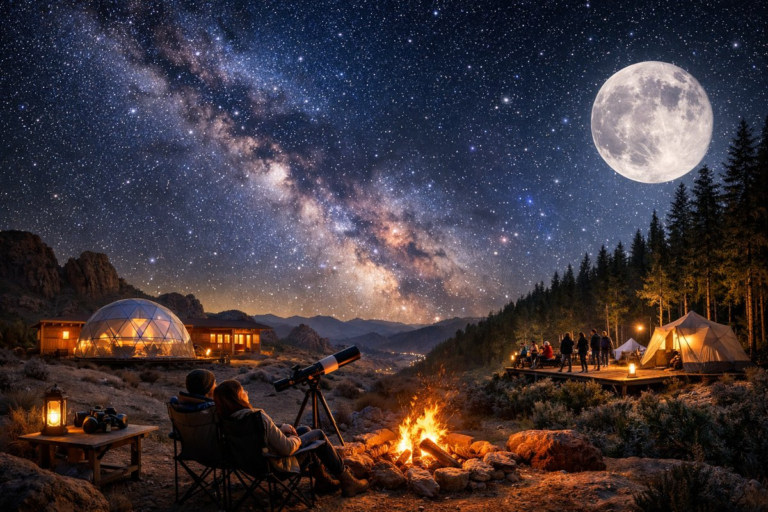
Turning northward again, we entered Alta Murgia National Park-an almost lunar landscape of karst plateaus and rocky outcrops. Here, the olive trees receded, replaced by hardy shrubs and tufts of grass that sway in relentless wind. After dark, the park becomes a designated International Dark Sky Reserve. We lay on a blanket, eyes lifting to a black dome pierced by thousands of stars. In that silence, the road behind us seemed as distant as a dream, while the vast sky mirrored an inner landscape of questions and quiet epiphanies.
One evening’s stay took us to a cave dwelling converted into an eco-lodge. Carved directly from limestone hillside, its interiors remained cool in the heat and warmed by solar-powered radiant floors by night. Rainwater harvesting and composting toilets demonstrated a commitment to minimizing impact on the fragile ecosystem. Here, every footprint felt deliberate, every choice a small affirmation that travel need not mean excess.
Yet the journey wasn’t without its puzzles. Narrow country roads sometimes vanished under olive branches, map signals faded, and Wi-Fi disappeared for days. At first, this felt like an inconvenience-but soon it translated into unexpected privacy, a reclaiming of time uninterrupted by notifications. We scribbled pen-to-paper notes, read by lantern light, and used a paper guidebook to recalibrate our route by landmarks rather than GPS dots.
By day, we embraced a simple packing list: sturdy walking shoes, reusable water bottle, sunhat, and a universal charger. Evenings called for layers and a headlamp to navigate unlit patios. We learned that patience must travel atop practicality-waiting at a village square for the single baker to reopen her oven, or choosing slower dirt paths for the payoff of untouched vistas.
The real gift of the journey lay in how landscapes and cultures shaped inner terrain. Conversations with olive farmers became meditations on resilience; each tree’s capacity to regenerate after drought or pruning mirrored personal reinventions we had carried on our own horizon. Hours spent watching sunlight filter through silvery leaves whispered reminders that attention enriches experience, and that slowing down can unlock new rhythms within.
When departure day arrived, we rolled luggage through an alley lined with nameless stone houses and paused for one last view of rolling groves under a cloudless sky. In our pockets lay coarse salt from the flats, pressed olives encased in glass, and a handful of farmhouse recipes. But more enduring than souvenirs were the impressions etched on mind and heart: how roads less traveled can spark genuine curiosity, how immersive stays foster empathy, and how every grove, hearth, and star-scattered night becomes a story carried home.
Every journey leaves its imprint. In southern Italy’s olive-kissed hills, we discovered that returning with lighter baggage-sustainably minded and emotionally attuned-can transform travel into a practice of mindful connection. As the road turns away, it invites reflection: how will we shape our lives when we step back into daily rhythms, mindful still of quiet groves and starry skies?