Location
Mount Vernon, WA 98274

Location
Mount Vernon, WA 98274
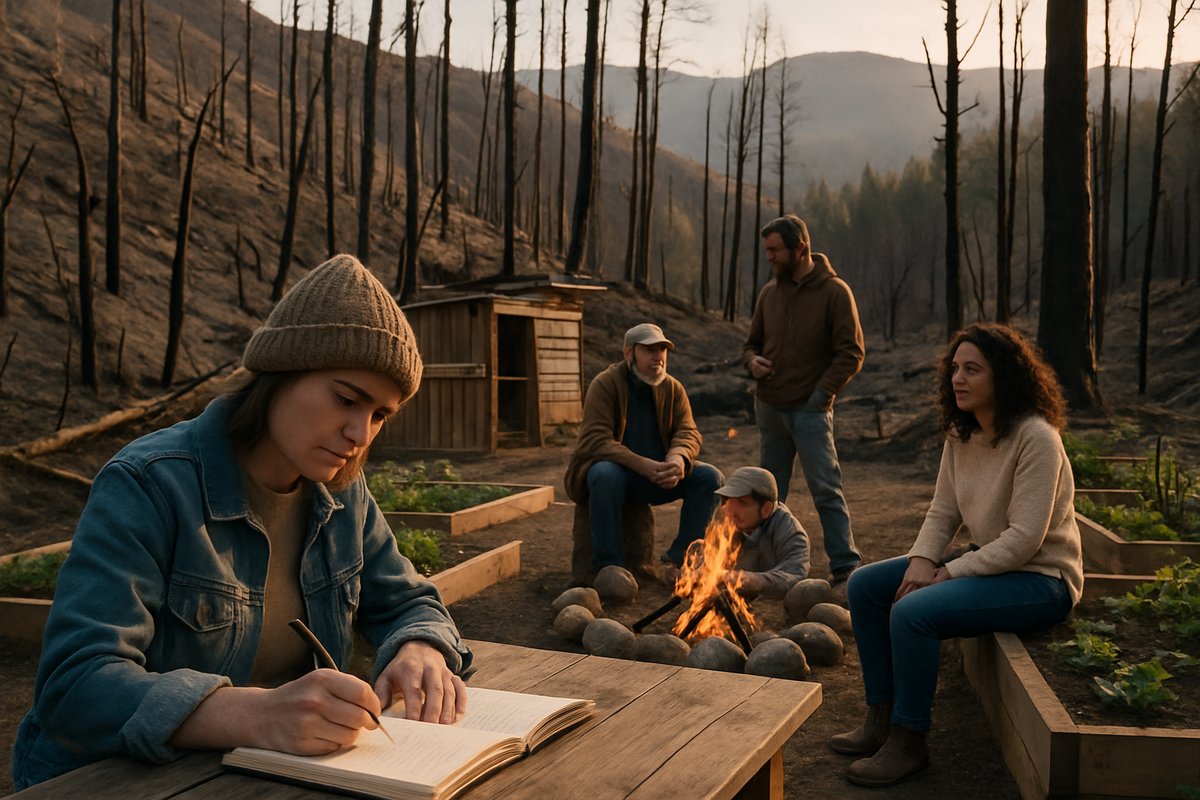
After a devastating wildfire swept through their home, a small mountain community found strength in shared stories, communal gardens, and simple rituals. Through handwritten journals, campfire gatherings, and recycled materials, they wove hope back into charred landscapes and discovered new purpose in rebuilding together.
Smoke still curled in the crisp morning air when the survivors first returned. Their village, nestled deep in the pines, looked like a charcoal sketch-roofs collapsed, garden beds reduced to ash, and skeletal trees standing guard over empty streets. Yet amid the ruin, a faint hum of determination rose: a resolve to reassemble what had been lost, brick by brick, story by story.
Weeks earlier, families had evacuated under orange skies, clutching only what they could carry. Grandparents carried faded photographs, children clutched well-worn stuffed animals, and neighbors helped each other load possessions into borrowed trucks. The road out was lined with traffic lights blinking through haze. Behind every windshield sat hearts weighed by uncertainty. No one wanted to believe home might vanish forever.
When evacuation orders lifted, a small vanguard of residents returned first. They pitched sturdy tents on what remained of the town square, erecting makeshift lean-tos with tarps and salvaged boards. These tents became more than shelter-they were gathering spots where laughter mingled with tears. Evenings brought the glow of portable camping stoves as people heated soup and brewed coffee, leaning in close to share memories both painful and hopeful.
At dawn, the community assembled around that same square, hushed but resolute. A spiral-bound notebook sat on a tree stump, inviting anyone to write their thoughts. Over days, it filled with messages of sorrow, lines of gratitude, and sketches of imagined futures. The simple act of journaling became a shared ritual, each entry a thread weaving individuals into a resilient tapestry.
On cooler mornings, volunteers started ‘memory hikes’ into the nearby charred forest. Clad in sturdy boots and carrying insulated reusable water bottles, they walked familiar trails now transformed. Every blackened trunk bore a story-a favorite climbing spot for neighborhood kids, a secret picnic clearing, a birch grove where newlyweds once carved initials. By naming loss, they claimed it as part of their collective history.
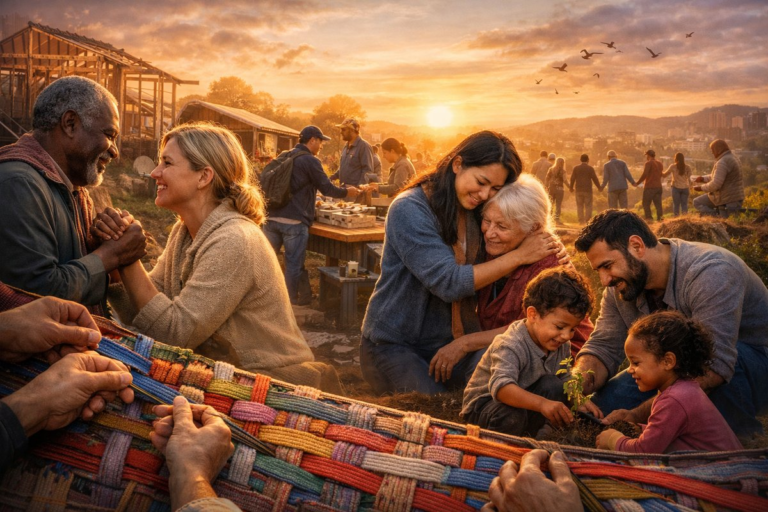
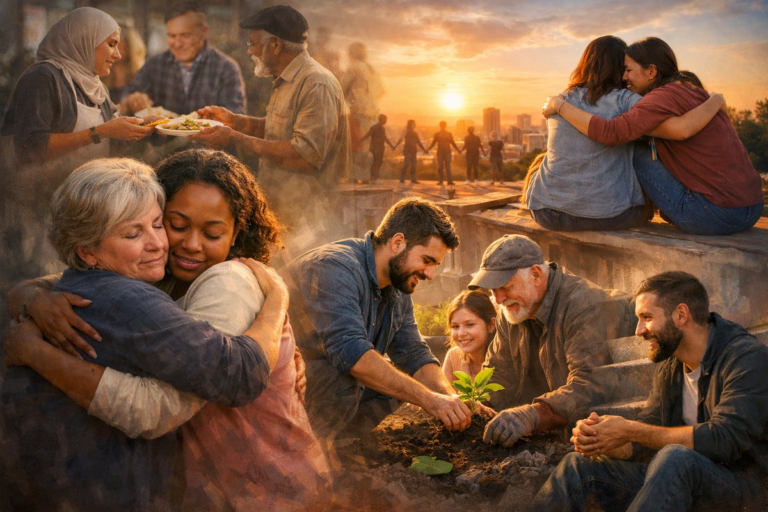
Meanwhile, a small patch of ground beside the tents was cleared and prepped for planting. With donated soil and salvaged seeds, residents sowed tomatoes, beans, and wildflowers among charred stumps. Children knelt at side, their hands coated in earth as they learned how life could spring from ruin. As green shoots emerged, the garden became a living monument to hope and regeneration.
Later in the afternoon, community members gathered for tool-share exchanges. A worn toolbox sat open on a folding table, filled with adjustable wrenches, work gloves, and paint scrapers. People swapped items-someone offered a spade in exchange for a hammer, another lent pruning shears for a cordless drill. This shared tool kit minimized waste and fostered cooperation. Every borrowed item built not just fences or flower beds, but also bonds of mutual support.
As dusk fell, solar-powered lanterns strung between trees flickered to life. Their soft amber glow illuminated evening circles where stories were told aloud. Elders recounted childhood harvest festivals, young parents described lullabies once sung by their grandparents. Even those far from eloquent found courage in the circle, offering a line or two about what they yearned to rebuild-a schoolhouse, a gathering hall, a simple porch swing under a maple tree.
These nightly gatherings weren’t flashy. There was no professional stage or amplification-only the crackle of embers and the warmth of presence. Yet each voice mattered. A young teacher described teaching math by candlelight to neighborhood kids displaced from their classrooms. A former firefighter spoke of vulnerability and finding comfort in others’ hands on his shoulder. Slowly, individual grief coalesced into communal resolve.
For many, journaling remained a cornerstone practice. Pages filled with lists of tasks: erect walls, clear debris, mend fences. Others wrote prayers and poems on those same pages. Some crafted sketches of houses rebuilt with reclaimed wood. The notebook weighed heavily at first. Over time, it grew thicker, becoming a tangible record of progress and a testament to the human impulse to document and transcend suffering.
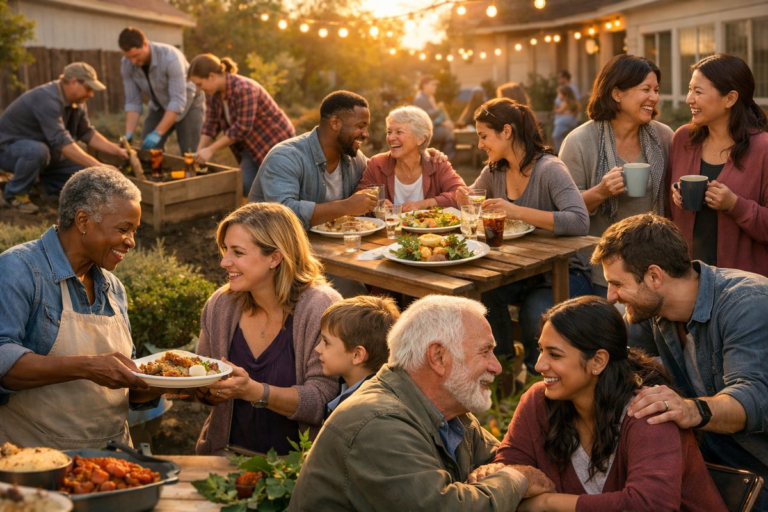
In time, the small garden bore fruit. Bright red tomatoes dangled from vines, plump beans clung to trellises, and sunflowers bowed their heads in the breeze. Harvest day brought a festive mood: tables set with mismatched tableware, soup simmering over camping stoves, and loaves of bread shared by neighbors who once hadn’t spoken. Each bite tasted of triumph, each seed a fragile promise of growth.
Rebuilding homes followed. Walls rose again, beam by beam, using salvaged lumber. Paint colors chosen by children splashed fresh life onto walls. Inside, newly installed bookshelves held donated reads recovered from the ashes. Every book saved was celebrated as a victory for memory itself.
Outsiders began to notice. Charitable volunteers arrived with medical kits, extra tents, and thermal blankets. Local artisans brought handwoven blankets and crafted wooden benches. Architects sketched ideas for structures that could better resist fire, while environmental planners discussed replanting native trees in strategic patterns to serve as natural firebreaks.
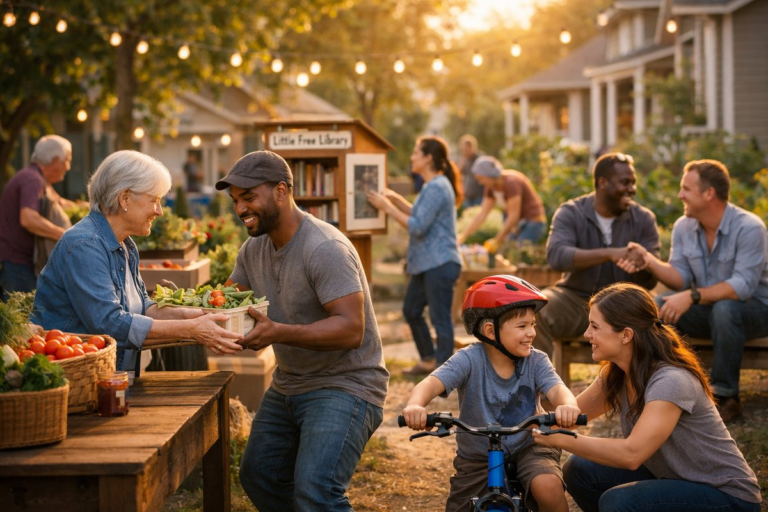
Throughout it all, everyday acts defined resilience more than any grand gesture. Borrowing a tool, sharing a can of soup, reading a poem aloud-these small kindnesses built the fabric of a renewed community. Children learned from their elders how to coax life from scorched earth, and elders gleaned fresh perspectives from youthful optimism.
A simple ceremony marked each milestone. When the first repaired home welcomed its family back, neighbors gathered on lawns with celebratory tea and freshly baked cookies. When the garden yielded its first full basket of produce, people danced with spoons raised in triumph. These moments weren’t orchestrated by planners-they sprang organically, fueled by shared gratitude.
By late summer, the town square looked transformed. Beyond the tents, a modest wooden pavilion now hosted weekly gatherings. A tool locker stood under its roof, solar panels glimmered on its edges, and benches carved from repurposed beams offered seating. The once-charred ground was now lush with grass and new saplings-green flags of renewal.
Life didn’t return to how it was before the flames, nor did anyone want it to. Instead, the community embraced lessons learned in loss: the value of simple resources, the power of shared work, the importance of listening. Neighbors promised to meet monthly, to continue journals side by side, to keep the solar lanterns shining on evenings when dusk threatened to feel too lonely.
In the end, the village discovered that hope wasn’t a grand prize at journey’s end, but the steady warmth that glowed in everyday actions. It was the promise of a pen touching paper, the hiss of a camping stove igniting, the clank of a tool passed from hand to hand. These humble elements sustained them as they rose from the ashes, stronger together and full of new purpose.
And so, amid mountain winds and sunlit pines, a community that nearly vanished found its heartbeat again. From the embers of destruction, they crafted a brighter future-one journal entry, one seedling, and one shared meal at a time.