Location
Mount Vernon, WA 98274

Location
Mount Vernon, WA 98274
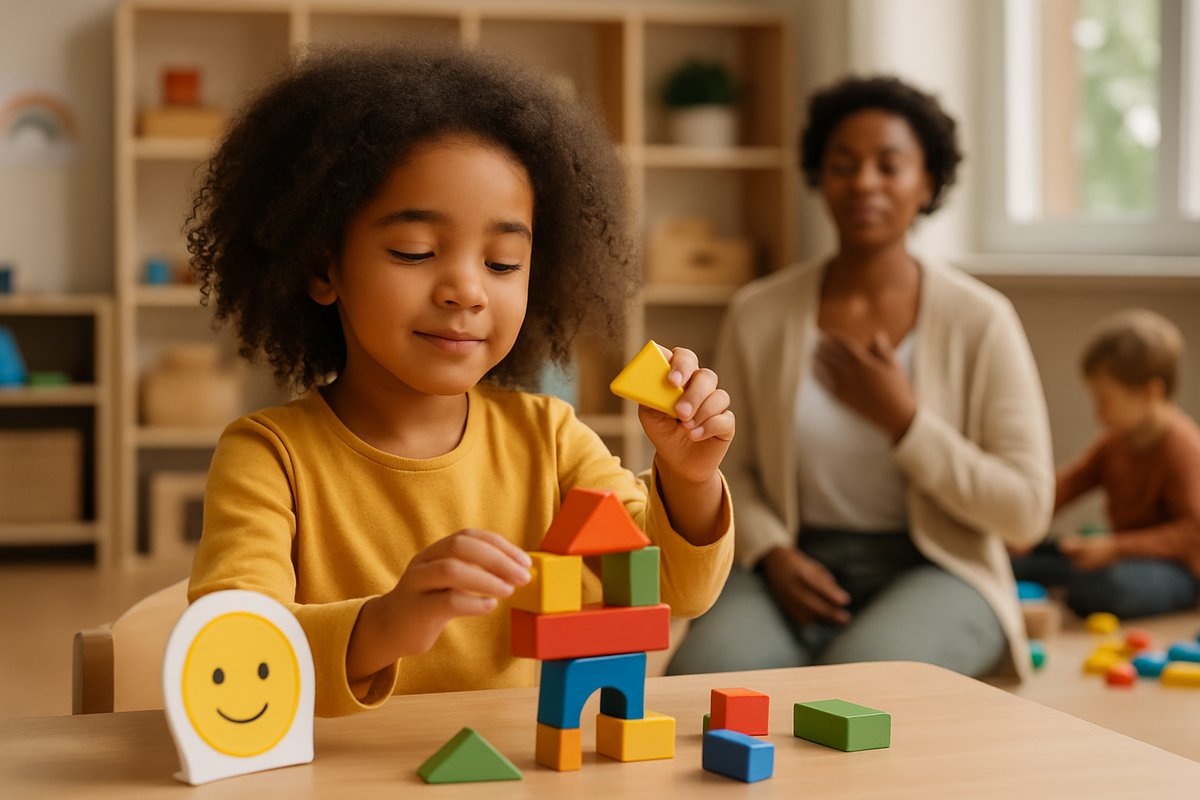
A growing wave of research and on-the-ground experiments shows that integrating emotional awareness tools with open-ended play can turbocharge young minds. From simple storytelling prompts to mindfulness-infused building activities, families and educators are finding new ways to nurture curiosity, agency and resilience in early learners.
In living rooms and classrooms around the world, a quiet revolution is taking place. Parents and educators are weaving emotional intelligence practices into everyday play, creating environments where children not only learn letters and numbers but also how to recognize and navigate their own feelings.
This trend has roots in a recent longitudinal study at a major Midwestern university, which found that preschoolers who engaged regularly in structured emotion-reflection activities alongside free play demonstrated stronger problem-solving skills and higher levels of creative thinking by age five. The study’s lead researcher, a developmental psychologist, noted that children who learned to name and share their feelings were more willing to take intellectual risks.
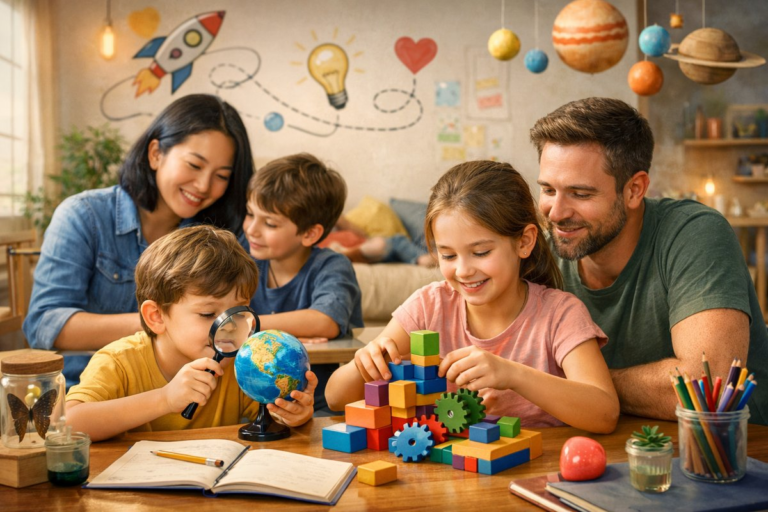
At a community center in a suburban neighborhood, families gather each Saturday morning for “Family Builders,” a workshop that pairs open-ended block sets with guided conversations. Parents are invited to ask questions like “What color would you choose if you felt brave today?” or “Can you tell me a story about your tower?” Rather than focusing on engineered outcomes, the emphasis is on process-experimenting, narrating and connecting the physical act of building with an inner landscape of emotions.
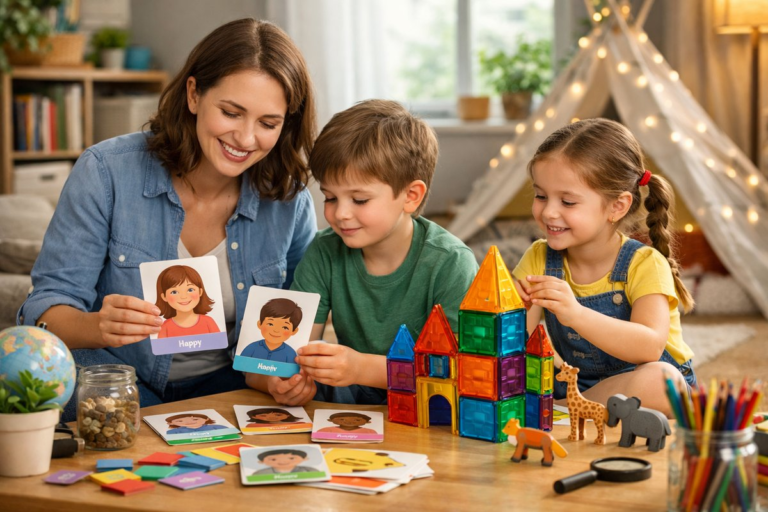
Educators have begun to follow suit. In a pilot program at an urban preschool, teachers introduced “emotion spotlight” moments before free-play periods. Children select an emotion card showing simple illustrations of feelings-joy, frustration, excitement, calm-and then choose a corresponding activity. A card for “excitement” might prompt an impromptu dance party, while “calm” could lead to a quiet corner with drawing supplies. Early results indicate that children who participate in these 5-minute check-ins transition more smoothly between activities and exhibit fewer behavioral outbursts.
One parent, a software engineer who works remotely, described how she adapted these ideas at home. She transformed a shelving unit into a “Feeling Station,” stocking it with items like scented play dough, coloring pencils and a set of illustrated emotion prompts. Whenever her kindergartner experiences big feelings-joy after a successful puzzle, frustration at a tricky math problem-she encourages him to visit the station, select a tool, and describe how the texture, color or scent reflects what he’s feeling.
Researchers emphasize that emotional awareness isn’t a separate add-on but an integral part of learning. By recognizing and naming emotions, children build neural pathways that support sustained attention, memory retention and self-regulation. These competencies underpin emergence of executive function skills, which are critical for academic success and lifelong adaptability.
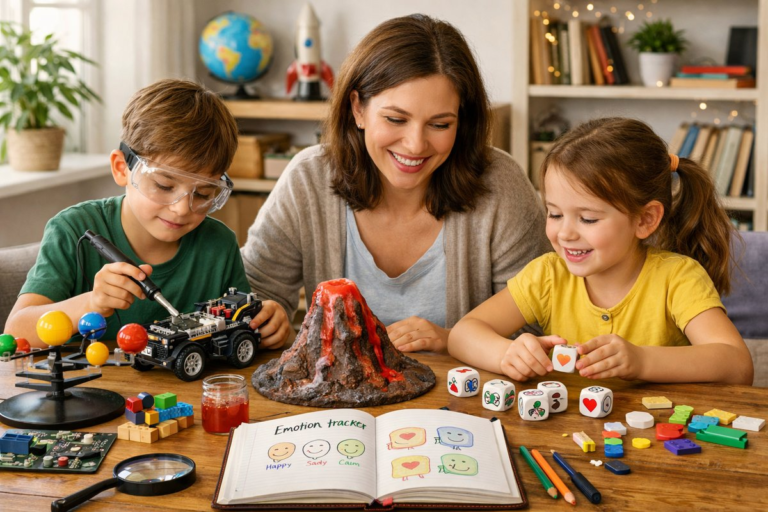
Schools are responding by designing blended curricula that link STEAM concepts with socio-emotional practices. For instance, an elementary classroom might cover basic engineering by constructing simple machines, then debrief with questions about teamwork, frustration and pride. A second-grade teacher described one project where students built rubber-band powered cars, then reflected on how it felt when their models didn’t work on the first try-and what strategies they used to persevere.
Digital developers are also taking notice. A new app called CurioPlay tracks children’s engagement patterns and prompts caregivers to ask reflective questions during play breaks. It logs informal anecdotes-like a toddler naming shapes while stacking rings-and uses that data to suggest fresh ideas: “Try pairing this stacking activity with a color-emotion pairing next time.” Initial feedback from beta testers suggests that such tailored prompts help sustain parents’ confidence in fostering meaningful experiences.
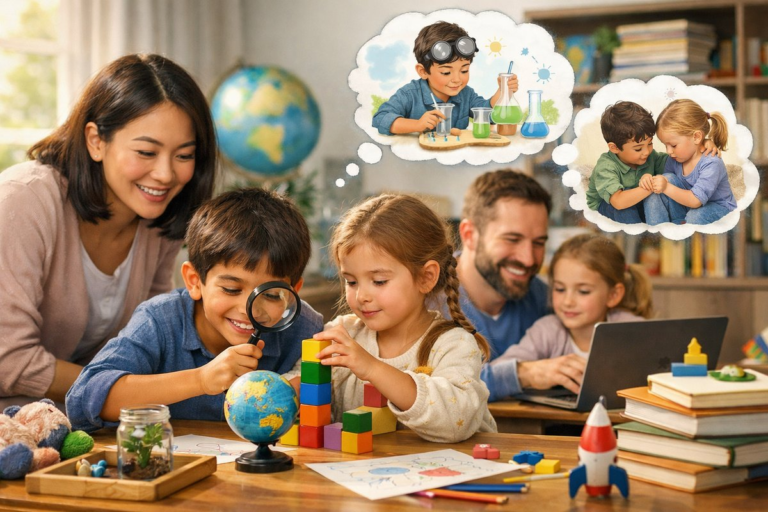
Alongside tech solutions, low-tech materials remain in high demand. Open-ended playthings-things like magnetic tiles, loose parts, and modular wooden pieces-encourage children to experiment, adapt and tell stories through physical creation. When paired with simple emotion prompts or storytelling cues, these foundational toys become vehicles for self-expression and cognitive growth.
Parent-educators recommend creating dedicated moments for reflection after play sessions. A typical routine might be to sit side by side with a child, review what they’ve built, and ask open questions: “What made you choose red instead of blue?” “How did you feel when your structure stayed up?” These conversations, framed with genuine curiosity rather than judgment, instill a powerful sense of agency.
Community organizations have joined the movement, offering “Play & Feel” pop-up booths at farmers markets and public parks. Volunteers encourage families to explore mood-themed building challenges-like constructing a bridge that feels “adventurous” or a castle that feels “peaceful.” By connecting physical creation with emotional vocabulary, these events invite children and adults to co-learn new ways of expressing and processing feelings.
Despite the momentum, experts caution against overstructure. The goal isn’t to schedule every second of a child’s day with rigid emotion drills, but to embed gentle invitations to notice and articulate feelings within naturally occurring play. Overly scripted checklists or metrics can undermine the authenticity that makes self-reflection meaningful.
Accessibility is another key focus. Advocates are working to ensure that emotion-infused play reaches underserved communities. Local libraries in several cities now stock free kits containing simple building materials, emotion-word flashcards and guided prompt cards. Caregivers check out these kits just like books, then return them for the next family to explore.
Looking ahead, some researchers envision public policy shifts that recognize social-emotional learning as equally important to literacy and numeracy. Proposals include funding for universal preschool programs that integrate heart-led play, grants for developing culturally responsive emotional tools, and partnerships between early-childhood centers and mental-health professionals.
Through all these efforts, the core message is clear: fostering tomorrow’s thinkers calls for more than facts and figures. It requires creating spaces where children feel safe to experiment, to stumble, to celebrate small victories and to articulate what’s happening inside their minds and hearts. When emotional intelligence and playful discovery come together, families, schools and communities can unlock a richer, more resilient form of learning.
By championing heart-led, curiosity-driven experiences, caregivers are not simply teaching children to count or to read-they are nurturing whole individuals who understand themselves, empathize with others and approach challenges with creative confidence. That, in the eyes of many experts, is the most important lesson of all.