Location
Mount Vernon, WA 98274

Location
Mount Vernon, WA 98274
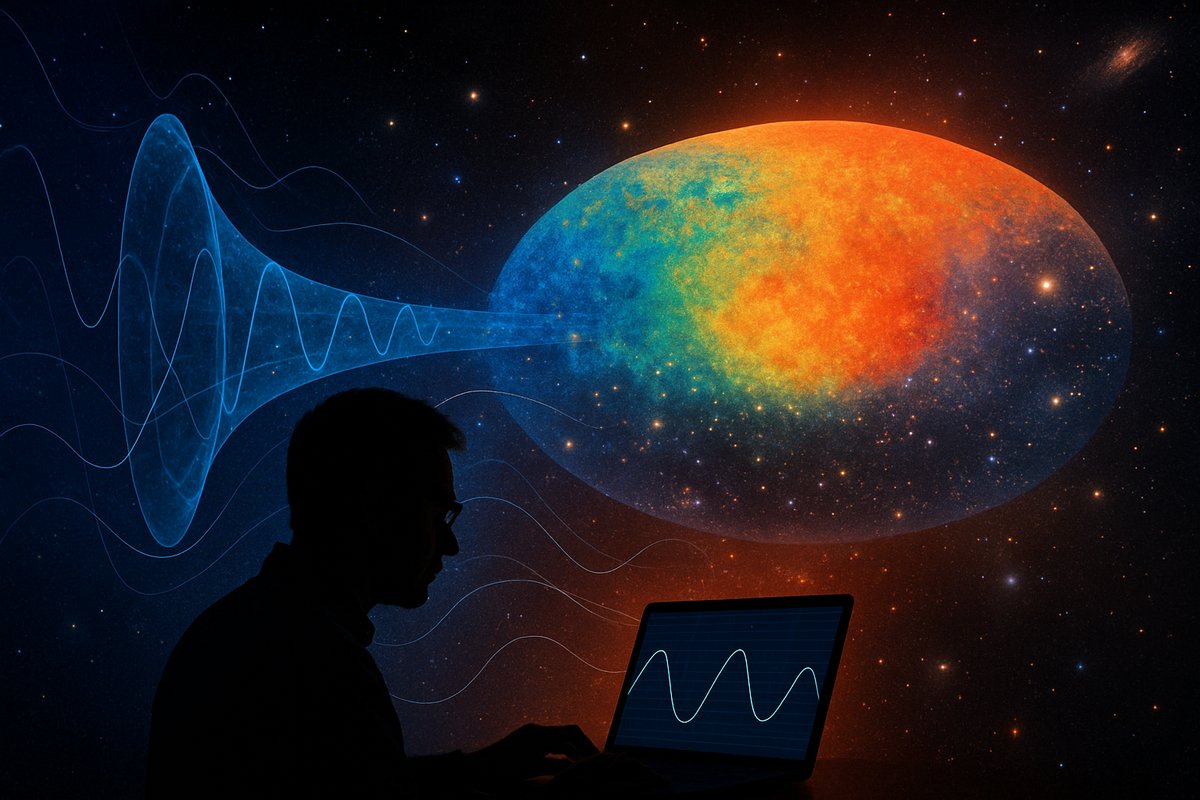
From the fleeting instant of cosmic inflation to the delicate afterglow of relic radiation, researchers are charting a path back to the universe's birth. New probes into gravitational whispers, particle imprints, and cosmic paradoxes are challenging our assumptions about space, time, and matter.
From the fleeting instant of cosmic inflation to the delicate afterglow of relic radiation, scientists are probing a tapestry of forces and particles that marked the universe’s birth. New observations of subtle ripples in space-time and unprecedented measurements of primordial background light are challenging our understanding of matter, energy, and even the very structure of reality. As ground-based detectors refine their sensitivity and space missions prepare to scan the heavens with greater resolution, the journey toward the beginning continues to unveil profound paradoxes-and tantalizing hints at realms yet unseen.
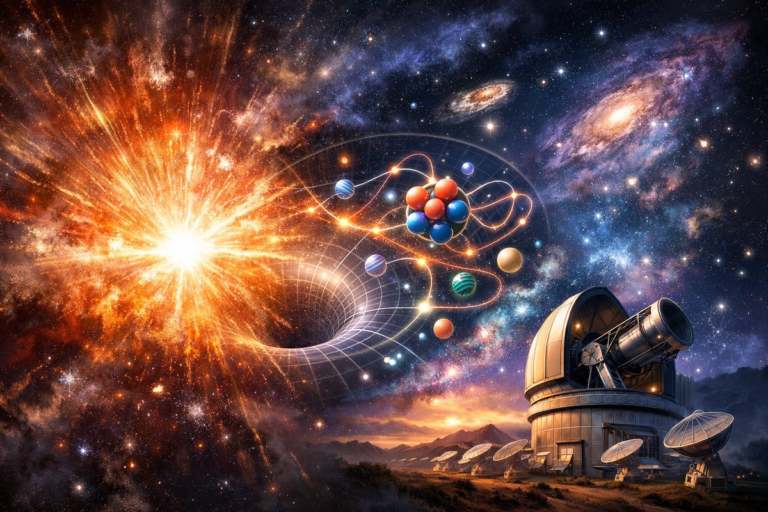
At the heart of the earliest moments lies the inflationary epoch, an era so brief that a cosmic heartbeat would stretch across an expanse larger than the observable universe. This explosive expansion smoothed out wrinkles in space-time and resolved puzzles such as why regions billions of light-years apart appear to share the same temperature. Yet the mechanism that drove inflation remains mysterious. Leading theories invoke exotic fields and energy reservoirs that behave unlike any matter we encounter today. As researchers refine models of quantum fields interacting with gravity, they wrestle with the challenge of reconciling general relativity and quantum mechanics in a single coherent framework.
Those quantum fluctuations-microscopic jitters in fields during inflation-would be magnified to cosmic scales, seeding the large-scale structures we see today. Galaxies, galaxy clusters, and vast filamentary networks of dark matter all trace their origins to these primordial tremors. Recent analyses of large-scale sky surveys have revealed statistical patterns in galaxy distributions that align with predictions from quantum-driven inflation. But discrepancies at the smallest scales hint at new physics waiting to be uncovered. Could fluctuations in additional hidden fields leave subtle fingerprints in the cosmic web? Or might entirely new particles have danced briefly in the primeval fireball?
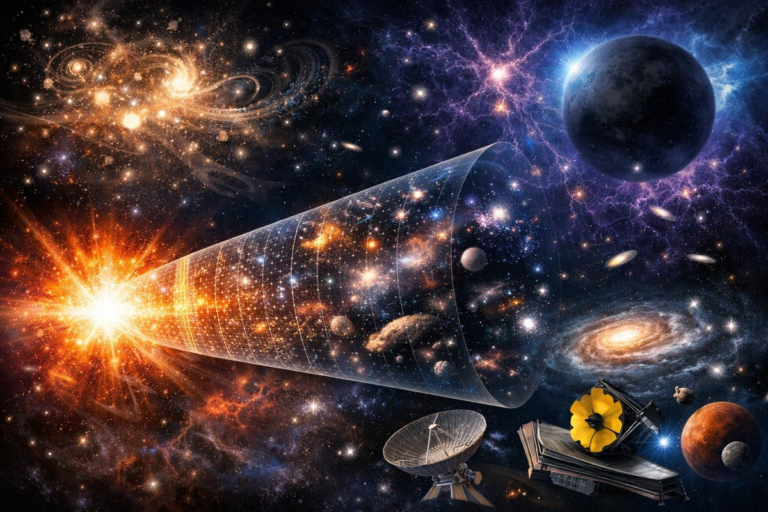
Much of what we know about those first light-seconds comes from the cosmic microwave background-the faint glow of photons released when the universe cooled enough for atoms to form. Decades of balloon flights, ground-based telescopes, and orbiting observatories have mapped this afterglow with staggering precision. Variations in temperature and polarization across the sky encode details about the density of ordinary matter, the abundance of dark matter, and the influence of dark energy. Recently, teams have begun teasing out the polarization patterns that would betray the imprint of primordial gravitational waves-ripples in space-time generated alongside the earliest fluctuations.
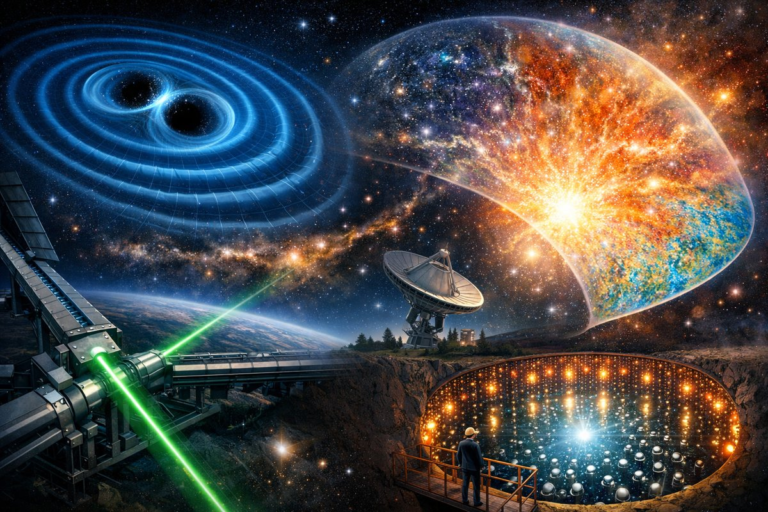
Detecting these primordial gravitational waves would be a watershed moment. Unlike the gravitational waves observed from colliding black holes or neutron stars, these ancient tremors would originate from the inflationary frenzy itself. Specialized detectors operating at polar sites and in space aim to isolate the tiny twisting of the microwave background’s polarization caused by these waves. While current data sets pose stringent limits on the strength of primordial signals, planned missions promise order-of-magnitude improvements in sensitivity. If successful, they would open a direct window into the universe’s first heartbeat.
Even as researchers chase these primordial echoes, they contend with two of the deepest enigmas in modern physics: dark matter and dark energy. Together they account for more than 95 percent of the cosmos, yet their nature remains elusive. Dark matter reveals itself through gravitational pull, sculpting the formation of galaxies and lensing distant light. Dark energy drives the accelerated expansion of space itself. Could these phenomena trace back to fields active at the universe’s birth? Some theories propose that remnants of the inflationary field persist today, masquerading as dark energy. Others entertain the possibility that dark matter consists of exotic particles produced in the fireball’s final cooling stages. Unraveling these connections demands both creative theoretical work and new detectors sensitive to feeble interactions beyond the Standard Model.
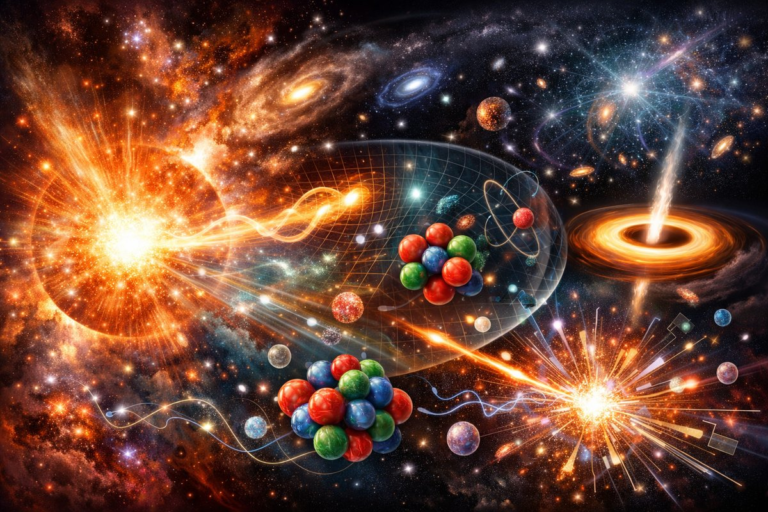
Beyond familiar particles and forces, the early universe may have forged relics that evade direct detection. Hypothetical neutrino backgrounds, gravitational wave backgrounds, and even topological defects such as cosmic strings could still permeate space. Experiments hunting for ghostly neutrinos from the big bang seek to capture the faintest of tremors in massive underground detectors. Parallel efforts scan the sky for sharp kinks or bursts of gravitational energy that might betray cosmic strings tearing through space-time. Though no unambiguous signal has yet emerged, the lack of detection itself places powerful constraints on theories of grand unification and symmetry breaking in the primordial furnace.
While standard cosmology describes a smooth expanse evolving through well-understood physics, some models propose a broader cosmic landscape. If our universe is a single bubble among many in an ever-inflating multiverse, then each bubble could exhibit different physical laws, constants, and initial conditions. In this view, the paradoxes of fine-tuning-why physical constants allow for stable atoms, stars, and life-could be answered by selection effects among a vast ensemble of universes. Testing such ideas challenges observational cosmology; we must seek subtle imprints such as bubble collisions or anomalies in large-scale cosmic surveys. So far, the evidence remains inconclusive, but the very possibility reshapes philosophical questions about existence and our place in the grand tapestry of reality.
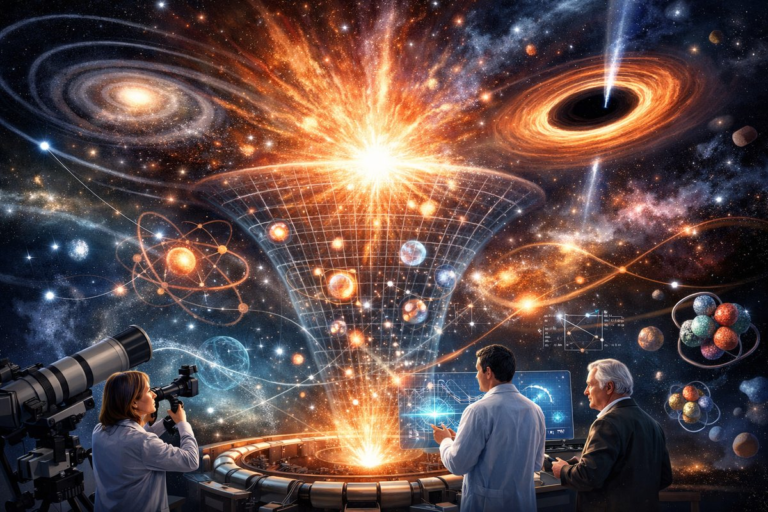
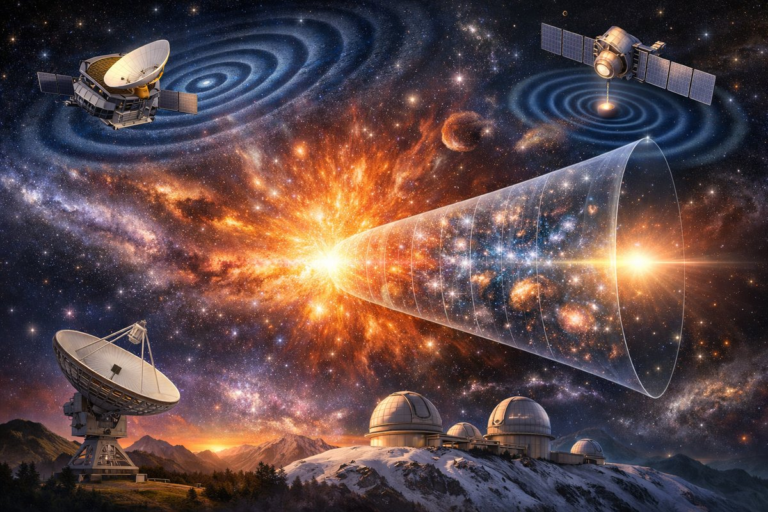
Looking ahead, the next decade promises breakthroughs on multiple fronts. Space-based gravitational wave observatories and microwave background satellites will peer deeper into the universe’s childhood. Particle accelerators and underground facilities will push the boundaries of high-energy physics, searching for new particles born in the early cosmos. Meanwhile, advances in quantum sensors and interferometry could reveal the faintest tremors of space-time. These tools will not only test inflation and particle theories but also refine our understanding of cosmic topology, whether space is infinite or loops back on itself.
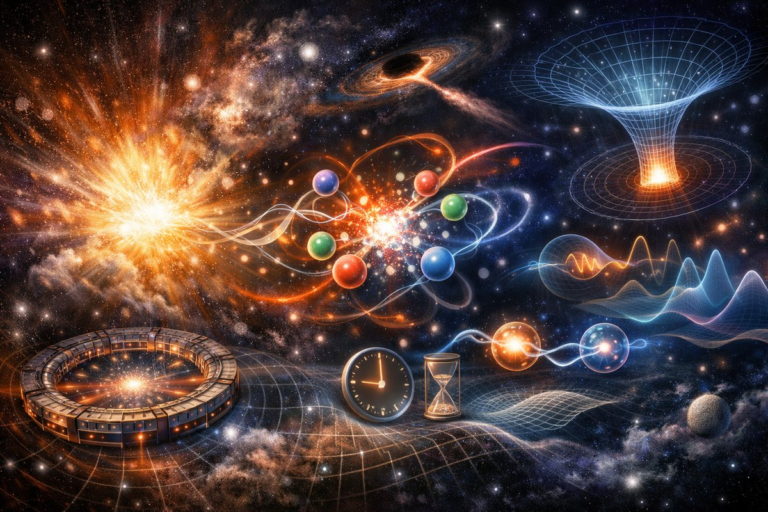
The quest to trace the universe back to its origin is more than a scientific pursuit; it is an exploration of our own heritage. Every photon, particle, and wave carries a fragment of a story that began nearly fourteen billion years ago. By decoding that story, we confront fundamental questions about the nature of time, the limits of knowledge, and the potential for new realms beyond our cosmic horizon. As our instruments become ever more sensitive and our theories ever more daring, the edge of the unknown beckons with mysteries yet to be imagined.
May this journey continue to inspire curiosity, humility, and awe in all who gaze skyward-and may the secrets of the first light guide us toward deeper truths about the cosmos and ourselves.