Location
Mount Vernon, WA 98274

Location
Mount Vernon, WA 98274
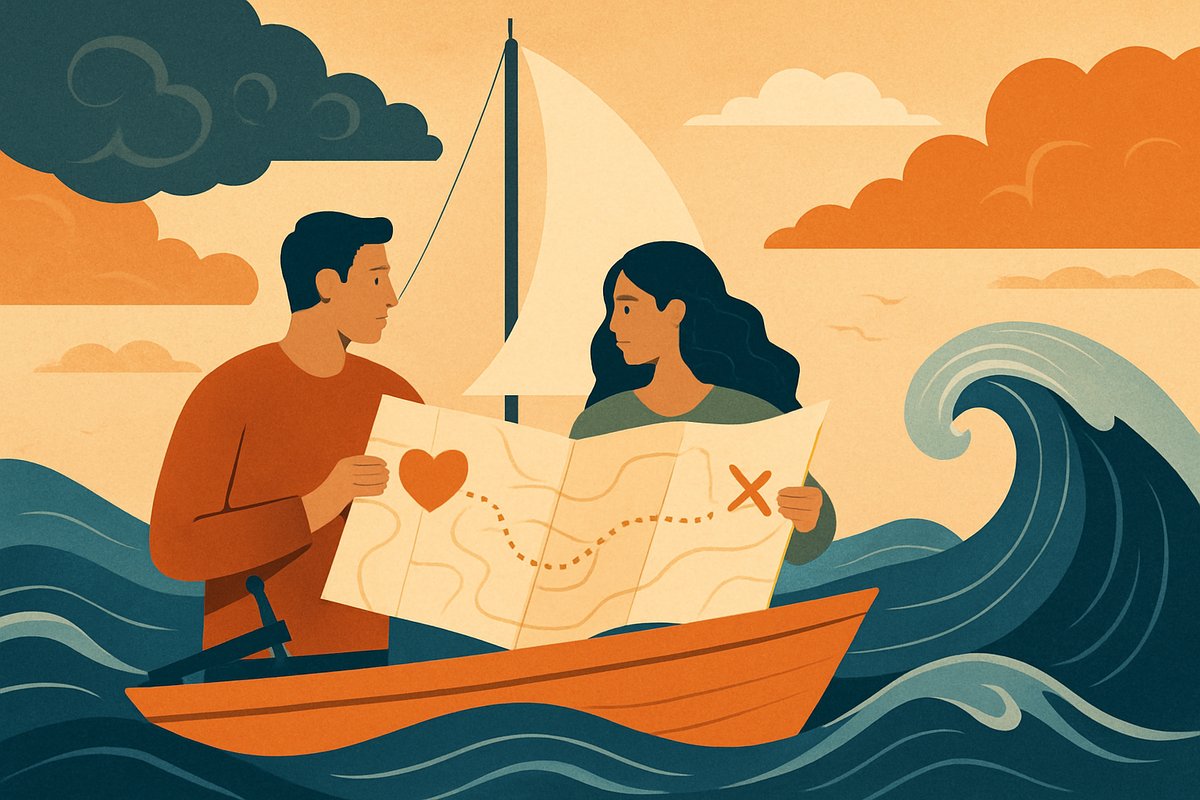
Every partnership sails through predictable storms and hidden shoals-emotional undercurrents that can either erode connection or power shared voyages of growth. By mapping feelings, practicing attuned listening, and co-designing a relational vision, couples can navigate change with curiosity, clarity, and care.
Every relationship carries its own emotional topography: peaks of excitement, valleys of disagreement and hidden currents that tug at trust. Too often partners mistake conflict for failure, when in reality those undercurrents signal an opportunity to build shared strength. This article proposes a new approach: treat your partnership as a living map, charting emotions and co-creating routes toward deeper understanding and long-term alignment.
Imagine unfolding a blank map each month, one that highlights not only milestones-anniversaries, promotions, vacations-but also emotional waypoints. Instead of waiting for friction to flare, schedule a brief monthly ritual: sit together with a pen and paper, or a blank digital canvas, and mark where you felt most connected, where tension lingered and toward which shared dreams you want to steer. This practice transforms reactive conversations into proactive navigation. A 2017 study in the Journal of Family Psychology found that couples who engage in structured reflection sessions report 25 percent higher relationship satisfaction over six months compared to those relying on spontaneous check-ins alone.
But creating this map requires emotional fluency. Emotional fluency is the art of naming what you feel-and inviting your partner to do the same-without judgment or agenda. Begin by pausing during a routine moment: share one word that captures your current state-“grounded,” “uneasy,” “hopeful.” Your partner listens with curiosity, then reflects back what they heard. This minimal form of active listening, validated by decades of research in social psychology, helps defuse misunderstandings before they escalate. It’s a reminder that language itself can become a bridge rather than a barrier.
Once you’ve mastered the simple exchange of words, layer on indirect feedback. Rather than saying, “You interrupted me earlier,” you might say, “I noticed our conversation moved quickly when I was sharing my day, and I’d love a moment to finish next time.” This subtle shift away from blame toward observation invites collaboration. It’s a boundary-setting technique rooted in nonviolent communication-where needs are named alongside requests. Over time, these exchanges create a culture of shared responsibility for each other’s emotional safety.
Beyond conversation, visual tools can anchor your shared vision. A magnetic board displayed in a common area becomes a living storyboard: photographs of recent adventures, sticky notes with short-term goals and small sketches of long-term dreams. One partner might attach a card reading “plant-based cooking experiments,” while the other tacks on “weekend hike by the river.” Together, you see where your individual passions overlap and where they diverge, creating fertile ground for planning future experiences that honor both voices.
Mapping emotions and co-creating a vision can feel playful and constructive-but disagreements still arise. That’s where curiosity-driven conflict repair comes in. Instead of replaying a script of accusations, try pausing the exchange to ask one simple question: “Can you tell me more about why that matters so much to you?” This invites your partner’s perspective without assuming motive. It also buys you space to regulate your own nervous system. Neuroscience shows that a brief, soothing question can reduce activation in the amygdala-the brain’s threat center-making it easier to stay present rather than reactive.
When you both feel heard, co-design solutions. If one partner struggles with a household task, brainstorm practical steps together: maybe a shared chore chart or a weekly planning session over coffee. If the disagreement is deeper-a clash of values or long-term goals-return to the magnetic board or a digital whiteboard. Draw two pathways side by side, then look for junctions where they intersect. Those intersections become new rituals: a monthly dinner tradition, a quarterly personal retreat, or even a pact to learn a new language as a team.
Of course, shared growth doesn’t mean losing individuality. In fact, one of the greatest gifts couples can give each other is encouragement to pursue personal passions. Celebrate each partner’s solo achievements-completing a training course, running a half marathon or mastering a musical instrument-and then mark those on the shared map. This creates a dynamic where individual growth seasons fuel the partnership, not drain it. According to relationship researchers, couples who actively support each other’s personal goals report 40 percent more intimacy and resilience when facing life’s challenges.
Privacy and consent also shape healthy boundaries. As you design your emotional map, decide together which areas remain private. For instance, one partner may choose to journal personal reflections and share only key insights. Respecting that boundary honors individual autonomy and prevents emotional overload. It also builds trust: knowing that your partner can hold a personal space just for themselves assures you that boundaries matter.
To keep momentum, turn these explorations into playful quests. Try a monthly “emotional scavenger hunt” where each partner names one subtle cue-maybe a sigh, a fleeting smile or a sudden change in tone-and the other guesses the underlying feeling. Celebrate correct answers with small rewards: a home-cooked meal, a five-minute backrub or a dance in the living room. This gamified practice heightens emotional awareness while strengthening your bond.
Finally, revisit and revise your relational roadmap at key milestones-anniversaries, life transitions or any moment when you sense a shift. Remove outgrown goals and add fresh ones. Tuck notes about unexpected detours or surprising discoveries into a shared journal. Over years, this living document becomes a treasure trove of your evolving partnership: a testament to curiosity, clarity and care.
Navigating love is less about avoiding storms and more about learning to read the weather. By mapping emotions, practicing fluent listening, setting collaborative boundaries and co-creating rituals for repair and renewal, couples can transform conflict into creative energy. This approach honors both individual autonomy and shared purpose, forging a resilient bond built on curiosity and compassion. The next time tension rises, unfold your map, take out your markers and chart a new course together-one that leads not away from friction, but through it toward deeper connection and shared growth.