Location
Mount Vernon, WA 98274

Location
Mount Vernon, WA 98274
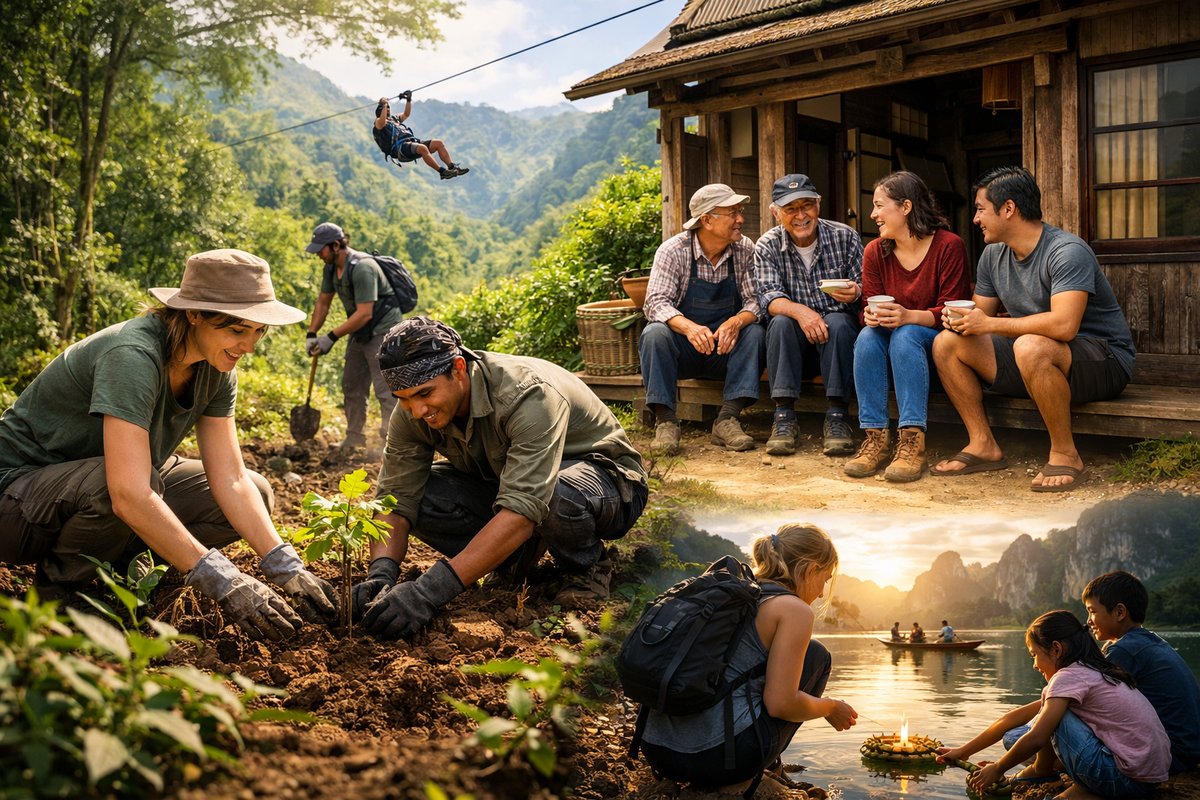
A new wave of travelers is reshaping the tourism industry by blending adventure with social impact and environmental stewardship. From forest restoration projects in Central America to community homestays in rural Japan, these journeys prioritize lasting connections over fleeting selfies.
Travelers today are redefining what it means to see the world. Beyond ticking off landmarks, many are seeking experiences that leave a positive mark on destinations and local communities. Recent industry data shows sustainable and voluntourism bookings have surged by nearly 25 percent compared with three years ago, signaling a shift from purely recreational getaways to journeys driven by purpose.
In Costa Rica’s Osa Peninsula, a small group of international volunteers is working alongside biologists to replant native trees in areas devastated by past logging. Armed with biodegradable seed kits and sturdy hiking boots, they spend their mornings trekking through dense rainforest to collect seeds from surviving trees, then nurturing saplings in a makeshift nursery. One volunteer explained how planting a single mahogany seedling felt like a personal vow to the forest.
Meanwhile, in a quiet mountain village in northern Japan, another form of purposeful travel is unfolding. Families and solo explorers are signing up for homestay programs that immerse them in local farm life. Participants help with rice planting, tea leaf sorting and traditional pottery workshops, then share meals prepared from produce grown in the host’s garden. The economic boost keeps young people in the village and preserves centuries-old crafts. Guests describe evenings spent trading stories around a wood-fired hearth as the highlight of their trip.
Closer to home, weekend warriors are embracing micro-adventures that combine outdoor recreation with environmental cleanup. Equipped with reusable water bottles, micro-fleece jackets and lightweight backpacks, they head out for single-day hikes along urban river trails. By picking up plastic waste as they go, these day-trippers transform a morning stroll into a community service outing.
Industry observers note that social media still plays a role, but the focus has shifted from flashy highlights to authentic narratives of impact. A growing number of travel bloggers and photojournalists are documenting volunteer builds, wildlife monitoring and heritage preservation. Their posts emphasize preparation, cultural sensitivity and long-term follow-through rather than one-off experiences.
At an international travel expo in London last year, sustainable tour operators filled entire halls with booths offering coral reef restoration dives, ethical elephant sanctuaries and urban art projects in post-industrial neighborhoods. Panel discussions centered on how travelers can use their skills-graphic design, accounting or teaching-to support grassroots initiatives. One keynote speaker cited a recent survey in which 68 percent of millennials said they would choose a volunteer-focused itinerary over a conventional sightseeing package.
Transportation options are evolving alongside these trends. Electric rental vehicles, carbon-offset airline tickets and bike-share schemes are becoming mainstream. In Reykjavik, a local tour company reported a 40 percent uptick in bookings for electric van excursions to remote glaciers. They balance convenience with minimization of environmental impact. On remote islands in the Philippines, solar-powered boats are ferrying visitors to mangrove nurseries where they assist with seedling care and crustacean surveys.
The rise of purpose-driven travel has also prompted gear manufacturers to innovate. Ultralight camping tents made from recycled fabrics, refillable toiletry kits with biodegradable formulas and modular camera systems that adapt to underwater photography are entering the market. Travel outfitters emphasize durability and ethical supply chains as selling points. One gear review site highlighted how a single long-haul backpack crafted from upcycled sailcloth can replace three conventional packs, reducing material waste and storage clutter.
Experts caution that not every well-meaning vacation delivers real benefits. Unregulated voluntourism can strain local resources or create dependency when participants perform tasks that could employ local workers. Similarly, low-cost homestays without proper vetting may expose vulnerable families to exploitation or cultural misunderstandings. To address these concerns, international organizations have started certifying responsible operators and publishing guidelines for travelers and hosts.
Practical preparation is key. Seasoned purpose-travelers advise learning a few phrases in the local language, reading about regional customs, and packing gear suited for both adventure and service. A multi-day beach cleanup might call for quick-dry shirts, sturdy gloves and a pocket-sized first-aid kit. A cultural exchange homestay may require modest clothing options and a small gift that honors local traditions. Those heading into backcountry conservation projects often pack solar chargers, water purification filters and lightweight field notebooks for data logging.
For many, the payoff is deeply personal. A recent traveler to southern India volunteered at a wildlife rescue center and returned home with a renewed sense of responsibility toward endangered species. Another visitor to an urban community art program in Brazil discovered a latent talent for mural painting and launched a nonprofit arts collective in their hometown. Stories like these underscore the transformative potential of purposeful travel.
Looking ahead, analysts predict the purposeful travel segment will continue to outpace traditional tourism growth. As climate concerns intensify and global connectivity deepens, trips that meld exploration with real-world impact are likely to become the norm rather than the exception.
For curious explorers plotting their next journey, the advice is clear: go beyond sightseeing. Seek out opportunities to learn, collaborate and contribute. When travelers treat each sunrise as a chance to leave a better world in their wake, every trip becomes an unforgettable chapter in their own story-one that resonates far beyond the return flight home.