Location
Mount Vernon, WA 98274
Location
Mount Vernon, WA 98274

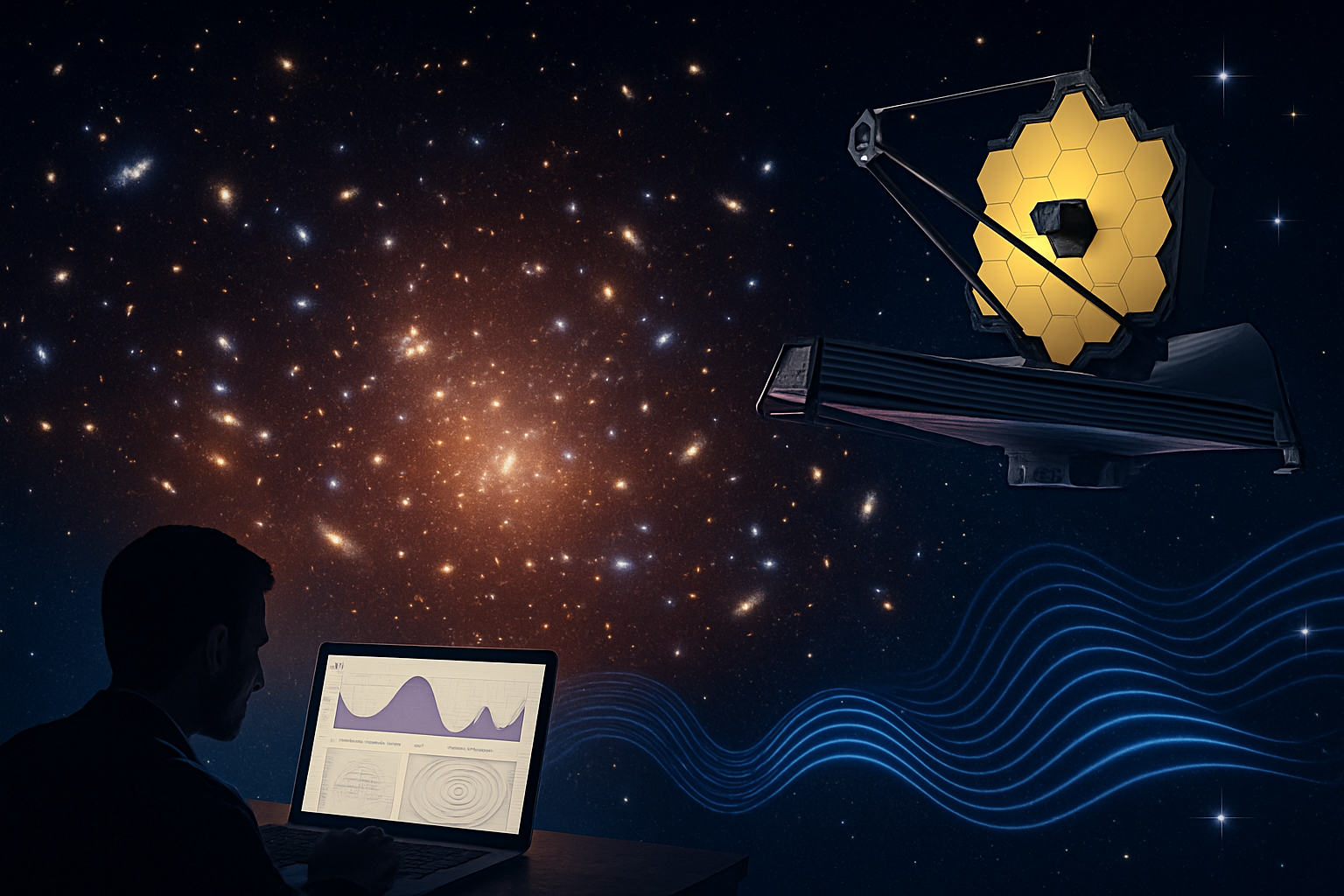
Recent observations have extended our view into the cosmic dawn, unveiling details of the universe's first galaxies and deepening debates over the nature of cosmic expansion. Advances in space telescopes, gravitational wave detectors, and collaborative citizen science projects are shaping a richer understanding of how our universe began.
The quest to understand how the universe began has entered a thrilling new phase thanks to unprecedented observations from the James Webb Space Telescope (JWST), gravitational wave detectors, and next-generation ground-based facilities. In recent months, astronomers have pushed the boundaries of observable space-time, capturing light emitted just hundreds of millions of years after the Big Bang. These breakthroughs are not only refining our timeline of cosmic history but also revealing puzzles that challenge established theories.
In a landmark set of studies, the JWST has detected several galaxy candidates at redshifts beyond 10, corresponding to a time when the universe was less than 5% of its current age. One of the most distant confirmed galaxies, cataloged as GN-z11, appears just 420 million years after the initial expansion. Spectroscopic analysis from the Near Infrared Spectrograph (NIRSpec) has provided the first glimpse of metal-poor star-forming regions that may trace back to Population III stars-the elusive first generation of stars thought to have ignited in a pristine hydrogen-helium environment.
Meanwhile, the Atacama Large Millimeter/submillimeter Array (ALMA) has complemented these findings by mapping cold gas reservoirs in these ancient galaxies. Observations of carbon and oxygen emission lines are helping to reconstruct how the earliest heavy elements were forged in stellar furnaces and dispersed through galactic winds, setting the stage for subsequent generations of star and planet formation.
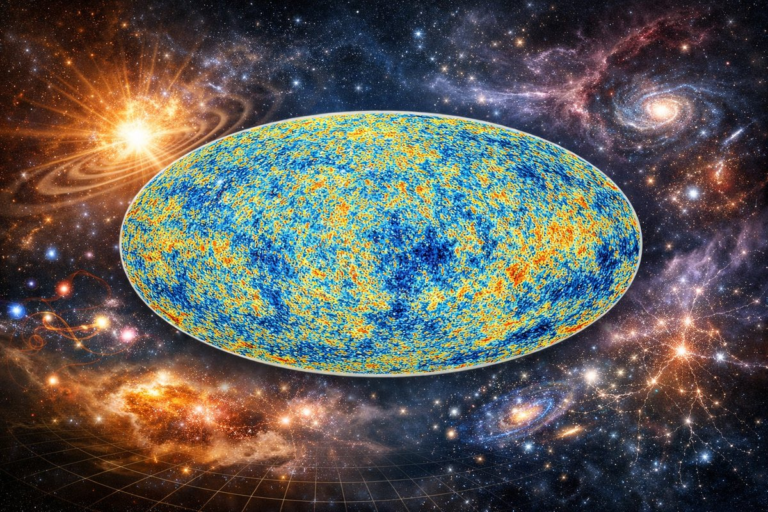
Despite these gains, a persistent discrepancy known as the “Hubble tension” has emerged between measurements of the universe’s expansion rate. Data from the Planck satellite’s observations of the cosmic microwave background (CMB) point to a Hubble constant near 67.4 kilometers per second per megaparsec, while local distance ladder methods-anchored by Cepheid variables and Type Ia supernovae-suggest a faster rate around 73 km/s/Mpc. This gap exceeds the combined experimental uncertainties and hints at new physics, such as early dark energy, novel neutrino properties, or undetected systematic errors in distance measurements.
The resolution of this tension could reshape our understanding of the early universe’s energy content and the dynamics of cosmic inflation. Researchers are now planning targeted observations to refine supernova calibrations and exploring alternative approaches, including gravitational wave “standard sirens” from neutron star mergers, to obtain independent distance estimates.
While the Big Bang framework remains the prevailing paradigm, theoretical cosmologists continue to investigate speculative scenarios that extend or modify the standard model. Concepts like loop quantum cosmology propose a “bounce” preceding the expansion phase, potentially avoiding the initial singularity. Inflationary multiverse models suggest that our observable patch may be one of countless bubble universes with varying physical constants.
Efforts to find observational signatures of these ideas, such as specific patterns in the CMB’s polarization or non-Gaussian fluctuations, are underway. Instruments like the South Pole Telescope and the Simons Observatory aim to detect primordial B-mode polarization, which could confirm key predictions of inflation and enrich our picture of space-time’s earliest moments.
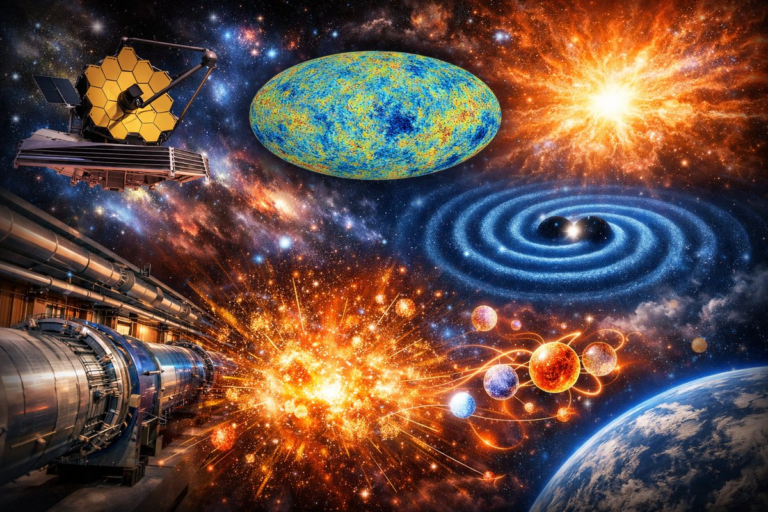
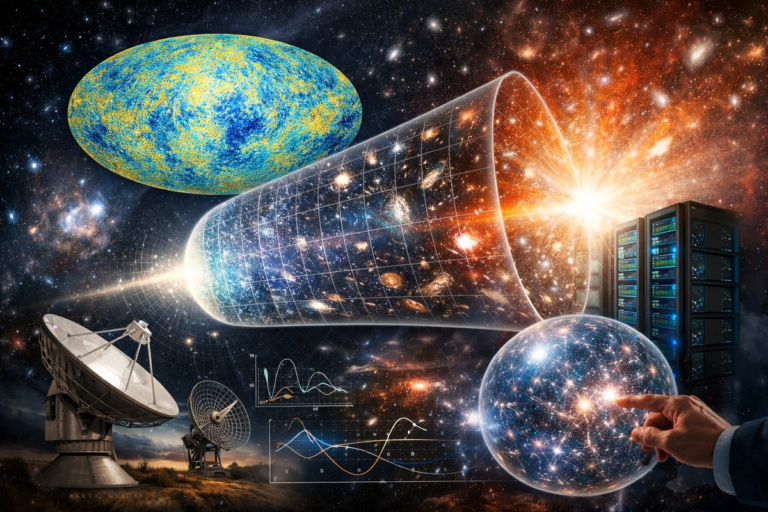
Modern cosmology relies on a diverse arsenal of observatories spanning the electromagnetic spectrum and beyond. The JWST has revolutionized infrared astronomy, while the Hubble Space Telescope continues to operate in optical and ultraviolet wavelengths. On the ground, ALMA probes the cool universe, and facilities like the Extremely Large Telescope (ELT) will soon deliver unprecedented angular resolution.
Gravitational wave observatories-LIGO, Virgo, and KAGRA-have opened a completely new window by detecting ripples in space-time from black hole and neutron star collisions. These events serve as unique laboratories for testing general relativity under extreme conditions and offer an alternative method for measuring cosmic expansion. Simultaneously, neutrino detectors such as IceCube at the South Pole are capturing ghostly particles from cataclysmic cosmic sources, providing insights into high-energy processes at the far reaches of the cosmos.
Encouragingly, the study of cosmic origins is not confined to professional astronomers. Citizen science platforms like Galaxy Zoo have enlisted hundreds of thousands of volunteers to classify galaxy morphologies in deep survey images, accelerating the discovery of rare galactic structures and anomalies. Public data archives from missions such as the Sloan Digital Sky Survey and ESA’s Gaia provide open access to billions of stellar and galactic measurements.
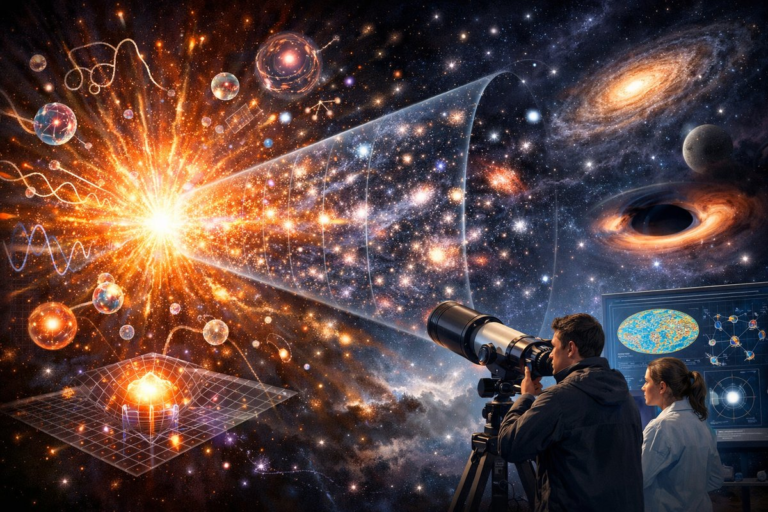
Educational initiatives and mobile applications allow enthusiasts to simulate observations, track satellite passes, and explore virtual star fields. Amateur astronomers equipped with mid-range telescopes or radio kits can contribute by monitoring variable stars, conducting meteor surveys, and even capturing optical counterparts to gravitational wave events. Such collaborations not only enrich scientific datasets but also foster a global community united by curiosity about our cosmic roots.
The next decade promises transformative missions designed to probe the universe’s infancy with greater precision. ESA’s Euclid spacecraft and NASA’s Nancy Grace Roman Space Telescope will survey billions of galaxies to map dark matter distribution and track cosmic expansion across time. The Laser Interferometer Space Antenna (LISA) will extend gravitational wave observations to lower frequencies, potentially detecting mergers of massive black holes and even signals from the inflationary epoch.
Ground-based CMB experiments, including the CMB-S4 collaboration, aim to improve polarization sensitivity by an order of magnitude, potentially uncovering the faint imprint of primordial gravitational waves. Next-generation neutrino observatories and 30-meter-class optical telescopes will further enhance multi-messenger astronomy, weaving together electromagnetic, gravitational, and particle data into a cohesive narrative of cosmic history.
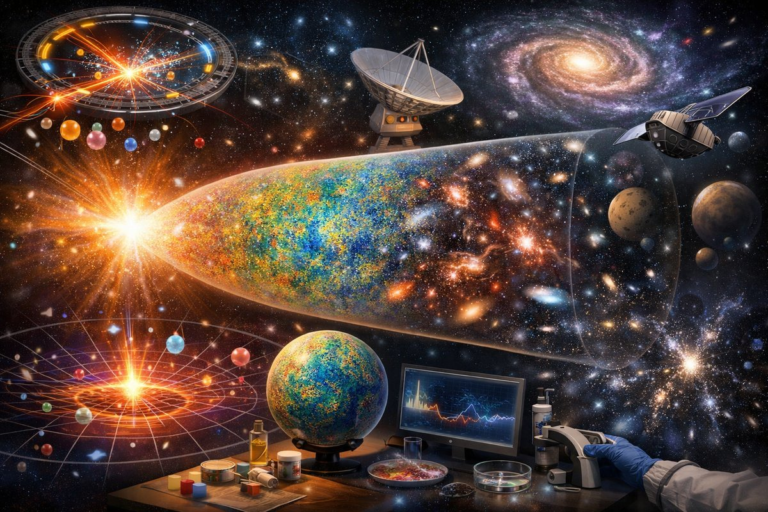
The study of the universe’s origins stands at the intersection of observation, theory, and technological innovation. Each new dataset and experiment refines our cosmic timeline while unveiling fresh mysteries-from the nature of dark energy to the possibility of parallel universes. As we expand our observational reach with powerful telescopes and detectors, we also broaden our philosophical perspective on existence itself.
By combining advances in instrumentation with collaborative citizen science and interdisciplinary research, humanity moves closer to answering one of the most profound questions: How did it all begin? While definitive answers may remain elusive, the journey of discovery continues to inspire wonder, drive innovation, and connect us to the vast tapestry of cosmic evolution.