Location
Mount Vernon, WA 98274
Location
Mount Vernon, WA 98274

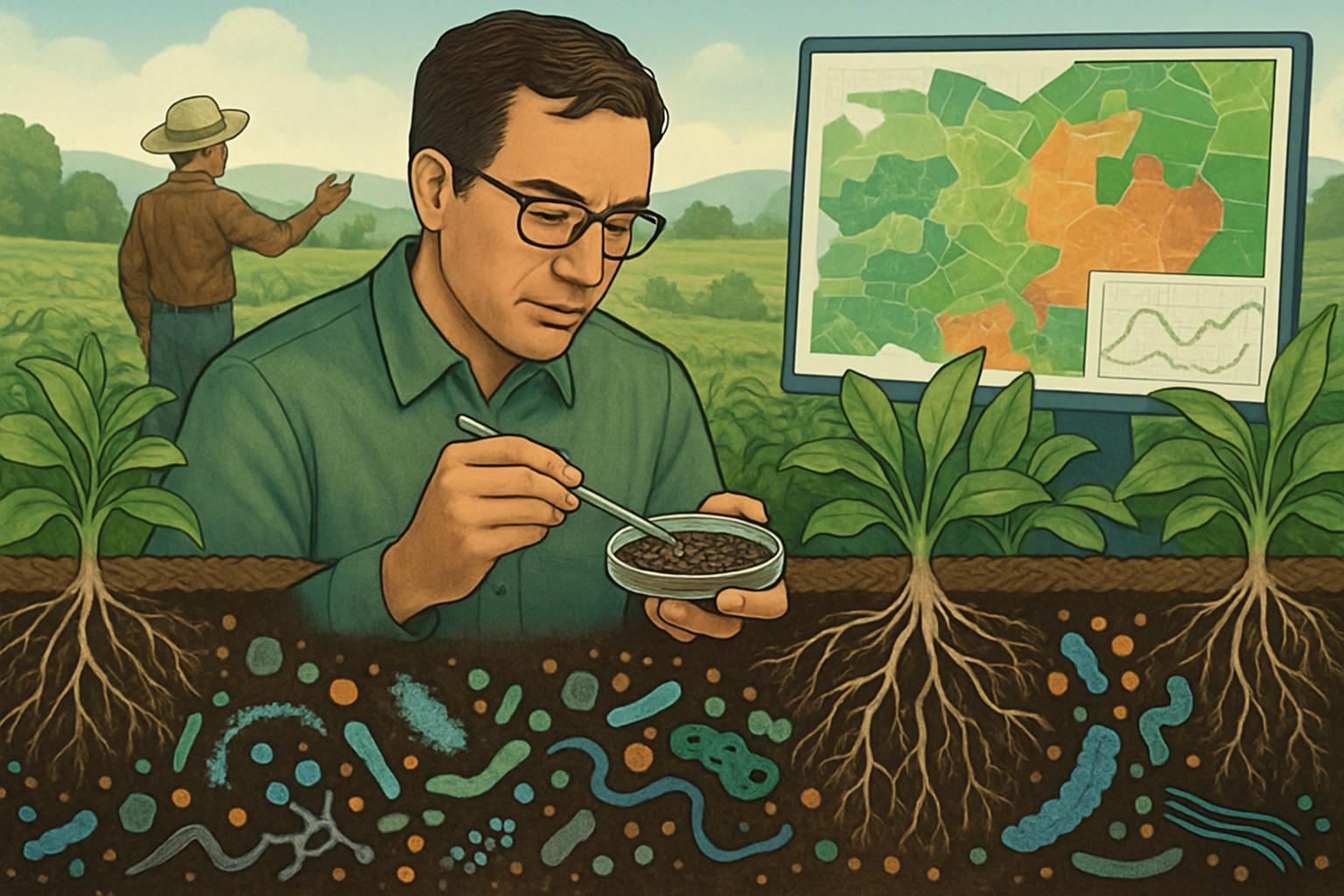
Scientists and land stewards are turning attention beneath the surface, exploring soil microbiomes as powerful allies in carbon sequestration and ecosystem health. New mapping techniques, regenerative practices, and policy incentives are converging to transform agriculture and conservation into climate mitigation frontlines.
From the grasslands of the American Midwest to rice paddies in Southeast Asia, a quiet revolution is unfolding below our feet. Soil might look inert at first glance, but it teems with microscopic life-bacteria, fungi, protozoa and nematodes-that collectively form complex microbiomes. These hidden communities break down organic matter, cycle nutrients and play a critical role in capturing atmospheric carbon dioxide. As the world races to cut emissions, researchers and farmers are increasingly focusing on the potential of healthy soils to lock away greenhouse gases for decades.
Recent estimates from the Intergovernmental Panel on Climate Change indicate that improved soil management could remove up to 5 gigatons of CO₂ equivalent per year by mid-century. That represents roughly one-tenth of current annual global emissions. Driving this potential are advances in genomic sequencing, remote sensing and computational modeling. Scientists can now identify microbial species critical for carbon storage and track changes in soil health at landscape scales. Armed with these tools, land managers are experimenting with cover crops, reduced tillage, strategic grazing and organic amendments to nurture microbiomes that thrive in carbon retention.
At the forefront of this effort, a team at a major agricultural research center recently deployed DNA barcoding to map fungal networks across several hundred hectares of temperate cropland. By analyzing soil cores at multiple depths, they uncovered hotspots where mycorrhizal fungi-symbiotic partners that attach to plant roots-were especially abundant. Those hotspots corresponded to fields managed with diverse cover‐crop mixes and minimal soil disturbance. Follow-up measurements revealed that fungal-rich soils stored up to 30 percent more organic carbon than conventionally tilled fields over a three-year period.
Satellite instruments have complemented these on-the-ground findings. Hyperspectral sensors aboard low-earth orbit platforms detect subtle shifts in vegetation reflectance tied to nutrient availability and soil moisture, indirect indicators of microbial activity. When integrated with thermal monitoring, these systems flag zones at risk of drying or degraded organic content-warning signs of microbiome stress. A collaborative project between a space agency and a network of universities has processed data covering millions of hectares, delivering map layers that farmers can overlay onto their own parcels. Such real-time dashboards help pinpoint areas where a cover crop might be most effective or where grazing rotations need adjustment to avoid overcompaction.
One Midwest grain farmer shares how he pivoted after years of monoculture. By introducing a blend of sorghum, vetch and radish as winter covers, he noticed darker, more crumbly soils by the second season. Testing kits revealed microbial respiration rates climbing sharply, a proxy for active decomposition of crop residues. His yields held steady while fertilizer costs dropped, thanks to improved nitrogen cycling. More importantly, soil carbon measurements showed an additional 0.5 metric ton of sequestered CO₂ per acre annually-a modest gain at first, but over hundreds of acres it represents meaningful climate mitigation.
Across the globe in coastal rice paddies, another group of researchers trials biochar-charcoal produced from agricultural by-products-as a soil amendment. Biochar’s porous structure provides refuge for microbes and slows the release of CO₂ during organic breakdown. In replicated field trials, biochar applications combined with intermittent flooding boosted both methane suppression and carbon storage, demonstrating a win-win for two potent greenhouse gases. Those results underscore how local materials and traditional farming wisdom can merge with cutting-edge science to yield scalable solutions.
These breakthroughs are spurring policy innovations. Several countries have expanded incentive payments to farmers who adopt regenerative practices verified through soil testing and remote sensing data. Carbon market platforms now accept credits derived from improved land management, backed by third-party audits that rely on microbial DNA profiles and soil organic matter assays. In some regions, agricultural extension services are partnering with environmental finance firms to offer low-interest loans for cover-crop seed purchases or no-till equipment. The net effect is a growing economic case for building healthy soils at landscape scale.
Yet challenges remain. Soil carbon responses vary widely depending on climate, soil type and cropping history, making one-size-fits-all prescriptions ineffective. Accurately measuring incremental carbon gains is also resource-intensive, requiring repeated sampling or investment in sensor networks. Critics caution that market-driven incentives may favor large operations able to shoulder testing costs, potentially sidelining smallholders. To address equity concerns, several governments are piloting collective approaches-pooling measurement expenses across cooperatives or providing technical support through community-based organizations.
Looking ahead, breakthroughs in sensor miniaturization and artificial intelligence promise to democratize soil monitoring. Field-deployable devices that extract and sequence microbial DNA on site are in prototype stages, reducing turnaround times from weeks to hours. Machine-learning algorithms trained on global datasets can identify shifts in microbial assemblages that predict carbon loss or nutrient imbalances. Citizen science programs are also taking root: school gardens and urban farms equipped with inexpensive sensors contribute data to open-source platforms, building a richer picture of soil health at every scale.
These innovations highlight a broader truth: soils are not static backdrops, but living systems integral to planetary resilience. Nurturing soil microbiomes rethinks agriculture not just as a source of food, but as a key lever in balancing the global carbon budget. By weaving together genomics, remote sensing and age-old stewardship practices, communities can revitalize degraded landscapes, bolster food security and help stabilize the climate.
For gardeners, farmers and conservationists looking to get started, simple steps go a long way. Introducing diverse cover crops, reducing or eliminating tillage, and returning organic residues to the field can jump-start microbial activity. Backyard compost bins and vermiculture setups turn kitchen scraps into rich amendments. Even small plots benefit from periodic soil testing kits available from extension services or community labs. The journey to healthier soils is collective and iterative; each patch of land improved contributes to a broader tapestry of climate action.
In the coming decade, the soil beneath our feet may emerge as one of humanity’s most powerful allies against climate change. By illuminating the hidden symbioses that govern carbon flows, researchers and practitioners are crafting a new narrative-one where every spade of earth holds potential for renewal. As this underground revolution unfolds, it calls on each of us to recognize that true sustainability begins from the ground up, with the smallest of life forms playing outsized roles in shaping the planet’s future.