Location
Mount Vernon, WA 98274
Location
Mount Vernon, WA 98274

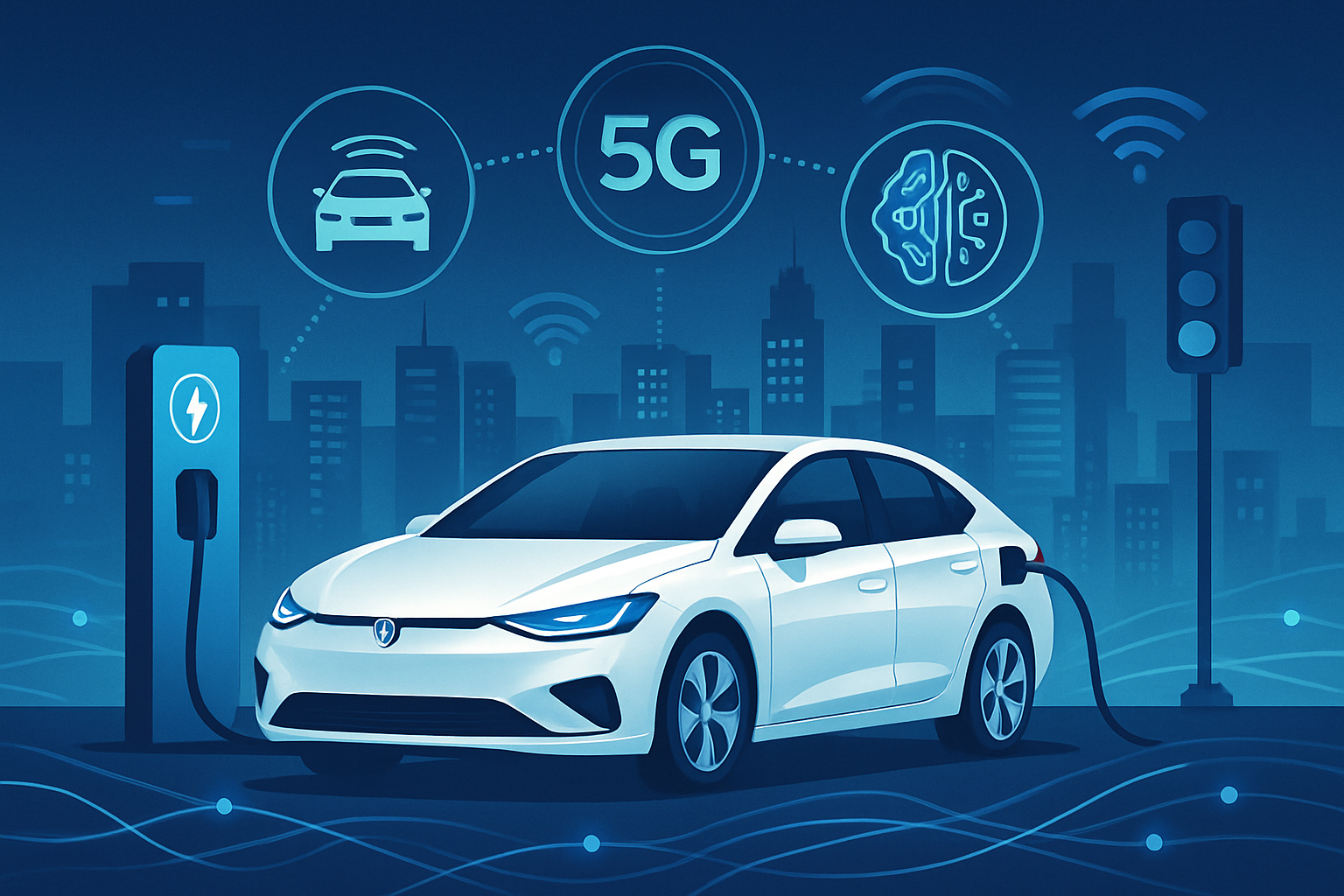
Automotive technology is at the cusp of a new era where electrification, connectivity and autonomy intersect to reshape how we move. From advanced battery chemistries and fast-charging networks to smart-city integrations and AI-driven user experiences, the industry is redefining vehicle roles as dynamic nodes in a larger energy and data ecosystem. This article explores the innovations driving this transformation and highlights practical steps for individuals and fleets to embrace tomorrow's transportation landscape.
The automotive industry is undergoing a seismic shift unlike any in the past century. Traditional boundaries between cars, software, and energy are dissolving, propelled by breakthroughs in electrification, connectivity, and autonomy. Consumers are embracing vehicles not just as metal machines but as mobile devices on wheels, equipped with chips more powerful than some laptops and access to real-time traffic and weather updates. This convergence is redefining the very concept of transportation, turning every commute into an ecosystem of data streams, sustainable energy flows, and interactive experiences. As highways and city streets evolve, so too must the way we think about journeys.
Electrification remains the most visible front of this revolution. Global electric vehicle stock has soared past 15 million worldwide, supported by generous incentives, stricter emissions targets and an expanding lineup of models across segments. Legacy automakers now compete with nimble startups to deliver everything from compact crossovers to heavy-duty pickup trucks powered by advanced battery packs. Meanwhile, corporate fleets are greening at scale as delivery vans and ride-sharing cars convert to zero-emission drivetrains. This rapid adoption is no longer a niche; it’s mainstream, setting the stage for a far-reaching transformation in how energy is produced, stored, and consumed.
Advances in battery technology lie at the heart of this shift. Solid-state prototypes promise energy densities exceeding 400 watt-hours per kilogram, while silicon-anode and lithium-sulfur chemistries inch closer to commercial viability. Industry research labs and venture-backed startups alike claim breakthroughs that deliver twice the range of today’s lithium-ion packs in a similar form factor. Fast-charging targets have too evolved, with some cells engineered to recharge to 80 percent capacity in under ten minutes. As cost curves continue their downward trajectory, the total cost of ownership for electric vehicles is set to undercut combustion-engine peers in more markets.
To support this electric fleet, charging infrastructure is scaling at unprecedented rates. Public fast-charging stations have doubled in the last two years, surpassing 100,000 units across major markets, and wireless charging trials are underway in urban corridors and highway rest areas. Partnerships between utility companies, governments and automakers fund millions in grants to expand high-power charging hubs along interstate routes. Innovative business models now allow drivers to reserve charging slots on a smartphone app, ensuring they avoid queues. Some cities even test dynamic wireless pads embedded in street lanes, offering continuous trickle charging at stoplights.
Connectivity serves as the nervous system of modern vehicles, enabling cars to communicate with each other, infrastructure and the cloud. Vehicle-to-everything (V2X) networks leveraging 5G deliver sub-20 millisecond latency, critical for collision avoidance and traffic optimization. In several European and Asian cities, traffic signals broadcast timing information that smart dashboards ingest, advising drivers on ideal speeds to catch green lights. This synergy reduces idling, cuts emissions and smooths flows during peak hours. Automakers are integrating over-the-air update platforms so vehicles can gain new features and security patches without ever visiting a service center.
On the road to autonomy, advanced driver-assist systems represent the current plateau of commercial deployment. Many new models feature highway pilot functions that control steering, acceleration and braking in defined conditions, handing moments of monotonous driving back to the machine. At the same time, regulatory bodies in select regions are drafting frameworks for true level-3 autonomy, where drivers may cede control under certain circumstances. Autonomous shuttle pilots ferry passengers along fixed routes in urban zones, while trials of purpose-built robo-taxis are gathering millions of miles in data. Each experiment sharpens the algorithms that one day could make human steering optional.
Underpinning these autonomous and assistive features is a suite of advanced sensors. Solid-state LiDAR units have dropped in price to below four hundred dollars in bulk production, making 360-degree scanning a realistic option for mass-market vehicles. Complemented by short-range millimeter-wave radar and high-resolution cameras, sensor fusion algorithms stitch together overlapping fields of vision to detect pedestrians, cyclists and road barriers even in low-light or inclement weather. The processing pipelines run on specialized AI chips optimized for power efficiency, cramming the equivalent compute power of a data center rack into a compact module designed for automotive temperatures.
Software is becoming the lifeblood of the vehicle ecosystem, with modular platforms and shared architectures enabling rapid innovation. Open-source initiatives allow developers to contribute code for everything from predictive maintenance analytics to in-cabin voice assistants. Over-the-air updates ensure vehicles can gain new capabilities long after purchase, turning static hardware into dynamic, evolving platforms. Some automakers have begun experimenting with in-car digital wallets, letting owners pay for tolls or recharging sessions without pulling out a smartphone. This software-driven model blurs the line between transportation asset and mobility service, raising questions about ownership and subscription economics.
With connectivity comes the responsibility of safeguarding data privacy and cybersecurity. Automakers now collaborate with security researchers to perform continuous penetration testing, while anonymizing vehicle telemetry to protect personal identities. Encryption standards borrowed from banking networks secure firmware updates, and industry consortia set best practices for biometric access controls and intrusion detection. Regulatory frameworks, inspired by consumer data protections in the tech sector, are beginning to apply to the automotive realm, granting drivers greater transparency over what data is collected and how it’s used. Trust is proving as crucial as torque in winning customer loyalty.
Sustainability extends beyond zero-emission powertrains to the raw materials and manufacturing processes themselves. Automakers are sourcing recycled aluminum and bio-based plastics, and some assembly plants already run on renewable energy. Closed-loop battery recycling facilities recover valuable metals like nickel and cobalt, reducing dependency on virgin mining. Interior components now include vegan leather substitutes derived from agricultural waste or lab-grown materials. Manufacturers tout carbon-neutral certification for their supply chains, illustrating that the green credentials of a vehicle begin long before it rolls off the line and end only when its parts reenter the circular economy.
Mobility services are also reshaping how people access transportation. Subscription models let drivers switch between different vehicle types for a monthly fee, while car-sharing platforms break ties between use and ownership. Micromobility options-electric scooters, bikes and even compact four-wheeled pods-integrate seamlessly through unified apps, allowing for door-to-door journeys that combine transit, pedals and wheels. Corporate campuses and residential communities deploy on-demand shuttles equipped with real-time tracking, reducing parking demand and congestion. Each service layer brings flexibility, and by focusing on access over asset, cities can repurpose space once reserved for endless rows of parked vehicles.
Smart-city initiatives are leveraging vehicle data to optimize infrastructure in real time. Digital twins of urban road networks simulate traffic scenarios, guiding dynamic signal timing and emergency route planning. Municipalities deploy edge-compute microservers at intersections to process local traffic feeds without relying on distant cloud centers, cutting latency and preserving bandwidth. Data-sharing agreements between transit authorities and ride-hail companies feed demand predictions back into bus scheduling software. In some districts, sensors embedded in pavement relay weight and speed information, enabling predictive street maintenance that reduces potholes and repairs before they disrupt commutes.
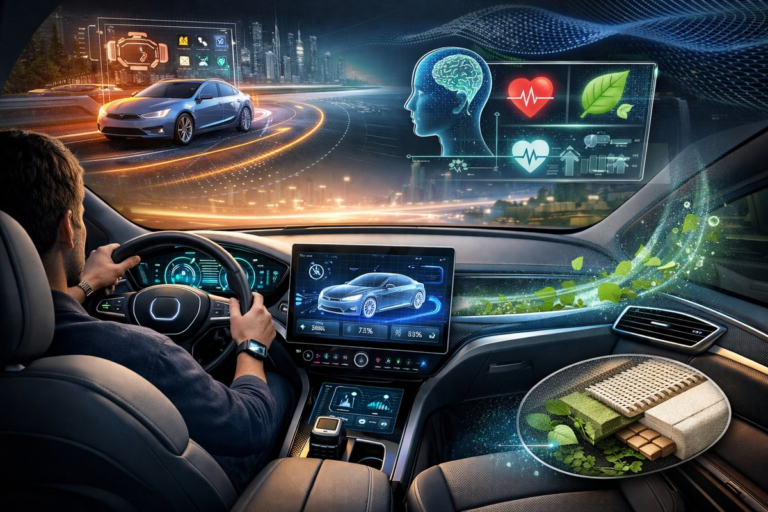
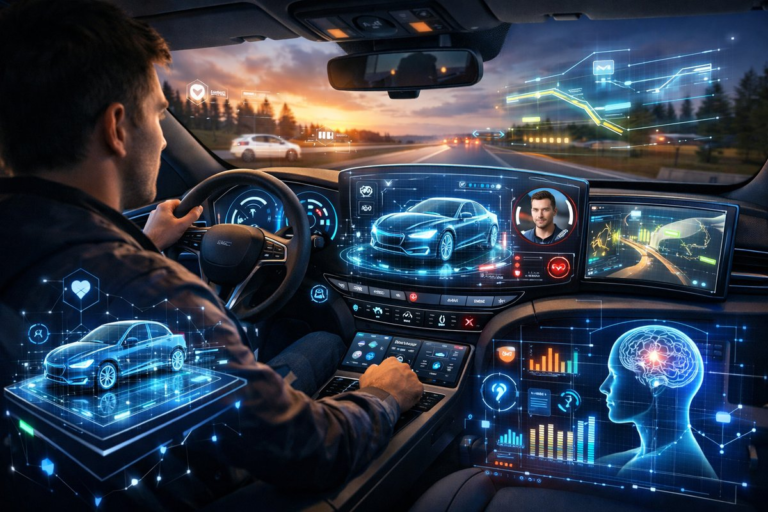
Inside the cabin, user experience is evolving from digital clusters and touchscreens to immersive environments. Ambient lighting systems adapt hue based on driver mood or driving context, while haptic feedback in steering wheels and seats alerts occupants to upcoming hazards. Augmented-reality head-up displays layer navigation directions, safety alerts and even social features onto the windshield. In-car voice agents can be personalized to recognize multiple speakers, adapting music and climate settings on the fly. Biometric sensors monitor heart rate and skin temperature, prompting gentle reminders to take breaks on long drives or offering calming music during rush-hour stress.
Emotional intelligence in vehicles goes beyond efficiency to well-being, as driver-monitoring cameras and sensors gauge alertness and attention. Fatigue-detection algorithms analyze eyelid movement, grip pressure and head inclination to prompt rest breaks. Some seats now shift posture autonomously to improve circulation on extended journeys. AI-driven coaching apps offer tips for eco-friendly driving, reward points for smooth acceleration and gentle braking, and even suggest mindfulness exercises during idle times. By acknowledging the human element, automakers are crafting holistic transportation experiences that prioritize safety, comfort and mental health alongside speed and convenience.
For individuals and fleet operators looking to adopt these innovations, practical steps can make the transition smoother. When shopping for an electric vehicle, verify the compatibility of available charging connectors with local networks and consider installing a Level 2 home charger with smart scheduling features to take advantage of off-peak rates. Evaluate models based on the frequency and transparency of over-the-air update cycles. Invest in trusted accessories like OBD-II diagnostic tools that pair via Bluetooth to your smartphone, and select dashcams with encrypted data storage to protect against tampering. Finally, explore mobility apps that aggregate ride-share, bike-share and transit options for seamless intermodal travel.
Looking ahead, the convergence of automotive and energy sectors promises unexpected breakthroughs. Vehicle-to-grid technology could allow parked cars to feed power back into homes during blackouts. Emerging forms of transport-such as autonomous aerial drones and hyperloop pods-might connect metropolises at unprecedented speeds. Material science advancements, from graphene-infused composites to self-healing coatings, could yield lighter, more durable frames. As 5G evolves into 6G-like networks and quantum computing edges closer to practical applications, the emphasis will shift from hardware alone to an integrated platform of mobility, data and sustainability, redefining not only how we move, but why.
The journey beyond the dashboard is underway, and it beckons consumers, policymakers and innovators alike to explore uncharted roads. Curiosity and collaboration will be the twin engines driving progress, whether that means advocating for local charging infrastructure, testing the latest driver-assist feature, or simply staying informed about emerging standards. By embracing this holistic vision-where privacy, sustainability and human well-being are the north stars-we can ensure that the next chapters of transportation technology deliver not just faster trips, but a richer, more equitable experience for all.