Location
Mount Vernon, WA 98274
Location
Mount Vernon, WA 98274

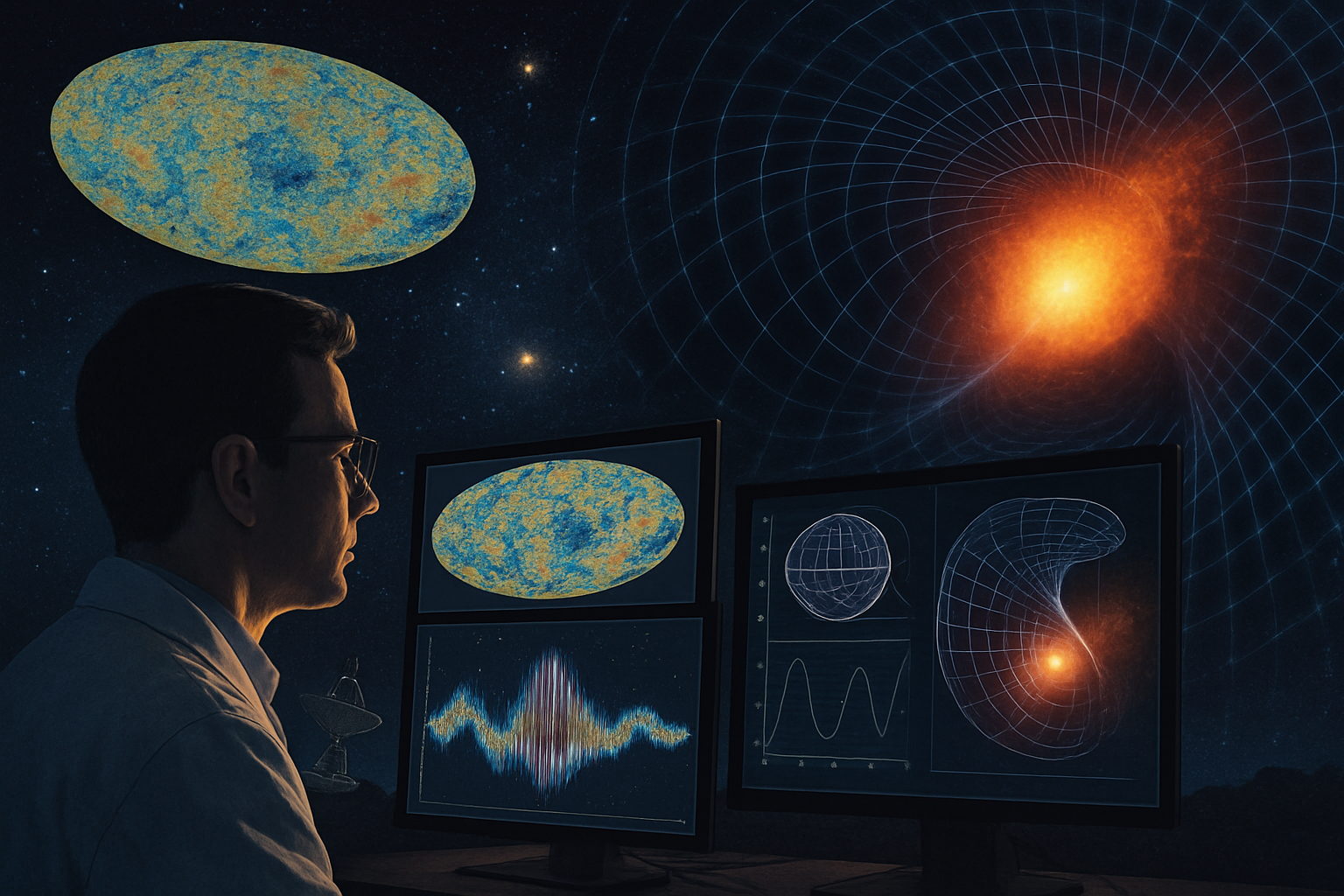
Scientists are charting innovative routes to peer deeper into the universe's origins, from refined cosmic microwave background measurements to gravitational-wave observatories. With breakthroughs in quantum gravity models and citizen science initiatives, the quest to decode the first instants after the Big Bang is more dynamic than ever.
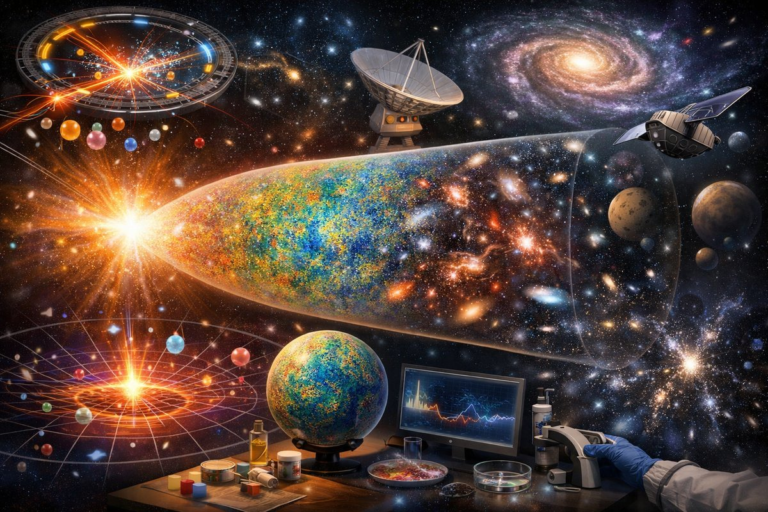
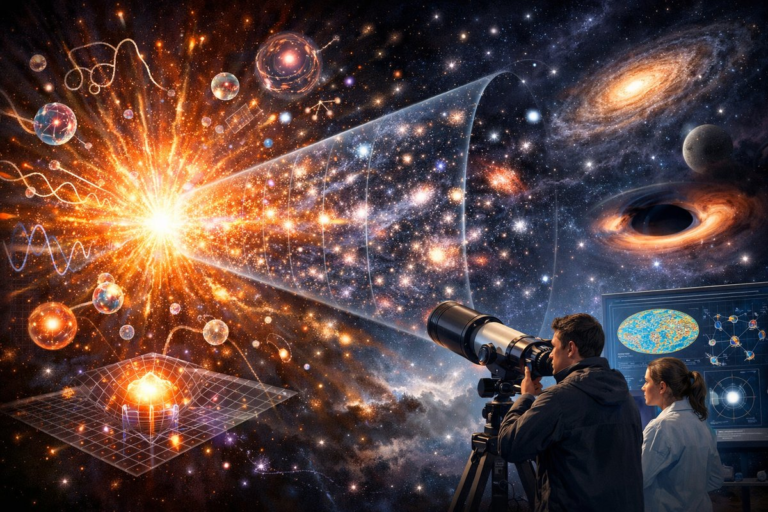
For generations, humanity has gazed at the night sky with wonder, seeking to untangle the story of how everything began. Recent advances in observational technology and theoretical frameworks are now converging to illuminate the universe’s earliest chapters with unprecedented clarity. By combining data from multiple observatories and harnessing powerful simulations, researchers are piecing together a portrait of the cosmos that stretches from the first flicker of energy to the sprawling galactic tapestry we see today.
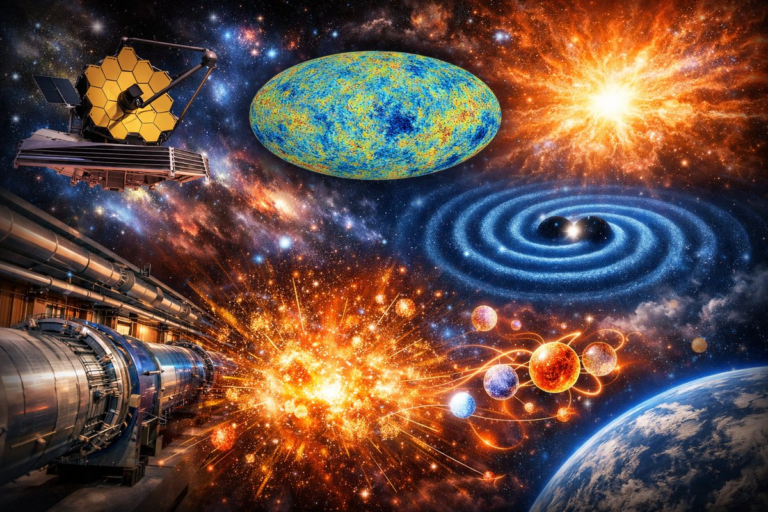
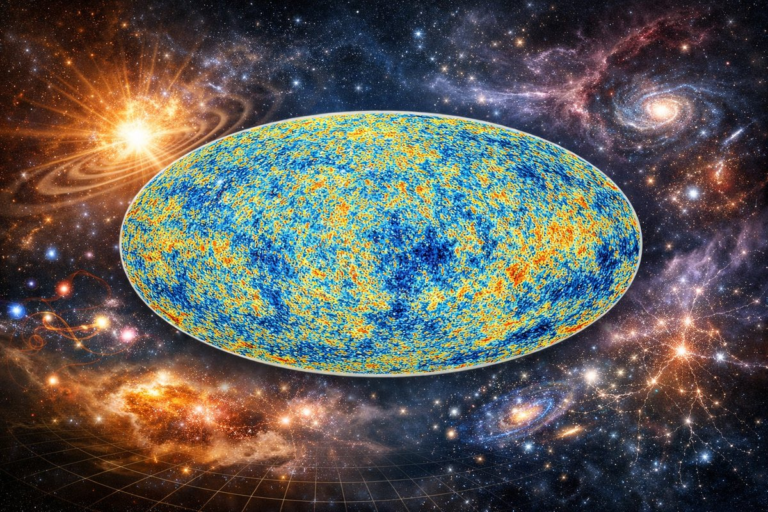
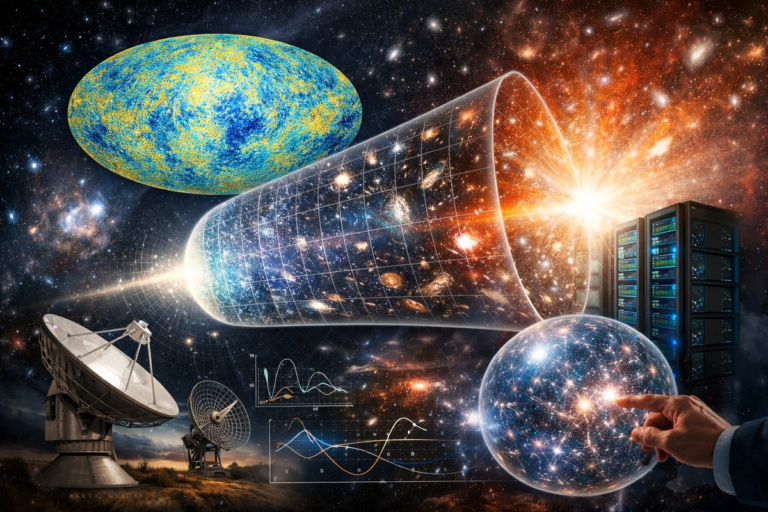
At the core of this effort is the cosmic microwave background (CMB), the faint afterglow of the Big Bang. New satellites and ground-based telescopes equipped with ultra-sensitive detectors have refined measurements of tiny variations in temperature and polarization across the sky. These subtle patterns record ripples in the primordial plasma, offering clues about the universe’s rate of expansion, its matter-energy composition, and the physics of its earliest epochs. By scrutinizing anomalies just millionths of a degree in size, teams can test rival theories of cosmic inflation and gauge whether exotic processes-such as phase transitions in quantum fields-shaped the infant cosmos.
Complementing microwave observations, gravitational-wave astronomy is now opening a fresh window on the dawn of time. Detectors spanning multiple continents have begun to catch whispers of spacetime distortions generated by cataclysmic events. While mergers of black holes and neutron stars dominate current catalogs, future upgrades promise to pick up lower-frequency waves that may originate from primordial fluctuations or cosmic strings-hypothetical remnants of early-universe phase changes. Detecting such signals would offer a direct probe of physics at energies far beyond what particle colliders can achieve, bridging the gap between general relativity and quantum theory.
Meanwhile, neutrino telescopes buried deep within ice and water have started to deliver on their promise, registering high-energy neutrinos that could carry messages from the universe’s formative moments. These ghostly particles barely interact with matter, allowing them to travel unimpeded for billions of years. By mapping their arrival directions and energy spectra, scientists aim to trace back to extreme environments-such as the first generation of stars or primordial black-hole evaporation-where neutrino-producing processes were at play in the young cosmos.
On the theoretical front, efforts to unify gravity with quantum mechanics continue to evolve. Loop quantum gravity and string-inspired models propose that space and time themselves might have emerged from discrete building blocks or vibrating fundamental strings. Recent progress in these areas has yielded testable predictions: for example, certain theories forecast minute deviations in the CMB’s polarization patterns or characteristic spectral imprints from gravitational waves. Incorporating these signatures into data analyses allows researchers to weed out incompatible frameworks and focus on the most promising approaches to quantum gravity.
Supercomputing centers around the world are vital to this grand exploration. State-of-the-art simulations recreate the universe’s first milliseconds, following the interactions of particles and fields under extreme conditions. By running ensembles of simulations across vast computing clusters, teams assess how slight changes in initial parameters influence the evolution of structure, from the formation of primordial black holes to the birth of the first atoms. Open-source initiatives ensure that code and data remain accessible, fostering collaboration and accelerating discovery. This transparency also aligns with broader values of privacy and sustainability: by sharing resources and minimizing duplicate effort, the scientific community reduces its collective carbon footprint.
Another remarkable development is the rise of citizen science projects focused on cosmology. Platforms now enable enthusiastic volunteers to sift through astronomical images, identify patterns in CMB sky maps, or classify simulated outcomes. By channeling collective curiosity, these initiatives democratize research and infuse it with fresh perspectives. Participants often report enhanced emotional engagement, feeling part of a global quest to tackle one of humanity’s most profound mysteries. This shared sense of purpose underscores the emotional intelligence at the heart of scientific discovery.
Delving into the universe’s origins also carries philosophical weight. As we uncover more about the mechanisms that triggered cosmic inflation or governed particle creation, fundamental questions resurface: Why does the universe have the properties it does? Could other regions of a larger multiverse operate under different laws? While empirical data guide us, interpretation remains inseparable from cultural and ethical considerations. Physicists increasingly engage with philosophers and ethicists to explore the broader implications of their findings, ensuring that the narrative of creation resonates responsibly with diverse worldviews.
Practical spin-offs from this research are already emerging. Techniques honed for deep-space signal processing enhance medical imaging systems and telecommunications networks. Advances in cryogenic sensor technology-driven by the need to detect faint cosmic signals-improve environmental monitoring devices and precision instrumentation. Even algorithms designed to analyze complex cosmic datasets find use in fields as varied as climate modeling and financial forecasting. By fostering sustainable innovation, the search for our cosmic roots yields benefits that ripple across society.
Yet challenges remain. The sheer volume of data streaming from next-generation telescopes and detectors demands ever-greater storage and computational capacity. Balancing open-data goals with secure handling of proprietary algorithms calls for robust privacy protocols. Collaboration between institutions and nations must navigate differing regulatory frameworks and data-sharing norms. Initiatives promoting inclusivity aim to ensure that emerging research centers in underrepresented regions can contribute to and benefit from the unfolding cosmic narrative.
Looking ahead, a suite of ambitious missions promises to propel our understanding even further. Space-based observatories will scan the CMB with unmatched sensitivity and resolution, while lunar-based gravitational-wave antennas could access low-frequency bands invisible from Earth. Neutrino detectors under construction will double or triple current volumes, increasing the odds of capturing the faintest cosmic messengers. Coupled with breakthroughs in quantum computing, these endeavors will bring scientists ever closer to a comprehensive timeline of the universe’s first instants.
For curious minds, the implications are profound. Each incremental insight reshapes our perception of time, matter, and the forces that govern reality. Amateur astronomers can engage directly through backyard telescopes and public-data portals, while educators integrate the latest findings into classrooms to spark wonder in tomorrow’s explorers. By nurturing a culture of lifelong learning and open curiosity, society stands to gain far beyond mere technical knowledge.
Ultimately, the quest to understand the universe’s origins is an ever-evolving tapestry, woven from the threads of observation, theory, and imagination. As new questions emerge alongside fresh answers, our collective story expands, embracing uncertainty as part of its charm. Whether deciphering the echoes of the first cosmic heartbeat or charting the next frontier of discovery, humanity continues to turn skyward, inspired by the vastness that birthed us all.