Location
Mount Vernon, WA 98274
Location
Mount Vernon, WA 98274

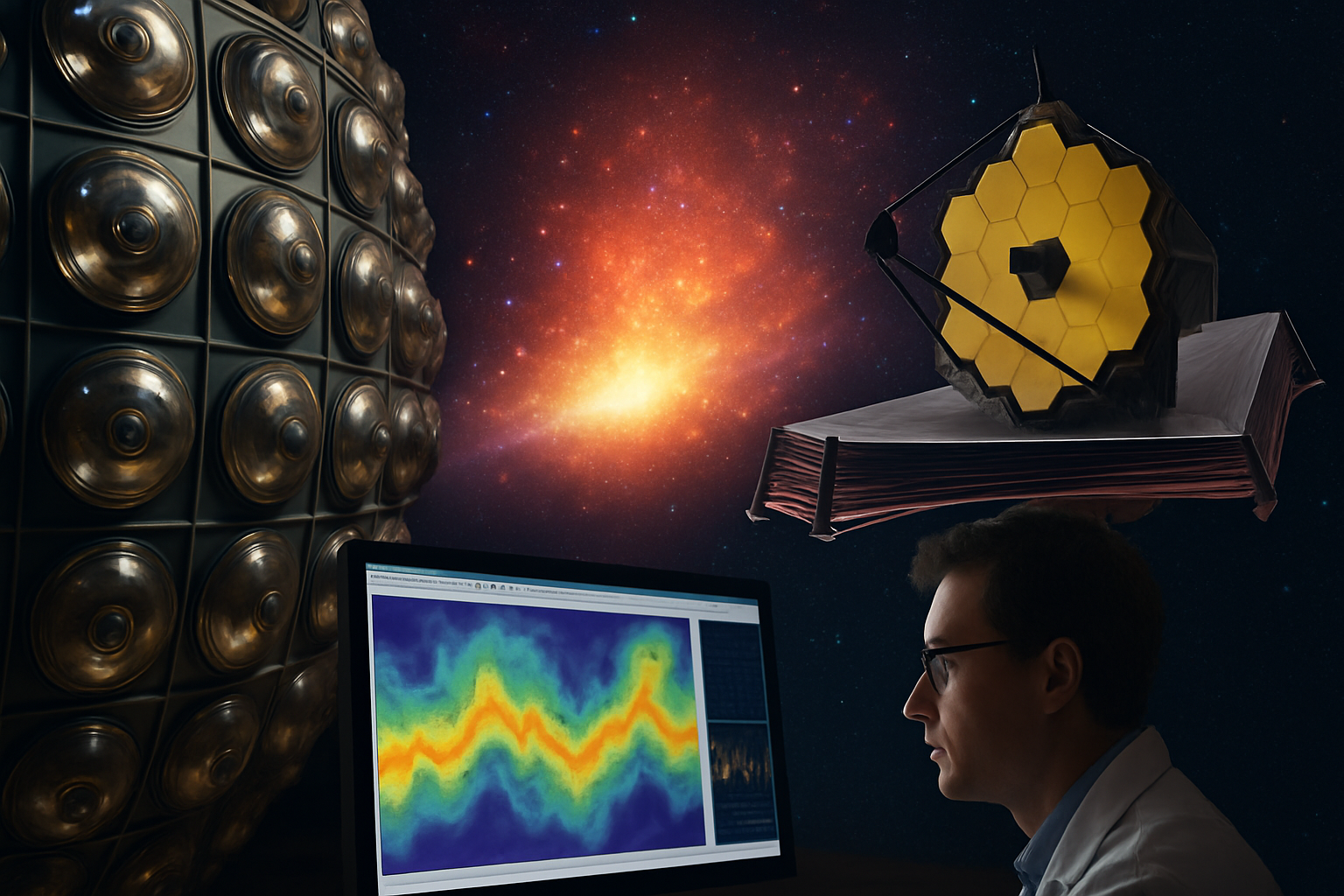
Scientists are weaving together faint neutrino whispers and the cosmic infrared glow to probe the universe's infancy. New detectors, space telescopes, and machine-learning techniques promise a fresh window into the first fractions of a second after the Big Bang.
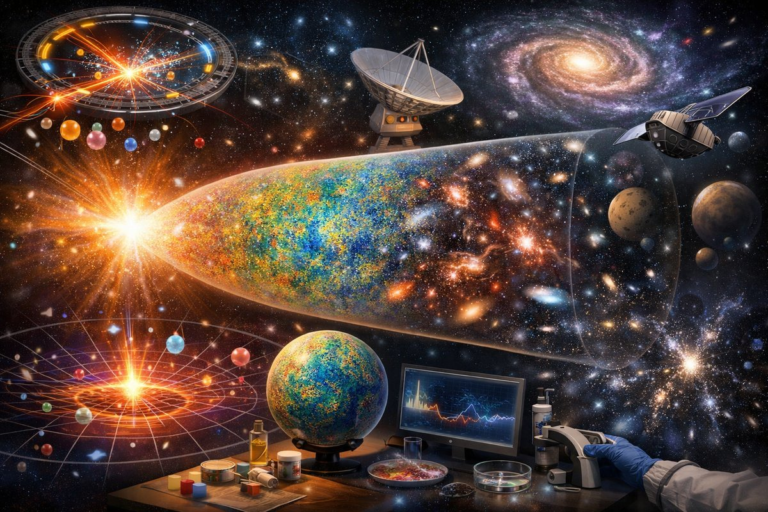
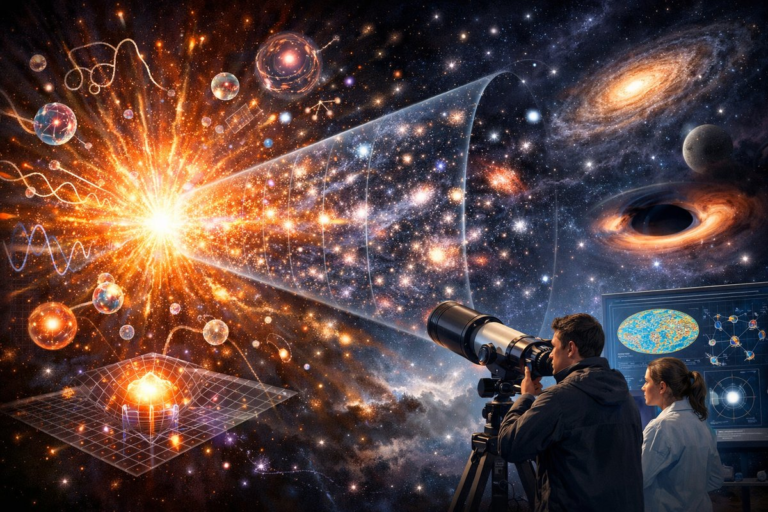
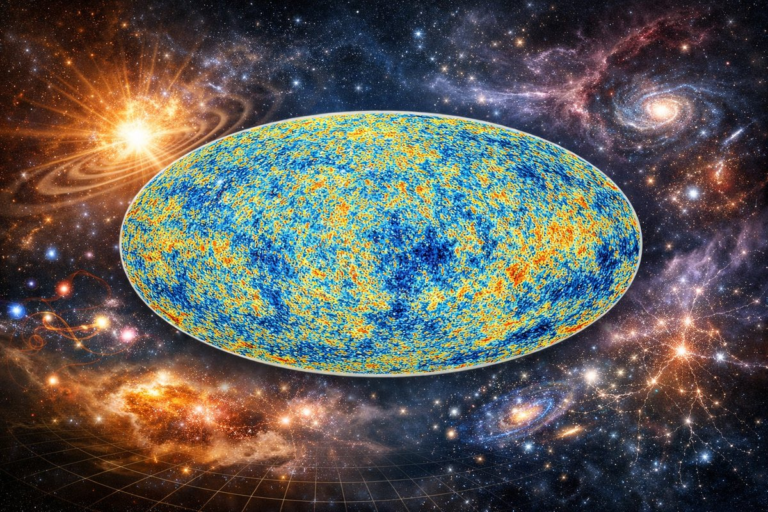
For decades, astronomers and physicists have peered into the deep sky, mapping galaxies, cosmic microwave background ripples, and gravitational waves in search of the universe’s origin story. Yet vast stretches of that narrative remain blurred by limitations in instrumentation and theoretical uncertainty. Today, an emerging interdisciplinary approach seeks to trace two elusive messengers-primordial neutrinos and the cosmic infrared background-to reconstruct events that transpired mere moments after creation. In doing so, researchers hope to connect theoretical predictions with observations and fill critical gaps in our understanding of cosmic dawn.
Neutrinos, nearly massless particles that scarcely interact with matter, flood the cosmos in staggering numbers. Since the first seconds after the Big Bang, these relic neutrinos have streamed freely through space, carrying unaltered information about conditions at energies and densities beyond those achievable in any laboratory. The cosmic neutrino background (CνB) is predicted to permeate every cubic centimeter of space at a temperature of about 1.9 kelvin, slightly colder than the 2.7 K of the microwave background. Detecting this ghostly radiation has been a longstanding challenge: individual neutrinos deposit minuscule energy when they collide, and their low momentum makes their signals almost impossible to isolate from terrestrial and cosmic noise.
Large neutrino observatories like IceCube at the South Pole and Super-Kamiokande in Japan have registered high-energy neutrino events from distant astrophysical sources, but they remain insensitive to the low-energy relic population. That may soon change. Prototype experiments such as PTOLEMY (Princeton Tritium Observatory for Light, Early-Universe, Massive-Neutrino Yield) aim to capture cosmic neutrinos by exploiting neutrino capture on tritium nuclei. By monitoring the subtle shifts in beta decay spectra, physicists hope to identify a handful of relic neutrino interactions each year. Although the expected capture rate is only a few events per square meter, even a sparse sample could shine light on the neutrino mass hierarchy, thermal history, and symmetry properties of the early universe.
In parallel, astronomers have turned to the cosmic infrared background (CIB) as another window onto primordial processes. When the first generations of stars and galaxies ignited, their ultraviolet light was absorbed and re-emitted by interstellar dust at infrared wavelengths. Telescopes such as NASA’s Spitzer, ESA’s Herschel, and more recently the James Webb Space Telescope (JWST) have measured the integrated glow of these early sources. By analyzing the intensity fluctuations of the CIB, researchers can infer the number, clustering, and spectral energy distributions of objects at redshifts beyond 10-times when the universe was less than half a billion years old.
The cosmic infrared background is not a smooth wall of light; it exhibits subtle anisotropies that reflect the large-scale distribution of early star-forming regions. These anisotropies encode information about the rate of cosmic expansion, the properties of primordial dust, and the processes that governed the formation of the first black holes. By cross-correlating CIB maps with other cosmological data-such as cosmic microwave background polarization or galaxy surveys-astronomers are beginning to piece together a more detailed timeline for cosmic dawn and the subsequent epoch of reionization.
Although neutrinos and infrared photons interact with matter in dramatically different ways, their combined signals promise a more comprehensive view of the nascent cosmos. Neutrinos are messengers from the first seconds, unimpeded by electromagnetic interactions, while infrared photons chart the activity of the first luminous structures hundreds of millions of years later. By linking these epochs, scientists can test theories of inflation, particle physics beyond the Standard Model, and the nature of dark matter.
Theoretical models of inflation propose that quantum fluctuations were stretched to cosmic scales, seeding the large-scale structure we observe today. These fluctuations should leave distinct imprints not only in the cosmic microwave background but also in the distribution of relic neutrinos, whose spectral distortions might encode the energy scale and duration of inflation. Similarly, scenarios involving light sterile neutrinos or axion-like particles could alter the predicted neutrino background density and temperature, subtly affecting nuclear processes in the first seconds.
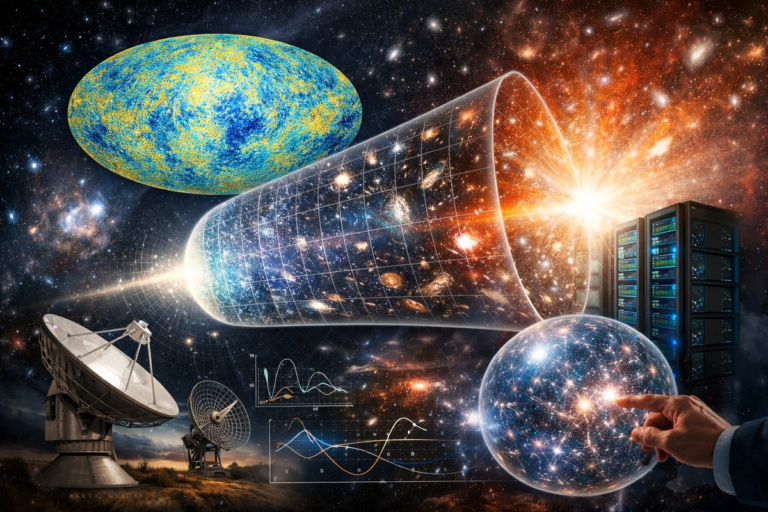
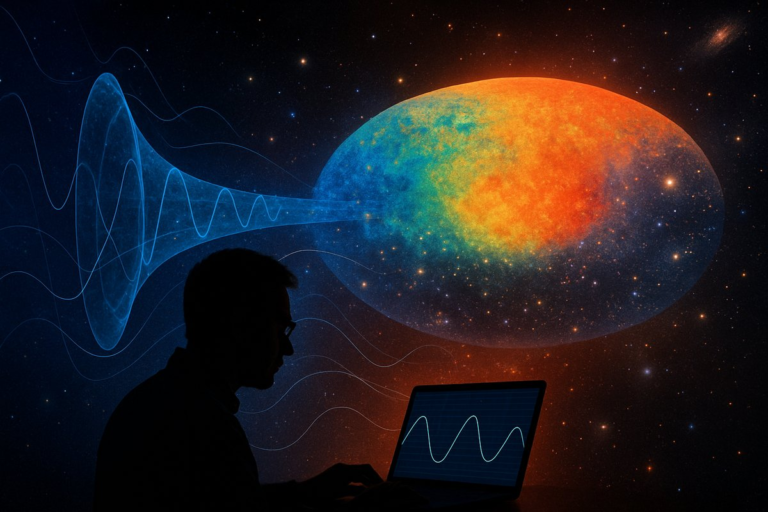
Tackling the data analysis challenges requires advanced computational techniques. Machine learning algorithms trained on simulated neutrino and infrared maps are now being used to distinguish genuine primordial signals from instrumental artifacts and foreground noise. Convolutional neural networks can identify the faint spectral distortions expected from relic neutrinos, while unsupervised clustering methods help isolate the spatial patterns imprinted by early galaxy populations in the infrared sky. By sharing open-source pipelines and data sets, research teams are fostering a spirit of transparency and reproducibility often lacking in highly specialized fields.
Beyond the flagship observatories, new small-scale detectors and pathfinder missions are experimenting with novel materials, cryogenic techniques, and quantum sensors. Arrays of superconducting nanowire detectors could boost neutrino capture efficiency, while balloon-borne infrared spectrometers are probing wavelengths obscured by Earth’s atmosphere. These efforts emphasize sustainability: many teams are exploring low-power electronics, modular detector designs, and green energy sources such as solar panels and wind turbines to minimize environmental impact at remote sites.
Astrophysicists also recognize the importance of data privacy and ethical collaboration. As global networks of telescopes and detectors exchange petabytes of raw measurements, best practices for secure data sharing, anonymization of proprietary calibration files, and fair attribution of contributions have become essential. International consortia are developing guidelines to ensure that all member institutions-regardless of funding or geographic location-can access and analyze core data sets. This democratization of cosmology aligns with broader efforts in science to promote equity and inclusivity.
Behind every neutrino prototype and infrared map is a diverse community of researchers, engineers, and students united by curiosity. Emotional intelligence plays a role as teams navigate cultural differences, time-zone barriers, and the inevitable frustrations of hardware malfunctions or null results. Many groups now incorporate regular workshops on collaborative communication, conflict resolution, and mental health awareness to sustain creativity and well-being over the decades-long timelines of fundamental research.
Public outreach and citizen science have found renewed momentum as well. Amateur astronomers equipped with commercial infrared filters contribute to calibration efforts, while online platforms invite volunteers to scan infrared images for unusual structures or artifacts. These grassroots projects not only expand the scientific workforce but also deepen the public’s connection to the unfolding cosmic story.
Despite rapid progress, critical questions remain unanswered. The exact mass mechanism for neutrinos and whether they are their own antiparticles continue to puzzle theorists. The origin of dark matter and its potential interactions with neutrinos or baryonic matter at early epochs is still speculative. Likewise, the processes that ended the universe’s so-called dark ages and drove reionization demand more precise timing and source identification.
To address these mysteries, the next generation of observatories is in development. Ground-based experiments like CMB-S4 will map microwave background polarization with unprecedented sensitivity. Proposed megaton-scale neutrino detectors in deep mines could capture low-energy events with higher fidelity. Meanwhile, space missions equipped with far-infrared spectrometers aim to extend the reach of JWST into previously unexplored wavelengths.
Ultimately, decoding the universe’s first moments is about more than arcane measurements; it speaks to our place in the grand cosmic tapestry. Every neutrino event and infrared photon from the dawn era carries a fragment of the universe’s origin myth. By assembling these fragments, humanity can chart its own lineage from subatomic fluctuations to living organisms capable of cosmic introspection.
The journey from theoretical conjecture to empirical evidence is often long and arduous, but each incremental advance reshapes our worldview. As detectors become more sensitive and data sets more complete, scientists inch closer to answering age-old questions: Why did our universe emerge rather than remain an empty mathematical possibility? What fundamental symmetries govern reality? And how might insights into the first seconds inform our understanding of dark energy, black holes, or the fate of the cosmos itself?
For any curious reader gazing skyward, the unfolding research offers a reminder that the night sky is both a window and a mirror. It shows us the distant past while reflecting our persistent drive to explore, to question, and to connect. In the coming years, the faint hum of relic neutrinos and the soft glow of infrared light will narrate new chapters of the origin story-chapters written not only by the universe itself but by the collective ingenuity of those who listen.
In this unfolding cosmic saga, the distinction between observer and observed grows ever more porous. Every instrument becomes an extension of human curiosity, every data analysis a collaborative act of imagination. And as the primordial echoes reach our detectors, they carry the promise of answers that, once revealed, will reshape not only our scientific theories but our sense of belonging in the vast expanse of spacetime.