Location
Mount Vernon, WA 98274
Location
Mount Vernon, WA 98274


From next-gen battery cells to AI-powered vehicle ecosystems, the latest breakthroughs in automotive tech are reshaping how we move. This deep dive explores the convergence of sustainability, connectivity, and predictive intelligence that's accelerating a new chapter in transportation.
Across urban thoroughfares and winding country lanes, vehicles are evolving faster than ever. Once dominated by mechanical linkages and analog gauges, modern automobiles now bristle with sensors, high-speed data links, and advanced materials that upend long-held assumptions about performance, safety, and environmental impact. As governments, fleets, and everyday drivers grapple with tightening emissions targets and surging demand for seamless mobility, a wave of innovations promises to transform the act of driving into a dynamic networked experience-one where cars, roads, and users collaborate in real time to optimize energy, boost reliability, and anticipate emerging risks.
It all begins at the cell level. Battery technology has long been the bottleneck for electrification, but breakthroughs in chemistry and manufacturing are closing the gap. New anode materials infused with silicon and graphene deliver higher energy densities than traditional blends, packing more range into smaller, lighter packs. Meanwhile, automated assembly lines leverage robotics and laser welding to slash production defects by up to 40 percent, accelerating rollout while taming costs. The upshot: electric vehicles are gaining 200-mile driving ranges in sub-10-minute charge sessions, pushing EV road trips from niche experiments into everyday routines. Charging technology itself is also maturing-bi-directional chargers let parked cars serve as power buffers, feeding surplus electricity back into homes or local microgrids during peak demand.
But batteries tell only part of the story. Underneath sleek exterior panels, advanced composite materials are trimming vehicle mass without compromising strength or crash resistance. Carbon fiber reinforced polymers, once reserved for exotic sports cars, are now being integrated into mid-range sedans and commercial vans. At the same time, plant-derived bioresins and recycled aluminum alloys are making green manufacturing a practical choice rather than a marketing afterthought. These lightweight yet robust structures reduce energy consumption, extend component life, and simplify end-of-life recycling-addressing a lifecycle perspective often overlooked in discussions of zero-emission mobility.
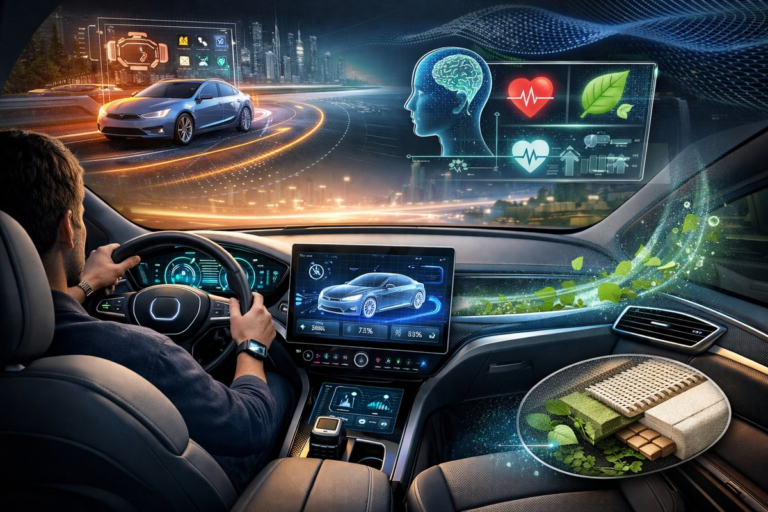
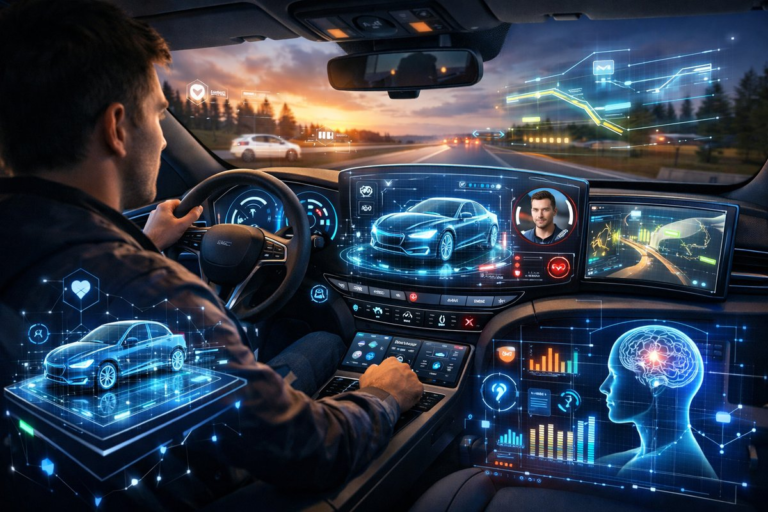
In the cockpit, artificial intelligence has become the co-pilot drivers never knew they needed. Machine learning models continuously analyze streams of sensor data-from lidar and radar to interior cameras-increasingly enabling predictive safety systems. Instead of reacting to a sudden obstacle, vehicles can anticipate dangerous scenarios, alerting drivers or even initiating mild brake interventions before brakes have to clamp. Advanced driver-assistance algorithms are also learning individual habits and preferences; a car might autonomously adjust suspension damping when it recognizes a particular driver’s penchant for spirited cornering, or optimize cabin temperature based on historical comfort patterns.
Connectivity brings a new layer of orchestration. Cars talk to one another, to roadside beacons, and to traffic management centers through low-latency wireless links. In smart cities, these connected exchanges help smooth traffic flow by signaling upcoming congestion, dynamically assigning priority lanes for high-occupancy vehicles or emergency responders, and balancing load on charging stations. The result is less idling in smog-choked intersections and shorter travel times across our busiest corridors. For fleet operators, telematics platforms now weave together GPS location, battery health, tire pressure, and driver behavior into a single dashboard-enabling proactive maintenance scheduling that slashes downtime by up to 30 percent.
Yet technology alone cannot drive change. Infrastructure must catch up. Governments and municipalities are piloting modular, on-demand charging hubs that plug into parking garages or highway rest stops with minimal civil work. These pop-up stations can be redeployed as traffic patterns shift, ensuring electric fleets and private cars have accessible charging no matter where urban growth takes them. In parallel, policies that incentivize vehicle-to-grid integration are gaining traction, encouraging owners to share energy capacity during critical peak hours. Such flexibility not only generates extra income for EV drivers but helps stabilize regional power grids in the face of variable renewables.
On the manufacturing front, sustainability principles are reshaping entire supply chains. Automakers partner with mining firms to source cobalt and lithium from certified low-impact operations; they invest in battery second-life programs that redeploy used modules for stationary storage; and they adopt closed-loop material recovery techniques that recover up to 95 percent of valuable metals. This cradle-to-grave accountability resonates with environmentally conscious buyers, who increasingly regard a vehicle’s carbon footprint before purchase rather than just zero-tailpipe emissions after it hits the road.
Perhaps the most exciting frontier lies beyond single vehicles: the rise of mobility as an ecosystem. Shared autonomous shuttles, dynamic ride-hailing services, and micro-mobility networks (including e-scooters and cargo bikes) are fusing into cohesive, app-driven platforms. Algorithms juggle real-time supply and demand, steering riders toward the most efficient mode for each leg of a trip-whether that’s a self-driving electric minibus to the nearest transit hub, followed by a short scooter ride to the final destination. By minimizing empty seats and deadheading vehicles, these services slash overall energy use and free up valuable curb space currently occupied by private cars.
As this mobility mosaic takes shape, urban planners and policymakers face hard choices. Curb regulations must balance commercial delivery vehicles against passenger drop-offs. Data privacy frameworks must protect personal movement records while enabling aggregate analytics to optimize traffic and safety. Equity considerations demand that cutting-edge services don’t just serve affluent districts but enhance transit-poor neighborhoods and support those with limited mobility. Crafting these rules requires collaboration among technology providers, government agencies, and community groups-an interdisciplinary approach fuelled by transparency and shared goals.
The journey ahead is far from linear. Legacy automakers wrestle with balancing capital-intensive retooling against the need to remain profitable. Charging network rollouts vary wildly between regions, leaving some areas underserved and dampening consumer confidence. Supply chain shocks-from geopolitical disruptions to rare-earth shortages-threaten to stall progress just as it ramps up. Yet the technological curve is undeniably steep, and winners will be those who integrate end-to-end systems: from cell chemistry and lightweight design to AI-driven safety and city-wide connectivity.
For drivers, the promise is compelling: a ride that adapts to each twist of the road, each twist of personal preference, and each twist in the power grid. For city dwellers, the vision holds out smoother commutes, cleaner air, and flexible transit options attuned to daily life rhythms. And for the planet, the hope is a rapid pivot away from fossil fuel dependency toward an electrified, data-infused network where every vehicle is a node in a living mobility organism.
In the coming years, these innovations will crystallize into new mobility paradigms that look as strange and wonderful to today’s drivers as smartphones once did to those still tethered to payphones. Underneath the polished steel and tinted windows, the convergence of cleaner energy, smarter materials, and predictive intelligence will power a transportation renaissance-one that reconnects communities, uplifts sustainability goals, and redefines what it means to move from point A to B. Humanity’s long journey toward motion continues, now fueled by a synergy of creative engineering and collective ambition that drives us toward roads we’ve only begun to imagine.