Location
Mount Vernon, WA 98274
Location
Mount Vernon, WA 98274

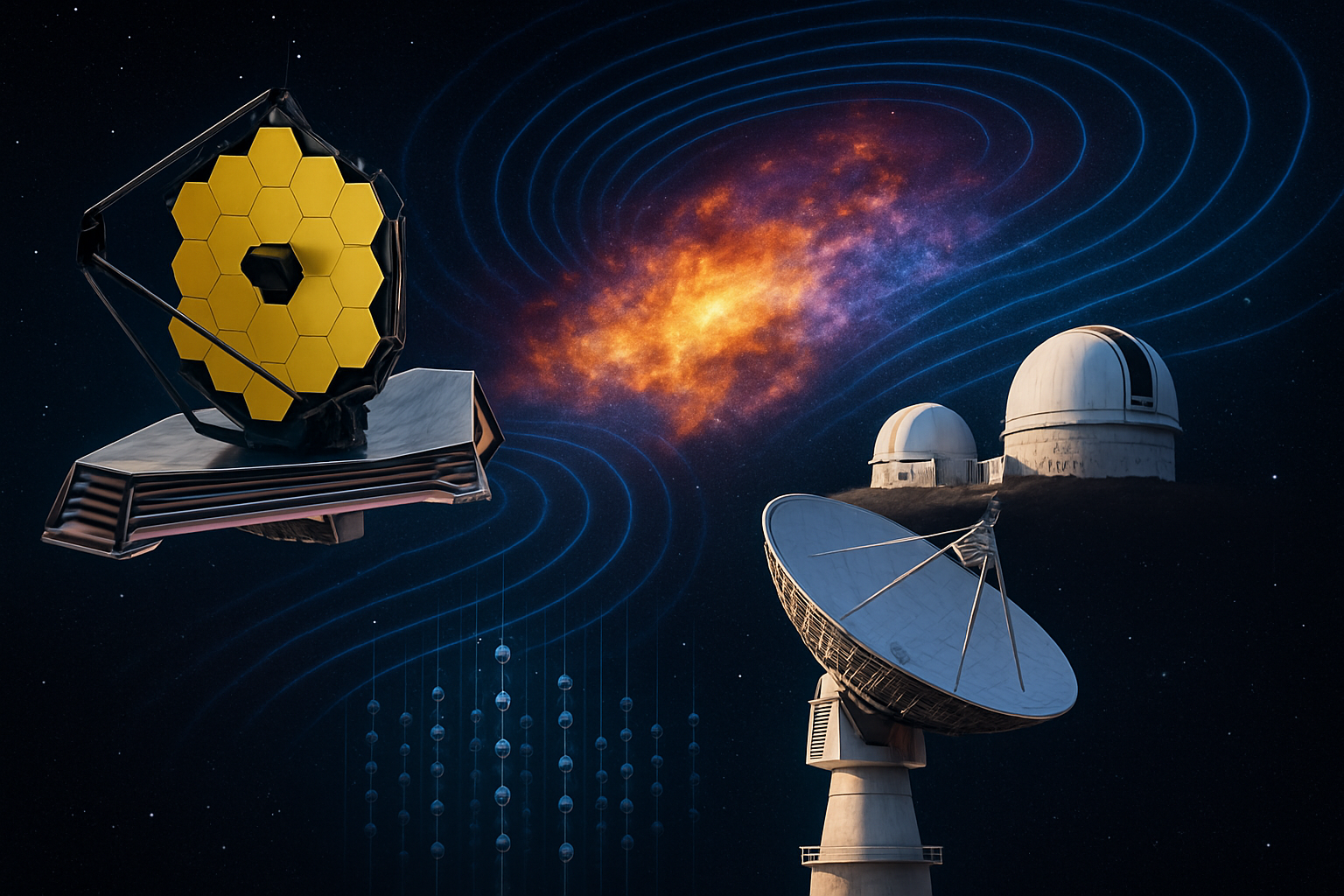
An unprecedented array of instruments-from infrared space telescopes to gravitational-wave detectors and neutrino observatories-is converging on the universe's earliest moments. Cutting-edge data and theory are weaving a richer narrative of how space, time, and matter emerged from primordial chaos.
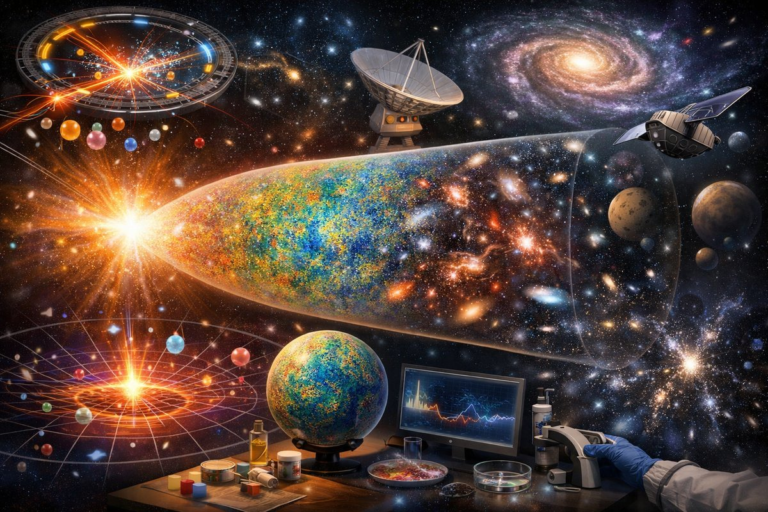
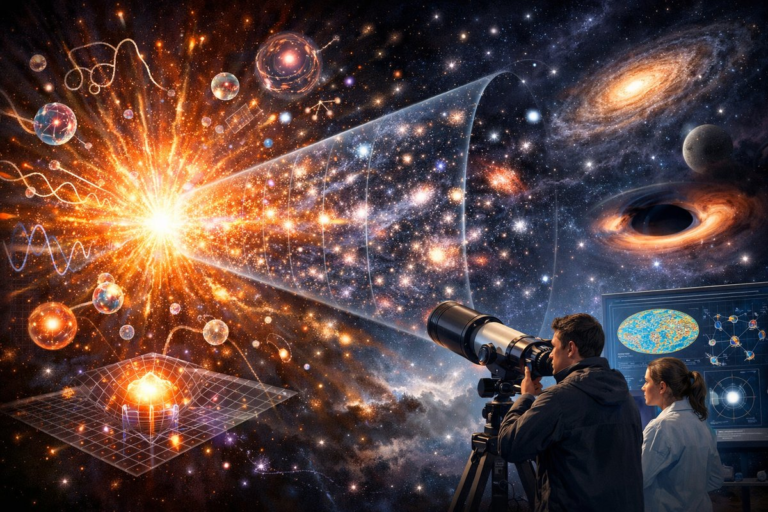
Humanity has always gazed at the night sky seeking answers to its deepest questions. What ignited the spark of existence? How did time and space unfold? Recent collaborations across multiple fields of astronomy and physics are offering fresh clues about the universe’s origin story. Far from isolated breakthroughs, these developments illustrate a broader transformation in how we probe cosmic beginnings, weaving observational evidence into theoretical frameworks with unprecedented precision.
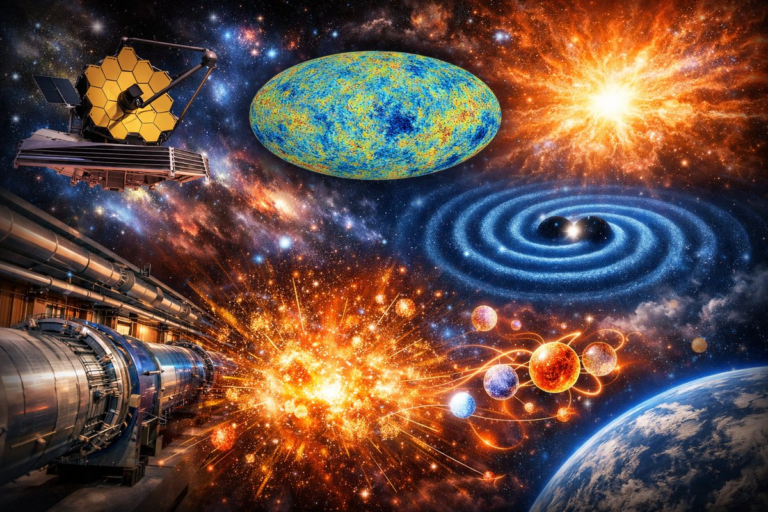
The James Webb Space Telescope has delivered spectacular views of galaxies forming when the universe was barely a few hundred million years old. Deep-field surveys have revealed faint objects at extreme redshifts, signaling pockets of star formation earlier and more vigorously than expected. Infrared signatures of nascent galaxies are traced against a backdrop of dark hydrogen clouds, illuminating the processes that reionized intergalactic space. These observations are pushing back the timeline of cosmic dawn and challenging models of early structure formation.
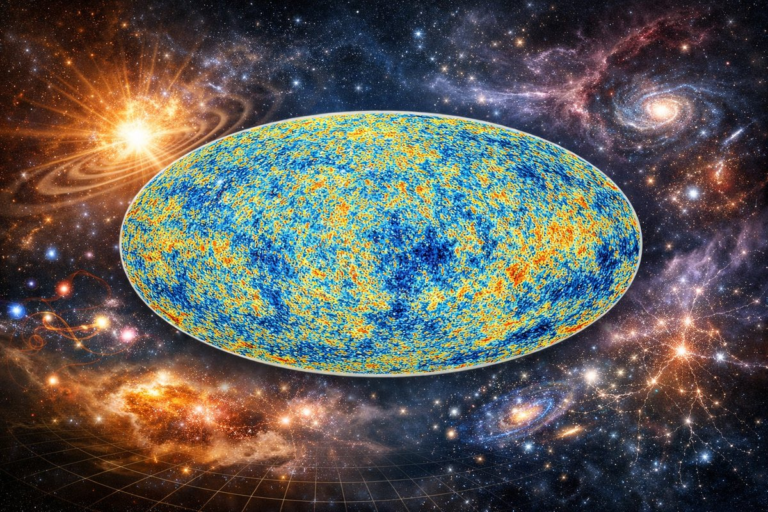
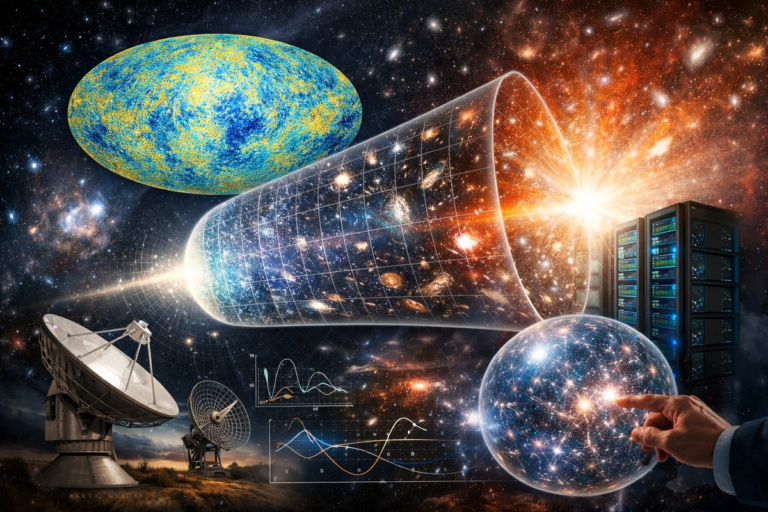
Meanwhile, data from the Planck satellite continue to refine measurements of the cosmic microwave background. Minute fluctuations in temperature and polarization provide a fossil record of density variations present just 380,000 years after the Big Bang. Novel analyses of polarization patterns are testing predictions of cosmic inflation-an exponential expansion theorized to have stretched quantum fluctuations into macroscopic seeds for galaxy clusters. The latest statistical maps have narrowed the range of viable inflationary scenarios, ruling out certain classes of models while vindicating others.
Gravitational-wave astronomy adds another dimension. Detectors like LIGO and Virgo have so far captured ripples from colliding black holes and neutron stars, but the hunt is on for a primordial background of gravitational waves. Such a signal, generated by violent processes in the infant universe, would carry direct information about energy scales far beyond what particle accelerators can reach. Proposed upgrades and new facilities aim to improve sensitivity at low frequencies, raising hopes of detecting this elusive echo of creation.
In parallel, neutrino observatories are broadening the multispectral approach. Located deep under ice and rock, detectors like IceCube scan for ghostly particles streaming through Earth from distant sources. Researchers are now tuning their analyses to spot a diffuse cosmic neutrino background-ultra-low-energy neutrinos left over from the first seconds of the universe. Capturing even a handful of these particles could reveal conditions at the moment nuclear forces first emerged, providing a direct probe of the primordial soup.
On the theoretical front, cosmic inflation remains the dominant paradigm, but it is no longer a monolithic concept. New variants explore how inflation might start and end through interactions between multiple fields, or how quantum gravity effects could smooth out singularities. Loop quantum cosmology offers a “bounce” alternative, envisioning a contracting universe that rebounds into expansion without a singular origin. Researchers are developing observational tests-such as specific patterns in the CMB power spectrum-to distinguish these models from standard inflation.
Bounce scenarios are compelling because they address the problem of initial conditions. Rather than requiring finely tuned parameters at the very beginning, a cyclic history could naturally churn out repeated expansions and contractions. Signatures of a pre-bounce era might linger as anomalies in primordial fluctuations or as non-Gaussian structures in the density field. While current data remain inconclusive, targeted surveys and advanced statistical techniques are poised to probe these subtle imprints.
String theory and other quantum-gravity approaches continue to motivate new hypotheses about the universe’s birth. Concepts like extra spatial dimensions could leave traces in gravitational-wave backgrounds, while the landscape of string vacua hints at a multiverse of cosmological domains. Though direct testing is exceptionally challenging, indirect consequences-such as relic topological defects or distinctive spectrum distortions-could emerge in the next generation of wide-field telescopes and precision polarimeters.
Dark matter’s origin is also entwined with cosmic beginnings. Candidates such as weakly interacting massive particles could have been produced during reheating, the period when inflation’s energy converted into standard particles. Alternatively, axion-like fields might have arisen through misalignment mechanisms, leaving a faint cosmic background. Laboratory searches, from underground detectors to precision magnetometers, complement astrophysical observations, painting a cohesive picture of how dark matter fits the genesis narrative.
Equally perplexing is the matter-antimatter asymmetry. If the universe began with equal amounts of both, why is matter overwhelmingly dominant today? Baryogenesis theories propose processes in the early universe that slightly favored matter during high-energy interactions. Ongoing experiments in high-energy physics laboratories, along with astrophysical probes of heavy-element abundances, provide cross-checks on these mechanisms. Any confirmed asymmetry signature in cosmic neutrinos or CMB polarization could be a smoking gun for baryogenesis at work.
The birth of the first stars transformed the cosmic landscape. Known as Population III stars, these primordial beacons burned hot and fast, forging the first heavy elements and seeding nascent galaxies. Their remnants-long vanished-are being reconstructed through chemical fingerprints in later-generation stars within our own galaxy. Advanced spectrographs on ground-based telescopes are measuring elemental ratios with unprecedented precision, allowing astronomers to infer the masses and lifespans of these ancient luminaries.
Subsequent galaxy formation was a tumultuous process of mergers and feedback. Early galaxies were small, irregular clumps aglow with intense star formation. Supernova explosions and radiation pressure drove outflows that regulated growth and influenced the intergalactic medium. Modern simulations, powered by petaflop-class supercomputers, are recreating these infant galaxies in three dimensions, offering a laboratory for testing feedback physics against the JWST’s observational benchmarks.
The synergy of multi-messenger astronomy is perhaps the most transformative trend. By combining electromagnetic signals, gravitational waves, and neutrinos, scientists gain a holistic view of cosmic events. Joint observational campaigns coordinate telescopes around the globe and in space, ensuring rapid follow-up when any messenger triggers an alert. This integrated approach was demonstrated in recent neutron-star merger detections, and similar strategies will be crucial for capturing any primordial gravitational-wave bursts or neutrino flares tied to early-universe phenomena.
Technological leaps in detector design and data processing have fueled these advances. Cryogenic bolometers, superconducting transition-edge sensors, and distributed computing networks enable data collection with unprecedented sensitivity and speed. Machine-learning algorithms sift through petabytes of data for faint patterns, while open-science platforms allow researchers worldwide to collaborate on signal extraction and interpretation. The result is a vibrant ecosystem where ideas can be tested rapidly against fresh observations.
Looking ahead, upcoming observatories promise to push the horizon even further. Missions like the planned next-generation cosmic microwave background satellite aim to map polarization with greater fidelity, while space-based gravitational-wave detectors will access frequency bands unreachable on Earth. Wide-field spectroscopic surveys will chart billions of galaxies, constructing the most detailed 3D map of the universe yet. These projects, often involving multinational partnerships, reflect a global commitment to unraveling our cosmic origins.
Behind every telescope and detector are cross-disciplinary teams of scientists, engineers, and data specialists. Collaboration between particle physicists and astronomers, between computational experts and observational teams, has become essential. Workshops and collaborative networks foster the exchange of ideas, ensuring theoretical proposals are testable and instrumentation designs are aligned with scientific priorities. This culture of openness accelerates progress and democratizes access to discovery.
The quest to understand the universe’s beginning carries profound philosophical implications. If our cosmos emerged from a quantum fluctuation or a pre-existing contracting phase, what does that say about causality and the nature of reality? Are there other universes beyond our observational reach? Such questions inspire humility and wonder, reminding us that science is as much an intellectual adventure as a technical endeavor.
Public engagement has flourished alongside scientific progress. Outreach programs, planetarium shows, and citizen-science projects invite nonexperts to experience the thrill of discovery. Participation ranges from classifying galaxy shapes in survey images to contributing to real-time transient alerts. These initiatives foster scientific literacy and connect global audiences to the monumental story of cosmic origins.
Sustainability and ethical considerations also shape big-science projects. Observatory construction must balance environmental stewardship with research goals, respecting local ecosystems and cultural heritage sites. Power consumption and data-center footprints are evaluated against carbon-reduction targets. By embedding sustainability into project planning, the scientific community demonstrates its commitment to preserving Earth even as we explore the heavens.
Ultimately, charting the cosmic dawn is a collective human endeavor. Each new data point, each refined model, brings us closer to understanding how we came to be. The interplay of observation and theory, of technology and creativity, ensures that our picture of the universe remains dynamic and evolving. As instruments reach farther back in time, we anticipate more surprises, more puzzles, and more moments of awe. The story of our cosmic origins is unfolding before us, and we are writing the next chapters in real time.