Location
Mount Vernon, WA 98274
Location
Mount Vernon, WA 98274

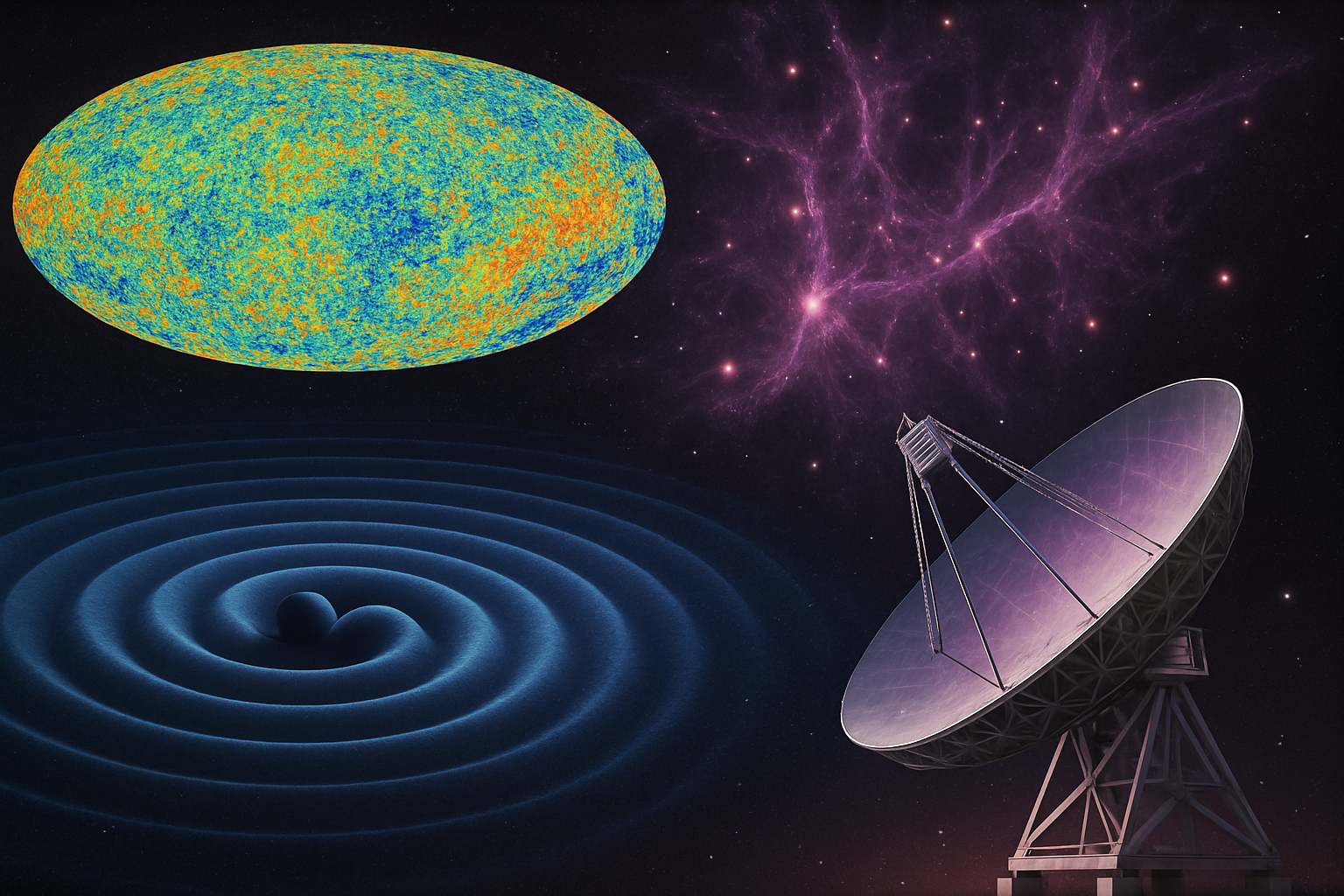
A new wave of observations is reshaping our picture of the cosmos's earliest moments. From gravitational waves to primordial gas maps, researchers are weaving together clues that illuminate how the universe emerged from its first flicker of existence.
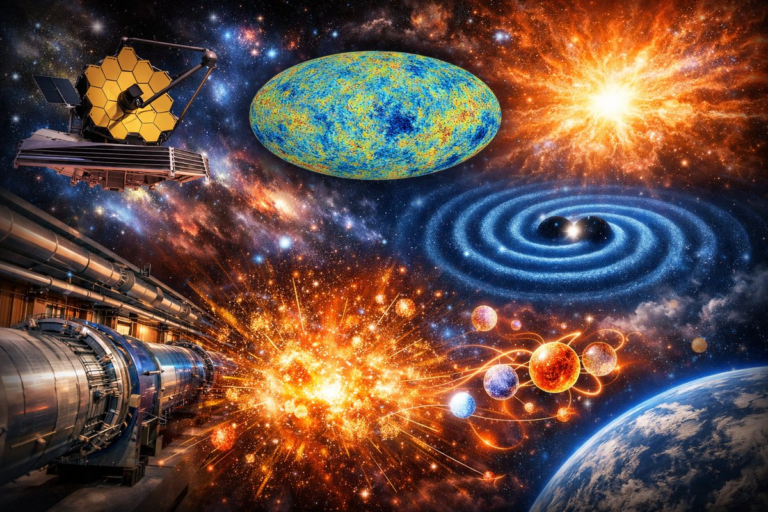
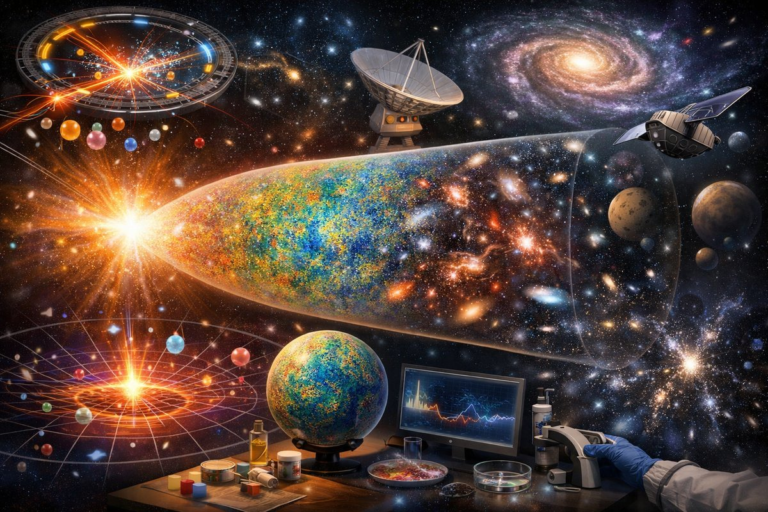
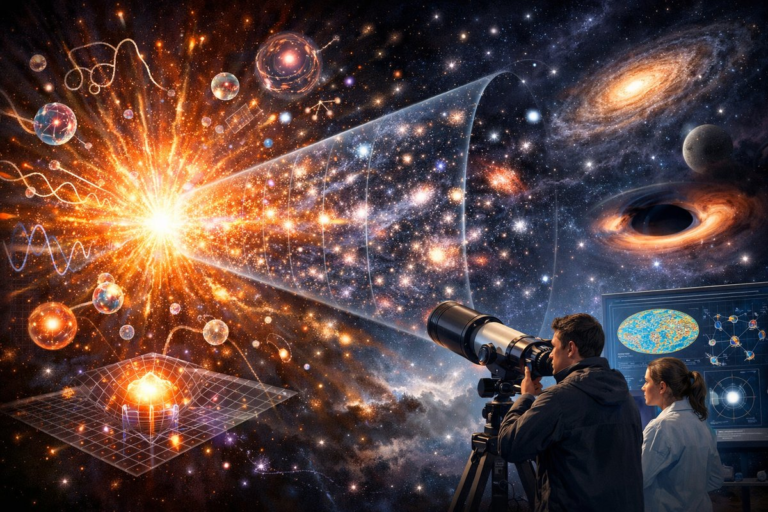
For centuries, humanity has gazed into the night sky and wondered how everything began. Recent breakthroughs across a spectrum of observatories and detectors are now giving us unprecedented glimpses into the universe’s infancy. Rather than relying on a single line of evidence, scientists are deploying a multi-messenger approach, weaving together light, gravitational vibrations, and subatomic whispers to reconstruct the opening act of cosmic history.
The James Webb Space Telescope has captured deep-field images that reveal infant galaxies shining less than half a billion years after the universe’s birth. Each detection of a dim, distant galaxy offers a snapshot of stellar nurseries forging the first heavy elements. Meanwhile, terrestrial radio arrays are tuning in to the 21-centimeter signal of neutral hydrogen, tracing a fog of primordial gas that filled the cosmos before stars began to blaze. Combining these datasets, researchers can pinpoint when reionization-when the first light ripped apart hydrogen atoms-began and how rapidly it swept across space.
Listening instead of looking, gravitational wave observatories have opened a second channel into cosmic origins. After detecting collisions of black holes and neutron stars, teams are now searching for a stochastic background-a faint, persistent hum from the merging of primordial objects or exotic phase transitions in the newborn universe. If found, this background would act like a fetal heartbeat echoing from the first moments, carrying information about energies far beyond what particle colliders on Earth could achieve.
At the same time, experiments buried deep underground or submerged in Antarctic ice are hunting for cosmic neutrinos-ghostlike particles that scarcely interact with matter. These neutrinos stream toward us unhindered from the densest, hottest regions of the early cosmos. By measuring their energy spectrum and arrival directions, physicists hope to test scenarios ranging from the formation of the first quark-gluon plasma to the decay of hypothetical superheavy particles left over from cosmic inflation.
On the radio side, the Hydrogen Epoch of Reionization Array and similar projects are refining their maps of the universe’s foggy middle ages. They do this by charting tiny fluctuations in the brightness of the hydrogen signal at different frequencies. Such 3D tomography reveals the patchy pattern of ionized bubbles around the earliest galaxies and offers clues about how those galaxies formed, how many stars they produced, and how efficiently they lit up the darkness.
This ensemble of signals-light, sound, neutrino drips, and ghostly particles-is stitched together in a grand tapestry of multi-messenger astronomy. The synergy of these methods not only cross-checks the results but also fills in gaps that any single approach would leave. For instance, while infrared telescopes excel at finding the first sparks of starlight, they do not directly probe the invisible scaffolding of dark matter that helped shape those stars. Gravitational waves and neutrinos can offer complementary insights into the same structures.
Closer to home, astronomers are also studying the oldest stars in our own galaxy’s halo. These relic stars carry chemical fingerprints of the primordial elements forged in the universe’s first explosions. By measuring the ratios of metals-elements heavier than helium-scientists deduce how massive those first supernovae were, how much energy they unleashed, and how they seeded subsequent generations of stars. In a sense, these stellar fossils act as local time capsules, preserving a record of the cosmic nursery that existed long before our Milky Way took shape.
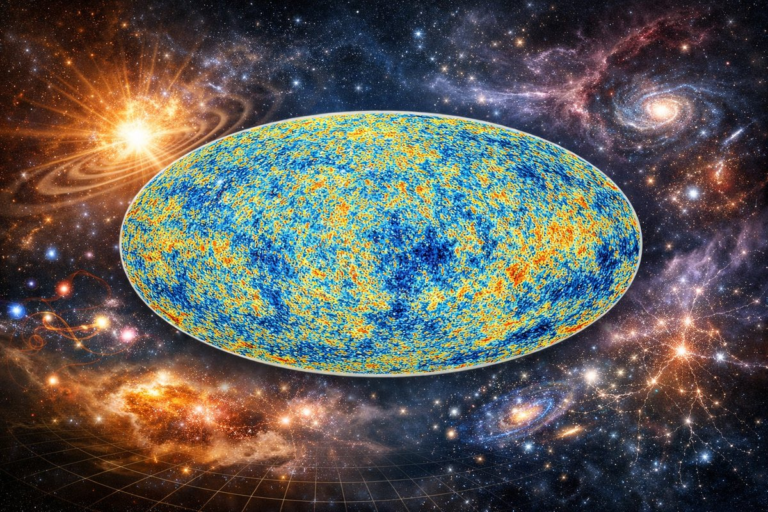
Meanwhile, satellites surveying the cosmic microwave background continue to refine measurements of its subtle polarization patterns. These minute signals, imprinted a few hundred thousand years after the Big Bang, can reveal tiny ripples in the fabric of spacetime caused by primordial gravitational waves. Detecting them would provide direct evidence for inflation, the rapid expansion thought to have smoothed and flattened the universe in an instant.
Yet the hunt for these signals also highlights unanswered riddles. Dark matter, which governs the growth of cosmic structures, remains invisible and elusive. Are we chasing particles that interact only gravitationally, or is the true nature of dark matter something far stranger-perhaps a manifestation of hidden dimensions or modifications to gravity itself? Upcoming experiments in deep-space probes and underground detectors aim to tighten the constraints and test alternative theories that could revolutionize our understanding of matter and the forces at play.
Beyond observational quests, theorists are exploring radical alternatives to the classic Big Bang narrative. Some models propose a cyclical cosmos that expands and contracts over vast cycles, while others invoke quantum gravity effects that smooth out the initial singularity into a finite bounce. Although these ideas remain on the frontier of physics, they underscore a fundamental truth: the story of the universe’s birth is still being written, and each new observation forces us to refine or even rewrite the opening lines.
Amid the data and equations, there is a deeply human element to this exploration. Gazing backward in time means confronting the sheer scale of our own existence. It reminds us of the fragility of life on a tiny planet orbiting a modest star. Yet it also stirs a sense of wonder and interconnectedness: we are made of atoms forged in early stellar furnaces, carrying within us tales of ancient cosmic processes.
The technologies born from these scientific quests often find unexpected applications. Imaging techniques refined for telescopic surveys improve medical diagnostics. Advanced data analysis methods developed to sift through cosmic signals power breakthroughs in climate modeling and security. As we strive to decode the universe’s origin story, we also cultivate tools that make everyday life more insightful and sustainable.
Large-scale astronomy initiatives also underscore the importance of ethical data stewardship and environmental responsibility. Massive observatories demand significant resources, land, and power. Project leaders and institutions are increasingly mindful of minimizing ecological footprints, partnering with local communities, and ensuring that data management practices respect privacy and equity. This values-driven approach emphasizes that exploration of the cosmos need not come at the expense of our planet’s well-being or social harmony.
For curious readers eager to contribute, citizen science projects offer the chance to classify galaxy shapes, search for gravitational-wave signals, or monitor radio interference. By crowdsourcing these tasks, professional teams accelerate discoveries while inviting everyone to share in the thrill of unraveling the past. Whether you have a powerful backyard telescope or simply a keen eye and internet access, there’s a place for you in this unfolding detective story.
There is no single moment when the universe began, nor a single experiment that will deliver the final answer. Instead, the narrative of our cosmic origins emerges from countless threads-light across the spectrum, whispers of gravitational energy, and the faintest particle traces-woven by scientists around the globe. Each new clue brings us closer to understanding where we came from and what kind of cosmos we inhabit.
As these investigations continue to accelerate, the path forward is both exhilarating and humbling. We stand at the threshold of discoveries that may challenge our most cherished assumptions about time, space, and matter. Yet regardless of the surprises to come, one certainty remains: the quest to understand our universe’s birth is a transcendent journey, uniting us in wonder, curiosity, and respect for the vastness that surrounds us.
Cosmic Invitations