Location
Mount Vernon, WA 98274
Location
Mount Vernon, WA 98274

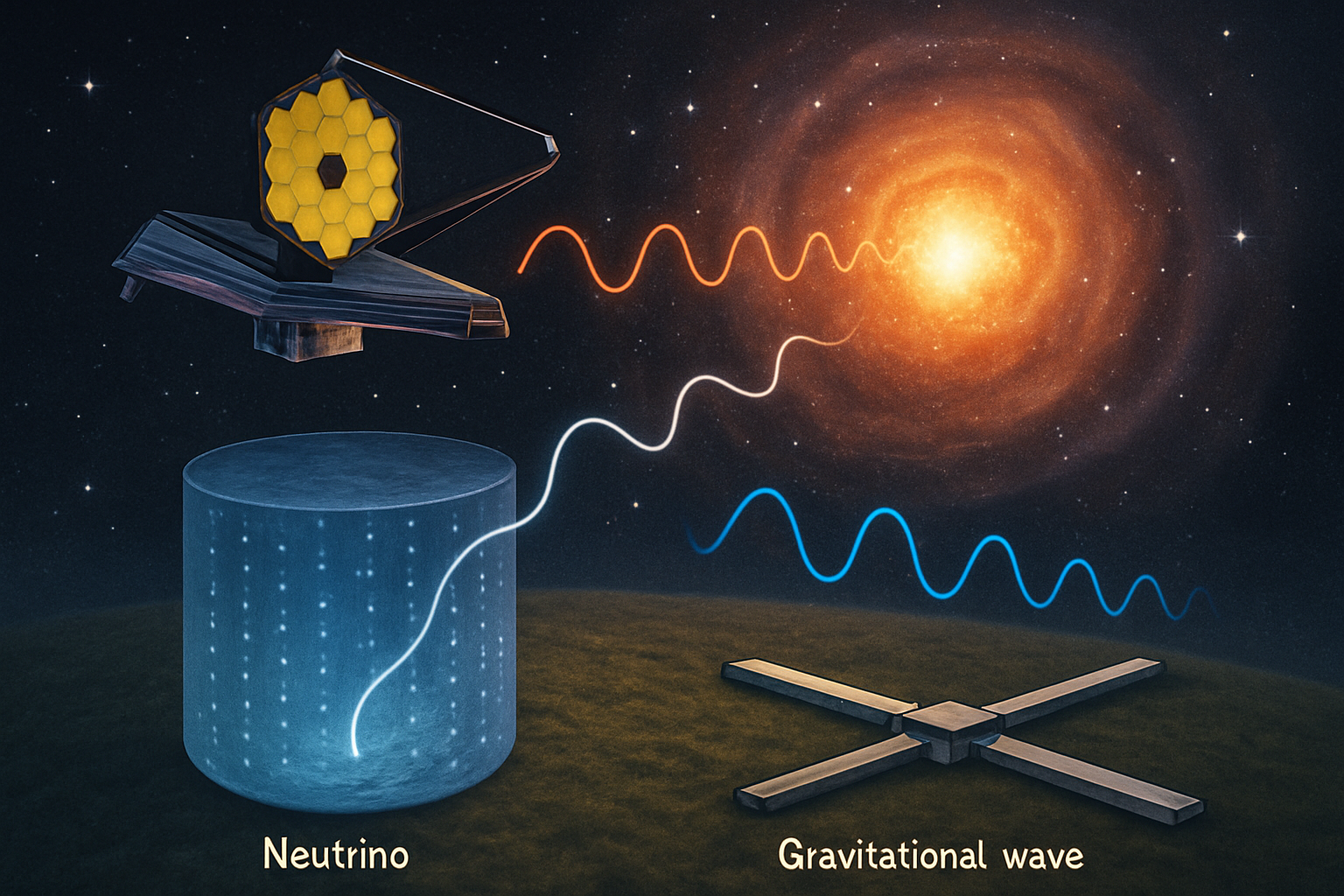
Advanced observations across infrared, neutrino, and gravitational wave channels are converging to reveal new details about the universe's earliest instants. By combining data from space telescopes and ground-based detectors, researchers are refining our cosmic origin story and opening doors to deeper mysteries.
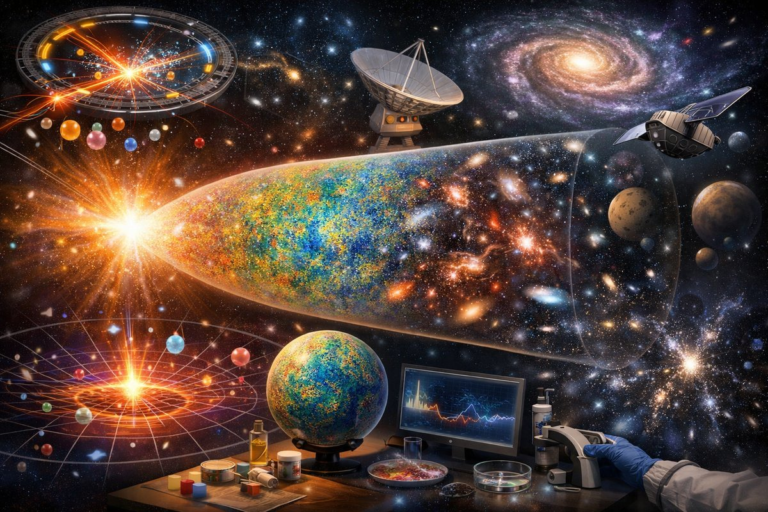
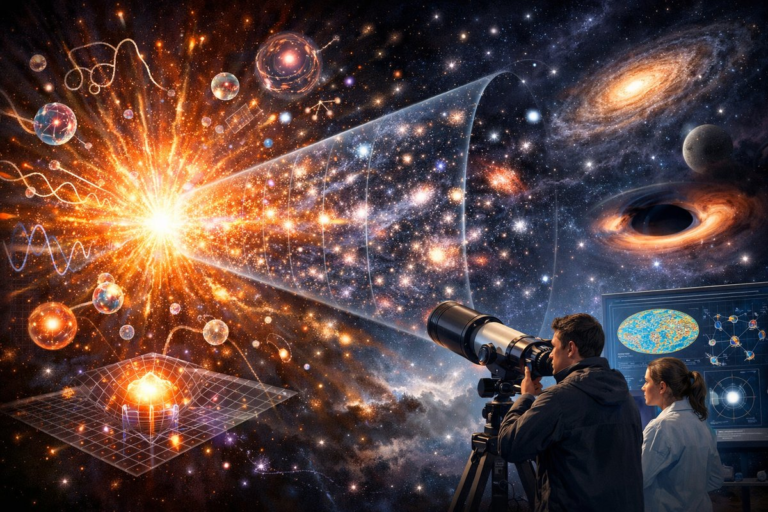
In the silent expanse before the first light, the universe hid its secrets beneath layers of darkness and energy. Recent breakthroughs in multiwavelength astronomy and particle detection are now peeling back those layers, offering an unprecedented glimpse into the first fractions of a second after the Big Bang. By weaving together signals from infrared surveys, neutrino observatories, and gravitational wave detectors, scientists are building a richer, more nuanced narrative of how cosmos and structure arose from an almost featureless sea of primordial energy.
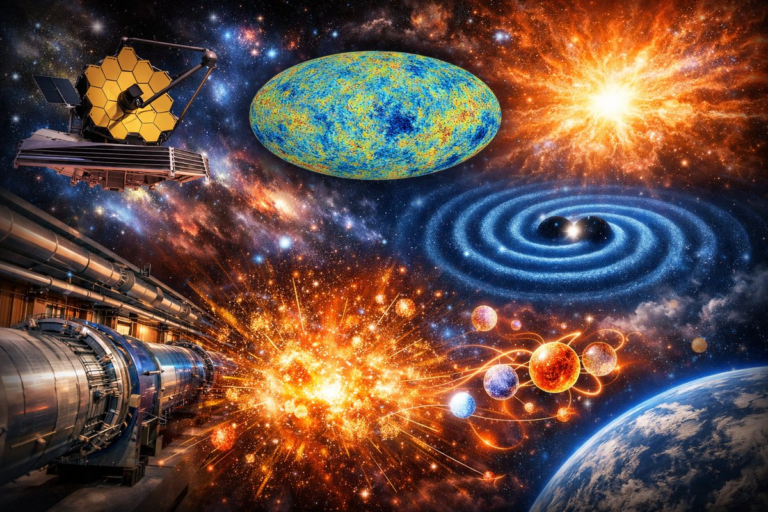
Infrared observations have become a cornerstone in this effort. Space-based observatories equipped with highly sensitive infrared imagers are capturing faint glow from the earliest galaxies. Those distant light sources, redshifted by billions of years of cosmic expansion, carry the fingerprints of the first zones of star formation. High-resolution infrared maps reveal clustering patterns that hint at how dark matter scaffolding guided the assembly of matter. As astronomers refine these maps, they uncover clues about the temperature, composition, and distribution of gas clouds that eventually ignited into the first stellar nurseries.
At nearly the same time, neutrino detectors buried deep beneath ice or rock are listening for ghostly particles emitted in cataclysmic events of the young universe. Unlike photons, neutrinos traverse space almost unimpeded, preserving information from environments too dense for light to escape. Recent analysis of high-energy neutrino events has sparked discussion about whether we’re observing relics from the era when fundamental forces separated. If confirmed, these detections could offer the first direct window into interactions that took place mere moments after the universe emerged from an ultra-hot, unified plasma.
Gravitational wave astronomy adds yet another dimension to this unfolding chronicle. After the landmark detection of ripples from colliding black holes, researchers are pushing toward the detection of a stochastic background-an omnipresent hum of gravitational waves generated during cosmic inflation. Designing experiments sensitive enough to tease out that faint background requires global coordination: networks of detectors spanning continents, synchronized timing, and sophisticated noise-reduction techniques. Success in this domain would provide direct evidence of the rapid, exponential expansion thought to have set the large-scale structure of the cosmos.
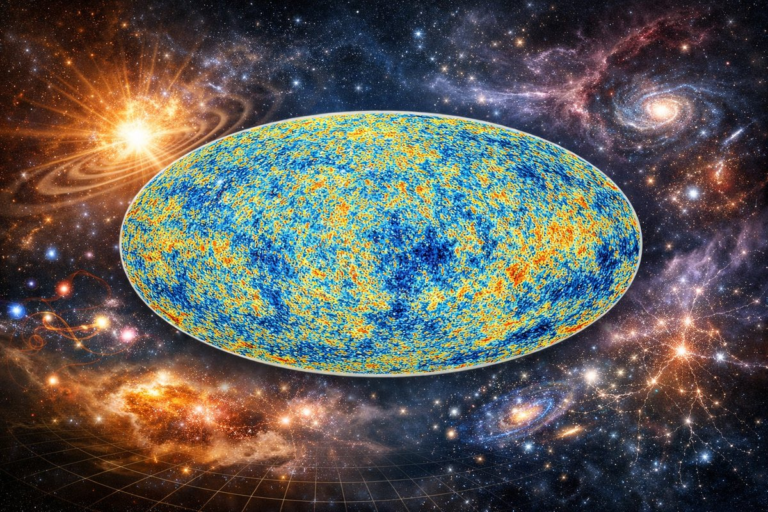
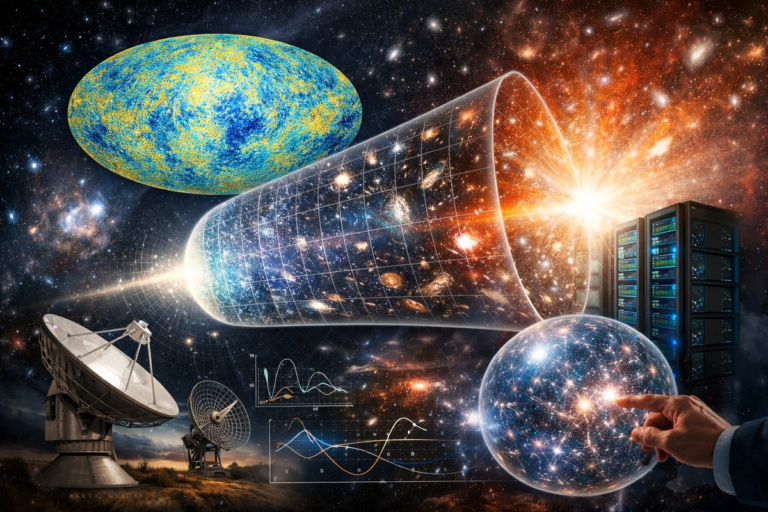
Meanwhile, the cosmic microwave background (CMB)-the afterglow of the Big Bang-remains a powerful source of information. New ground-based telescopes at high-altitude sites are mapping minute temperature and polarization patterns with ever-greater precision. These patterns encode data on the universe’s composition, geometry, and growth history. Tiny anisotropies in the CMB are blueprints of the seeds from which galaxies and galaxy clusters eventually formed. Combining these measurements with infrared and neutrino results is helping researchers discriminate between competing inflation models and test hypotheses about hypothetical particles that could make up dark matter.
Driving these achievements is a surge in collaborative data analysis powered by machine learning. Advanced algorithms comb through petabytes of data, identifying subtle correlations and unexpected anomalies that might elude conventional statistical methods. Open-source platforms encourage transparency and reproducibility, inviting citizen scientists and early-career researchers to contribute to code development and data interpretation. This democratization of discovery reflects a commitment to inclusivity and shared intellectual ownership-a principle as important as any telescope or detector design.
On the theoretical front, progress in high-energy physics and cosmology is illuminating the mechanisms that could have triggered inflation, governed phase transitions in the early universe, and shaped the behavior of quantum fields at extreme energies. Models leveraging extra dimensions or modifications to general relativity are under active investigation, with each new observational constraint narrowing the theoretical landscape. Researchers emphasize that progress thrives on diversity of thought: novel ideas emerging from unexpected corners of academia often spark crucial breakthroughs.
Sustainability has also become a guiding value in big-science projects. From minimizing the environmental impact of observatory construction to optimizing energy consumption in data centers, teams are seeking greener pathways to understanding the cosmos. Solar arrays power remote telescope sites, and circular-economy principles influence instrument fabrication. By embedding environmental consciousness into the research pipeline, the scientific community underscores the importance of stewardship even as it reaches for the stars.
Beyond technical rigor, these discoveries resonate emotionally. Peering into the universe’s infancy evokes a profound sense of wonder and shared curiosity. The realization that every atom in our bodies emerged from processes that unfolded billions of years ago connects us intimately to cosmic history. That human ingenuity can decode whispers from the universe’s dawn speaks to our collective resilience and imaginative spirit.
Technological spin-offs from cosmology research continue to influence everyday life. Imaging sensors refined for faint-signal detection improve medical diagnostics. Signal-processing algorithms originally developed for gravitational wave searches enhance earthquake monitoring and telecommunications. Even the challenge of managing colossal datasets has accelerated cloud-computing solutions that fuel industries far beyond astronomy.
Looking ahead, the next generation of observatories promises to carry this momentum forward. Planned missions include ultra-deep infrared surveys to find the very first galaxies, expanded telescope arrays to sharpen neutrino point sources, and space-based gravitational wave detectors capable of probing lower frequencies. Each project involves international partnerships, shared funding models, and interdisciplinary teams uniting astrophysicists, engineers, and data scientists.
Public engagement initiatives harness the same curiosity that drives professional researchers. Citizen-science platforms let enthusiasts help classify galaxy shapes, chart meteor showers, and even develop software for data pipelines. Science festivals, virtual reality experiences, and interactive star maps cultivate a deeper connection between individuals and the cosmos, nurturing the next generation of explorers.
As we piece together the universe’s origin story, certain mysteries endure: the true nature of dark matter, the physics of the very first instants, and the full profile of cosmic inflation. Each discovery raises new questions, ensuring that the grand pursuit never truly ends. Yet even partial answers enrich our perspective, offering a humbling reminder of both the vastness of space and the ingenuity of the human mind.
In the quiet moments before dawn, when the night sky still glimmers, people around the world can look up and reflect on the saga of creation that modern science is gradually unraveling. That shared experience of wonder-amplified by the latest breakthroughs-bridges cultures and generations, reminding us that in tracing our cosmic roots, we find common ground and hope for what lies ahead.