Location
Mount Vernon, WA 98274
Location
Mount Vernon, WA 98274

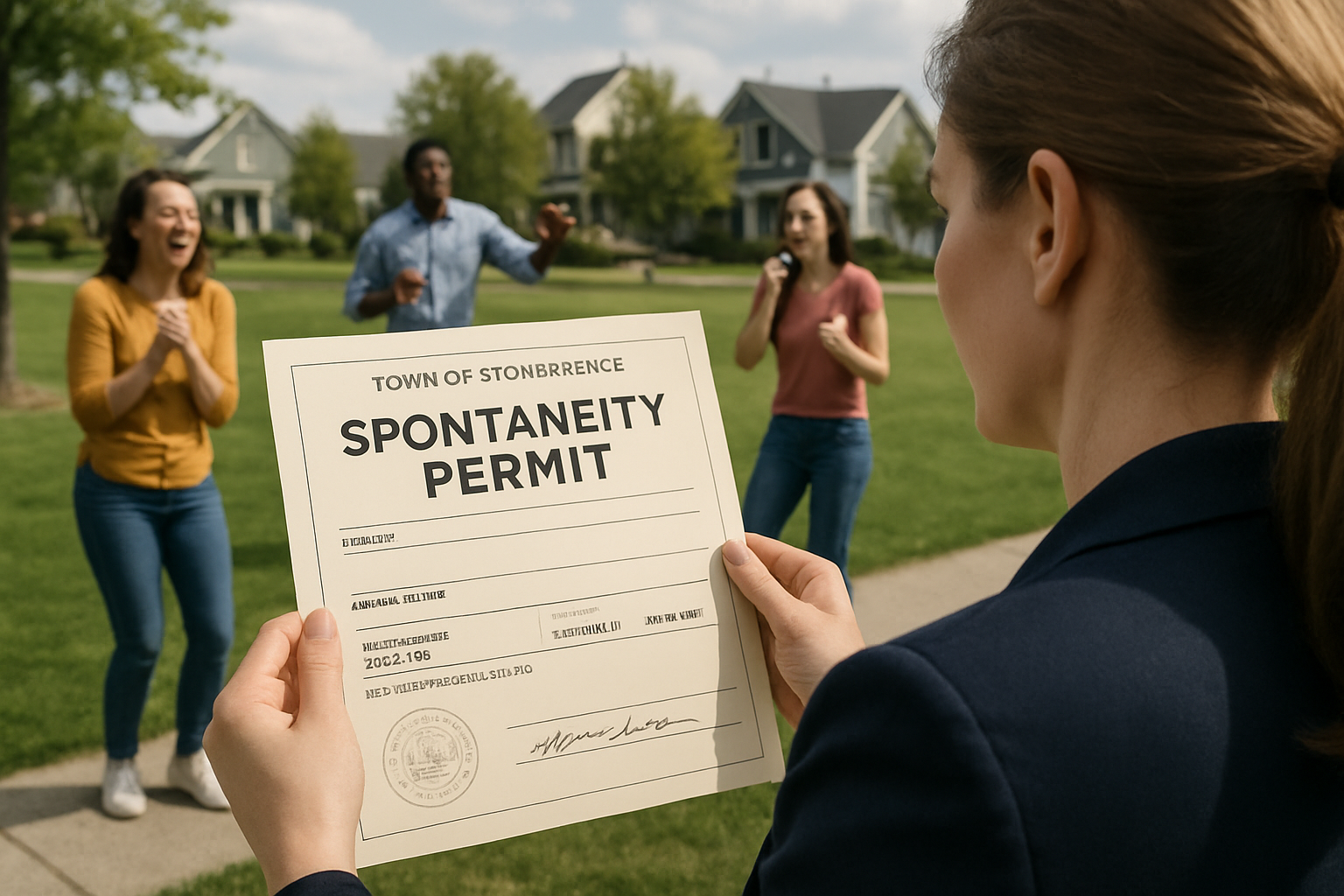
In an unprecedented move blending community engagement with red tape, Stonebridge officials now require residents to apply for spontaneity permits every two weeks before engaging in unplanned activities. Amid outrage and confusion, locals grapple with scheduling impromptu laughter, surprise dance-offs, and last-minute karaoke.
Stonebridge, a town long celebrated for its predictable weather forecasts and meticulously trimmed hedges, has introduced an ordinance so bewildering it might just become the next tourist attraction. Effective immediately, every citizen who wishes to partake in any unplanned or spontaneous activity must submit a Spontaneity Permit Application to the newly established Department of Unscheduled Events (DUE).
Mayor Felicity Hardgrave, appearing resolute behind a podium draped in pastel bunting, explained that the intention is to balance the community’s craving for surprise with its need for orderly recordkeeping. “We’re not against fun,” she declared, clutching a clipboard with exactly seven forms attached. “We just believe that a little planning goes a long way-even when you’re planning not to plan.”
The permit comes in two tiers: Tier A covers minor spur-of-the-moment hiccups-like spontaneous sidewalk chalk art or impromptu three-minute dance breaks-while Tier B is reserved for higher-stakes unplanned events, including surprise birthday pranks, sudden group singalongs at the park, and flash mob pillow fights. Each application requires a description of the desired spontaneity, projected emotional impact, anticipated cleanup efforts, and, most critically, preferred date and time slots for unplanned behavior.
DUE Director Lionel Brummel, a former library assistant turned civil servant extraordinaire, described the labyrinthine review process with enthusiastic precision. “Applicants must allow a five-business-day turnaround for Tier A and a ten-business-day turnaround for Tier B. Exceptions can be filed through our expedited spontaneity hotline, which unfortunately only operates between 1:13 p.m. and 1:17 p.m. on Tuesdays.” Brummel’s patience in reciting the policy-down to its most arcane time constraints-was met with a mixture of applause from city staff and polite yawns from press attendees.
Within hours of the announcement, Stonebridge’s City Hall lobby transformed into a makeshift flashback to the DMV. Long lines snaked past potted ferns, and frustrated citizens unwound laminated brochures titled “How to Request That Unscripted Thrill.” A clutch of retirees debated which Tier A form best covers spontaneous crossword puzzle sessions at the senior center. Nearby, teenage skateboarders fumed because their night-of-the-moment half-pipe jam apparently qualifies as Tier B, meaning they’d have to fill out paperwork just to ollie.
A handful of local business owners quickly adapted their storefronts. The Blue Corgi Café began offering an “Approved Spontaneity Package” complete with a pre-filled application, a cappuccino, and a complimentary doodle. “We figured if people are already here waiting, we might as well brighten their day while they wait for approval to brighten theirs,” said owner Marisol Jensen, sliding an espresso toward a young woman clutching a clipboard labeled “Expedite Me.”
Opposition to the ordinance sprang up almost immediately. A protest group calling itself “Unplanned, Unstoppable” assembled in the town square wielding handmade signs reading, “Life Isn’t a Calendar!” and “Stop Scheduling the Unexpected!” When asked why they had arrived without prior notice, one organizer shrugged and said, “We just felt like doing it.” They subsequently faced citations for participating in an unauthorized spontaneous rally.
Local reaction has been a cocktail of bemusement and resentment. Kindergarten teachers in Stonebridge Elementary issued Tier A permits every Friday afternoon for “recess free dance,” only to learn that the children’s spontaneous games of tag counted as Tier B “high-energy, unregulated play.” Meanwhile, construction crews must now certify on their permit that surprising bursts of hammer-to-nail rhythm won’t shatter neighborhood windows.
At the heart of the controversy is the fear that Stonebridge has overstepped the bounds of civic order. Dr. Nate Hawthorne, a sociologist who recently moved to town, warned that codifying unpredictability could backfire. “The irony is that by regulating spontaneity, you’re effectively eliminating it,” he explained. Yet, when asked if he’d filed for a spontaneity permit to voice that critique, he sheepishly admitted he’d missed the Tuesday window and would have to wait two weeks.
Several seniors recounted fond memories of unanticipated summer storms and backyard s’mores that never required paperwork. “Once you start cataloging everything, you lose the joy of surprise,” muttered Agnes Truett, who attempted to rally her book club for an impromptu mystery reading under the oak tree but had to postpone until the permit was approved. The club, now awaiting Tier A clearance, has resorted to reading chapter summaries instead.
Proponents of the policy argue that Stonebridge is setting a precedent for other towns grappling with the chaotic side of human nature. Councilman Theo Ramirez, co-author of the ordinance, claimed that standardizing randomness could enhance civic life. “Imagine a world where every belly laugh is accounted for, every raised eyebrow is documented,” he enthused at a community forum. “Soon, we’ll have a dashboard monitoring townwide happiness per capita!”
At the first DUE town hall meeting, attendees watched in stunned silence as a color-coded map displayed predicted spontaneity levels across Stonebridge neighborhoods. Areas marked in deep magenta-“Unlikely Spark Zones”-were places where residents seldom booked Tier A or B permits. Conversely, the main square glowed emerald, signaling an overabundance of licensed spontaneity. Some citizens wondered whether unlicensed surprise underdogs might rise to reclaim those neglected zones.
Late-night comedians nationwide have seized on Stonebridge’s ordinance as prime material. Internet memes depict citizens clutching permit forms while trapped in elevator small talk, nervously checking watches in case they need spontaneous bathroom breaks. A popular mock PSA features an actor in a suit intoning, “Before you sneeze, make sure you’ve reserved your SneezeSlot™.”
Despite the ridicule, sales of novelty pens and clipboard sets have surged in local stationery shops. One shopkeeper, Linda Graves, admitted she can’t keep the “Official Spontaneity Application Kit” in stock. “Everyone’s desperate to prove they can be unpredictable-if only on paper,” she quipped. A rumor even circulated that an online marketplace was listing counterfeit spontaneity permits, though town officials dismissed it as “Tier C mischief.”
Perhaps most paradoxical is how Stonebridge residents have turned DUE’s bureaucracy into a competitive sport. Neighborhood associations compete to clear applications fastest, posting weekly “Unplanned Approval” tallies on community boards. Prizes include jars of confetti-certified Tier A-eligible for occasional tossing-and decorative calendars labeled “Emergency Spontaneity Days.”
Behind the scenes, DUE employees confess they sometimes forget what real spontaneity feels like. “I used to buy lottery tickets on a whim,” confessed permit reviewer Marjorie Chen. “Now I can’t even decide if that counts as significant enough to require paperwork.” She admitted to quietly skipping paperwork and dancing down the hallway when no one is looking-a rogue act of unapproved fun that she describes as “liberating.”
After two weeks of chaos, Mayor Hardgrave announced a review committee that includes philosophers, librarians, and at least one professional improv troupe. Their task: assess whether the Spontaneity Permit Ordinance fosters genuine moments of surprise or merely turns unpredictability into another line item on a budget sheet. Their findings are expected to drop-spontaneously.
Meanwhile, families continue to navigate the fine line between chaos and compliance. Parents struggle to obtain Tier A approvals for backyard water balloon fights before the kids age out. Couples wonder if impromptu candlelit dinners require a permit or can be considered “domestic Tier A under domestic Tier A exceptions.” Even pets have allegedly become collateral damage, with one dog reportedly cited for barking without prior authorization.
As dusk settles across the neatly planned streets of Stonebridge, a lone citizen sits atop a park bench, permit application in hand, wrestling with the burden of booking tomorrow’s surprise. The lampposts flicker on in orderly intervals, and the faint echo of an unlicensed giggle wafts across a flowerbed. It remains to be seen whether Stonebridge’s great experiment will spark a renaissance of joyous unpredictability or choke it under layers of paperwork. But one thing is sure: when life in Stonebridge throws you a curveball, you’d better have that Tier B ready.