Location
Mount Vernon, WA 98274
Location
Mount Vernon, WA 98274

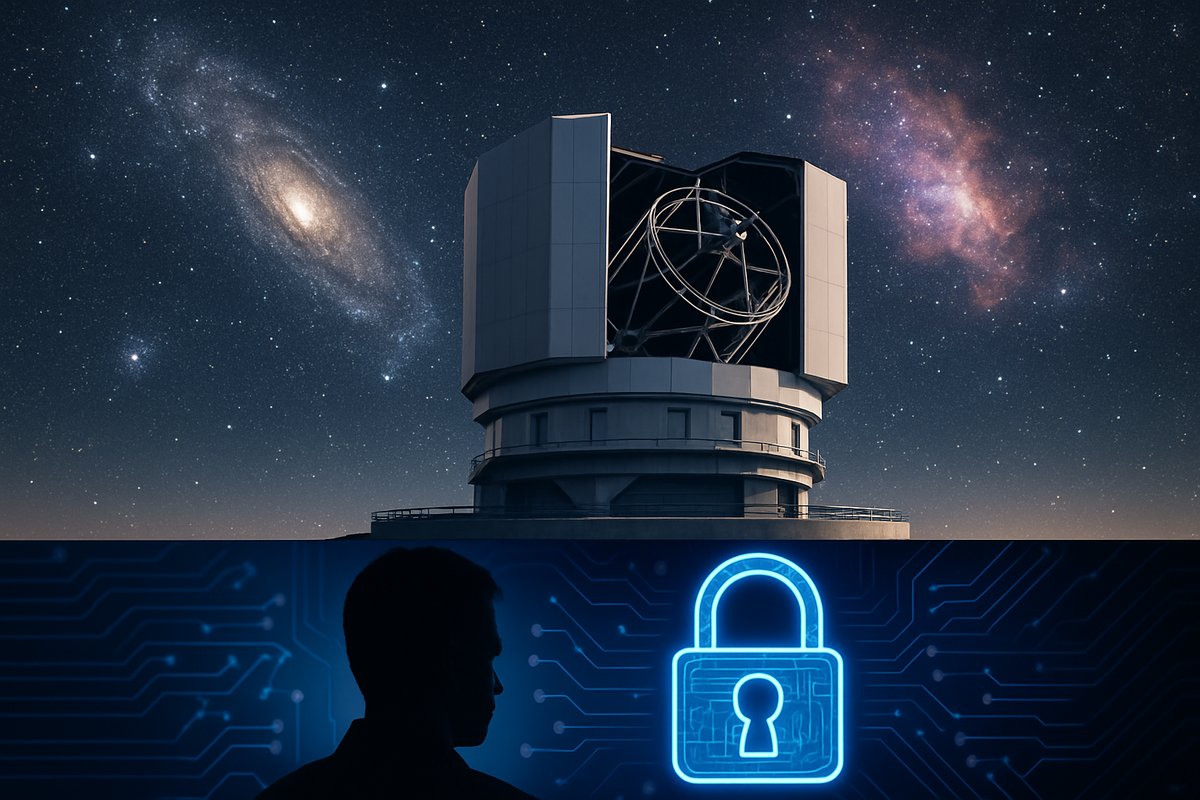
As next-generation observatories unlock unprecedented views of the universe, they also risk incidentally sweeping up terrestrial data that could infringe on personal privacy. This article delves into the emerging clash between space-time research, digital surveillance, spyware-detection strategies, and the ethical frameworks needed to safeguard individual rights.
When a network of high-sensitivity cosmic sensors begins mapping gravitational waves and neutrino bursts from distant galaxies, its achievements can redefine our understanding of physics. Yet embedded within that triumph lies a shadow side: side channels in ground stations that inadvertently collect terrestrial signals, from smartphone metadata to wireless emissions. As space science ventures deeper into the unknown, engineers and policy analysts are grappling with the unanticipated privacy implications of instruments designed to listen to the cosmos.
Consider one flagship project set to deploy a distributed array of radio and laser interferometers across remote mountaintops. Each installation houses an ultra-precise timing unit, GPS receiver, and environmental sensor suite to calibrate measurements down to billionths of a second. Those same subsystems, however, can pick up and log nearby Wi-Fi beacons, Bluetooth pings, and civilian GPS reflections. A recent whitepaper from an independent research group found that early prototypes had cataloged over 200,000 unique device identifiers within a six-month trial-raising alarms about surveillance by design.
At the heart of the dilemma is the blurred boundary between cosmic signal collection and terrestrial data capture. Instruments tuned to faint pulses from pulsars or mergers of black holes demand extreme sensitivity. Yet any sensor with an open radio frequency front end or location fix function can pick up unintended human traffic. Without robust filtering, these research platforms become inadvertent eavesdropping stations-amassing personal data under the guise of astrophysical discovery.
Privacy advocates warn that if left unchecked, the next wave of observatories could be repurposed for broad-scale surveillance. Ground-station operators might legally retain raw logs of device MAC addresses, signal strengths, and timestamps-data that can reconstruct movement patterns, social interactions, and even daily routines. While scientists rarely intend to spy on citizens, the mere capability triggers a conflict with digital rights frameworks built to protect individuals from unauthorized tracking.
In response, cybersecurity specialists are inserting spyware-detection and removal toolkits directly into the data pipelines. Edge processors running anomaly-detection algorithms can flag suspicious ground-based signals for sanitization before storage. Open-source firmware updates enable real-time classification of signal origins, stripping out any human-attributable metadata while preserving genuine cosmic measurements. These privacy-respecting workflows mark a shift from after-the-fact compliance to privacy by design in space instrumentation.
Emerging methods for this approach borrow from cutting-edge fields like federated learning. Instead of uploading raw sensor data to central servers, each station trains a lightweight machine-learning model on its own signals. Only encrypted model updates travel back to a shared aggregator, ensuring that no unfiltered ground-signal details leave the local node. Once the collective model can accurately distinguish between cosmic pulses and terrestrial interference, the entire array operates with a reduced risk of capturing private information.
Policy discussions have not lagged behind technological innovations. International bodies are revisiting the Outer Space Treaty to define “dual-use data”-information that straddles the scientific and surveillance realms. Proposals call for mandatory transparency logs, periodic audits by multi-national committees, and a new digital charter that extends terrestrial privacy laws into extraterrestrial contexts. Advocates argue that cosmic data stewardship must respect the same “purpose limitation” principles enshrined in global data protection regulations.
One notable milestone came when an intergovernmental consortium adopted a protocol requiring full encryption of telemetry links and a public summary of filtered datasets. This compromise allows institutes to publish gravitational-wave waveforms, neutrino event maps, and cosmic microwave background analyses without exposing any embedded device identifiers. Researchers can peer into star-forming regions light-years away without compromising the digital rights of communities near ground stations.
Yet technical solutions alone cannot solve deeper ethical questions. Who ultimately “owns” space-derived data? Do participants in citizen-science initiatives have a right to review the processing logs of detectors that may record their personal wireless signals? Digital-rights organizations argue that affected individuals deserve a form of “informed consent,” even in environments where the primary goal is pure research. This reframing recognizes that data collection footprints can extend far beyond traditional campus or lab boundaries.
At an upcoming symposium on ethical tech, speakers will emphasize the importance of privacy-preserving architectures in all branches of scientific instrumentation. They urge system designers to integrate hardware-level encryption modules, to adopt standardized filter lists for flagged frequencies, and to open-source the data-cleansing algorithms. By publishing transparent code and hardware specifications, the scientific community can build trust with both the public and oversight bodies-turning space science into a rallying point for privacy innovation rather than a potential threat.
Meanwhile, digital-rights advocates are challenging space agencies and research institutes to adopt binding data-minimization principles. The goal is simple: retain only the minimal necessary information to achieve astrophysical objectives. By default, ground-station software should disable any function that captures terrestrial signals unless explicitly authorized for calibration or environmental monitoring. Every extra byte of data logged carries a privacy risk that must be justified in writing and subject to review.
Alongside these high-level debates, a grassroots movement of amateur astronomers and open-science hackers has emerged. They’re prototyping open-source hardware shields that physically block unauthorized frequency bands. DIY filter boards-built from off-the-shelf components-clip onto radio receivers to block common civilian bands below 6 GHz. Enthusiasts also conduct local audits to verify that commercial ground sensors are not covertly harvesting private data on behalf of third-party vendors.
Regulatory bodies are taking notice. In one jurisdiction, legislation now stipulates that any licensed ground-station operator must submit quarterly spyware-detection reports, outlining the number of filtered signals, the frequency bands scrubbed, and evidence that no personal identifiers were stored. Noncompliance can result in fines or revocation of spectrum rights. This model aligns with broader efforts to hold edge-device operators accountable under digital-rights frameworks.
Looking forward, the convergence of cosmos-space-time science with privacy-surveillance and digital-rights principles demonstrates the complexity of 21st-century research. The frontiers of knowledge no longer lie solely in remote galaxies; they also lie in ensuring that our quest for universal truths does not undermine individual freedoms on Earth. By embedding spyware-detection tools, adopting privacy by design, and forging new ethical-tech standards, the next generation of observers can respect both cosmic mysteries and civic liberties.
As the world prepares for more sensitive explorations of space-time ripples and interstellar phenomena, the insistence on digital-rights protection will only grow stronger. Scientists, engineers, policy-makers, and citizens alike have a shared stake in crafting a framework that safeguards privacy without hampering discovery. After all, the wonder of starlight should illuminate human curiosity-not cast long shadows over personal rights.