Location
Mount Vernon, WA 98274
Location
Mount Vernon, WA 98274

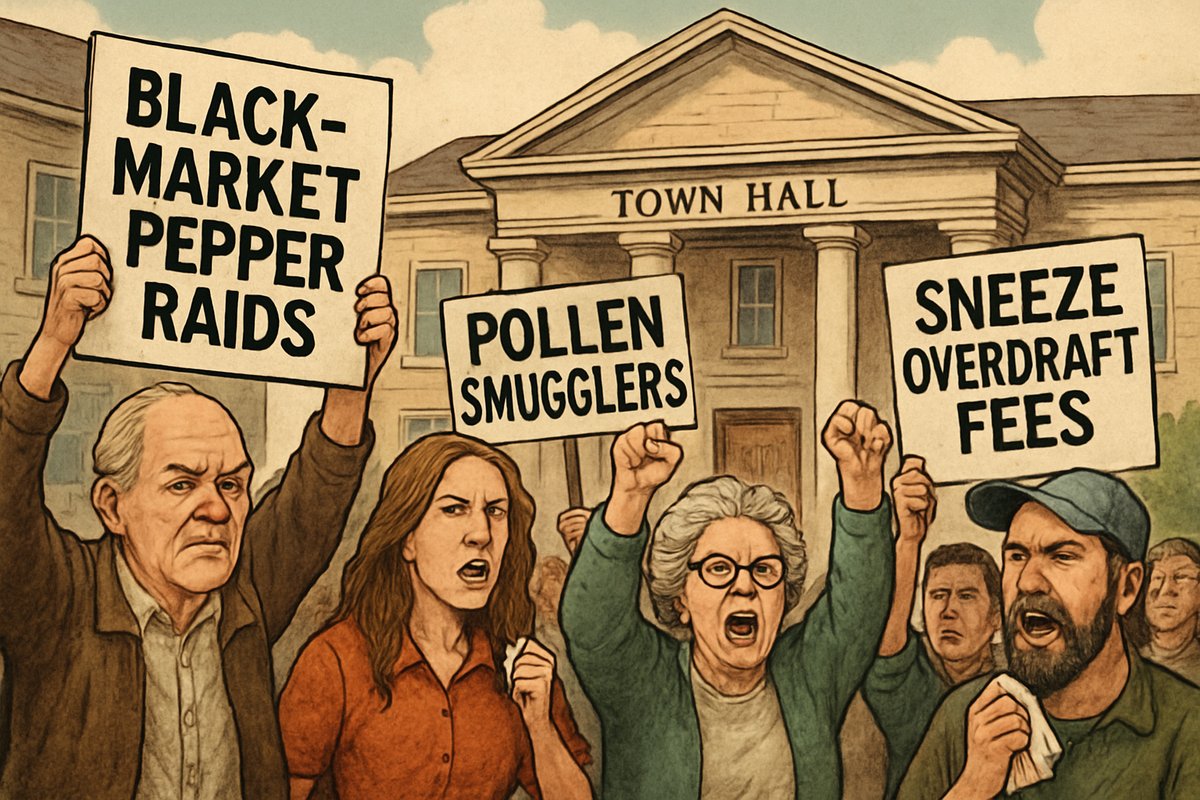
A small-town council has passed the Sneeze Licensing Act, requiring residents to register and pay for every nasal explosion. Citizens protest black-market pepper raids, pollen smugglers, and sneeze overdraft fees in this satirical look at bureaucratic overreach.
Glenchester’s town council voted unanimously last week to enact the Sneeze Licensing Act, transforming a reflex as old as humanity into a regulated civic duty. Under the new ordinance, every citizen must apply for a permit-valid for up to three sneezes per week-record each nasal eruption in a municipal logbook and pay a surcharge for any extra expulsions of air and mucus. Violators risk fines tallied not in dollars but in “nose points,” an abstract bureaucratic currency that can only be redeemed for local sidewalk chalk.
At the packed public hearing, residents crammed into the community center, some covering their noses with surgical masks, others clutching alarmingly full boxes of tissues. One attendee demanded to know whether hay-fever sufferers would receive mercy permits in spring. Councilmember Harriet Dawkins replied that “the only mercy we offer in Glenchester is forgiveness at the confessional-this council does not practice nose leniency.” The chamber erupted in coughs, sneezes, and scattered applause.
The Sneeze Licensing Act establishes a tiered fee schedule: basic permits for common colds, premium permits for seasonal allergies and an “emergency sneeze pass” for surprise pepper gusts. The ordinance also creates the Office of Nasal Compliance, staffed with rubber-gloved sneeze auditors who will visit homes unannounced to inspect tissue use and measure snot-speck ratios. A first offense incurs a warning; a second violation yields a citation and required attendance at the “Sneeze Safety Seminar,” featuring instructional videos titled Keep It In, Please.
Local entrepreneur Calvin Bickers immediately pivoted his coffee shop into the region’s first sneeze broker. From behind frosted glass, he hawks illicit pepper packets and pollen canisters wrapped in brown paper. Bickers boasts a thriving black market for sneeze futures: “My clients lock in next week’s sneeze quota at today’s rates,” he whispers while weighing a suspiciously aromatic spice blend on a digital scale. The scent wafts through the alley, prompting onlookers to cover their noses and panic about potential permit overages.
Across town, Glenchester Middle School implemented sneeze drills for students, turning a once spontaneous reflex into a timed event. Teachers now carry stopwatches, instructing twelve-year-olds to spritz saline mist precisely thirty seconds after the bell rings. “It’s preparation for real life,” says Principal Carver. “One day they’ll need to punch a sneeze card at their office buzzer.” Parents at the school board meeting objected to sneezing quotas during recess. One furious mother wailed, “My kid can’t even laugh without filling out a form!”
In a move that stunned allergy-sufferers everywhere, the Glenchester Pollen Festival was canceled indefinitely. Organizers had planned hay-bale mazes, floral art displays, and giant dandelion-blowing contests-events guaranteed to trigger multiple sneezes. The festival committee issued a public service announcement lamenting lost tourism dollars and promising to replace it with the Inhale Responsibly Expo, a chamber of commerce event featuring vacuum-sealed indoor gardens.
Sidewalk chalk artists complain of nose-point inflation. “Last year I did fifteen murals,” says local artist Zane Kim, “but this season I’ve used up my entire sneezing allowance just on a single portrait.” Kim now experiments with non-allergenic paints and sound-activated fog machines to simulate gusts without risking permit violations. “It’s performance art meets sneezing compliance,” he explains while adjusting a fog nozzle to release precisely timed clouds.
The regional news affiliate sent in a sneeze shock trooper, clad head to toe in hazmat gear, to document a raid on suspected pepper hoarders. The footage shows officers brandishing sniff detectors, confiscating jars of ground spices and loading them into cardboard boxes stamped “Sniff Evidence.” A neighbor peeks through curtains and mutters, “I haven’t seen this much excitement since sidewalk chalk was outlawed.”
Meanwhile, a grassroots group calling itself the Mucus Liberation Front has begun chalking sidewalks with messages like FREE THE SNEEZE and NO MORE LOOSE NOSES. They’ve staged caravans in decorated nasal floats, complete with sneeze cannons that shoot confetti instead of bodily fluids. The group’s leader, known only as The Itchy One, claims responsibility for plastering sneeze-point conversion charts on every lamppost. Police labeled these acts “nonviolent nasal terrorism.”
Outside Glenchester, neighboring towns are considering reciprocal sneeze-sharing treaties. Mapleton has offered to loan ten sneezes per month in exchange for Glenchester’s chalk supply. Oakvale responded by trademarking the term SneezeSwap and launching a mobile app that tracks breaths, blinks, and sneezes in real time, offering “compliance badges” to good citizens. Rumor has it they’re also developing an algorithm to predict when residents will exceed their quotas so they can up-sell emergency permits.
Legal scholars have scratched their heads at the constitutionality of sneeze regulation. A prominent law professor hosting a webinar argued that regulating involuntary bodily functions may be a slippery slope: “Next they’ll require licenses for burping, yawning, or blinking. What about breathing? Oh, wait, that already happened somewhere else.” Her audience erupted in nasal applause-evidence she herself had snuck in triple-sneeze permits.
Amid all the chaos, the town council insists the Sneeze Licensing Act will improve public health and safety. Councilmember Dawkins claims the ordinance will reduce workplace distractions, curb airborne illness transmission and boost local revenue. Critics call it a “nasal cash grab” and vow to challenge the law in court as soon as they muster the three sneezes needed to file legal paperwork. For now, Glenchester’s noses are clouded in confusion, and each tickle-or lack thereof-now carries the weight of municipal authority.
As the sun sets on Glenchester, residents pause before exams, meetings, and dinner parties to wonder whether that first ticklish hint in their sinuses will be a legally sanctioned sneeze or an unlicensed nasal rebellion. In the meantime, pepper packets have become contraband, and the town’s tagline officially reads: “Glenchester-where every sneeze counts.”