Location
Mount Vernon, WA 98274
Location
Mount Vernon, WA 98274

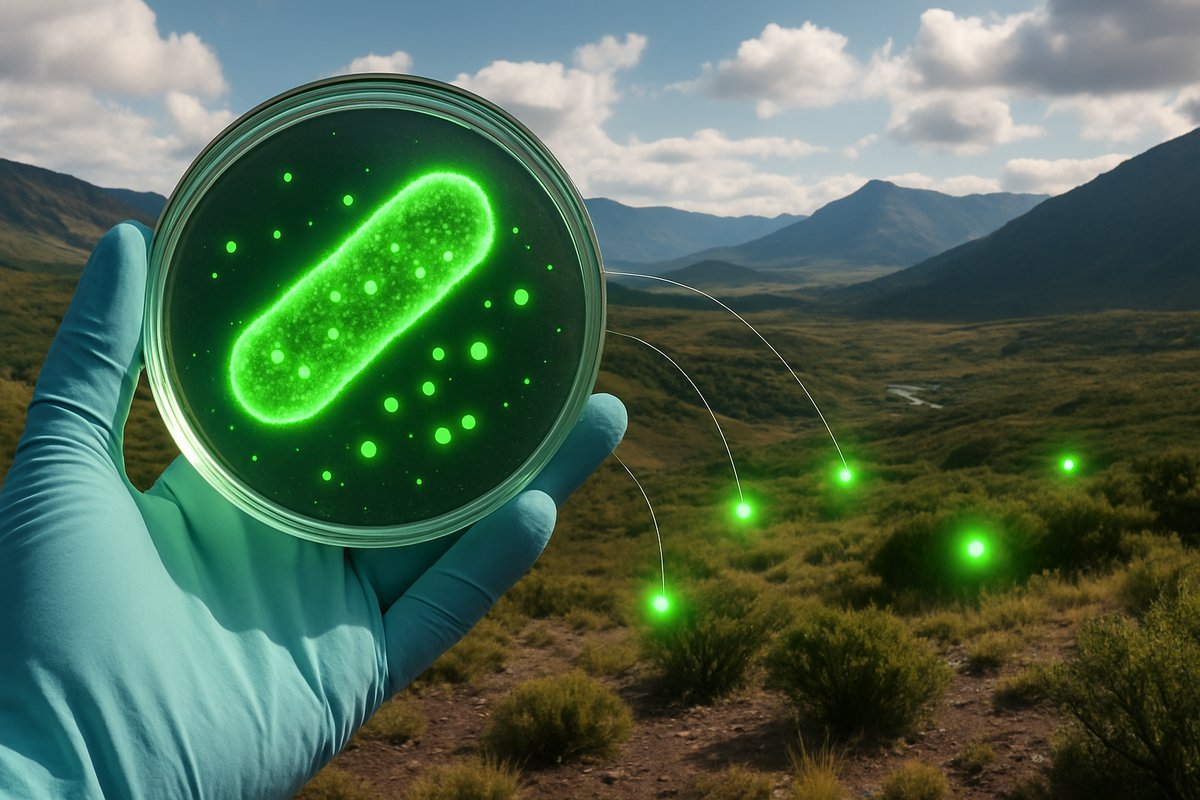
A breakthrough in synthetic biology has yielded living sensors capable of reporting real-time ecosystem changes. Deployed across remote landscapes, these engineered microbes could transform environmental monitoring by transmitting biochemical data through detectable fluorescent signals.
Across the rugged slopes of remote mountain ranges and the vast expanses of boreal forests, a silent transformation is underway. Tiny engineered microbes, no larger than a single grain of sand, are being deployed as living sentinels to capture and broadcast essential information about their surroundings. Born from a collaboration between microbiologists, ecologists, and drone engineers, these microbial sensors promise to deliver unprecedented insight into soil health, moisture levels, and pollutant concentrations-all in real time.
Traditional environmental monitoring methods rely on periodic sampling and lab analysis, a process that is often laborious, expensive, and limited in scope. Automated stations can fill in some of the gaps, but they rarely capture fine-scale variations across challenging terrain. By contrast, microbial sensors integrate seamlessly with their habitat. Once engineered to produce distinctive fluorescent proteins in response to specific chemical triggers-such as rising nitrate levels or shifts in soil pH-they become living indicators that can be surveyed remotely.
At the heart of the system lies a suite of genetically modified soil bacteria equipped with synthetic gene circuits. Each circuit is programmed to activate a fluorescent reporter when detecting defined thresholds of environmental factors. For instance, a microbe designed to sense heavy metals will produce a red-shifted glow when cadmium or lead exceeds predetermined safe levels. Another strain might emit green fluorescence in response to drought stress, as soil moisture dips below critical points for plant vitality.
These luminescent cues, invisible to the human eye, can be detected by multispectral drone cameras. Flying at low altitudes, the drones capture high-resolution imagery that reveals hotspots of activity across the landscape. Advanced image-processing algorithms then translate the fluorescence patterns into georeferenced maps, pinpointing areas that warrant further investigation or intervention.
Field trials conducted over the past year have demonstrated the robustness of this approach. In a pilot study across a temperate rainforest reserve, microbial sensors detected an early increase in soil acidity weeks before conventional tests flagged any anomaly. Park managers were able to deploy targeted treatments to vulnerable peat bogs, averting a cascade of microbial imbalances that could have compromised key carbon sinks.
Another trial in an arid grassland revealed localized spikes in nitrate concentrations downwind of a fertilized crop field. By cross-referencing drone imagery with weather data, researchers traced the pollution plume back to irrigation runoff channels that had gone unmonitored. This case study underscores the power of microbial sensors to uncover hidden feedback loops in land management practices.
Beyond pollutant detection, synthetic biology opens the door to a vast array of ecological diagnostics. Future variants could monitor soil respiration rates by producing fluorescence in response to elevated carbon dioxide levels. Others might sense root exudates linked to plant health, allowing foresters to detect early signs of pathogen invasion or nutrient deficiency.
The development of microbial sentinels also raises important ethical and safety considerations. To prevent unintended spread, engineered strains are equipped with built-in biocontainment mechanisms. One design includes a dependency on an artificial nutrient that does not occur naturally in wild soils. Once the provided nutrient is depleted, the microbes lose the ability to sustain themselves and perish. Another layer relies on synthetic “kill switches” that trigger self-destruction if the bacteria escape predefined temperature or pH ranges.
Regulatory agencies and community stakeholders have been engaged throughout each stage of research. In regions where indigenous land rights intersect pilot sites, scientists have hosted open forums to discuss potential risks and benefits. Transparent data sharing agreements ensure that local communities retain ownership of ecological information gathered on their lands, reaffirming respect for sovereignty and environmental justice.
The cost efficiency of living sensors is striking. While deploying a network of automated chemical probes can run into the tens of thousands of dollars per site, a microbial-based approach requires only an initial batch of lab-grown bacteria and periodic drone flights. As production techniques improve, the price of synthetic gene circuit assembly continues to fall, making widespread adoption more feasible for conservation groups, agricultural cooperatives, and research stations.
Integration with existing data platforms is also straightforward. Fluorescence maps can feed into open-source geographic information systems (GIS), where specialists layer them alongside satellite imagery, hydrological models, and biodiversity surveys. Machine learning tools can then analyze longitudinal trends, predicting hotspots of ecological stress before they escalate into irreversible damage.
The promise of microbial sentinels extends beyond terrestrial ecosystems. Marine biologists envision similar constructs tailored for coral reefs, capable of reporting early markers of bleaching or acidification. In freshwater environments, engineered algae might reveal shifts in nutrient loads that presage harmful algal blooms, offering a crucial early warning system for water managers.
Looking ahead, the fusion of synthetic biology with remote sensing heralds a new era of participatory environmental stewardship. Citizen science initiatives could empower volunteers to release microbial sensors in urban green spaces, tracking the impact of community gardens or green roofs on local air and soil quality. Educators might incorporate kits into classroom curricula, teaching students about molecular genetics, ecology, and data analysis through hands-on experimentation.
As climate change accelerates and anthropogenic pressures intensify, tools that enable rapid, accurate, and scalable monitoring become indispensable. Engineered microbial sentinels exemplify how living technology can amplify our capacity to observe and protect the planet. By harnessing the inherent sensitivity of biological systems alongside the reach of aerial drones and data analytics, researchers are charting a path toward an era in which ecosystems communicate their health directly to those who care for them. In this unfolding narrative, curiosity drives innovation, precision guides policy, and awe at life’s complexity inspires us to nurture the Earth in unprecedented ways.