Location
Mount Vernon, WA 98274
Location
Mount Vernon, WA 98274


Across denominations, a growing number of Christians are setting aside screens and embracing focused time in prayer, Scripture, and community. This emerging "Digital Detox Week" movement encourages believers to rediscover the rhythms of spiritual life, balancing modern demands with ancient practices of quiet devotion.
In living rooms and sanctuaries around the country, Christians are committing to weeklong digital fasts designed to reclaim mental space for prayer, Scripture study, and fellowship. Dubbed “Digital Detox Week,” this grassroots movement encourages participants to power down smartphones, tablets, and laptops for set periods each day and lean into time-honored spiritual disciplines. What began as a small experiment among college campus ministries has rapidly grown into an intergenerational phenomenon.
Leaders in several denominational networks trace the trend back to a brief challenge issued at a regional pastors’ gathering earlier this year. A handful of ministers suggested taking a Friday night through Sunday digital fast ahead of Easter as an invitation to deeper reflection on Christ’s passion. Social media posts tagged #DigitalDetoxWeek sparked curiosity, and within weeks, dozens of churches were organizing weekend retreats or small-group gatherings around the idea. Today, congregations large and small report hundreds of participants.
“We have younger members who feel tethered to screens for school and work, and older members who worry their grandkids spend all day on devices,” says one pastor in the Midwest who has led three detox weekends. “This challenge gives us a shared experience. By stepping away from constant notifications, people begin to notice God’s voice in the quiet.”
According to a recent Barna Group survey on faith and technology, nearly half of Christian adults say they would participate in a structured digital fast if their church provided guidance. That statistic reflects growing concern over screen fatigue and a desire for intentional spiritual rhythms. Participants report having more uninterrupted time for prayer, Scripture reading, and creative expression like journaling or drawing devotional art.
For Sarah, a young professional in Seattle, the digital detox represented a turning point in her prayer life. “I used to check my phone first thing in the morning, even on weekends,” she admits. “During my first Digital Detox Week, I struggled the first day without social media. But by day three, I found myself sitting in stillness with a cup of tea, reading a psalm. I realized I’d been missing those moments of simple listening.”
Her testimony mirrors those of many who say they rediscovered a practice of contemplative prayer long overshadowed by screen time. One longtime Sunday school teacher described writing a simple breath prayer-“Lord, be with me”-and repeating it every hour. She found herself more aware of God’s presence during routine tasks like folding laundry or walking the dog.
Digital Detox Week often includes group gatherings for corporate prayer and Scripture discussion. In one suburban church, families met each morning for a half-hour prayer walk in a nearby nature preserve. Parents held hands with toddlers, while teens carried journals in canvas bags, ready to note verses that stood out during silent reflection. The scene felt like a pilgrimage, complete with whispered prayers and occasional bursts of laughter as someone spotted a deer or watched sunlight filter through autumn leaves.
Beyond physical gatherings, some churches offer guided audio sessions recorded before the detox begins. These tracks provide Scripture readings, brief reflections, and prompts for prayer or journaling. Participants download the files ahead of time, then play them through a Bluetooth speaker or portable device that remains offline during the challenge. Organizers emphasize that the detox isn’t about condemning technology, but about using it more thoughtfully.
Small-group leaders often recommend keeping a physical journal rather than typing notes. Many participants report that writing by hand slows the mind and deepens engagement with biblical text. One facilitator shared an anecdote about a 12-year-old who filled half a notebook with doodles inspired by Revelation, each drawing accompanied by a sentence or two on what it meant to her.
On social media platforms outside the detox window, participants share before-and-after reflections using the hashtag #DigitalDetoxWeek. Posts describe breakthroughs in prayer focus, deeper insight into familiar passages, and even renewed joy in simple practices like lighting a candle during evening devotions. A few churches have seen new interest in midweek prayer services and have added early morning gatherings to their schedules.
Critics caution that digital fasts can become self-congratulatory if not rooted in genuine longing for God. Some spiritual directors stress the importance of framing the detox as preparation for lifelong rhythms rather than a one-off challenge. “The goal isn’t just to go without screens,” says a spiritual formation coach in the Southeast. “It’s to establish daily practices that last beyond the week-prayer anchors, Scripture memorization, acts of service, and moments of silence.”
In response, many Digital Detox Week programs now include follow-up resources. Participants receive weekly emails with brief devotionals, recommended Scripture passages, and community prompts-like writing a prayer to share with a neighbor or volunteering an hour at a local shelter. These resources aim to keep spiritual momentum going once screens are reintroduced.
One notable innovation is an audio podcast series produced by a coalition of campus ministries, releasing a short episode each morning of Digital Detox Week. Episodes pair an uplifting Scripture reading with a five-minute guided meditation. Listeners, unable to stream the episodes live, download them in advance and listen through Bluetooth speakers in homes, parks, or coffee shops that remain offline during listening times.
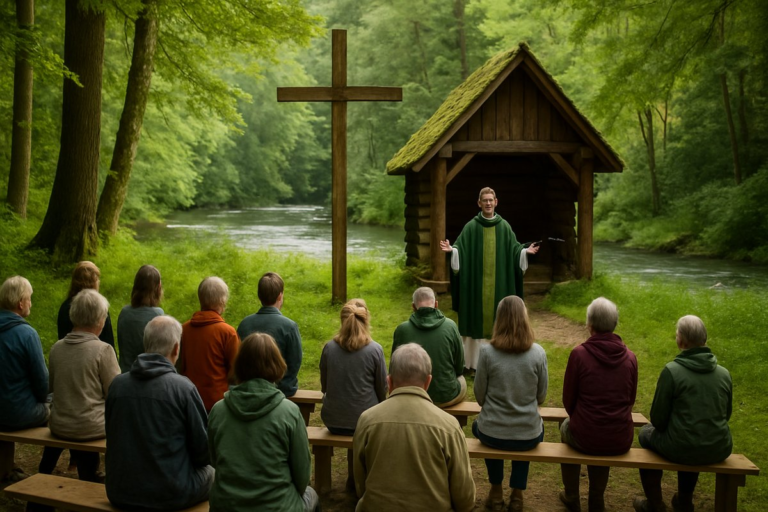
A handful of retreat centers have adapted cabins for digital-free stays, complete with prayer corners stocked with Bibles, notebooks, crayons, and colored pencils for creative reflection. These getaways offer participants an immersive break: no Wi-Fi, no cell service, and none of the usual digital distractions. Meals are communal, often made from seasonal, locally sourced ingredients, encouraging conversations that range from daily joys to deep questions of faith.
Early data from one retreat center’s post-stay survey reveals that 82 percent of guests made at least one new spiritual practice part of their routine after participating. Practices included nightly examen reflections, memorizing short Scripture verses, and setting alarms for midday stillness. Parents reported bringing digital detox principles into family life, such as instituting weekly “screen-free Sundays” or tech-free meal times.
Digital Detox Week also intersects with social justice and environmental concerns. Some organizers encourage eco-friendly elements, like using upcycled notebooks, planting prayerful gardens, or conducting neighborhood cleanups. Others integrate prayer walks with service projects-picking up litter while praying for local communities, or distributing water bottles and snack bars to the homeless as they move silently through city streets.
As Christians seek holistic renewal, the rise of Digital Detox Week reflects a hunger for balance in a wired world. By carving out intentional space for prayer, Scripture, and service, participants report a deeper sense of God’s nearness and a clearer vision for daily life. For many, the movement is more than a digital fast; it’s a gateway to a transformed spiritual rhythm.
“Every time I turn off my phone now, I don’t panic,” says one retreat attendee. “Instead, I look for God in the quiet-the way I used to before I was always scrolling. This isn’t about rejecting technology outright. It’s about choosing what nurtures my soul.”
Whether enacted in church basements, retreat cabins, or living rooms, Digital Detox Week is becoming a fixture on Christian calendars nationwide. As organizers refine their models and share best practices, the movement may help a new generation of believers rediscover the ancient discipline of stillness in the presence of the divine.
With smartphones and tablets ubiquitous, carving out periods of purposeful silence and focused prayer can feel radical. Yet for thousands of Christians, that radical choice is turning screens into tools rather than masters-transforming ordinary weeks into opportunities for spiritual renewal.