Location
Mount Vernon, WA 98274
Location
Mount Vernon, WA 98274

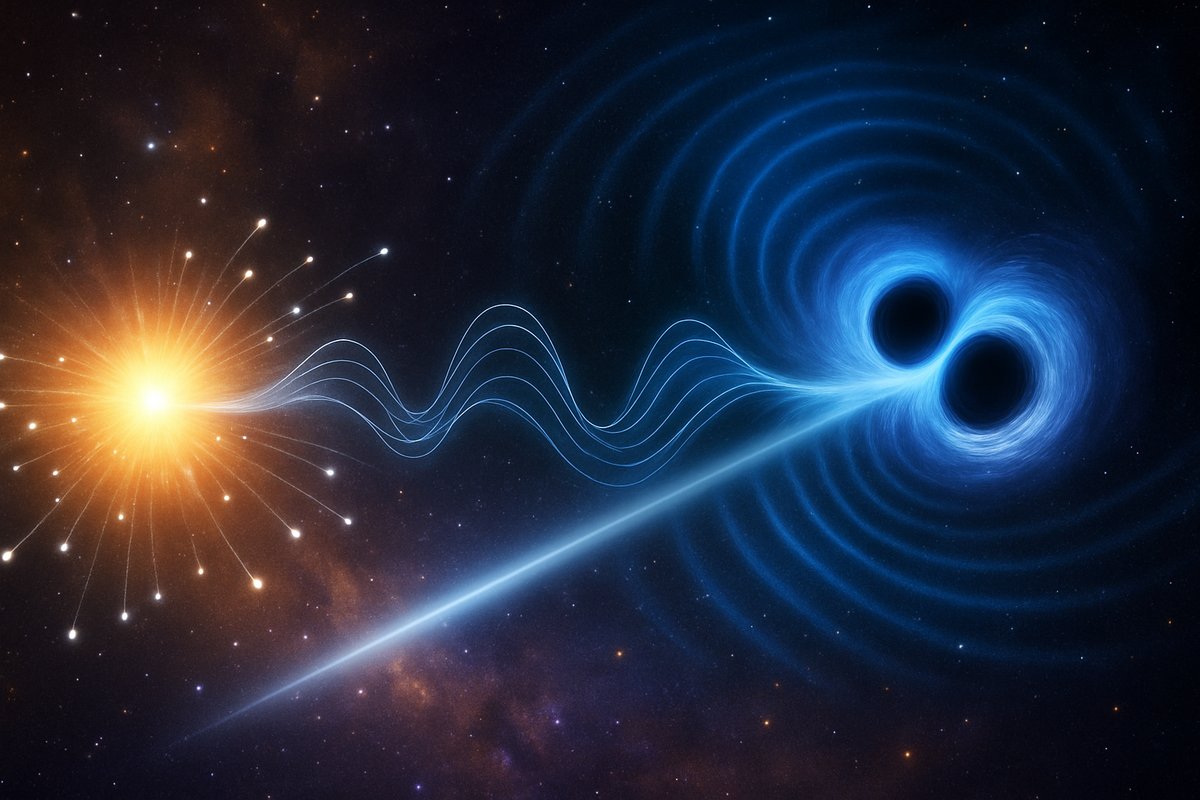
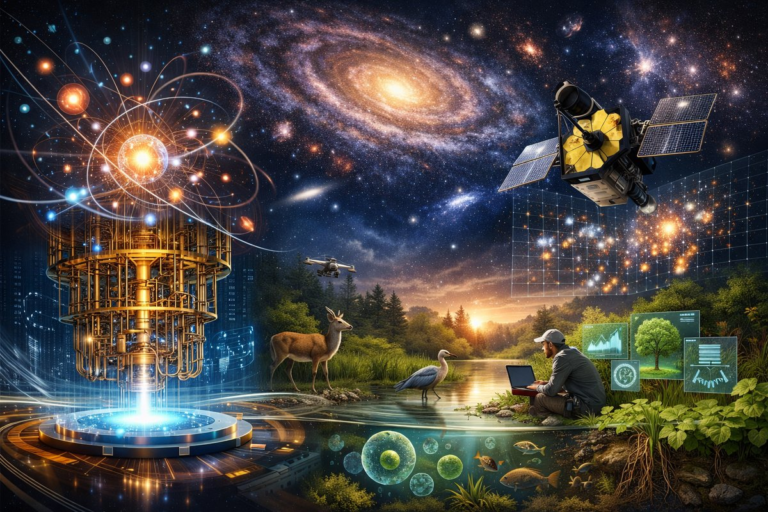
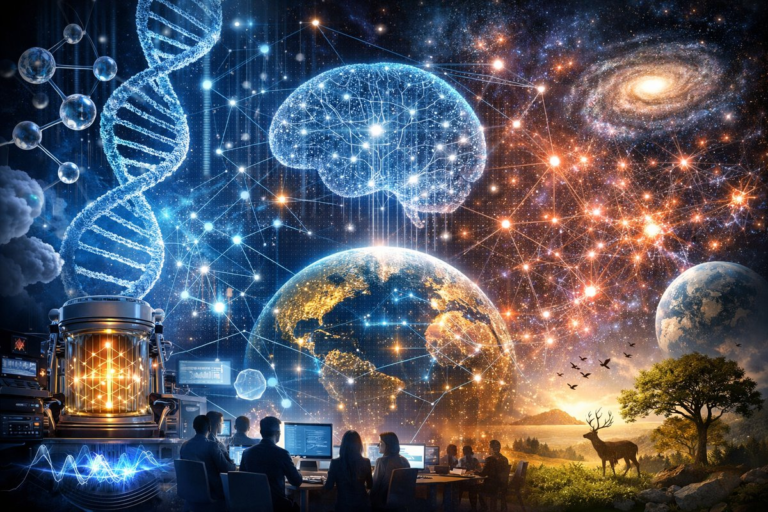
A new era of cosmic exploration is unfolding as neutrinos, gravitational waves, and light converge to reveal the universe's deepest secrets. Scientists are linking disparate signals into a unified narrative of star births, black hole mergers, and the very origins of matter.
For centuries, stargazers relied solely on light to decode the cosmos. The color of a star, the arc of a comet, the glow of a nebula-all arrived as photons traveling across unfathomable distances. Yet in the last decade, the spectrum of cosmic messages has exploded. No longer do astronomers listen only to light; they now tune into gravitational ripples and ghostly neutrinos. This tectonic shift-known as multi-messenger astronomy-is transforming our picture of the universe, turning once-hidden phenomena into vivid stories of creation and destruction.
The humble neutrino was long dismissed as an oddity: a subatomic particle with virtually no mass and no electric charge that slips through matter without a trace. A trillion neutrinos pass through your body every second and you don’t even notice. But when massive stars collapse or black holes collide, they unleash torrents of neutrinos. These ghost particles carry unfiltered information from the most extreme environments, passing unimpeded through gas, dust, and magnetic fields that would swallow light whole.
Neutrino observatories buried deep beneath ice or sunk into the ocean act as silent sentinels, waiting for the rare interaction when a neutrino collides with an atomic nucleus. The resulting flash of light marks a cosmic telegram decoded by arrays of sensitive photodetectors. In recent years, clusters of these flashes have pinpointed cosmic accelerators-blazars spewing jets of high-energy particles, supernova remnants forging heavy elements, and mysterious sources still defying classification.
Meanwhile, gravitational wave observatories have made waves of their own. When massive objects like neutron stars or black holes spiral into one another, they shake the very fabric of spacetime, sending out ripples that carry imprints of mass, spin, and collision dynamics. Detectors have measured these ripples from hundreds of millions of light-years away, translating minute changes in laser paths into cosmic event logs.
The first joint detection of gravitational waves and light from a neutron star merger in 2017 marked a turning point. Observatories around the globe converged on a single sky region, capturing a kilonova’s glow in multiple wavelengths. That event settled long-standing mysteries about how heavy elements like gold and platinum are formed, proving that these cosmic collisions forge nature’s most precious metals.
Multi-messenger astronomy is neither redundant nor accidental. Each messenger-photons, neutrinos, gravitational waves-probes a different aspect of violent astrophysical processes. Photons tell us about surface temperatures, chemical compositions, and magnetic fields. Neutrinos offer unobstructed views of dense interiors. Gravitational waves reveal the masses and orbits of colliding bodies. When cross-referenced, these signals offer a holistic portrait of cosmic engines that no single channel could achieve alone.
Modern research is focused on combining these streams into real-time alerts. As soon as a neutrino burst is registered by an underwater detector or a gravitational chirp is caught by interferometers, networks of optical, radio, and X-ray telescopes swivel to the target coordinates. Even amateur astronomers can join the chase, submitting observations of transient phenomena and helping refine localization. The result is an unprecedented, collaborative symphony of observation.
One of the most tantalizing frontiers is the search for dark matter clues. Since dark matter neither emits nor absorbs light, its presence has been inferred only through gravitational effects on galaxies and clusters. Some theories predict that dark matter particles annihilate to produce neutrinos or gamma rays. Multi-messenger networks are scouring the galactic center, dwarf galaxies, and galaxy clusters for telltale coincidences. While definitive detection remains elusive, each null result hones theoretical models and narrows the search space.
In parallel, scientists are exploring cosmic magnetic fields that thread galaxy filaments and shape large-scale structure. These fields are invisible to optical telescopes but influence the paths of charged particles. By comparing neutrino arrival directions with polarized radio signals, teams are beginning to sketch maps of intergalactic magnetism, shedding light on the forces that guided galaxy formation.
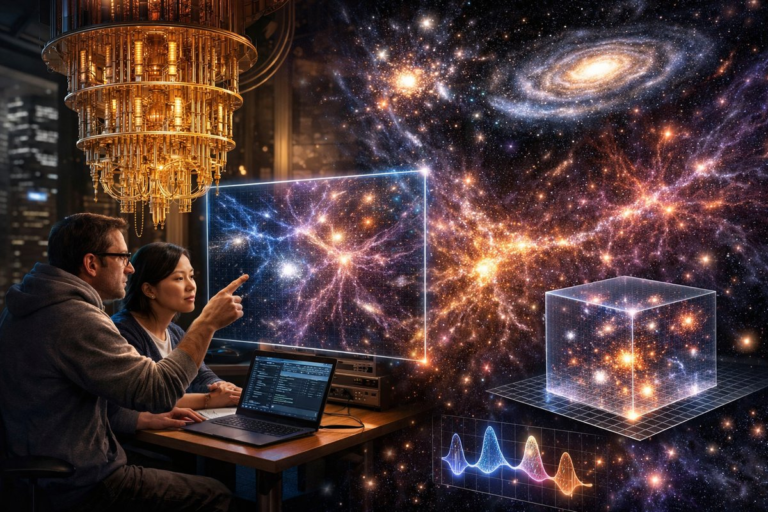
For neutrinos, vast detectors like deep-sea arrays and Antarctic ice sensors provide the volumes necessary to catch rare interactions. Gravitational wave facilities use kilometers-long laser interferometers anchored in remote valleys for seismic isolation. Across the electromagnetic spectrum, next-generation radio dishes, X-ray satellites, and high-energy gamma-ray telescopes coordinate observations through global data platforms. Behind the scenes, machine learning algorithms comb through petabytes of raw data, flagging patterns too faint or fast for the human eye.
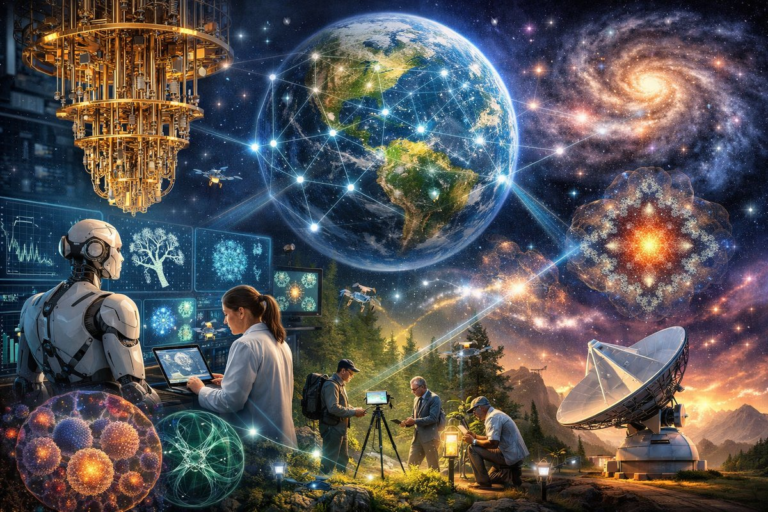
Collaborations span continents. Data flows seamlessly between research stations in Europe, North America, Asia, and the Southern Hemisphere. Cloud-based archives democratize access, allowing smaller teams and independent researchers to contribute. The era of ivory-tower astronomy is fading; the future is open, distributed, and inclusive.
Multi-messenger astronomy may sound like an arcane domain reserved for particle physicists and cosmic engineers, yet enthusiasts can play a role. Citizen science platforms invite volunteers to classify flashes in neutrino detector recordings or identify potential optical counterparts in survey images. Amateur radio arrays can detect cosmic ray showers, offering ground-truth for professional observatories.
Educational kits that simulate particle interactions, low-cost optical telescopes, and interactive star charts empower the next generation of sky watchers. By fostering curiosity in schools and communities, we ensure a steady stream of fresh perspectives-and perhaps the critical insight that cracks the next cosmic mystery.
As we stand at the dawn of this multi-messenger revolution, each new detection rewrites chapters in the story of our universe. From the whisper of a neutrino to the tremor of spacetime, nature is broadcasting on multiple channels. Tuning in demands precision, collaboration, and an unquenchable sense of wonder. The cosmos has many voices; our task is to listen, interpret, and marvel anew.
Future plans include expanding detector networks to cover both hemispheres uniformly, developing quantum sensors that surpass classical limits, and coordinating lunar or orbital observatories for uninterrupted monitoring. In the interplay of particles and waves, light and matter, we glimpse the deepest laws that govern reality. With every message we decode, we inch closer to answers that have long eluded philosophy and science alike.
The journey from a single telescope to a global, multi-modal observatory network mirrors our evolution from solitary observers to a connected scientific community. It is a testament to our capacity for collaboration and innovation-and a reminder that the universe holds endless surprises for those who dare to listen.