Location
Mount Vernon, WA 98274
Location
Mount Vernon, WA 98274


A groundbreaking public art festival has unveiled a series of AI-driven sculptures across the city, blending sensor networks, generative algorithms, and eco-friendly engineering. By inviting visitors into a dialogue with living artworks, organizers aim to redefine the relationship between technology, creativity, and community.
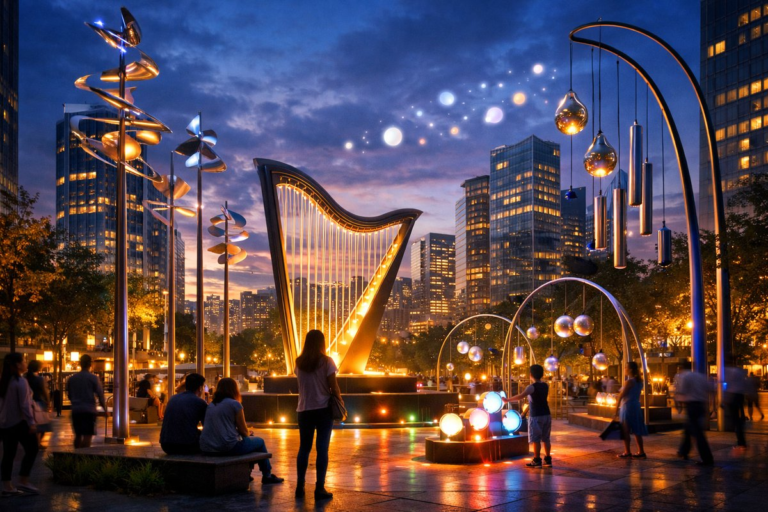
At dawn last Friday, the city’s main plaza shimmered with flickers of living color as the inaugural wave of smart sculptures came to life. Passersby paused beneath towering, sensor-laden columns that glowed in shifting hues, each pulse and tint responding to the footsteps and whispers of curious onlookers. This bold reveal marked the opening of the Urban Lumina Festival, a monthlong celebration of art and design where artificial intelligence, renewable energy, and human interaction converge.
Behind these installations stands a collective of architects, generative artists, and environmental engineers united by a vision: to transform concrete spaces into dynamic ecosystems. Instead of static bronze or steel, these new sculptures embody emergent behavior. They listen, adapt, and even learn from the patterns of daily life. By layering motion sensors, sound detectors, and algorithmic frameworks, each piece evolves over time, redistributing light and form in response to the rhythm of the city.
One of the most talked-about works is “Chroma Forest,” a cluster of twenty slender towers equipped with proximity sensors and flexible LED arrays. As visitors weave between the columns, beams of pastel light stretch and bend, creating the illusion of walking through a living grove. The design team employed 3D printing techniques to fabricate modular segments that snap together like puzzle pieces. Inside, microcontroller boards run custom code that maps sensor data onto color algorithms, producing gradients that range from soft dawn pinks to twilight blues.
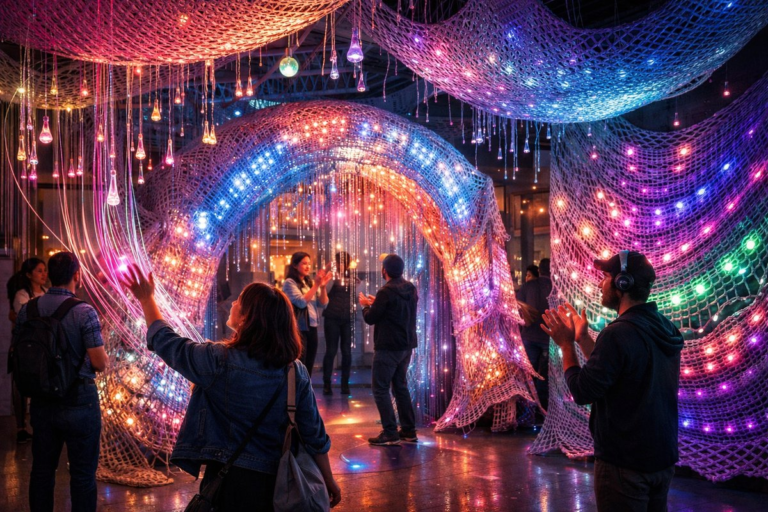
Across the riverbank stands “Echo Mesh,” an expansive canopy of woven cables strung between lampposts. Embedded within the mesh are tiny microphones and vibration motors that capture ambient sounds-snapping twigs, distant traffic, laughter-and translate them into gentle tremors in the structure’s form. During rehearsed improvisations, visiting musicians improvise nearby, prompting the mesh to pulse like the skin of a beating heart. Project organizers partnered with a local acoustic research lab to refine the sensitivity of the sensors, ensuring even a soft hum triggers a cascade of kinetic ripples.
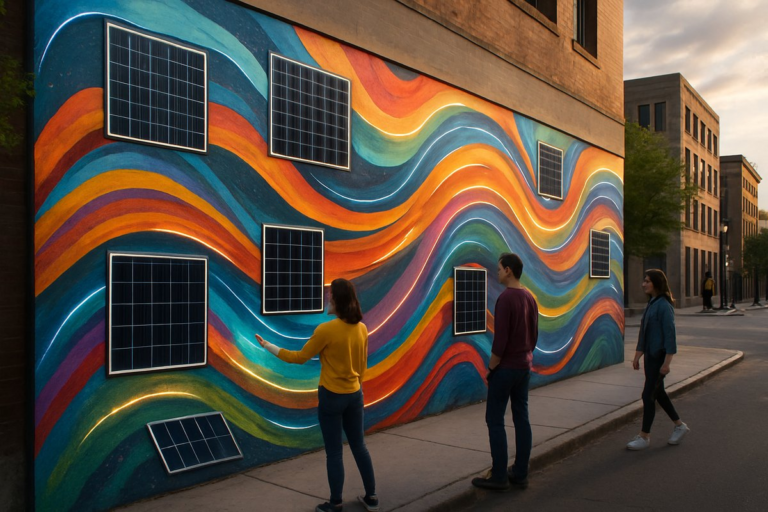
Material choice has been as critical as technological innovation. Many installations incorporate reclaimed plastics, low-carbon concrete, and recycled aluminum frames. Fiberglass-reinforced panels, sourced from surplus manufacturing offcuts, form the backbone of several sculptures, offering both durability and lightweight support. Beneath hidden hatches, compartments house rechargeable battery packs that draw power from integrated solar cells. On overcast days, a network of energy storage units redistributes surplus charge, keeping the artworks illuminated long into the night.
Technicians often refer to each piece as a “living node” within a broader network. A mesh of wireless transmitters links the sculptures to a central control hub located in a repurposed freight container at the festival grounds. From there, engineers monitor performance metrics-light intensity, battery voltage, sensor accuracy-and push over-the-air updates to refine behavior. This cloud-connected approach allows the creative team to tinker with color algorithms or sensitivity thresholds in real time, fine-tuning the audience experience without ever dismantling a single art piece.
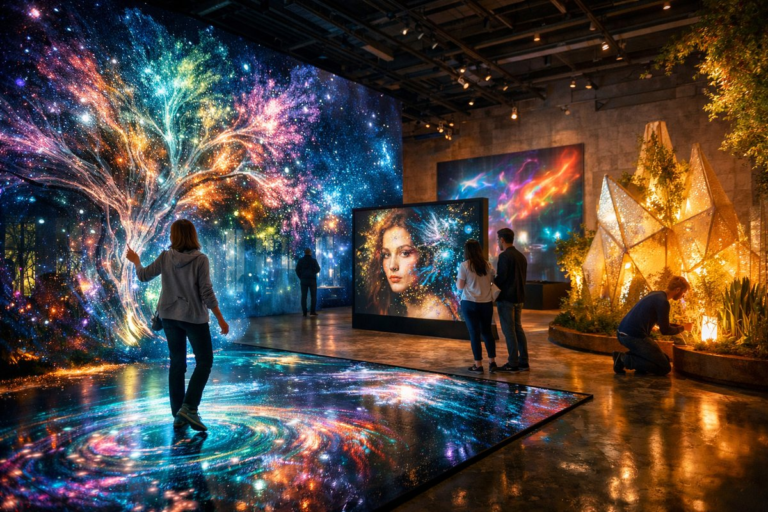
For visitors seeking a deeper connection, an augmented reality mobile app overlays digital animations onto the physical installations. Pointing a smartphone camera at a sculpture reveals hidden data streams: swirling filaments representing sensor activity, animated graphs tracing energy consumption, and poetic snippets generated by a text-based AI reflecting on the day’s weather and traffic flow. The app also unlocks optional haptic feedback, allowing participants to feel faint vibrations as they interact, heightening awareness of the invisible forces at play.
Environmental sustainability underpins every design decision. All printed circuit boards are RoHS-compliant, and assembly took place in carbon-neutral workshops powered by on-site wind turbines. Any surplus materials from one installation are meticulously cataloged for reuse in future projects. A transparent ledger, accessible through the festival website, details the lifecycle of each component-from raw material sourcing to end-of-festival decommissioning. This level of accountability has inspired local schools to incorporate similar transparency into their design curricula.
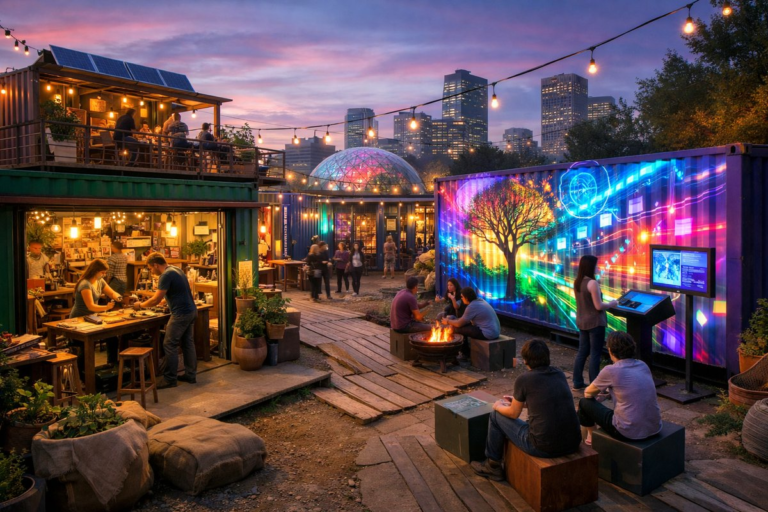
The Urban Lumina Festival stretches across six neighborhoods, transforming underused plazas, railway underpasses, and waterfront promenades into interactive art venues. Guided walking tours leave every hour from the central square, led by student docents who share behind-the-scenes stories and technical walkthroughs. Evening soundscape performances invite audiences to step into the heart of “Echo Mesh,” while midday workshops in the reclaimed freight container invite families to assemble simple sensor circuits using off-the-shelf microcontroller kits.
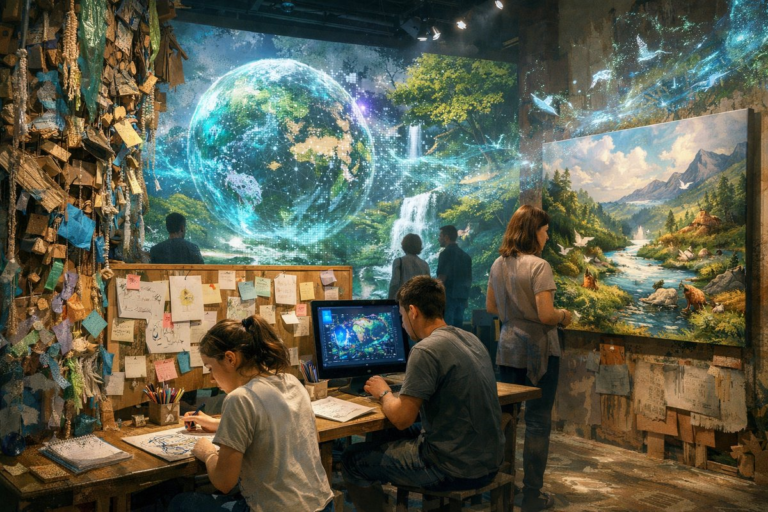
Community engagement has been a core focus since the project’s inception. Open calls invited architects, coders, and local makers to submit design proposals. Selected teams participated in six weeks of collaborative jam sessions, exploring everything from biodegradable polymers to real-time data visualization. A pop-up fabrication lab in a disused warehouse provided tools-laser cutters, 3D printers, CNC routers-for rapid prototyping. By fostering a spirit of shared ownership, organizers ensured that the final installations reflect a tapestry of perspectives, rather than a single artistic vision.
Beyond the technical spectacle lies a philosophical question: how do we share authorship with algorithms? Many lead artists describe their code as a creative collaborator rather than a cold tool. Just as a painter trusts the unpredictable swirl of a brushstroke, they embrace the unexpected gestures of generative routines. Over time, patterns emerge that surprise even the original designers: subtle oscillations in color sequences or geometric forms that echo organic growth. These surprises spark conversations about the nature of creativity in an age of machines.
Practical challenges abound when deploying responsive art outdoors. Weatherproofing sensors to withstand rain and dust demands custom enclosures with silicone gaskets. Temperature fluctuations can skew readings, so real-time calibration routines run throughout the day. Battery performance dips in colder hours, requiring smart power management protocols that dim lights gradually rather than cut power abruptly. Maintenance crews patrol the festival sites nightly, swapping out damaged modules and addressing network hiccups to ensure a seamless visitor experience.
Early visitors describe the experience as a “sensory awakening,” noting how the installations reveal hidden dynamics of urban life. Children dart through the glowing columns of “Chroma Forest,” thrilled by the way their movements summon waves of color. Evening strollers pause beneath the arches of “Echo Mesh,” closing their eyes to feel the vibrations of the city’s ambient hum. For many, the festival transcends the static categories of art and technology, inviting every bystander to become an active participant in a living tapestry.
As the month unfolds, organizers will host panel discussions exploring the ethics of data-driven art, the future of public space design, and strategies for making high-tech installations more accessible. Plans are already in motion to replicate select works in smaller communities, using simplified open-source toolkits and solar modules donated by local green energy advocates. By the festival’s close, these installations will have logged thousands of hours of community engagement, sparking new ideas about how cities can co-create with emerging technologies.
Looking ahead, the success of Urban Lumina points to a broader shift in the art world-one that values process over permanence, collaboration over isolation, and adaptability over fixed form. In the not-so-distant future, anyone with a smartphone, a creative spark, and a willingness to experiment might contribute to a living public canvas. For now, the city’s transformed plazas stand as proof that when art and innovation join forces, even the most familiar streets can take on a magical, ever-changing glow.