Location
Mount Vernon, WA 98274
Location
Mount Vernon, WA 98274

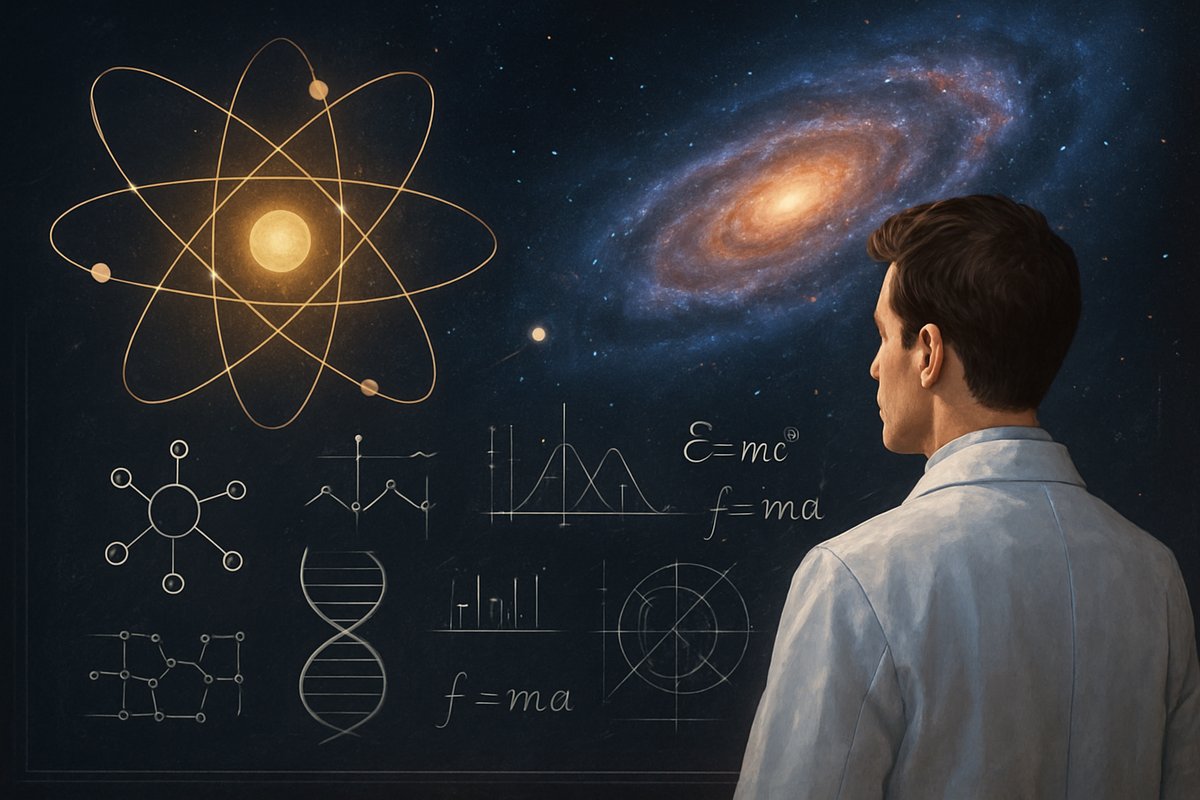
Science is a boundless adventure spanning the tiniest particles to the grandest galaxies. By weaving together precise experiments and bold theories, researchers are uncovering patterns that reshape our understanding of matter, life, and the universe itself. This journey reminds us that curiosity remains our greatest compass.
Every breakthrough begins with a question. What lies beneath the surface of a raindrop? How does a cluster of galaxies evolve over billions of years? Can a single neuron spark consciousness? Today, science invites us on an extraordinary voyage-from the subatomic realm of quantum uncertainty to the unfathomable scale of cosmic structure, and from the intricate choreography of cells to the collective dance of human societies. This is a playground where curiosity coexists with precision, where experiments are complemented by elegant mathematics, and where each discovery peels back a layer of the known world, revealing fresh mysteries to ponder.
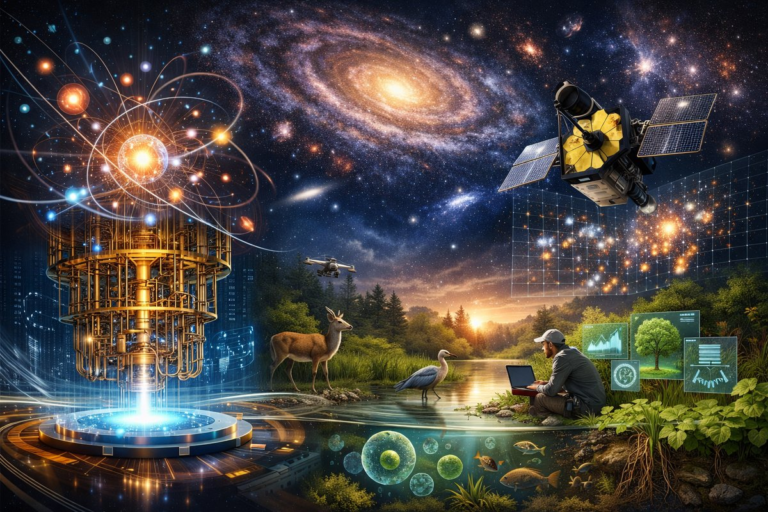
At the heart of this journey is an ethos of relentless inquiry. In ultracold laboratories around the globe, physicists isolate individual atoms in vacuum chambers cooled to fractions of a degree above absolute zero. They tweak electromagnetic fields with nanometer precision, coaxing atoms into quantum superpositions. Here, time itself can be stretched into sluggish oscillations, enabling measurements with unrivaled accuracy. These tabletop wonders offer a glimpse at phenomena once thought to be purely theoretical-particles that exist in two states at once, quantum interference patterns, and entanglement that links siblings of light across kilometers without exchanging any classical signal.
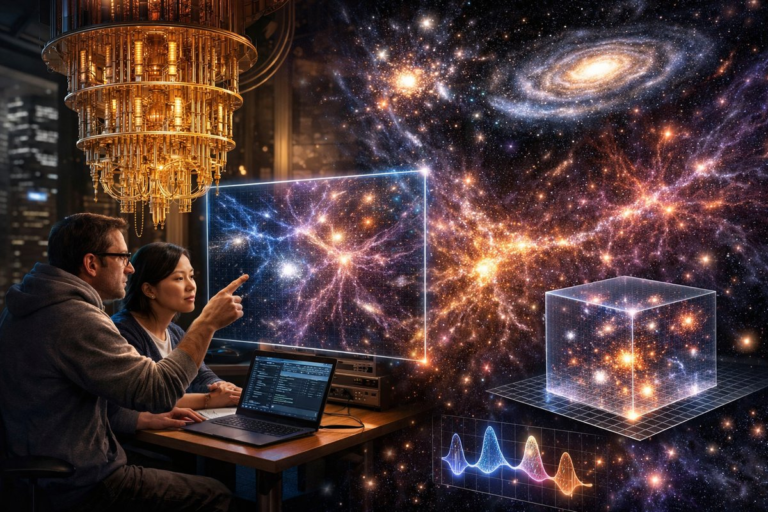
Meanwhile, just beyond our atmosphere, space missions chart the cosmic wilderness. Instruments aboard space telescopes capture the faint glow of structure formed by dark matter and ordinary gas. By analyzing how massive galaxy clusters bend and distort the light of more distant galaxies-a phenomenon known as gravitational lensing-astronomers assemble a three-dimensional atlas of the cosmic web. Filaments of unseen matter thread the universe, guiding the assembly of galaxies and influencing the fate of clusters over billions of years.
Closer to home, within our oceans and forests, environmental scientists deploy networks of sensors to map ecosystems in real time. Autonomous underwater vehicles record temperature, salinity, and biological activity, revealing how marine communities respond to shifts in climate and nutrient cycles. In rainforests, drone-mounted spectrometers measure canopy health and carbon exchange, offering data that feed into models predicting future biodiversity trends. This melding of fieldwork, remote sensing, and computational modeling represents a powerful synergy: it illuminates life’s intricate balance and informs sustainable stewardship of the planet.
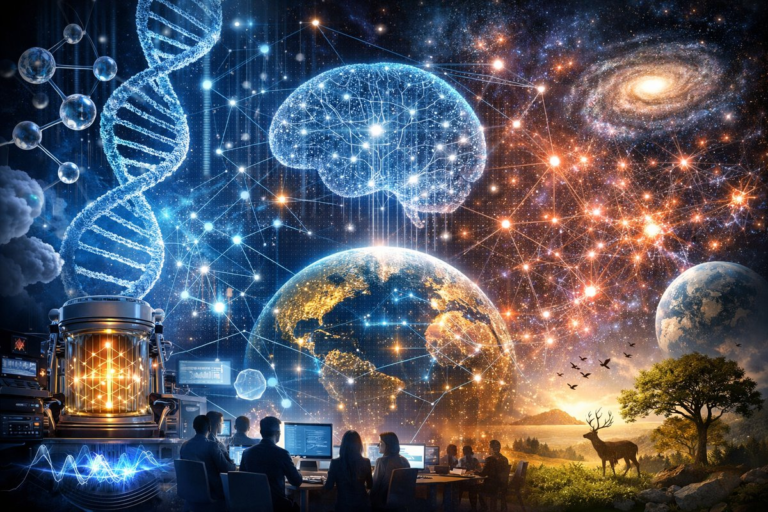
At the cellular scale, biologists harness gene-editing tools to dissect the circuitry of life. CRISPR systems allow researchers to toggle individual genes on or off, revealing their roles in growth, resilience, and disease. Combined with high-speed microscopy and single-cell sequencing, these tools produce time-lapse portraits of dividing cells, migrating neurons, or immune responses in action. Such detailed views are reshaping our approach to medicine: they highlight targets for precision therapies, shed light on mechanisms of aging, and suggest strategies to engineer tissues for transplantation.
Yet science is not confined to isolated labs. It permeates society, prompting fresh perspectives on social dynamics. Data scientists apply methods drawn from statistical physics-once used to study magnetism-to model how opinions spread through social networks. Epidemic models, refined during recent global health challenges, now inform urban planning and resource allocation. From predicting traffic flows in megacities to anticipating the ripple effects of policy changes, these tools underscore a profound lesson: systems governed by countless individual decisions often exhibit emergent behaviors that obey universal patterns.
Consider, for example, the scaling laws that link the metabolism of single cells to the energy consumption of entire cities. When plotted on a log-log graph, metabolic rates across species, from bacteria to elephants, align along a single line. Cities, too, follow similar scaling relationships: doubling in population doesn’t simply double energy use or economic output; it does so according to predictable power laws. These surprising connections hint at deep organizing principles that transcend traditional disciplinary boundaries.
In parallel, researchers investigate the origin of consciousness by mapping the brain’s complex network architecture. Functional MRI scans track blood flow changes as volunteers solve puzzles or reminisce about childhood scenes. Machine learning algorithms sift through terabytes of imaging data, teasing out patterns that correlate neural activity with cognitive states. Emerging models suggest that consciousness may arise from a critical balance between segregated brain regions and integrated global signaling-a hypothesis that blends neurobiology with concepts drawn from information theory.
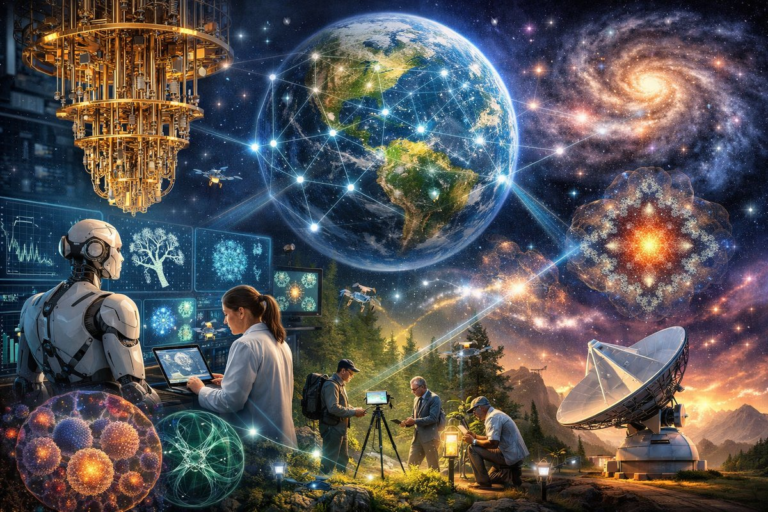
Across all these domains, computation has become an indispensable partner. High-performance clusters crunch simulations of stellar formation, turbulence in fluids, or molecular dynamics in proteins. Cloud platforms democratize access to massive datasets, while open-source software fosters collaboration across continents. Scientists share code, data, and methods on public repositories, accelerating discovery and enhancing reproducibility. This culture of transparency not only propels innovation but also builds a more inclusive scientific community.
Technology itself is evolving in step with these advances. Quantum sensors promise to revolutionize navigation, enabling devices to map subtle variations in Earth’s gravitational field without relying on GPS. Lab-grown materials, inspired by natural designs like the nanostructures in butterfly wings, are giving rise to coatings that self-clean or change color in response to environmental cues. Artificial photosynthesis systems seek to convert sunlight directly into fuels, drawing inspiration from the molecular machinery of green leaves.
Meanwhile, citizen science initiatives invite anyone with a smartphone to participate in real-time data collection. Apps guide volunteers to record local air quality, identify plant species, or monitor migrating birds. These grassroots efforts complement professional research, filling in geographic gaps and fostering public engagement. For learners of all ages, such projects cultivate scientific literacy and underscore the notion that discovery isn’t reserved for ivory towers-it’s a collective adventure open to anyone with curiosity and a bit of determination.
Yet these exciting frontiers come with responsibilities. As we decode genomes, design self-driving vehicles, and manipulate subatomic particles, ethical considerations loom large. Questions of privacy, consent, and equitable access must guide research agendas. Sustainability demands that new technologies minimize environmental impact and avoid unintended consequences. Fostering a diverse scientific workforce ensures that multiple voices shape the questions we ask and the solutions we pursue.
Ultimately, the tapestry of modern science is woven from a simple thread: wonder. It’s the thrill of observing interference fringes in a quantum double-slit experiment, the awe of gazing at star clusters beyond our Milky Way, and the satisfaction of unraveling the inner workings of a cell. Each experiment, each field expedition, each simulation builds on centuries of inquiry and trust in the scientific method.
As we stand at the intersection of microscopic precision and cosmic grandeur, we are reminded that the path of discovery extends in all directions. New questions beget new tools-new tools open uncharted territory. Whether you’re an amateur stargazer, a budding molecular biologist, or a data enthusiast mapping social trends, science welcomes you. Here, every measurement is a story, every hypothesis a challenge, and every result a stepping-stone toward deeper insight. The playground of curiosity awaits-take the first step, and who knows what marvels you might unveil?