Location
Mount Vernon, WA 98274
Location
Mount Vernon, WA 98274

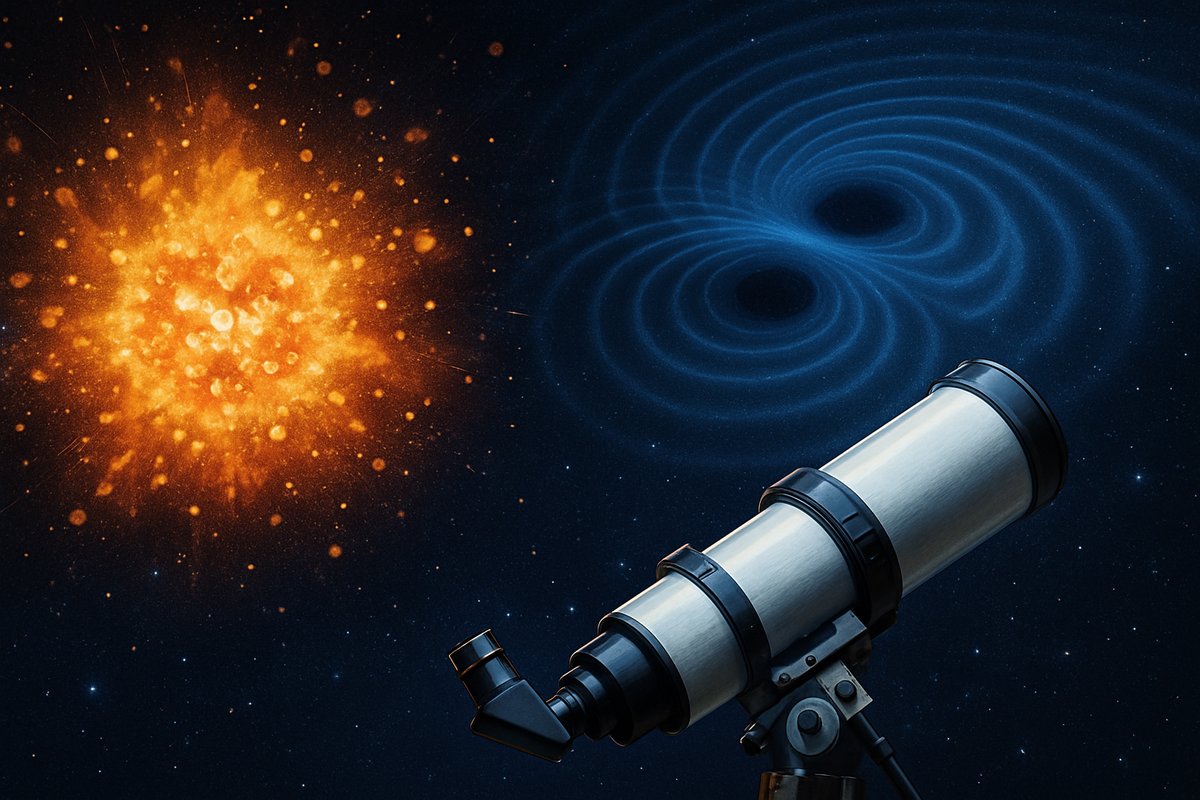
New observations and experiments are shedding light on the universe's earliest moments, from the seething quark-gluon plasma to the ripples of spacetime detected as gravitational waves. This article explores how modern instruments are unraveling age-old paradoxes and guiding humanity closer to the true origins of everything we see.
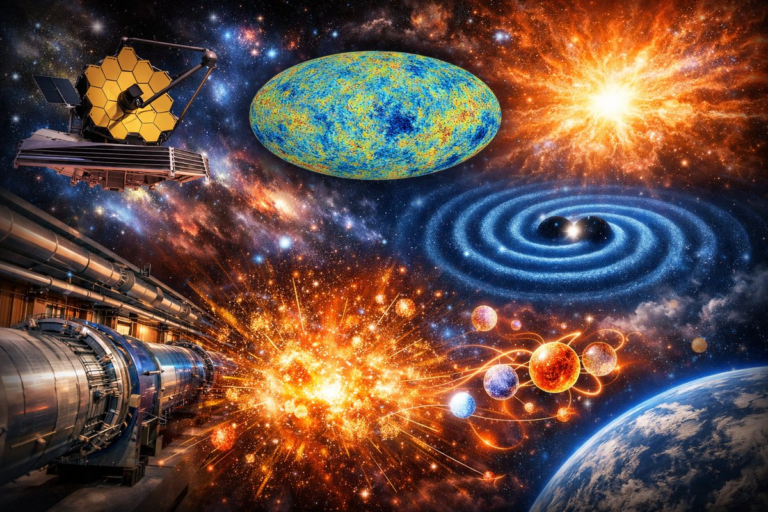
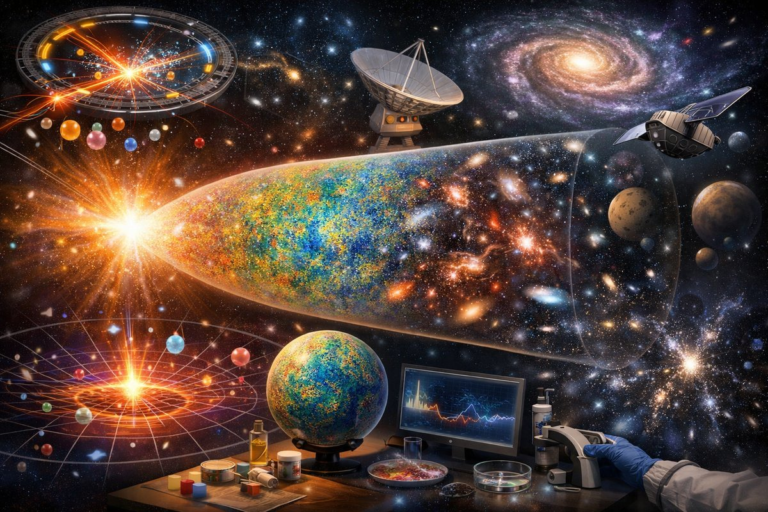
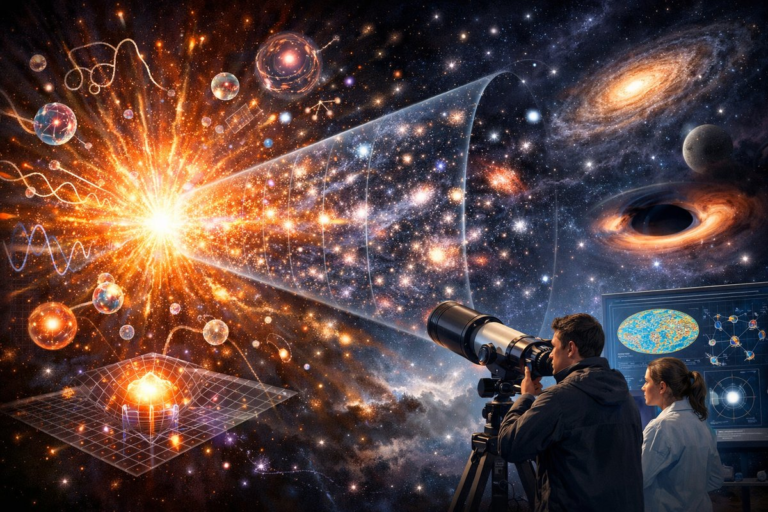
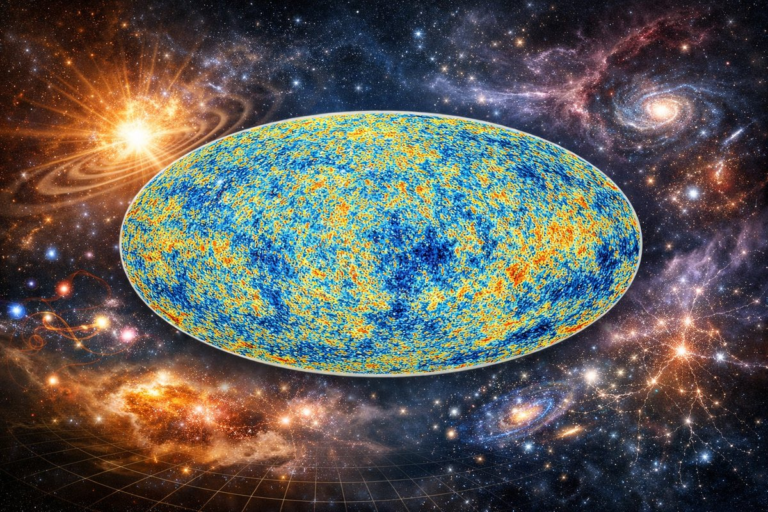
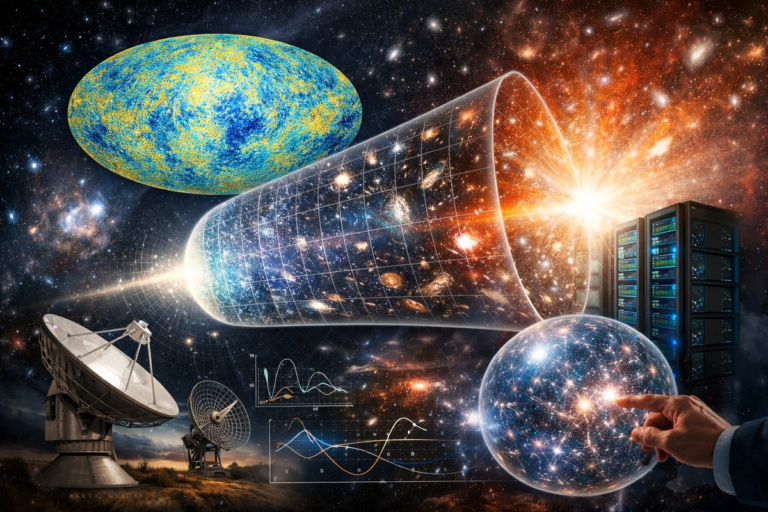
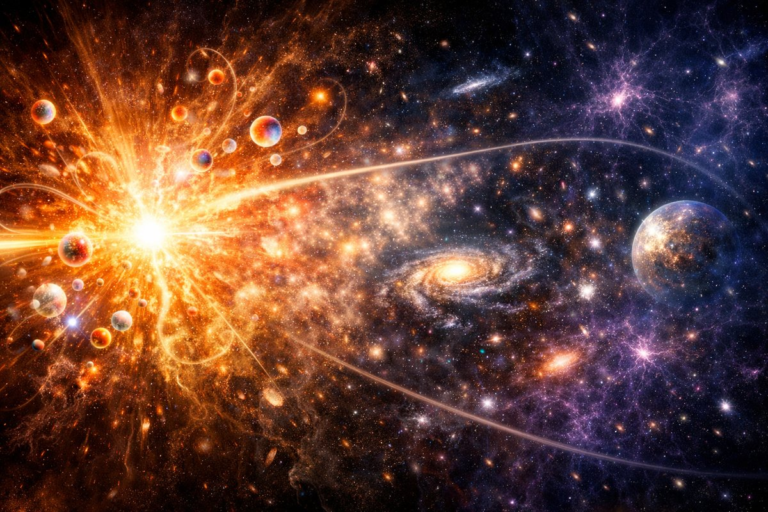
In the fraction of a second after the Big Bang, the universe expanded and cooled so rapidly that particles and forces coalesced into the seeds of galaxies, stars, and planets. The faint whisper of that primordial era still lingers in the cosmic microwave background, a uniform glow that has been mapped with increasing precision by satellites and ground telescopes. Tiny temperature fluctuations in this afterglow encode the imprint of quantum fluctuations magnified by cosmic inflation, offering a snapshot of the universe at an age of mere hundreds of thousands of years. Each new data release tightens our models of how matter and energy interacted in the wake of creation.
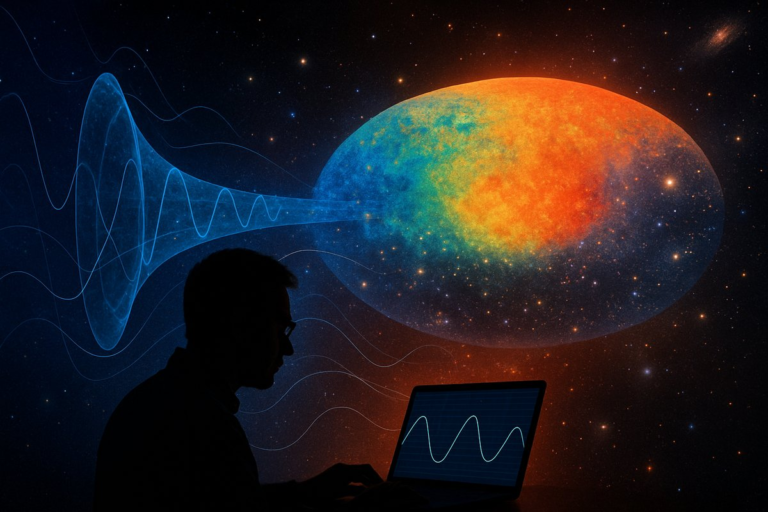
Cosmic inflation itself remains one of the most intriguing hypotheses in modern cosmology. It proposes that a repulsive form of energy drove space to swell by an unimaginable factor in less than a trillionth of a trillionth of a second, ironing out irregularities and establishing the large-scale uniformity we observe today. Yet questions persist: what mechanism triggered this burst of expansion? Did an inflaton field decay into the particles we know, or is there deeper physics yet to be discovered? Researchers are probing these mysteries with observations of polarization patterns in the microwave background, hunting for the telltale B-mode signatures of gravitational waves from inflation’s earliest tremors.
Back on Earth, particle accelerators recreate tiny pockets of the early universe under laboratory conditions. By colliding heavy ions at near-light speeds, scientists generate quark-gluon plasma, an exotic state of matter where quarks and gluons roam freely rather than being confined inside protons and neutrons. These experiments reveal how the strong nuclear force behaves at extreme temperatures and densities, helping to bridge the gap between theory and the conditions that prevailed microseconds after the Big Bang. Sophisticated detectors surrounding the collision points record showers of subatomic debris, allowing researchers to test predictions of quantum chromodynamics with ever greater precision.
At the same time, the detection of gravitational waves has opened a brand-new window on the cosmos. Laser interferometers stationed thousands of kilometers apart measure distortions in spacetime as massive objects merge. While the first observations centered on black hole and neutron star collisions, ongoing upgrades are pushing sensitivity toward lower frequencies-where a background of primordial gravitational waves might finally emerge. If detected, these ripples from the universe’s first moments would provide direct evidence of the inflationary epoch, offering insights into the energy scales at which space itself once trembled.
Another fundamental puzzle is why our universe is dominated by matter rather than its mirror opposite, antimatter. In the first instants after the Big Bang, particles and antiparticles should have appeared in equal numbers, annihilating each other and leaving behind only radiation. Yet a subtle imbalance-known as baryon asymmetry-ensured that a tiny excess of matter survived. Laboratory experiments studying the decays of mesons and searches for electric dipole moments of neutrons are hunting for sources of CP violation beyond the Standard Model, hoping to explain how that asymmetry arose. Unlocking this secret could illuminate why galaxies, stars, and life itself exist at all.
Dark matter and dark energy account for roughly 95 percent of the universe’s content, yet their nature remains mysterious. Experiments deep underground employ ultra-pure detectors cooled to cryogenic temperatures, poised to catch the faint collisions of hypothetical dark matter particles as they pass through Earth. On the cosmic scale, surveys of galaxy distributions and supernova brightness track how structure formation and expansion have evolved over billions of years. These observations constrain the properties of dark energy, the mysterious force driving the universe’s accelerated expansion. Together, they guide theoretical models toward or away from specific candidates, from weakly interacting massive particles to exotic fields permeating space.
Space-based observatories have recently joined the quest to reveal our origins in unprecedented detail. Infrared telescopes scan distant galaxies, peering through cosmic dust to record the first clusters of stars and the formation of heavy elements. Observations of the earliest quasars test models of how black holes grew in the infant universe. Meanwhile, measurements of the cosmic infrared background trace the combined light of thousands of faint galaxies too distant to resolve individually. These deep-field studies refine our picture of the cosmic timeline, linking the era of recombination to the epoch of reionization when starlight first ionized intergalactic hydrogen.
Closer to home, neutrino observatories buried beneath mountains or submerged in Antarctic ice detect ghostly particles that traverse Earth almost unimpeded. These detectors record interactions that can trace core-collapse supernovae and probe the sun’s nuclear furnace. More intriguingly, they may one day reveal signals from the Big Bang itself. A flux of relic neutrinos is predicted to permeate space, but teasing out this signal against a backdrop of cosmic and atmospheric noise presents a formidable technical challenge. Success would mark a milestone, offering a direct glimpse at particles produced mere seconds after the universe’s birth.
Looking ahead, next-generation missions promise even deeper insights into cosmic origins. A proposed network of radio telescopes will map neutral hydrogen at high redshift, charting the transition from darkness to light. Advanced gravitational-wave observatories in space will target frequencies inaccessible on the ground, potentially unveiling mergers of black holes hosted by the first galaxies. Plans for CMB-S4 aim to achieve unprecedented sensitivity to polarization anisotropies, tightening the constraints on inflationary models. Together, these facilities will stitch a more complete tapestry of cosmic evolution from its earliest spark to the vast cosmic web we inhabit today.
Yet despite the wealth of data, fundamental paradoxes endure. Why is the universe so flat and homogeneous on large scales? What set the initial conditions for inflation? How did quantum fluctuations imprint classical structure on spacetime? Each answer seems to raise new questions, driving theorists to consider radical ideas: multiverse scenarios born from eternal inflation, holographic principles linking space and information, or even emergent spacetime arising from entangled quantum bits. Such concepts blur the line between physics and philosophy, reminding us that the search for cosmic truth is both a scientific and intellectual adventure.
Amid these grand investigations, personal curiosity still plays a vital role. Amateur astronomers uncover supernovae in nearby galaxies, while citizen scientists comb through telescope archives to spot gravitational lenses or unknown asteroids. Online platforms connect enthusiasts with data from professional observatories, enabling anyone with an internet connection to contribute to light-curve analyses or galaxy classifications. These collaborative efforts enrich our collective understanding and demonstrate that the quest to unravel the universe’s origins belongs to all of us.
As we stand on the cusp of new discoveries, the story of the cosmos remains unfinished. Forces and particles that shaped the earliest moments continue to influence our destiny, and paradoxes of space, time, and matter beckon us toward deeper truths. By combining cutting-edge instruments with boundless human curiosity, we inch ever closer to the moment when everything began. And beyond that moment lies an even more profound mystery: what lies on the other side of origin itself?