Location
Mount Vernon, WA 98274
Location
Mount Vernon, WA 98274

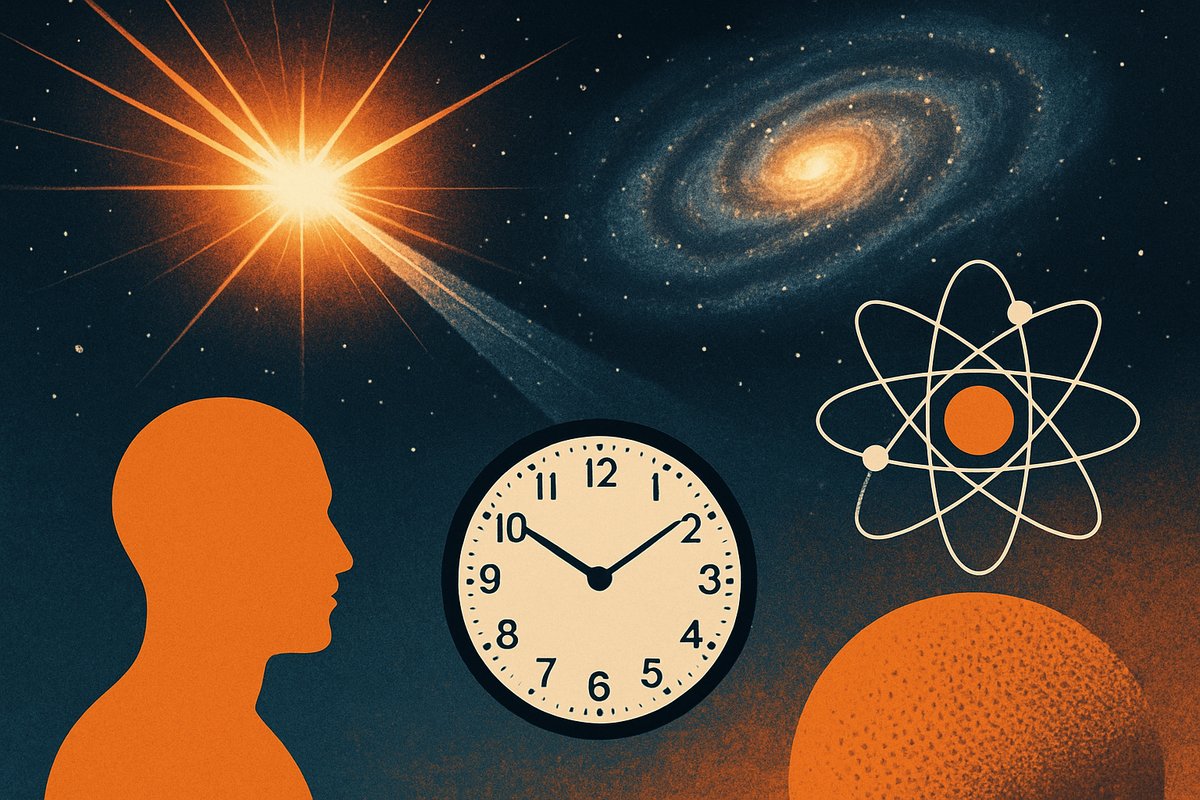
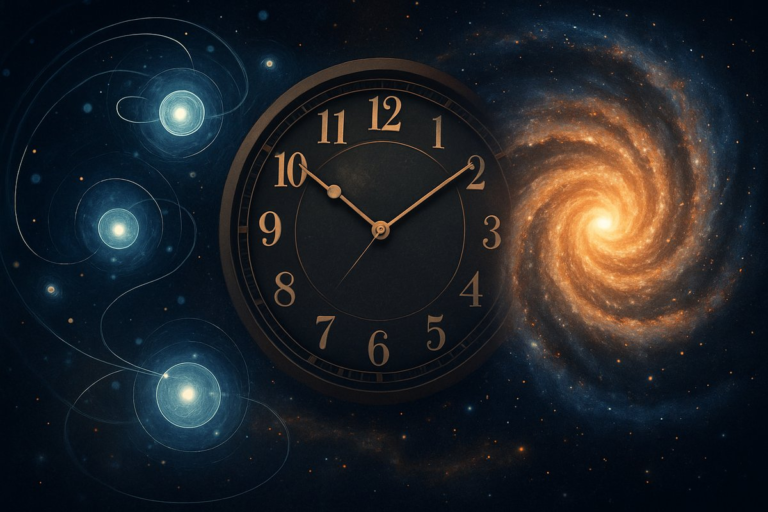
From the first flicker of a distant star to the irreversible march of time, light, mass, and entropy weave a story that spans the universe and echoes in our daily lives. This exploration traces how photons illuminate not only the cosmos but our biological rhythms, how mass shapes spacetime and identity, and how entropy defines the arrow of time and the pulse of change.
At the edge of human understanding, where equations dissolve into wonder, the universe speaks in three dialects: light, mass, and entropy. These threads form the tapestry of reality, each strand influencing the shape of galaxies and the rhythm of our hearts. Though they emerge from abstract mathematics and high-energy physics, their effects ripple through everyday life, guiding the dawn of each morning, the weight of our bodies, and the slow unravelling of ordered systems into chaos.
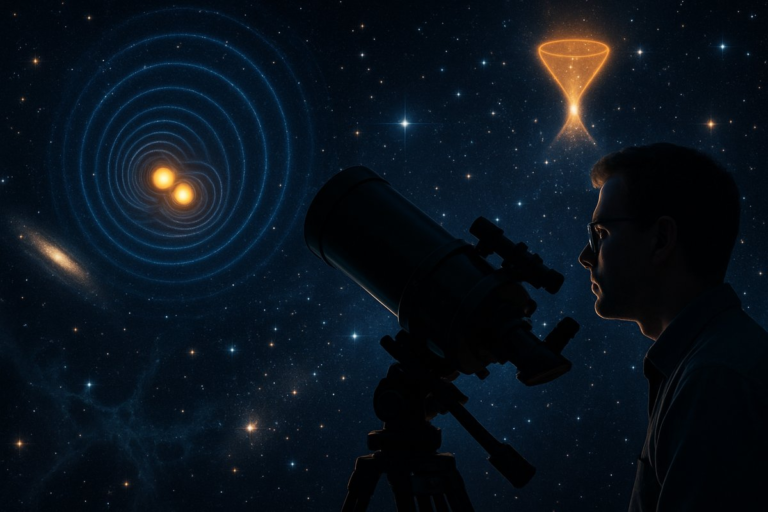
Photons carry the universe’s earliest whispers. Born in the fiery crucibles of stars, they traverse vast distances to deliver messages in wavelengths ranging from radio waves to gamma rays. When we gaze at starlight, we peer back through time, glimpsing supernovae that erupted millions of years ago or even the remnant glow of the primordial fireball that marks the universe’s birth. In laboratories, scientists use precise spectrometers to decode the chemical makeup of distant worlds, hunting for signs of water vapor or organic molecules on exoplanets. On Earth’s surface, those same photons trigger the dance of chlorophyll in plants, fueling the photosynthesis that sustains ecosystems worldwide.
Yet light is a paradox. It behaves like a wave, spreading across space in oscillations of electric and magnetic fields, and like a particle, delivering discrete packets of energy known as quanta. Experiments with single photons and beam splitters reveal that reality isn’t fixed until we measure it. Quantum superposition allows a photon to traverse two paths at once until observation collapses its wave function. This dual nature underpins lasers, fiber-optic communications, and even emerging quantum encryption that promises unbreakable security.
Beyond its scientific marvels, light shapes human culture and physiology. Circadian rhythms depend on exposure to blue-rich daylight, regulating sleep cycles, hormone production, and mood. Full-spectrum lamps have become popular tools for people in northern latitudes during long winters, easing seasonal affective disorder and promoting a sense of connection to natural daylight. Artists have long manipulated light to craft atmosphere and emotion-rembrandt’s canvases glow with chiaroscuro, while contemporary installations use programmable LED arrays to immerse viewers in shifting hues.
If light defines the information we receive, mass contours the landscape it travels through. According to Einstein’s insight, mass and energy tell spacetime how to curve, and that curvature dictates the motion of objects. This elegant framework explains everything from the orbit of planets to the bending of starlight around a galaxy cluster, a phenomenon known as gravitational lensing. Astronomers use these cosmic magnifying glasses to study galaxies too faint for direct observation and to infer the presence of dark matter, the invisible mass that outweighs ordinary matter by a factor of five.
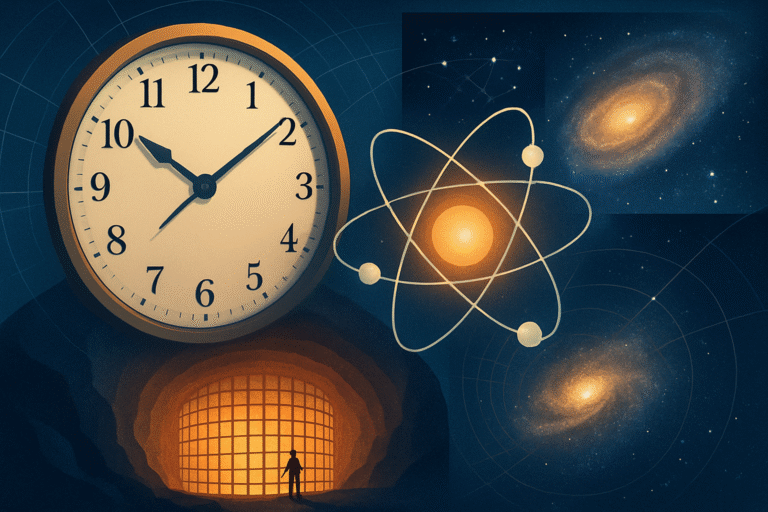
In research facilities around the globe, particle accelerators probe the origin of mass itself. By smashing subatomic particles together at near-light speeds, scientists reveal how fundamental entities acquire inertia through interactions with fields that permeate the vacuum. These experiments require precision detectors, superconducting magnets chilled to cryogenic temperatures, and layered arrays of silicon sensors-all designed to record fleeting traces of particles that exist for mere billionths of a second.
Back on our planet, mass is a constant companion. Scales measure everything from the chemical reagents in a lab to the luggage travelers check at an airport. Precision digital scales with milligram accuracy empower home experiments in cooking, chemistry, and 3D printing, while industrial balances monitor production lines for pharmaceuticals and microelectronics. Mass shapes identity, too: our bodies carry personal histories in bone density and muscle mass, data that informs medical decisions from nutrition plans to prosthetic design.
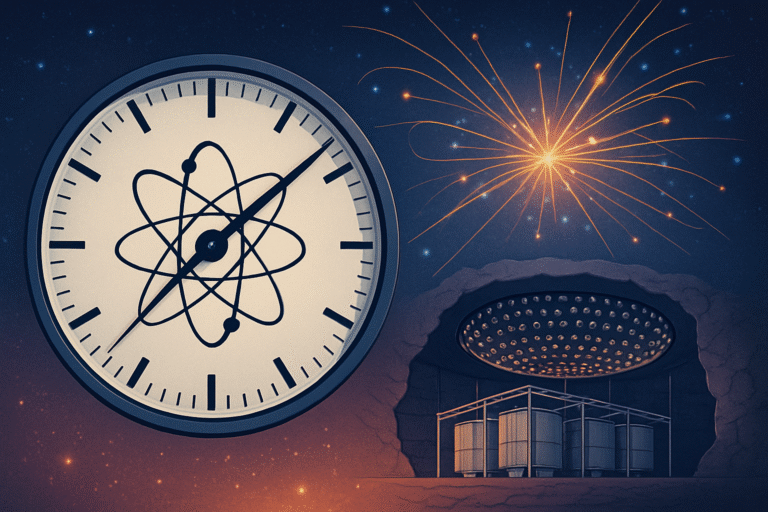
If mass bends space, entropy bends time. Entropy quantifies disorder, a measure of how energy spreads out and becomes less available for work. The second law of thermodynamics tells us that entropy in a closed system never decreases. It’s why your freshly organized desk eventually slides into clutter, why ice melts in a warm room, and why a hot cup of coffee cools to ambient temperature. This inexorable drift toward equilibrium gives rise to the arrow of time-the reason we remember the past but not the future.
Beyond thermals, entropy links to information. Each bit of data carries a minimum energy cost when written, erased, or transmitted. This principle shapes the design of computing hardware and network infrastructure, motivating engineers to find energy-efficient algorithms and cooling methods. At the cosmic scale, the fate of information swallowed by black holes remains a central puzzle. Do those data vanish forever, violating quantum theory’s insistence on reversibility, or do they somehow imprint themselves on the event horizon? Debates about black hole entropy have driven theoretical breakthroughs that blend gravity with quantum mechanics.
Every human life tracks its own entropy. Our bodies age as cellular processes accumulate molecular damage and lose ordered structures. Memorable moments crystallize as neural networks form patterns, while memories fade when synapses weaken, mirroring the diffusion of energy across a thermal gradient. Societies, too, experience entropy: institutions that once thrived can wither under neglect or corruption, while cultural and technological revolutions reorganize social order into new patterns of cooperation.
The true wonder arises when light, mass, and entropy intertwine. In the hearts of stars, intense gravity crushes mass into conditions where nuclei fuse, releasing torrents of photons and forging heavy elements that seed future generations of planets. Supernova explosions inject these elements into the interstellar medium, where they condense into dust grains, coalesce into rocky worlds, and ultimately participate in the chemistry of life. Each breath we take carries carbon and oxygen atoms that once danced in a supernova shockwave.
In laboratories, researchers mimic cosmic conditions to study material behavior under extreme pressure or temperature. Diamond anvil cells squeeze samples to millions of atmospheres, recreating the cores of giant planets and shedding light on exotic phases of matter. High-energy lasers produce fleeting plasmas that echo the fiery birth of the universe. Such experiments deepen our understanding of phase transitions, conductivity, and superconductivity-phenomena that might one day revolutionize energy transmission and storage.
Confronting the vastness of cosmic processes invites a humble perspective. We are stardust, wrestling with entropy and bathed in light, made conscious by the curvature of spacetime around a speck of dense matter. Yet the same physical laws that govern distant galaxies animate our creativity, our empathy, and our longing for connection. Every photon that warms our face, every gram that grounds us to Earth, every irreversible moment that carries us into tomorrow-all echo the grand narrative of the cosmos.
In the face of mystery, there is room for curiosity and care. Sustainable approaches to energy harness the sun’s photons with solar panels designed to minimize material waste and maximize efficiency. Designs for colder data centers use evaporative cooling and recycled water to reduce entropy-driven energy leaks. Innovative materials, from carbon-fiber composites to bioengineered proteins, blur lines between art and science, offering new ways to align human ingenuity with planetary limits.
We stand at a crossroads in this story of light, mass, and entropy. Understanding these forces isn’t just a journey across data and theory; it’s an invitation to shape our shared future. By learning from the cosmos, we can illuminate paths toward harmony-with nature, with one another, and within ourselves. The echoes of infinity guide us, reminding us that every action radiates outward like a photon, every decision carries weight, and every choice nudges the flow of time toward greater order or deeper unraveling.