Location
Mount Vernon, WA 98274
Location
Mount Vernon, WA 98274

A growing wave of educators and parents are blending hands-on learning toys with emotional tools to foster both cognitive growth and social-emotional intelligence in young children. By anchoring curiosity in real-world play and feelings language, this approach empowers kids to explore, experiment, and articulate their inner lives while developing critical thinking skills.
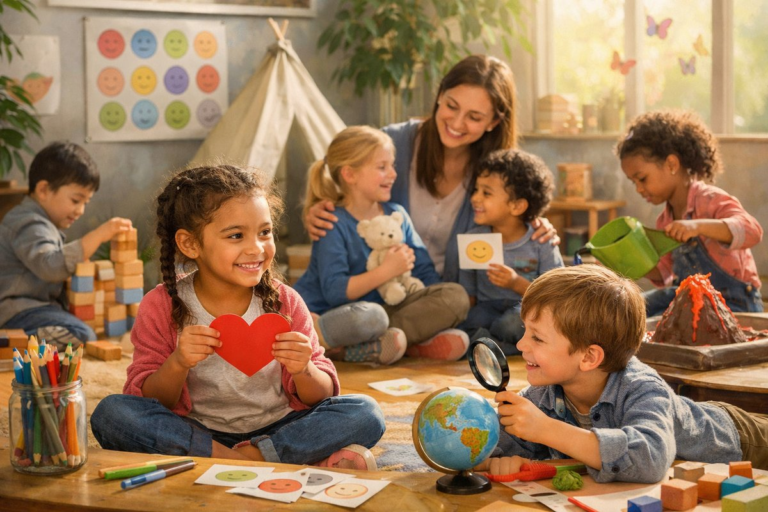
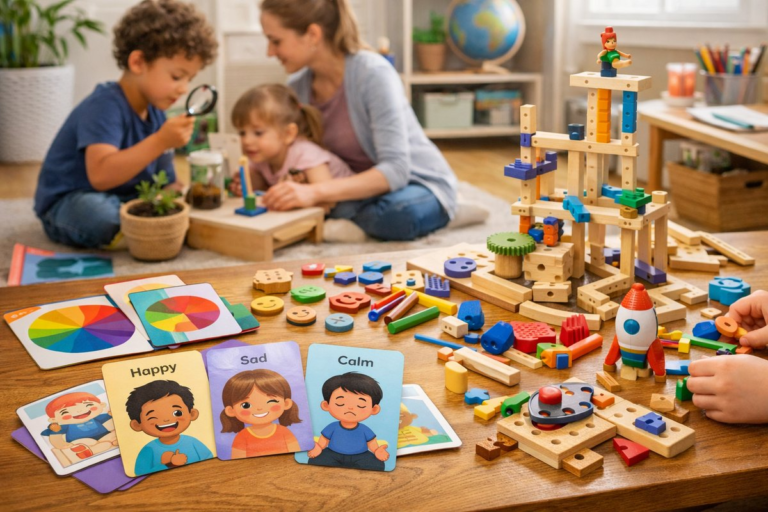
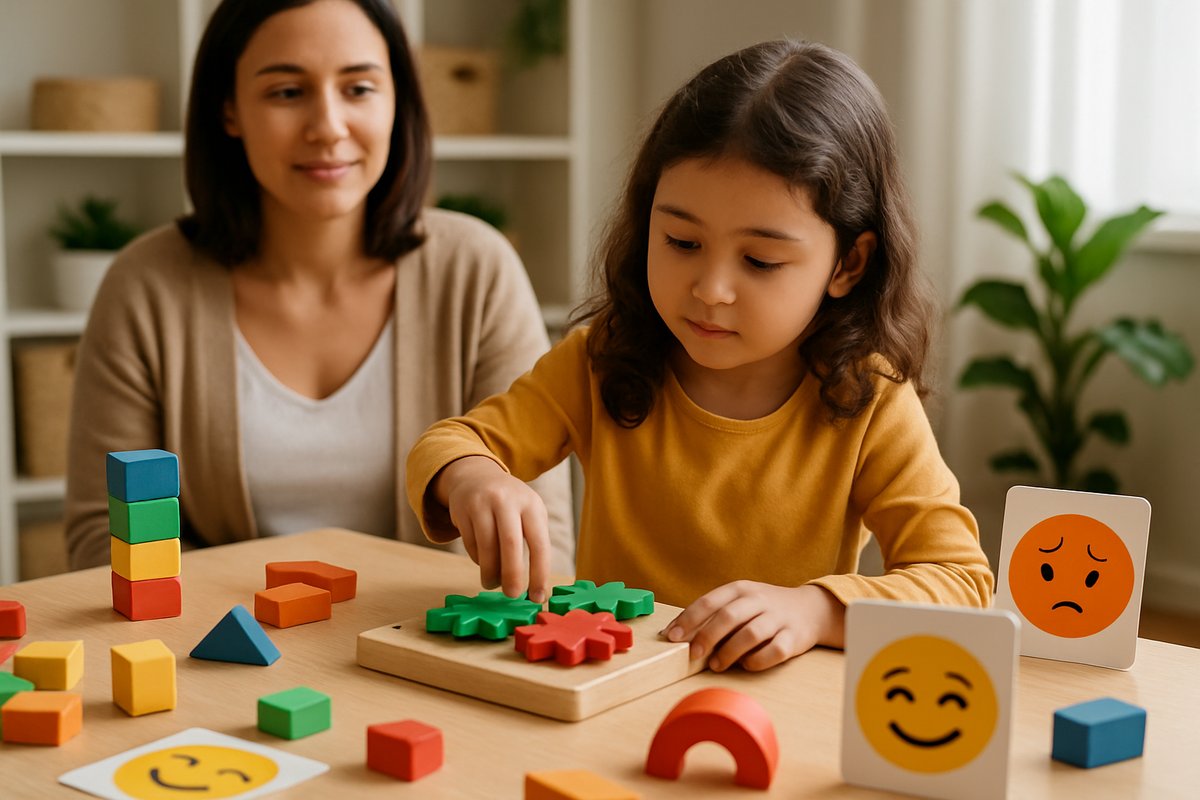
In a brightly lit early learning center, toddlers cluster around a low table strewn with magnetic building blocks and illustrated feeling cards. One child stacks translucent squares, constructing a soaring tower of vibrant colors. Another pauses to pick up a flashcard depicting “surprised,” repeating the word while mimicking raised eyebrows. An educator observes quietly, offering gentle prompts: “What might your tower feel if it suddenly wobbles?”
This scene captures a quiet revolution in early childhood education: marrying traditional STEM-style manipulatives with social-emotional learning tools. What began as individual experiments by forward-thinking preschools has accelerated into a national movement, fueled by mounting evidence that children learn best when play sparks both the mind and the heart.
A 2023 study by the Pew Research Center found that 78 percent of parents believe emotional intelligence is as important as academic readiness for school success. Schools and parents are responding by reimagining the play table as a lab for emotional investigation. Magnetic shapes, wooden blocks, sensory sand, feelings flashcards, and emotion-themed storybooks are placed side by side, inviting children to debug a structure and name a feeling in the same breath.
In Portland, Oregon, a pilot program at Hawthorne Early Learning Collaborative trains educators to integrate emotion prompts into every activity. Building block sessions open with a “mood check,” where each child selects a card showing happy, anxious, calm, or curious. The cards guide collaborative building games: a child who feels “excited” may lead a challenge to stack the tallest tower; a “calm” child might balance blocks at the edges. The interplay of texture, color, balance, and feeling language encourages children to tune into their own responses as well as those of their peers.
“Kids develop agency when they see their ideas take shape-literally-and when they learn to name what they’re experiencing,” explains an early education specialist who helped design the pilot. “We’re not just teaching shapes and colors; we’re teaching reflection, collaboration, and confidence.”
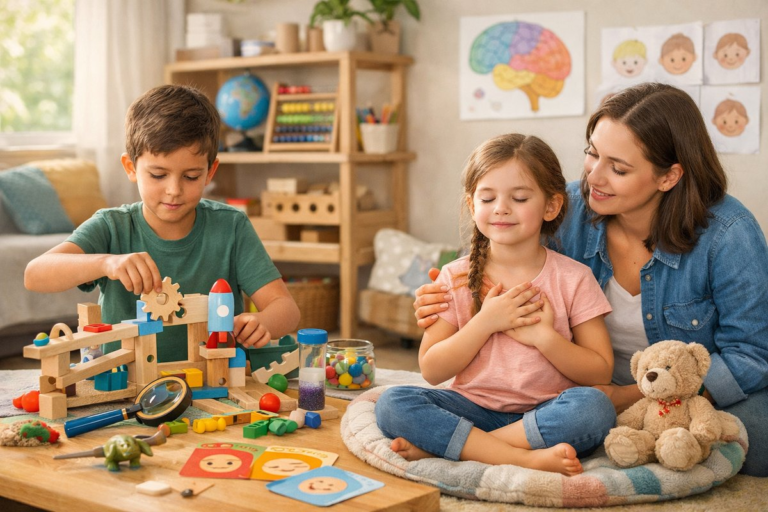
Parents are catching on, too. At home, many are stocking shelves with open-ended toys that double as emotional prompts. One mom describes turning her living room into a mini lab: blocks become a city, then a spaceship, then a fragile bridge-each scenario invites discussion of triumph, frustration, and pride. When a block tower tumbles, she encourages her daughter to choose a feelings card before starting again. “We say, ‘It’s okay to feel upset if it falls. What can we do with that feeling?’ It teaches her resilience and vocabulary all at once.”
Beyond anecdotal feedback, a 2022 report from the National Institute for Early Education Research confirms that social-emotional learning in preschool correlates with higher self-regulation and better academic performance in later grades. Children who can identify and manage emotions are more likely to persevere through challenging puzzles, articulate questions in circle time, and cooperate in group tasks.
In everyday practice, facilitating emotion-enhanced play requires few high-tech tools. Instead, simple materials and routines foster an environment of curiosity and mutual respect:
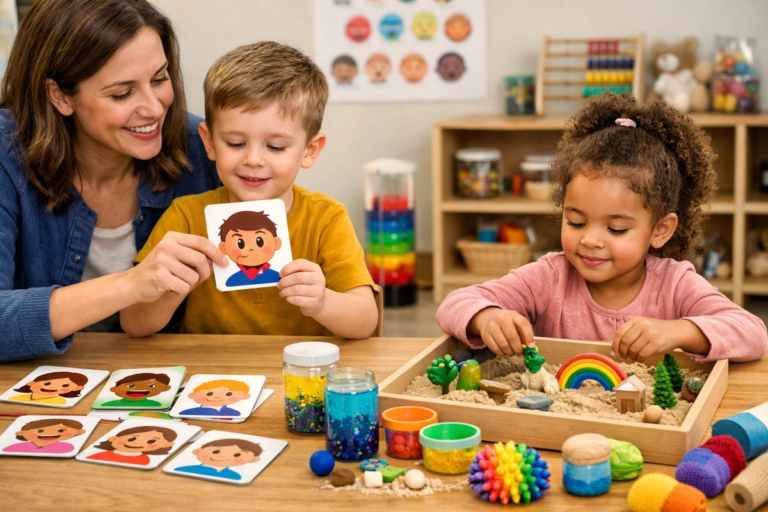
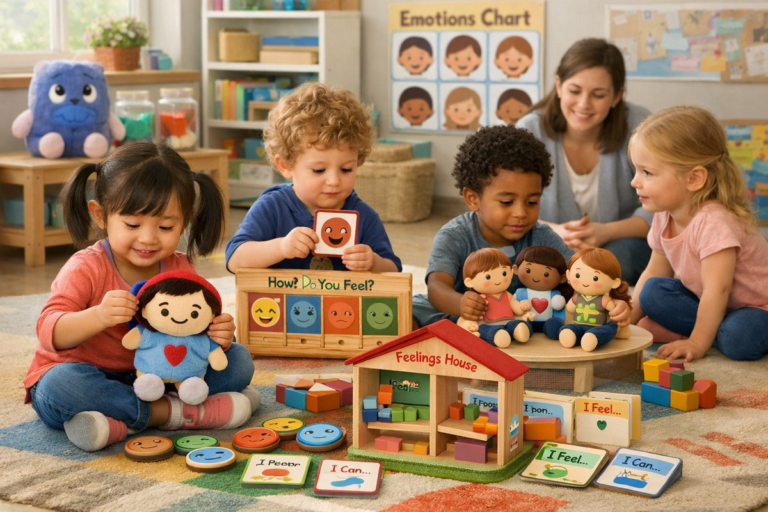
• Feeling Flashcards: Illustrations of basic emotions serve as visual cues, helping non-verbal or emerging speakers label their inner state. Teachers consult these cards at transition times-before snack, nap, or clean-up-to anchor the class in shared awareness.
• Open-Ended Blocks: Magnetic or wooden sets that allow children to create freely, without imposed instructions. Investigators watch how kids negotiate design choices and labels for success.
• Emotion Story Dice: Cubes printed with facial expressions or single words like “brave,” “worried,” and “proud.” Rolling the dice before building or drawing sparks mini-narratives that connect feeling to action.
• Sensory Play Trays: Sand, water beads, or themed tactile kits that children explore at their own pace. Facilitators ask questions like, “What does this texture remind you of? How does it make you feel?”
Each of these tools becomes a catalyst for dialogue. When a child places a blue square on top of a red one, a teacher might say, “I see you chose blue on red today. Blue can mean calm or sad-how are you feeling about your tower?” That question sends a clear message: thoughts and feelings are part of the learning landscape.
Critics of play-based approaches sometimes worry that academic content will suffer. But research suggests the opposite: executive function, language development, and early math skills flourish when children engage in self-directed, emotionally supported play. Neurologists note that positive emotions light up the brain’s reward pathways, making new information easier to encode and retrieve.
At Maple Grove Preschool in Atlanta, Georgia, educators report that children who began the year hesitant to try new tasks transformed into bold experimenters. Teachers attribute the shift to an environment where children felt safe naming mistakes as opportunities. “When you validate a child’s disappointment at a project failing, you normalize failure itself,” says the lead teacher. “They learn that falling apart is part of building up.”
Balancing adult guidance with child autonomy is an art. Some educators worry they might over-script play and stifle creativity. The key is subtle prompts: open-ended questions rather than step-by-step directives. For instance, instead of saying “Stack three blocks,” a teacher might ask “What fun shapes can we make with these today?” This invites children to define success on their own terms.
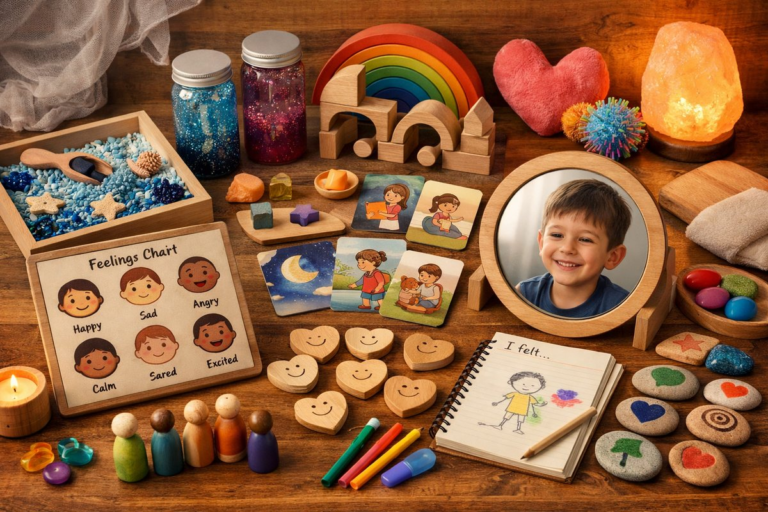
Parents can apply the same principle at home by setting up dedicated play stations and then stepping back. A “feelings corner” with pillows and a feelings chart lets children choose to take a self-regulated break. A building zone with bins of blocks, wheels, and connectors encourages collaboration. Parents can observe from a distance, ready to join when invited rather than directing each move.
Emotional intelligence experts emphasize the importance of naming feelings early. Studies show that children with a broader emotional vocabulary are better equipped to manage conflict, regulate impulses, and engage in cooperative play. In multilingual households, feelings language can bridge cultural divides-young learners describe frustration in one tongue, excitement in another, and parents help them switch gears fluidly.
Looking ahead, some schools are piloting “emotion journals” for preschoolers: sticky-note diaries where kids draw a face or write a word about their day. Teachers collect these notes and use them as conversation starters, spotting trends like repeated frustration with fine motor tasks or excitement around group stories. This data informs individualized support-maybe extra finger-strengthening games or more circle-time sharing opportunities.
As more districts adopt this blended approach, administrators stress the need for professional development. Workshops on active listening, emotion coaching, and small-group facilitation equip teachers to guide play without commandeering it. Districtwide surveys reveal that staff who feel confident in SEL strategies report higher job satisfaction and lower burnout, indicating that emotional learning supports educators as much as students.
In living rooms and classrooms across the country, the message is clear: raising little thinkers isn’t just about counting blocks or memorizing letters. It’s about cultivating curiosity, resilience, empathy, and self-reflection through the joyful act of play. When children learn to name what they build and feel, they lay a foundation for lifelong inquiry and collaboration.
For families and educators seeking that sweet spot where logic meets feeling, the fusion of learning toys and emotional tools offers a powerful pathway. It turns the play table into a shared territory where young minds grow in both intellect and heart, ready to tackle tomorrow’s challenges with wonder and confidence.
With each stack, tumble, and shared insight, these little builders are shaping more than towers-they’re shaping themselves, one feeling at a time.