Location
Mount Vernon, WA 98274
Location
Mount Vernon, WA 98274

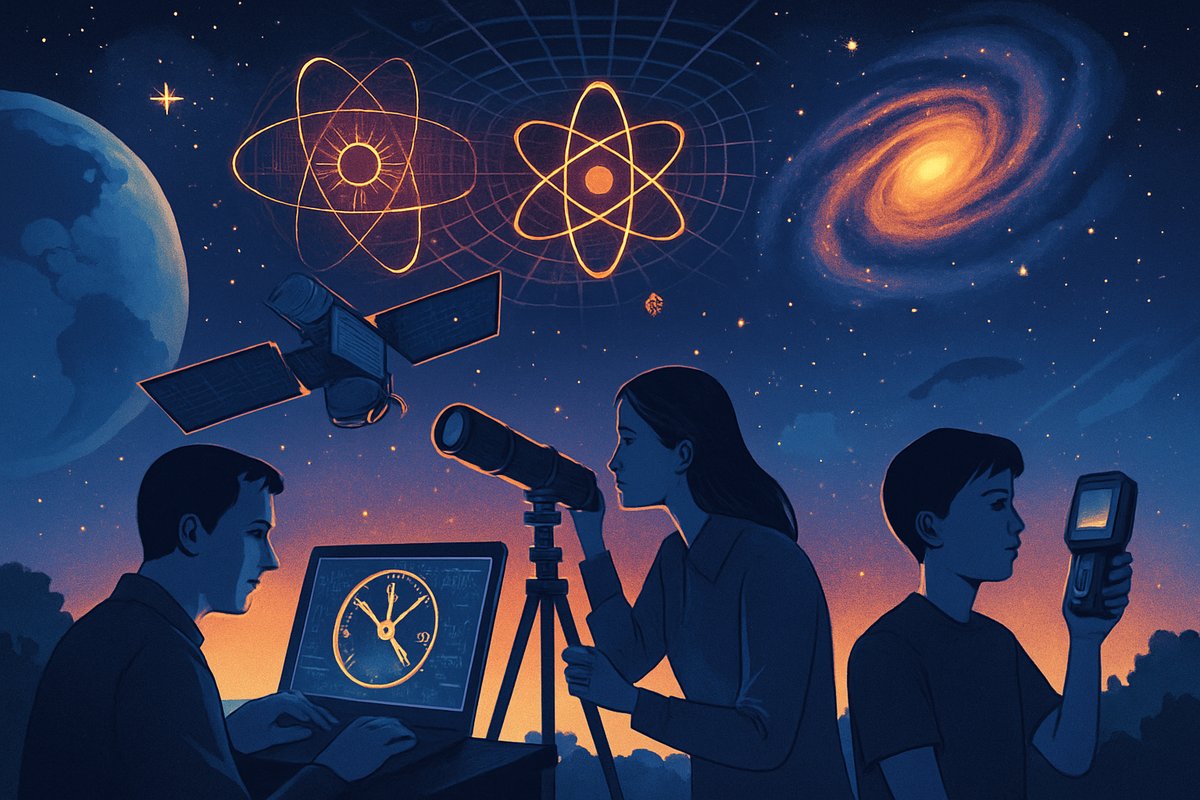
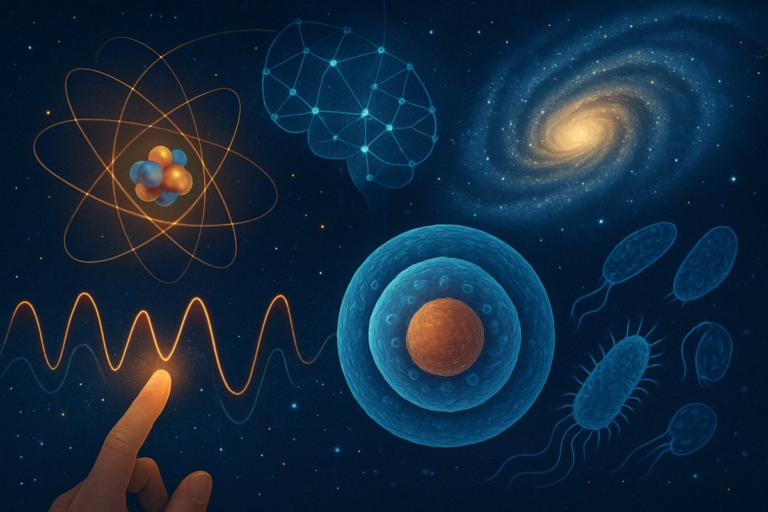
A groundbreaking international initiative is bridging quantum phenomena with cosmic-scale observations to unlock fresh insights across the physical world. From atomic clocks poised to test relativity in deep space to networks of citizen-operated spectrometers mapping starlight, this effort invites explorers of all levels to participate in multiscale discovery.
Scientists from more than 50 institutions across six continents have joined forces in a program designed to dissolve traditional boundaries between quantum research and cosmology. Dubbed the Multiscale Science Initiative (MSI), this collaboration is set to deploy next-generation atomic clocks, precision interferometers, and sensor networks from underground laboratories to orbiting satellites. By aligning experiments at the smallest and largest scales, researchers hope to reveal uncharted connections between quantum uncertainty and the structure of spacetime itself.
The program’s first major project centers on portable quantum clocks-devices that leverage ultracold atoms to achieve timekeeping accuracy on the order of 10−18 seconds. These clocks will be flown aboard high-altitude balloons and small satellites, where they can directly compare flow of time in varying gravitational fields. Data from these clocks could yield the most stringent tests of general relativity to date, and may hint at subtle deviations that point toward new physics.
Simultaneously, a fleet of ground-based interferometers-similar in principle to those that first detected gravitational waves-will be repurposed to monitor faint signals from distant pulsars and merging black holes. Advances in laser stabilization and quantum squeezing of light have lowered noise floors, allowing these networks to pick out signals that were previously obscured by terrestrial vibrations. Early results from the European-MSI array already suggest improved sensitivity at low frequencies, potentially opening a window onto exotic phenomena like primordial gravitational echoes.
Yet the initiative isn’t confined to high-end laboratories. In an effort to democratize data collection, MSI has released open-source blueprints for a handheld spectrometer that clips onto a smartphone camera. Amateur astronomers and citizen scientists can now record stellar spectra and upload measurements to a central database. Within weeks of the launch, contributors from remote observatories in South America and backyard rooftops in Europe had cataloged emission lines from supernova remnants and star-forming regions, enriching professional surveys with a wealth of localized data.
At the cellular scale, the collaboration has sparked interest in quantum biology-a field exploring how nonclassical effects influence processes like photosynthesis, olfaction, and even avian navigation. Researchers are deploying cryogenic microscopes that use entangled photons to probe living tissue with minimal photodamage. Early experiments suggest that energy transfer in certain protein complexes exhibits coherence times far longer than classical models predict. If confirmed, this could revolutionize our understanding of bioenergetics and inspire quantum-inspired designs for solar harvesting technologies.
Computational modeling is another pillar of MSI’s strategy. By integrating quantum mechanics into large-scale simulations of galaxy formation and climate systems, teams aim to bridge the gap between micro- and macro-scale phenomena. One group is using quantum-enhanced Monte Carlo algorithms to simulate magnetohydrodynamics in star-forming clouds, while another explores how entangled qubits could speed up the prediction of extreme weather events. These hybrid models not only test fundamental theories but also promise practical benefits in forecasting and resource management.
Education and outreach lie at the heart of this movement. Virtual reality exhibits let students shrink down to the quantum realm and then zoom out to cosmic filaments stretching across millions of light-years. Immersive workshops guide participants through hands-on exercises: calibrating a tabletop interferometer, tuning a laser to cool atoms, or analyzing spectrometer data from networked volunteers. By combining spectacle with precision, these programs foster a culture of curiosity, empowering a new generation to think deeply and discover boldly.
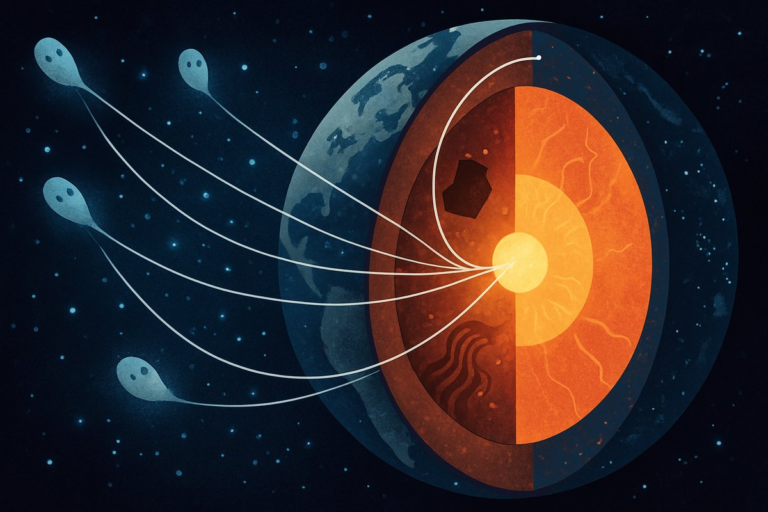
Funding for MSI comes from a blend of government agencies, philanthropic foundations, and private partnerships. A recent milestone includes a multiyear grant that will underwrite a quantum gravimeter project aimed at mapping subterranean structures by measuring minute variations in Earth’s gravity. Such instruments could detect underground aquifers, monitor volcanic activity, and even assist in archaeology-all by deploying quantum superposition to measure how mass distorts spacetime on a human scale.
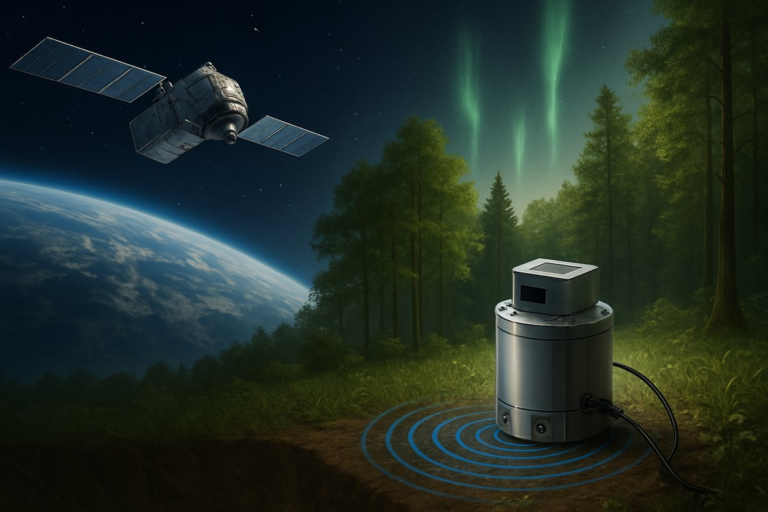
The initiative also tackles sustainability challenges. Teams are developing low-power quantum chips and solar-powered sensor pods designed for remote ecosystems. These devices can track environmental variables-temperature, magnetic field strength, particle flux-while requiring minimal maintenance. In tropical rainforests and polar research stations, they promise continuous data streams that feed back into both earth science studies and fundamental physics experiments.
Interdisciplinary collaboration has uncovered unexpected synergies. Experts in condensed matter physics are advising cosmologists on noise reduction techniques derived from superconducting qubit platforms. Meanwhile, astrophysicists share data-processing pipelines originally built for tera-scale sky surveys with biologists seeking patterns in high-dimensional genetic data. Such crossover not only accelerates innovation but also underscores a central principle: the universe operates on unifying patterns, whether in atom-sized lattices or sprawling clusters of galaxies.
One of the more philosophical goals of MSI is to reveal how questions at different scales reflect a common drive to understand causality and complexity. Panels at recent conferences have debated the nature of randomness, asking whether quantum indeterminacy and chaotic dynamics in weather systems stem from related mathematical structures. Although definitive answers remain elusive, the dialogue itself cultivates fresh perspectives, helping scientists to reframe longstanding puzzles in new contexts.
As MSI enters its second year, plans are underway to extend its reach to space-based laboratories. Proposals include installing quantum sensor suites on the lunar surface, where the low seismic background and stable thermal environment could yield unprecedented measurement precision. Collaborators hope to test whether vacuum fluctuations behave differently in the Moon’s weaker gravity, offering clues to the behavior of dark energy and the vacuum itself.
Ultimately, the Multiscale Science Initiative aspires to be more than a series of experiments-it’s a manifesto for how science can evolve. By weaving together quantum optics, astrophysics, biophysics, and computational modeling, it champions a culture that prizes both detail and perspective. In embracing initiatives that span the cellular to the cosmic, society can harness collective imagination, sharpen our instruments of inquiry, and perhaps glimpse deeper truths that transcend any single scale of observation.
The adventure is just beginning. Whether you’re peering through a telescope, calibrating a quantum gyroscope, or simply pondering the nature of time, MSI’s doors are wide open. Science, after all, is built on wonder-and this initiative reminds us that wonder thrives when curiosity crosses every frontier.