Location
Mount Vernon, WA 98274
Location
Mount Vernon, WA 98274


A leading digital platform has unveiled a Prose Category dedicated to reflective essays, narrative explorations, and quiet resonance. Editors say this space offers writers and readers a chance to slow down, connect with memory, and find emotional truth in carefully crafted language.
The launch of a dedicated Prose Category on a major online publishing platform marks a turning point in digital literature. At a time when social feeds thunder with breaking news and 280-character updates, this new space invites readers and writers to pause, lean in, and savor the textures of language. Curated essays, meditative reflections, and narrative explorations now have a home where emotional truth and memory take center stage.
Industry observers point to shifting reader habits as the catalyst. A 2021 survey by Pew Research found that 36 percent of American adults read literary nonfiction in the previous year, a sign that audiences crave more than quick hits of information. Meanwhile, analytics from independent reading apps report a 20 percent uptick in engagement for long-form personal essays across digital platforms. Editors at the platform recognized an opportunity to respond to this quiet revolution in readership, creating a category that honors depth over breadth.
“The goal was to craft a sanctuary,” says the platform’s editorial director. “We wanted a place where language itself becomes the vessel for memory and feeling. People have told us they want breathing room, time to reflect. This category answers that call.” Without flashy headlines or rapid-fire comment threads, the Prose Category opens with a notification: new pieces published weekly, each accompanied by ample white space and minimal distraction.
In its first month, the category received over 500 submissions from writers spanning four continents. Early analytics show an average dwell time of nine minutes per piece-more than double the time spent on typical articles. These metrics suggest that readers are willing to invest emotional energy and attention when given an invitation to slow down.
Among the standout entries is an essay titled “Footsteps in Fog,” a lyrical account of childhood walks along a misty coastline. The author weaves sensory detail-wet sand, distant gull cries, cool salt wind-into a meditation on memory and loss. Another piece, “Light Through the Blinds,” reads like a letter to a younger self, exploring the small triumphs of choosing vulnerability over certainty. A third, “Between Two Maps,” follows a traveler who discovers the inner landscape of grief while charting new terrain abroad. Each demonstrates how narrative can reveal hidden truths.
To encourage deeper engagement, the platform introduced virtual reading salons. Held twice a month, these gatherings bring writers and readers together in a voice-only video chat. Passages are read aloud, and participants respond with questions or quiet reflections. One session focused on tone and pacing, inviting contributors to share the rhythms that rise when memory meets language. The salons quickly filled to capacity, reflecting a hunger for community rooted in shared stories rather than social metrics.
Writers who have found a home in the Prose Category describe a renewed sense of purpose. “I’ve lived for years in the margins of newsrooms,” says one contributor. “This space gives me permission to explore emotional truth without the pressure of virality.” Another reflects on how writing an essay about her grandmother’s kitchen turned into a therapeutic journey. She credits the category’s emphasis on resonance and craft for unlocking fresh creative energy.
Research in expressive writing supports these anecdotes. Decades of psychological studies have shown that writing about personal experiences can reduce stress, strengthen empathy, and foster self-awareness. According to a 2020 meta-analysis published in a leading psychology journal, participants who engaged in guided narrative writing reported improvements in well-being and cognitive clarity. The Prose Category’s curators see echoes of these findings in the letters, journals, and meditative pieces they select for publication.
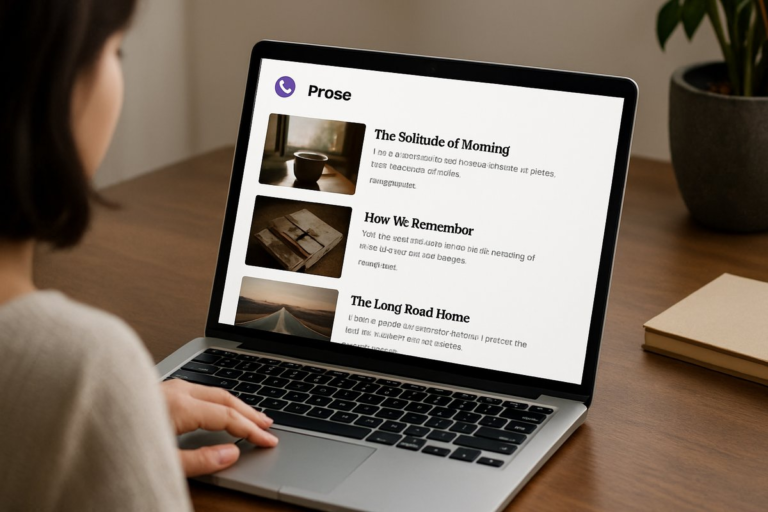
A subtle yet powerful feature of the category is its presentation. Each essay appears on a minimalist page with adjustable margins and a “quiet mode” option that dims background elements. Readers can activate a gentle ambient soundtrack-rainfall, distant bells, rustling leaves-to match the tone of reflective pieces. These design choices aim to foster an atmosphere of contemplation, as if readers were holding a printed page in a sunlit corner of a cafe.
Feedback from accessibility advocates has also been positive. High-contrast text, resizable fonts, and keyboard navigation ensure the Prose Category remains welcoming to readers with visual or motor challenges. The platform partnered with disability consultants to refine these features, prioritizing inclusivity in both content and design. “We want this corner of the web to be a quiet space for everyone,” the accessibility lead explains.
Beyond digital reading, the editorial team is planning offline events. Small-group workshops will convene in independent bookstores and community centers around the country. Attendees can bring their own drafts for peer critique, guided by professional nonfiction mentors. Writing prompts will encourage participants to draw on sensory memory-sounds of a childhood home, tactile impressions of an old object-transforming those experiences into narrative shape.
Looking ahead, the Prose Category aims to publish an annual anthology. Selected essays will appear in print, featuring bespoke cover art and hand-numbered editions. The anthology project seeks to preserve the most resonant pieces in a tangible form, acknowledging that crafted language often finds enduring life beyond a screen. “We believe these stories deserve permanence,” the anthologist says. “They speak to the timeless bond between writer and reader.”
As the category evolves, editors plan to introduce themed series. One forthcoming cycle explores “Thresholds”-moments when people stand on the edge of change, poised between past and future. Another will focus on “Silent Dialogues,” essays framed as conversations with spaces: an empty room, a deserted track, a neglected garden. By curating these micro-collections, the platform hopes to build deeper arcs of meaning over time.
For writers seeking entry, guidelines emphasize authenticity and craft. Submissions may range from 1,000 to 3,500 words and should demonstrate careful attention to language: precise imagery, emotional honesty, and a distinct narrative voice. Editorial feedback is offered to all contributors, even those whose work isn’t selected, nurturing a community of lifelong learners.
In an online world saturated with noise, the emergence of a Prose Category dedicated to deliberate language feels both urgent and inevitable. Here, essays become small vessels of feeling, narrative journeys unfold at a human pace, and readers rediscover the quiet resonance of memory shaped by words. Whether embarking on a new writing practice or seeking solace in reflective reading, participants find a shared language of emotional truth.
The digital realm often prizes speed and brevity. But in the silent interstices between posts and updates, there’s a growing chorus calling for meditation, story, and reflection. The Prose Category answers with open doors: a space where language can be an act of care, where essays and reflections remind us that memory and meaning are inseparable, and where emotional truth finds its place in the ever-evolving narrative of our lives.