Location
Mount Vernon, WA 98274
Location
Mount Vernon, WA 98274

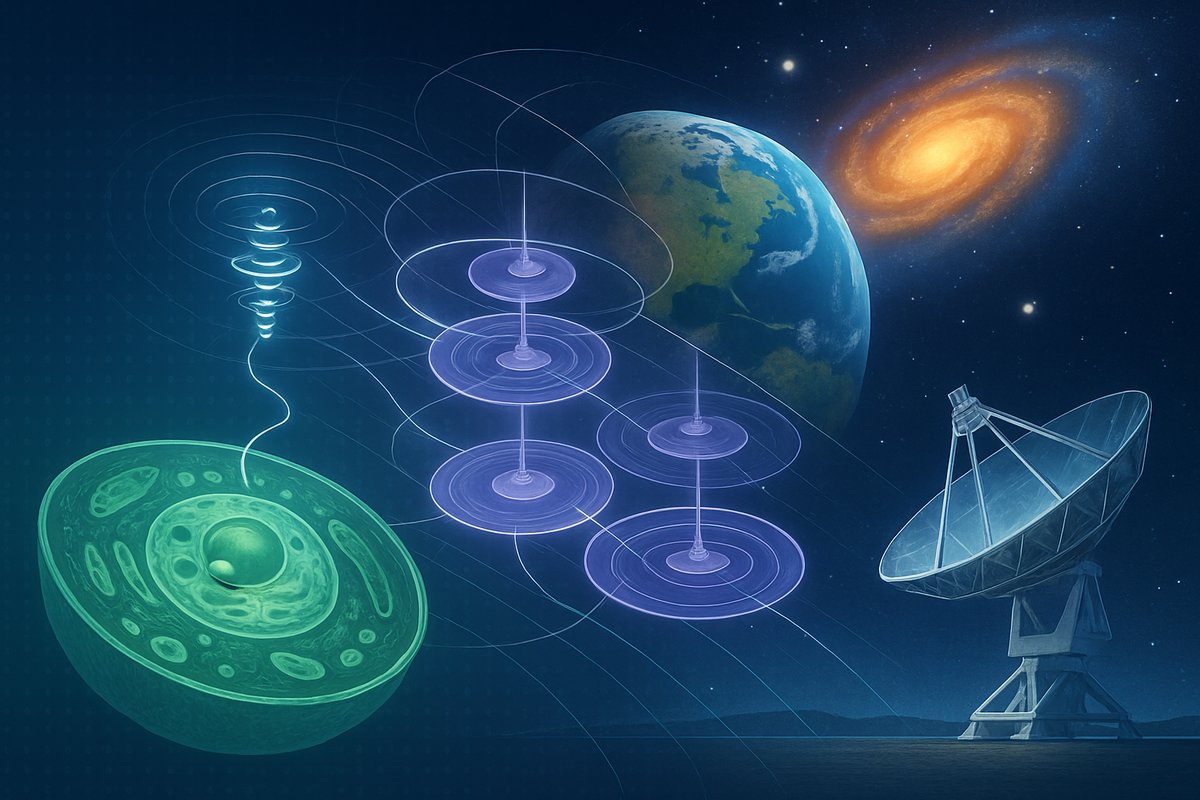
Researchers have unveiled a network of quantum sensors capable of capturing signals from the subatomic scale to cosmic events, bridging the gap between lab-based precision and observatory-grade scope. This advance promises new insights in astrophysics, Earth science, and even cellular biology, ushering in a truly multiscale era of exploration.
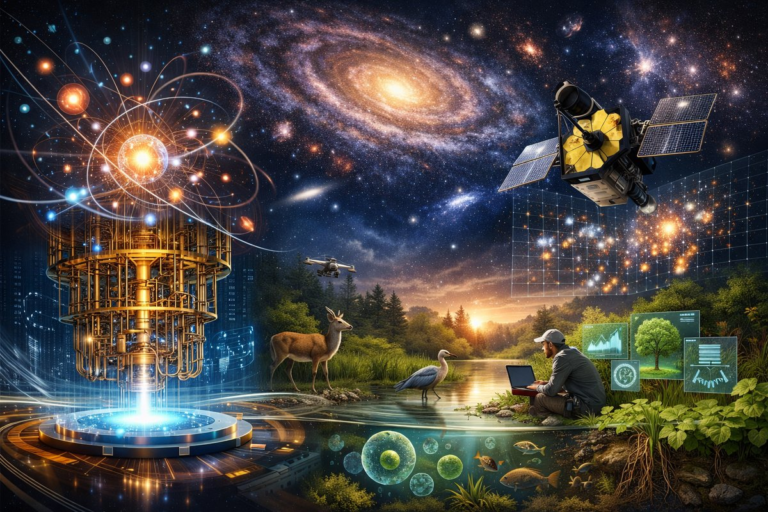
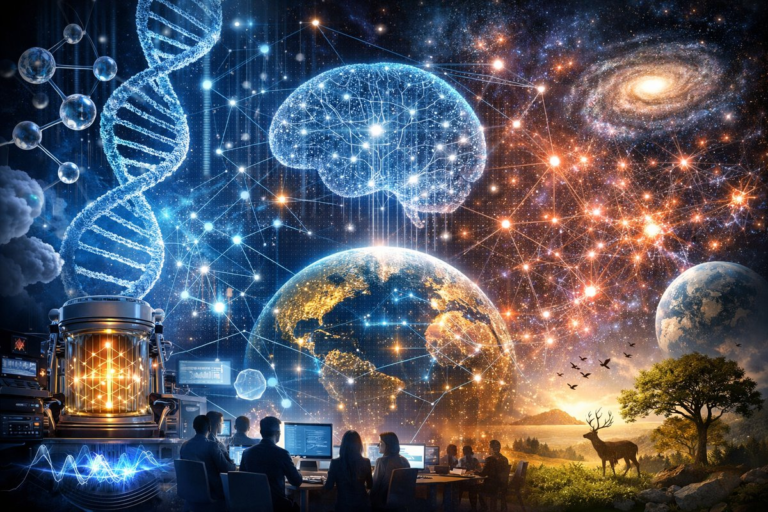
Science has always thrived on the tension between the infinitely small and the infinitely large. In a recent breakthrough, a collaborative team of physicists, geoscientists, and biologists announced the deployment of a distributed quantum sensor network that operates seamlessly from the quantum realm to cosmic distances. By harnessing entangled photons and superconducting devices, the network can detect minute fluctuations in local magnetic fields one moment and register high-energy cosmic events the next, effectively unifying the study of phenomena across more than twenty orders of magnitude.
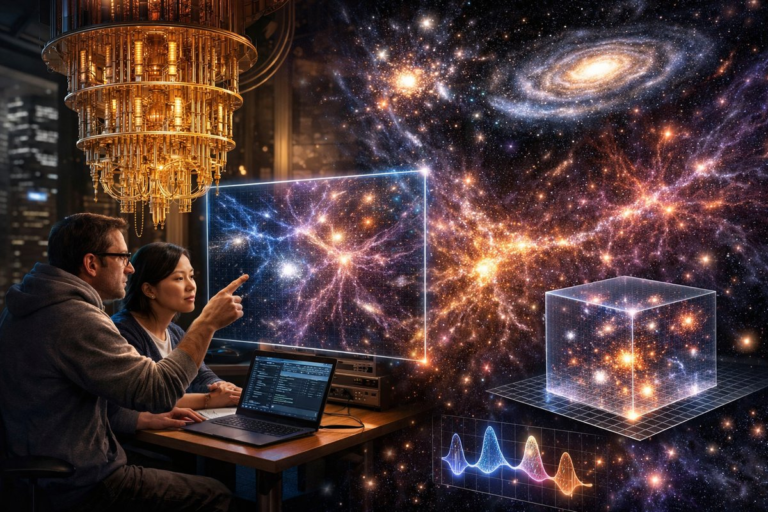
At the heart of this multiscale system are arrays of superconducting quantum interference devices (SQUIDs). Traditionally confined to laboratory benches under cryogenic temperatures, these instruments have been ruggedized and miniaturized for field deployment. Each station houses a compact dilution refrigerator, a laser-stabilized photon source, and the SQUID array itself. Entangled photon pairs generated within the unit create a reference channel that cancels out environmental noise, allowing the sensors to maintain quantum coherence over long distances. This makes it possible to measure magnetic field variations as small as femtoteslas-levels once thought accessible only in controlled lab environments.
Field testing began earlier this year at three observatories: a high-altitude plateau for cosmic ray monitoring, a deep cavern repurposed for geophysical research, and a coastal marine lab focusing on underwater acoustics and magnetic anomalies. In each location, the quantum network has already delivered results that surpass conventional instrumentation. At the plateau, researchers recorded a sudden spike in muon flux correlated with a distant supernova remnant, refining estimates of cosmic ray propagation through interstellar space. Meanwhile, underground teams detected subtle shifts in the Earth’s magnetic field that appear to precede minor seismic tremors, hinting at potential applications in early earthquake warning systems.
Perhaps the most surprising finding emerged from the marine lab, where sensors picked up the magnetic signature of biogenic minerals produced by deep-sea microorganisms. By tuning the quantum detectors to specific frequency bands, scientists could differentiate signals from microbial magnetosomes against a noisy background of seawater currents and tectonic rumblings. This offers a noninvasive window into microbial ecosystems and could revolutionize our understanding of geomicrobiology in extreme environments.
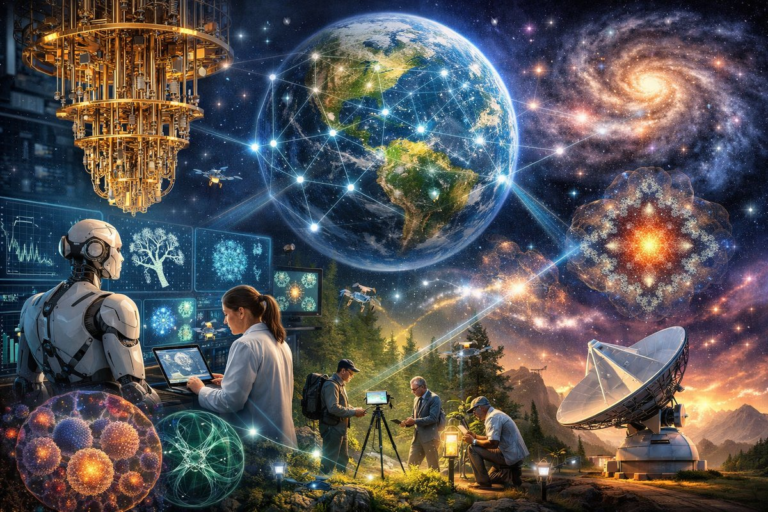
Beyond these immediate discoveries, the quantum sensor network has significant implications for astrophysics. Its sensitivity allows for direct measurement of fluctuations in the cosmic microwave background on sub-degree angular scales, complementing data from space-borne telescopes. When integrated with existing radio arrays, the network can cross-verify signals, reducing false positives and opening new pathways for detecting transient phenomena such as fast radio bursts or magnetar flares. Researchers believe this could help chart the large-scale magnetic structures that thread between galaxies, shedding light on the origins of cosmic magnetism.
On the geoscience front, the deployment of quantum sensors in boreholes and underwater observatories promises to map subterranean features with unprecedented resolution. By correlating quantum-level magnetic readings with seismic data, teams can create high-definition models of fault zones, aquifers, and mineral deposits. This refined imaging is expected to aid sustainable resource management, from groundwater extraction to geothermal energy projects, all while minimizing environmental impact.
One of the most forward-looking components of the project involves translating quantum sensing techniques into tools for cellular biology. Engineers are adapting the same SQUID-based detectors for integration with cryogenic electron microscopes, allowing researchers to observe biomolecules at cryogenic temperatures with enhanced magnetic contrast. Early experiments have captured quantum spin states in individual proteins, suggesting new strategies for probing electron transfer processes and molecular conformations. This intersection of quantum metrology and structural biology could deepen our understanding of fundamental life processes.
Central to this achievement has been an open-science ethos. All raw data from the three initial observatories are being streamed in real time to a publicly accessible portal. Citizen scientists, students, and independent researchers can tap into the live feeds, apply their own algorithms, or simply watch cosmic-scale and quantum-scale events unfold side by side. The project team hopes that this transparency will foster unexpected collaborations and accelerate innovation beyond the founding institutions.
The technical challenges have been formidable. Maintaining quantum coherence in rugged, uncontrolled environments demanded novel error-correction protocols and adaptive feedback loops. The research consortium developed machine learning algorithms that monitor sensor health, predict noise patterns from weather and human activity, and dynamically adjust laser frequencies to maintain entanglement. These AI-driven controls have slashed downtime and allowed the network to operate continuously for weeks at a time between scheduled maintenance cycles.
Ethical considerations have also been part of the conversation. While the quantum network is positioned as a purely scientific endeavor, the ability to sense minute magnetic variations raises questions about potential misuse-such as covert surveillance of vehicles or communication devices. The consortium has pledged to implement strict data governance policies, anonymize signals that could be traced to individuals, and collaborate with legal experts to ensure compliance with privacy regulations. This commitment to responsible innovation underscores the project’s broader values of transparency, curiosity, and respect for society.
Looking ahead, the team plans to launch a counterpart network in orbit, deploying quantum sensors on small satellites to extend coverage beyond Earth’s surface. By forming a space-ground quantum link, researchers aim to probe gravitational anomalies, test theories of quantum gravity, and investigate the influence of solar storms on quantum coherence. Such an initiative could revolutionize precision navigation, enable new tests of fundamental physics, and strengthen our resilience against space weather events.
This quantum-cosmic sensor network exemplifies science’s boundless ambition to connect disparate scales and disciplines. From the subatomic flicker of entangled photons to the vast expanse of interstellar space, the project illuminates patterns that were previously hidden behind technical barriers. As data accumulate and analytical tools evolve, the multiscale approach promises discoveries that will reverberate across physics, geology, biology, and beyond. In the spirit of curiosity and collaboration, this breakthrough invites scientists-and anyone with a thirst for exploration-to think deeply, engage boldly, and witness the extraordinary convergence of quantum precision and cosmic wonder.