Location
Mount Vernon, WA 98274
Location
Mount Vernon, WA 98274

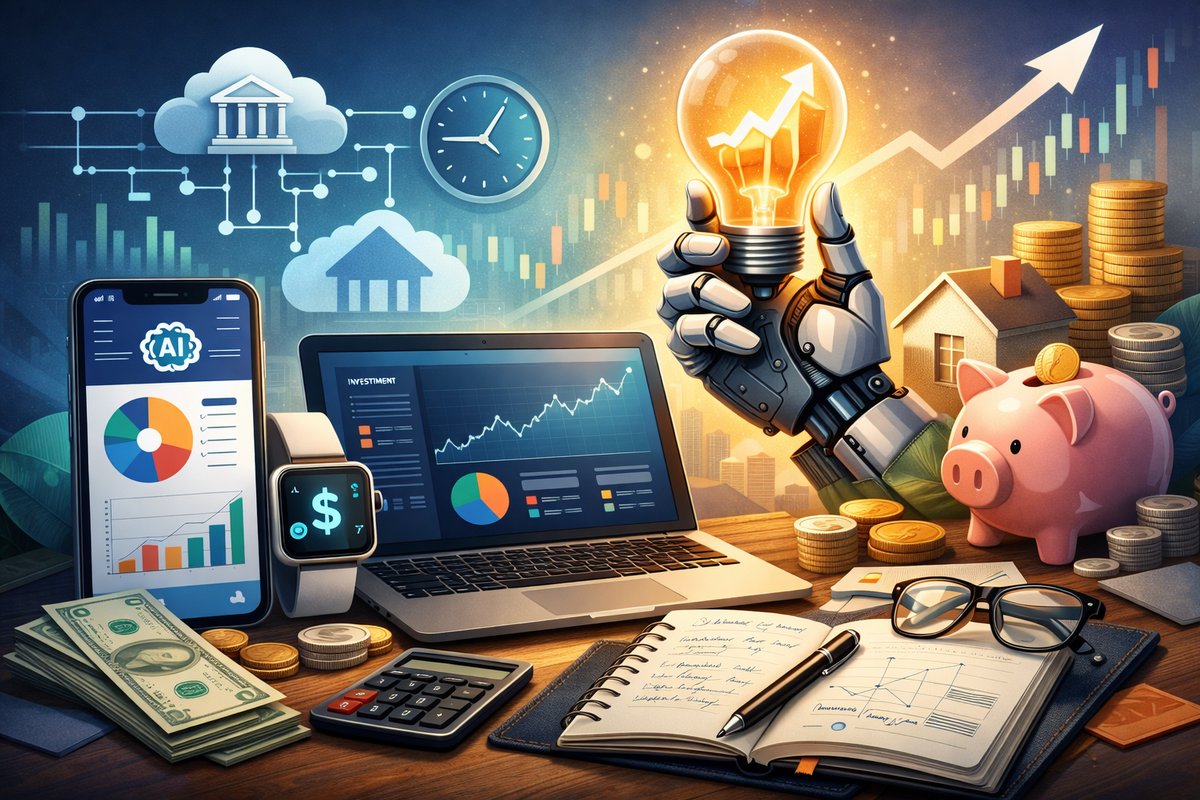
A wave of digital innovations and regulatory shifts is transforming the way individuals budget, invest, and plan for long-term goals. From AI-driven spending insights to open banking APIs, today's tools promise clarity and control without the jargon. Discover how to harness these advances-both digital and analog-to build a more confident financial future.
In a climate of persistent inflation, shifting interest rates and volatile markets, building a stable financial foundation can feel like charting unknown seas. Yet the same forces creating uncertainty are driving a surge of innovation in budgeting, investing and money management tools. New regulations are unlocking data, artificial intelligence is turning raw numbers into clear narratives, and even analog methods are finding fresh relevance alongside slick mobile apps. The result is an unprecedented opportunity to take control of personal finances-and to do so with confidence and curiosity rather than overwhelm.
Last summer, the Bureau of Labor Statistics reported that the Consumer Price Index had risen by 3.7% year-over-year. For households already juggling rents, mortgages and rising grocery bills, that uptick underscores the importance of granular visibility into monthly spending. Gone are the days when a single bank account statement sufficed: today’s budgeters want real-time alerts when monthly targets are exceeded, automatic insights into where discretionary dollars disappear, and predictive analytics that help forecast next quarter’s cash flow.
Enter open banking, a set of standards and APIs that allow financial institutions to share customer‐authorized data securely with third parties. In regions where these rules are in effect-Europe under PSD2, parts of Latin America and now a growing patchwork of pilot programs in North America-innovators can build apps that pull in checking, savings and credit activity from multiple sources. The result is a unified ledger of every transaction, updated in near real-time, eliminating the manual import/export drudgery of past spreadsheet-based workflows.
One recent survey by eMarketer found that 65% of millennial and Gen-Z consumers now rely on at least one third-party financial app to manage bill payments or savings goals. Many of those users cite automated categorization-think “groceries” versus “dining out”-as the feature that finally turned budgeting from dreaded chore into an illuminating habit. Instead of wrestling with dozens of line items, they receive weekly reports that highlight trends: a 12% uptick in transportation costs, a 40% drop in impulse online purchases, or a reminder that car insurance renews in two weeks.
Advances in natural language processing are now giving these platforms the ability to do more than categorize. They can answer questions: “How much did I spend at coffee shops versus streaming services last quarter?” “What would happen to my monthly savings rate if I cut restaurant meals by 30%?” “Am I on track to retire at 65 if inflation holds at 3%?” This conversational interface shifts the dynamic from passive observer to active coach, nudging users toward smarter choices and surfacing long-term impacts that a static spreadsheet could never reveal.
These AI models draw on historical spending patterns, public economic indicators and user-provided goals. They run simulations in seconds: “If you invest an extra $200 per month in a diversified portfolio-50% stocks, 30% bonds, 20% sustainable assets-you could add an estimated $75,000 to your nest egg over the next decade.” By blending personal data, macroeconomic trends and portfolio projections, the platform makes abstract scenarios tangible. What once required a financial adviser and industry jargon is now accessible through a few keystrokes on your phone.
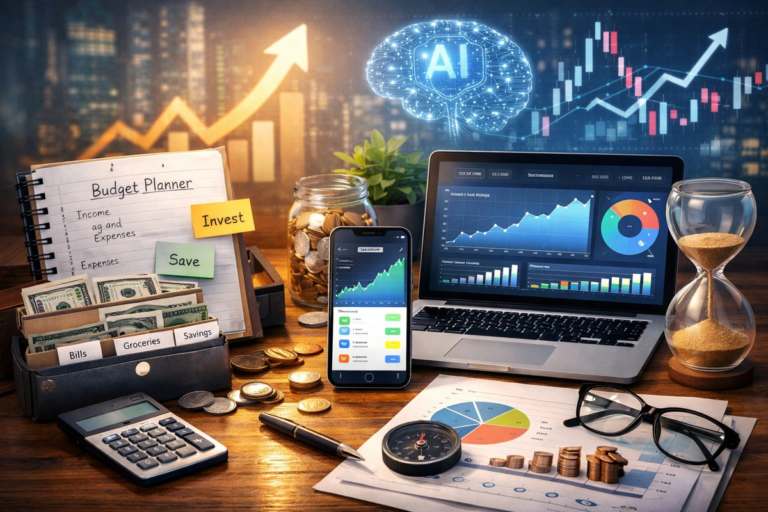
While these digital solutions work wonders once accounts are connected, many experts recommend anchoring those insights with analog rituals that foster mindfulness. That’s where a budget planner notebook can be especially powerful. Jotting down every expense in your own handwriting-even if you duplicate categories later in an app-sharpens attention. Physically crossing out a category when it’s maxed out creates a moment of pause, giving you space to reflect: Should that extra take-out order really be worth the splurge?
Investment platforms have not been immune to the trend toward frictionless experience. Fractional shares, once confined to a handful of boutique brokerages, are now mainstream. You can allocate spare change-or pocket change roundups-to a basket of exchange-traded funds that track clean energy, emerging markets or social impact indexes. In the past year alone, assets in micro-investing platforms grew by nearly 25%, according to a report from the Investment Company Institute. This shift opens the door for younger and lower-income investors to build diversified portfolios without requiring large initial deposits.
ESG (environmental, social and governance) scoring is weaving its way into these products. Behind the screens, data providers apply standardized metrics to thousands of public companies: carbon footprints, board diversity, labor practices. Investing a small weekly sum becomes an act of values alignment, not just capital growth. For many users, seeing a live tally of positive impact-trees planted, women represented on boards, CO2 emissions reduced-makes market returns feel like part of a larger story rather than a zero-sum game.
At the same time, pundits caution about “ESG washing” and the risk of superficial labeling. Savvy investors increasingly demand transparent reporting and periodic third-party audits. The upshot is a more rigorous ecosystem where impact claims can be verified and funds rebalance to reflect actual corporate progress. Better data yields better decisions, and that loop benefits the planet as well as the portfolio.
To make the most of these digital and analog tools, many enthusiasts are curating dedicated workspaces. A mechanical keyboard with tactile switches can transform long spreadsheet sessions into satisfying typing marathons, reducing fatigue and improving accuracy. Pair that with a set of wireless noise-canceling headphones and you create a distraction-free cocoon, whether you’re focused on quarterly reviews or chasing down investment research.
Whether you use a single ultrawide monitor or a dual-screen setup, the goal is clarity: arrange your budgeting app alongside a live market dashboard, keep a physical budget planner notebook at hand for quick jotting and anchor your day with a five-minute morning ritual of reviewing last night’s transactions. That ritual-fueled by intentional routines rather than reactive clicks-can transform budgeting from a technical task into a reflective practice, reinforcing a sense of agency over time.
The beauty of today’s ecosystem is its modularity. You don’t need every tool from day one. Start by linking bank accounts to a trusted budgeting app and setting a monthly savings target. Then experiment with a micro-investing feature, allocating your next $10 roundup to an ESG fund. At the same time, order a budget planner notebook and designate Sunday evenings for a ten-minute digital-plus-analog review. Slowly add hardware enhancements-a mechanical keyboard for comfort, noise-canceling headphones for focus-and let the momentum build.
As personal finance continues to evolve, the guiding principle remains the same: clarity precedes confidence. Whether you’re reconciling last month’s overspend or modeling retirement scenarios, the deeper you understand your own money story, the more empowered you become. Today’s innovations-open banking APIs, AI coaches, micro-investing with impact metrics-are all tools to illuminate that story, not to obscure it in technicalities. Adopt what resonates, remix what works, and remember that financial freedom is as much about emotional resilience as it is about returns on investment.
By weaving together the best of digital design and analog mindfulness, anyone can chart a clearer path forward. You no longer need to be a numbers wizard or a Wall Street insider to harness powerful insights. Instead, leverage intuitive platforms, tangible routines and a supportive toolkit. The future of personal finance is modular, transparent and-most importantly-designed for humans, not just algorithms. With the right combination of apps, hardware and a simple budget planner notebook, you’ll be well on your way to building a more confident, purposeful financial future.