Location
Mount Vernon, WA 98274
Location
Mount Vernon, WA 98274


A new international initiative is deploying an integrated array of quantum, ecological, and spaceborne sensors to map phenomena from subatomic fluctuations to planetary waves. This multiscale observatory promises breakthroughs in environmental monitoring, fundamental physics, and our understanding of complex systems across time and space.
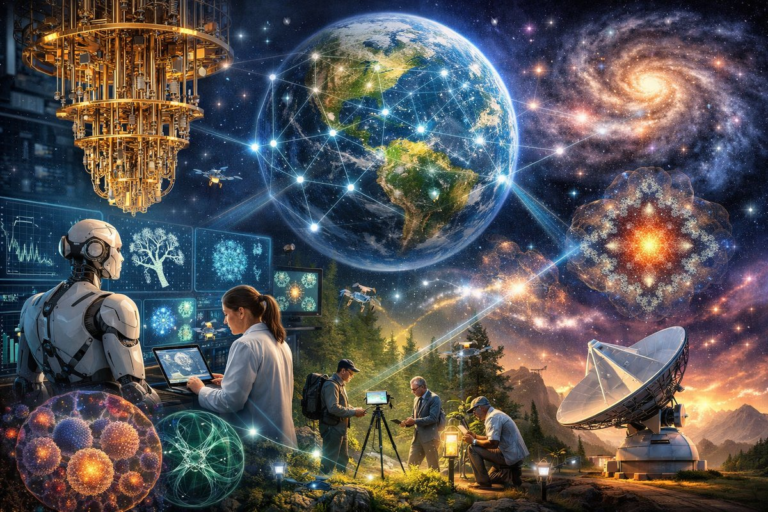
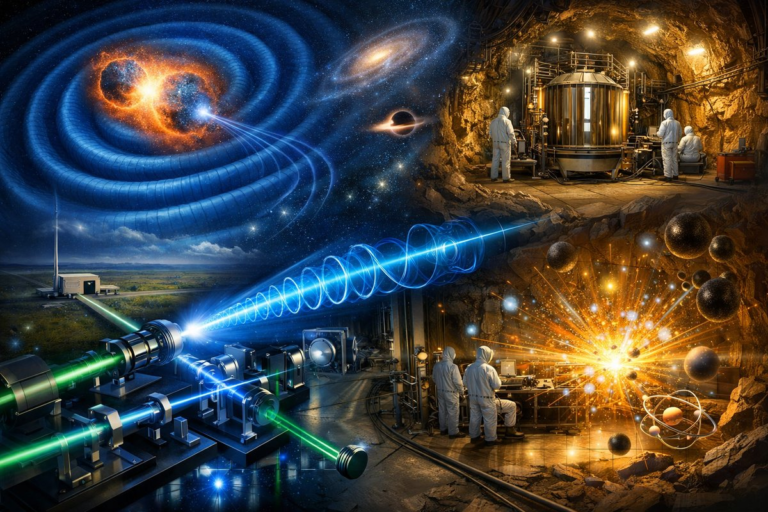
The early hours of a remote desert night formed the backdrop for an unprecedented scientific experiment: a formation of quantum sensors, ecosystem nodes, and a compact satellite constellation all activating in unison. Known as the Multiscale Observatory Initiative, this project stitches together instruments that probe the smallest known building blocks of matter with those that survey atmospheric currents and cosmic signals. The result is an end-to-end view of our planet and its place in the universe.
At the heart of this effort are quantum magnetometers and gyroscopes capable of detecting magnetic field variations measured in femtoteslas. Installed within ground stations and carried aboard small satellites, these devices capture minute disturbances driven by geological activity, solar storm interactions, and even gravitational waves rippling through Earth’s crust. By harnessing quantum coherence, each sensor delivers precision once reserved for laboratory bench-tops, now extended beyond the laboratory into the wild.
But this initiative isn’t solely focused on quantum phenomena. Distributed ecosystem nodes-modular units equipped with acoustic recorders, spectral cameras, and microclimate probes-are peppered across rainforests, tundra, and coastal marshes. These nodes monitor biodiversity by identifying vocalizations from birds, amphibians, and insects; measure soil composition changes; and track humidity, temperature, and carbon flux in real time. Together, these ecological data streams reveal how local habitats respond to environmental stressors and how they interconnect on regional and global scales.
High above, a fleet of microsatellites carries hyperspectral imagers and infrared telescopes. Each satellite captures snapshots of cloud patterns, vegetation health, and sea surface temperatures with spatial resolutions down to a few meters. In parallel, cosmic ray detectors analyze high-energy particles that bombard Earth’s atmosphere, while a network of miniaturized interferometers seeks signatures of gravitational waves from cataclysmic events in distant galaxies. The synergy of these spaceborne instruments with quantum and ecological sensors on the ground yields a continuous, multiscale tapestry of data.
Data integration poses its own challenge. Streams arriving from polar deserts, tropical wetlands, low Earth orbit, and near-geostationary altitudes converge via secure mesh networks. Edge computing units perform preliminary analyses, filtering noise and calibrating signals before forwarding processed results to regional data hubs. The combination of decentralized intelligence and cloud-based analytics ensures scientists can explore correlations across scales without sacrificing raw resolution.
One early application involves volcanic monitoring. Quantum magnetometers detect subtle magnetic field shifts as magma migrates, while ecological nodes register changes in soil respiration and acoustic tremor signatures long before visible plumes emerge. Satellite thermal imagers corroborate these signals by spotting surface hotspots. This multiscale approach increases warning lead times for nearby communities, blending physics, ecology, and Earth observation into a single diagnostic tool.
In the polar regions, researchers deploy shallow seismic arrays synchronized with quantum gyroscopes to map permafrost thaw dynamics. Ecosystem sensors track migrating bird populations that use thawed corridors, and satellites record albedo changes as snow gives way to exposed terrain. By fusing these layers, teams can predict ecological shifts and feedback loops affecting global carbon cycles and sea-level rise.
On another front, the observatory network is probing the upper atmosphere. Quantum sensors aboard high-altitude balloons measure magnetic fluctuations tied to solar wind interactions, while ultraviolet spectrometers capture auroral emissions dancing across polar skies. Ground stations then correlate these readings with space weather forecasts, improving aviation route planning and satellite operation timelines during geomagnetic storms.
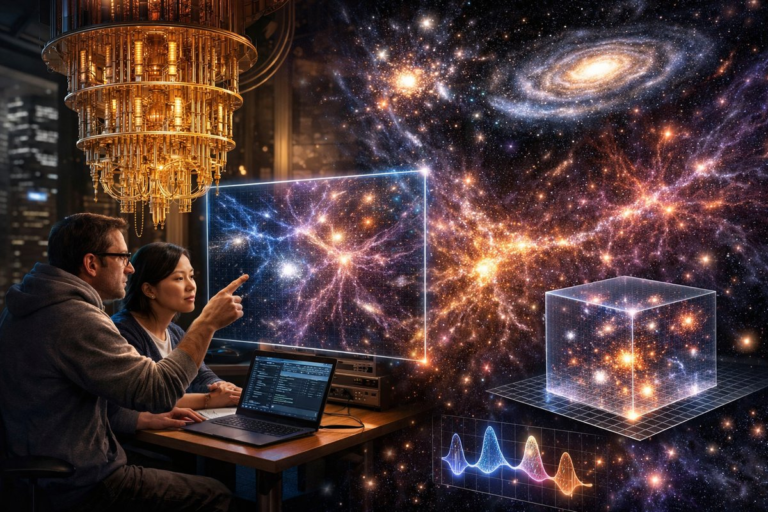
Beyond environmental monitoring, this initiative holds promise for fundamental physics. Quantum interferometers arranged across continents look for correlated phase shifts that might signal passing gravitational waves at frequencies outside current detection bands. If successful, this network of tabletop-scale quantum instruments could complement large interferometer facilities, opening a new window on the cosmos.
One of the project’s guiding principles is modularity. Sensor units can be swapped, upgraded, or reprogrammed as technology evolves. Researchers recently field-tested a new atomic clock module linked to existing quantum sensors, refining the timing precision across the network to nanosecond scales. This improvement enhances geolocation accuracy for ecological nodes and boosts the sensitivity of cosmic signal detections.
Open data policies drive collaboration. A federated data-sharing platform allows accredited scientists, educators, and even citizen scientists to tap into curated datasets. Interactive dashboards visualize correlations-such as linking seismic tremors with sudden fluctuations in bird call frequencies-and enable users to overlay satellite imagery with ground-level metrics. By democratizing access, the initiative invites contributions from diverse disciplines, from microbiology to astrophysics.
Educational outreach is embedded in every phase. Portable sensor kits modeled on the full-scale ecosystem nodes have been introduced in high school and community college curricula. Students install acoustic monitors along creek beds, map leaf greenness with handheld spectral sensors, and upload data to public repositories. These experiences foster deep engagement with both quantum science and environmental stewardship, nurturing the next generation of multidisciplinary researchers.
Security and privacy considerations are paramount. Sensor nodes collect environmental and biological signals but are designed to exclude personal data. Encryption safeguards data in transit, while open-source firmware permits audits to ensure no inadvertent surveillance occurs. In an era when smart devices often blur the line between observation and intrusion, this network reaffirms a values-driven approach to technological innovation.
As data accumulates, machine-learning models trained on multiscale inputs begin to reveal emergent patterns. In one pilot study, algorithms correlated minute magnetic anomalies picked up by quantum sensors with shifts in atmospheric humidity measured by ecological nodes, suggesting a coupling between subterranean water flow and near-surface weather phenomena. If validated, such findings could refine hydrological forecasts and inform water management strategies.
On the cosmic side, researchers have already spotted a tentative gravitational wave candidate by cross-referencing signals from quantum interferometers with optical data from satellite telescopes. While confirmation requires additional runs, the early result hints at the power of distributed microinstruments working in concert across both Earth and orbit.
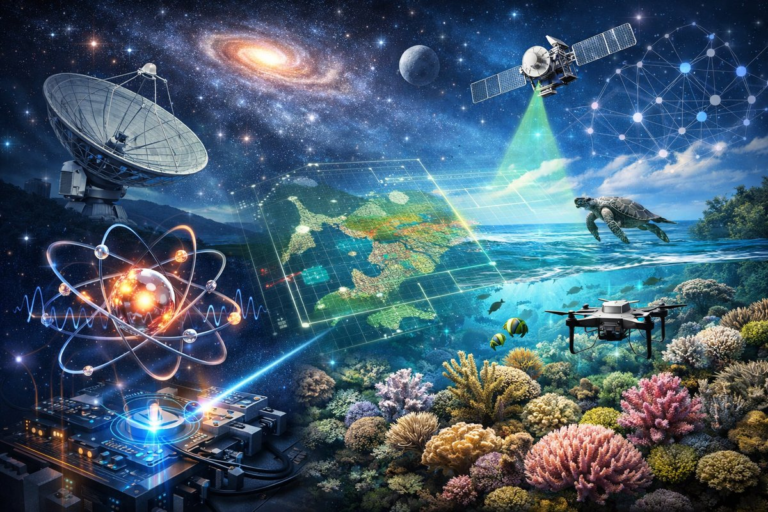
Looking ahead, the initiative plans to expand into oceanic environments. Autonomous underwater vehicles equipped with quantum gravimeters and sonar arrays will map seafloor topography, underwater currents, and tectonic activity. Complementary flotillas of surface buoys carrying ecosystem sensors will track plankton blooms and marine mammal migrations, linking ocean health to cosmic inputs like solar radiation and geomagnetic variability.
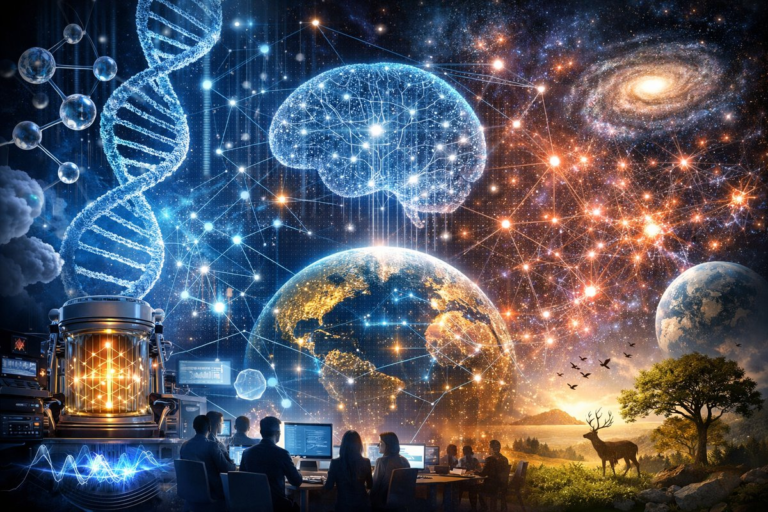
In the coming decade, this global network aims not only to answer longstanding scientific questions but to inspire novel inquiries at the intersection of scales. By integrating quantum precision with ecological insight and cosmic perspective, the Multiscale Observatory Initiative stands as a testament to human curiosity and collaboration. In the dance of atoms and atmospheres, in the interplay of cells and stars, we glimpse a richer portrait of our world-one that invites us to think more deeply, measure more precisely, and wonder more boldly.