Location
Mount Vernon, WA 98274
Location
Mount Vernon, WA 98274

Parents and educators are weaving emotional awareness into play, creating environments where children learn to navigate feelings and ideas through hands-on discovery. From illustrated feelings cards to sensory-rich play kits, these tools foster agency, curiosity, and resilience, laying the groundwork for lifelong learning.
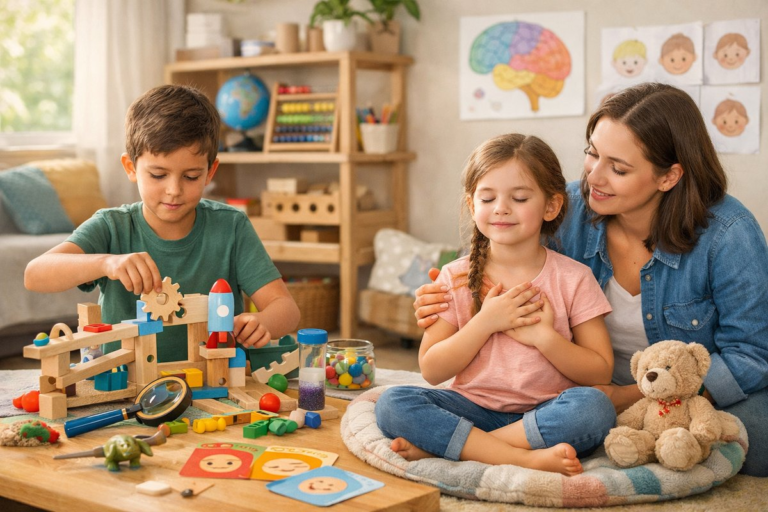
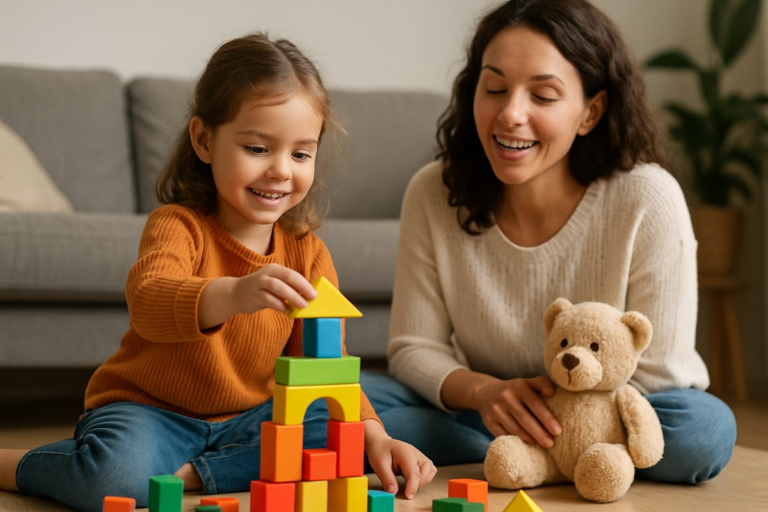
In a bright corner of her living room, seven-year-old Maya arranges colored pebbles into concentric circles on a soft play mat. Each hue represents a different emotion: blue for calm, red for excitement, green for curiosity. Across the room, her younger brother builds a soaring tower of natural wood blocks, pausing now and then to reflect on how the structure makes him feel “proud and brave.” Their mother watches from a cozy chair, notebook in hand, jotting down observations: how Maya circles her feelings colors when she’s anxious about an upcoming recital, or how her brother’s tower gains height whenever he’s eager to take on a new challenge. This corner, stocked with emotion cards, sensory materials, and open-ended building tools, is more than a play area; it’s a laboratory of growth where toys and feelings intertwine.
Across the globe, a shift is underway in early education. Traditional toys that emphasized rote learning or passive entertainment are sharing shelf space with materials designed to nurture emotional intelligence, critical thinking, and self-directed exploration. A landmark study from a leading university found that children who engage in play-based emotional learning activities show marked improvements in social skills and academic readiness. By integrating tools that invite reflection-like illustrated flashcards depicting a range of feelings-parents can guide children in mapping experiences from the sandbox to the schoolyard.
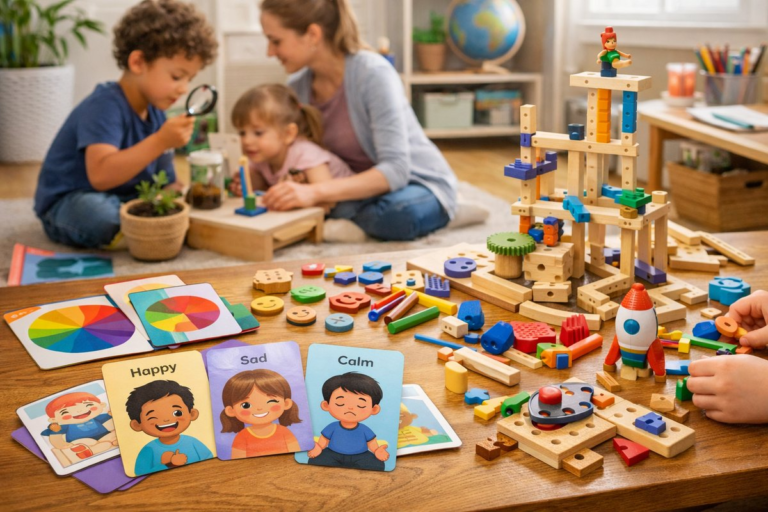
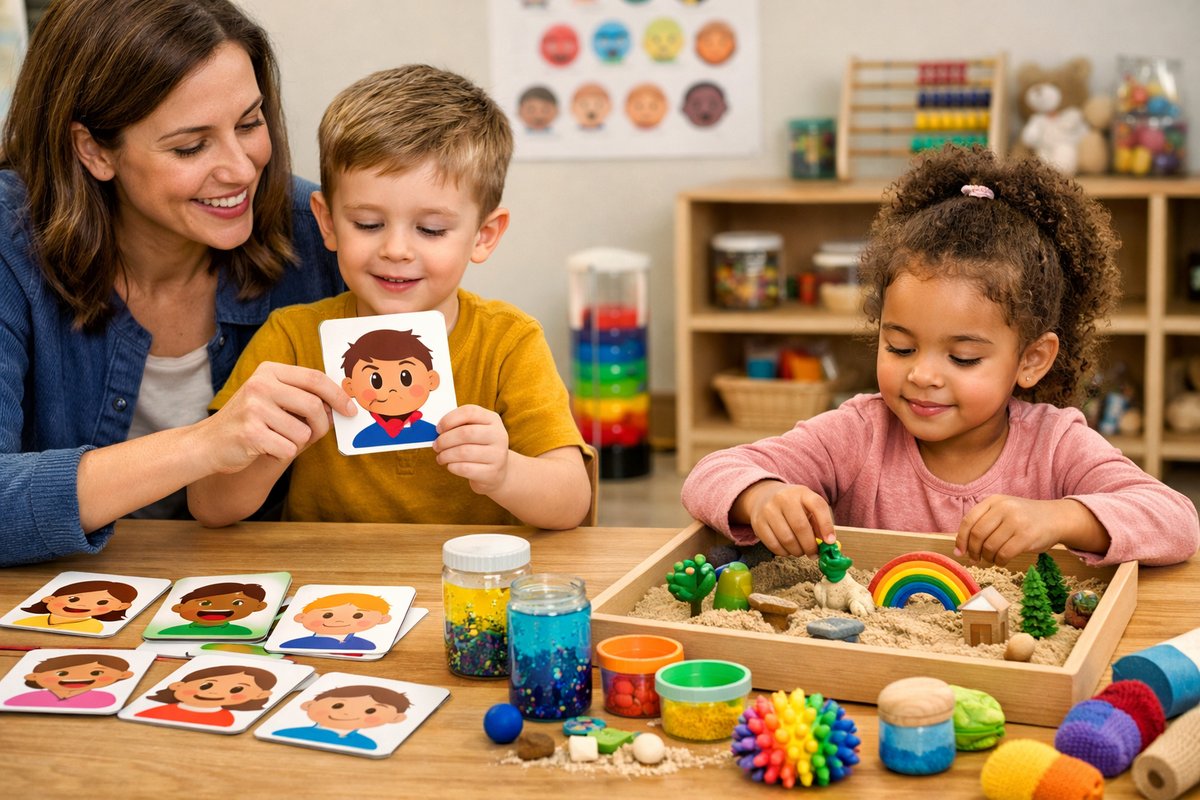
Why does emotion matter in early learning? Neuroscience reveals that the brain’s emotion centers are closely linked to memory and motivation. When a child feels safe and understood, neural pathways for problem-solving and creativity fire more vividly. Conversely, unchecked frustration or anxiety can produce “stress hormones” that dampen curiosity. One practical strategy is to embed feeling-check routines into play sessions. Before a building or drawing exercise, caregivers can invite children to draw a simple face on a small card indicating their current mood. These emotion prompts, whether sketched by hand or drawn from a ready-made deck, equip youngsters with a shared language for self-expression.
Designing a Play-and-Feel Station
Many families create a dedicated corner-sometimes called a calm-down or reflection station-where emotion and exploration meet. Here’s how to set one up:
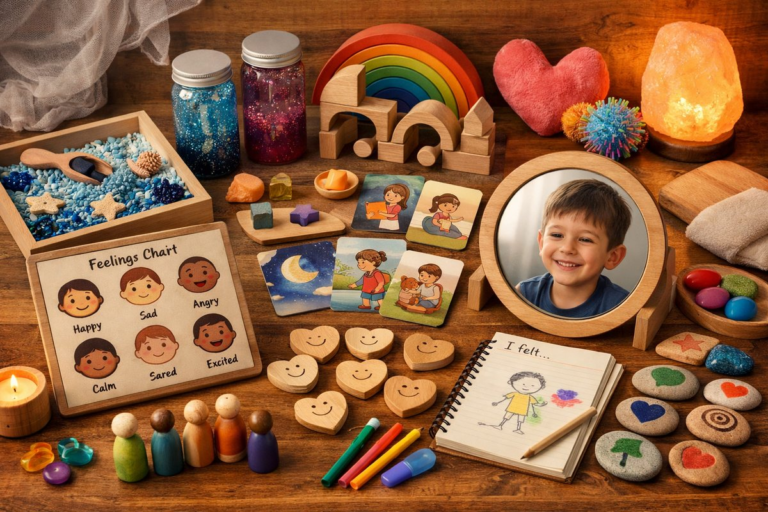
– Soft Base: Start with a cushioned mat or rug that signals ‘come down and breathe.’
– Feeling Cards: A stack of flashcards with expressive illustrations encourages kids to name their emotions. Set them face-down and let children choose one whenever they begin an activity or feel overwhelmed.
– Sensory Tray: Fill a shallow bin with small objects like textured balls, squishy shapes, or colored rice. This multi-sensory kit gives restless hands something to explore and invites conversation: “How does this texture make you feel calm or curious?”
– Open-Ended Toys: Include wooden blocks, magnetic tiles, or simple crafting materials. These items have no single purpose, so they spark imagination and group play rather than dictating a fixed outcome.
– Reflection Journal: A blank notebook and crayons or pencils let older kids jot or sketch thoughts about their building process, challenges they faced, and emotions they encountered.
Encouraging Agency and Collaboration
The centerpiece of emotionally intelligent play is agency: the feeling that one’s choices matter. Instead of handing children a toy with instructions and stepping back, caregivers can offer guiding questions: “What would happen if you shuffled these blocks by size instead of color?” or “Can you build something that represents how happiness feels today?” This invitation transforms play from passive imitation into an active inquiry.
Siblings or peers playing together can learn vital social skills. When two children share a single set of wooden blocks, they navigate cooperation, negotiation, and compromise. Emotions inevitably arise-joy at a stable tower, frustration at a collapse, pride at a collaborative triumph. Having feeling cards and guided prompts on hand helps them pause and articulate: “I felt disappointed when the tower fell. What can we do next time to make it stronger?”
Embedding Emotional Literacy into Everyday Routines
While a play station offers a dedicated space, emotional learning need not be confined to it. Meal prep can double as a conversation on sensory exploration: tasting sweet apples, noting the crunch, describing how different textures or flavors evoke comfort or excitement. A grocery run offers a chance to practice agency-letting a child choose between spinach and kale, then reflecting on how decision-making itself can feel empowering.
Evening wind-downs can incorporate mindfulness jars filled with water, glitter, and glycerin. As children shake the jar, they see swirling particles slowly settle-an analogy for racing thoughts calming over time. A short debrief-“How did watching the glitter settle remind you to take deep breaths when you’re upset?”-cements the connection between inner states and external tools.
Building Emotional Resilience Through Stories
Storytime has long been a cornerstone of early education, but adding emotional check-ins elevates its impact. After reading a tale with a character overcoming fear, parents can ask: “Have you ever felt scared, like this character? What helped you feel brave again?” Tying narrative arcs to personal experience deepens empathy and cements the lesson that emotions are universal and manageable.
Certain picture books pair beautifully with feeling cards, allowing children to match illustrations of anger, surprise, or sadness in the story to cards in their own set. This small act of mapping internal to external creates a bridge between imagination and self-awareness.
When to Introduce Structured Workshops
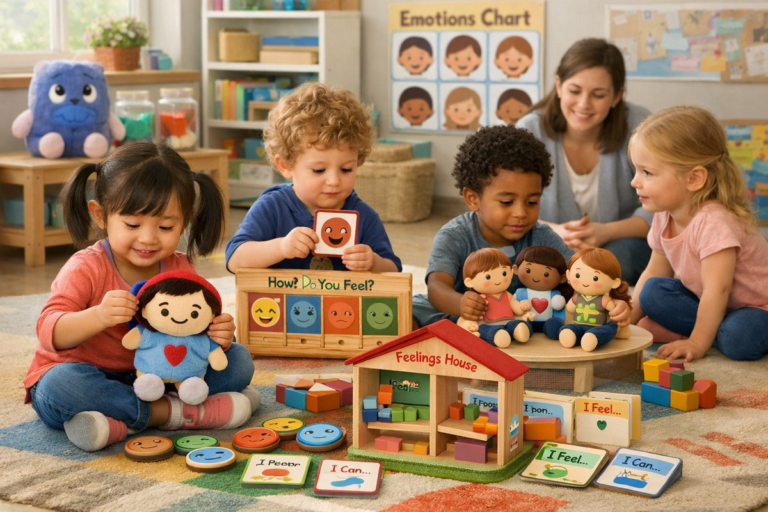
Some preschools and parent-and-toddler groups now offer short workshops on emotional intelligence, combining puppet shows, role-play, and sensory play. These guided gatherings can be a valuable complement to home learning, especially for parents seeking inspiration or peer support. Look for workshops led by developmental specialists who emphasize hands-on discovery-neuroscience-backed activities rather than lectures.
Making It Sustainable and Inclusive
No two children learn or express emotions in the same way. To build an inclusive toolset:
– Rotate Materials: Swap out feeling cards for new sets that include culturally diverse faces or symbols. Change sensory materials each month-introduce natural elements like pine cones or smooth stones alongside synthetic textures.
– Listen and Adapt: Observe whether a child prefers drawing their emotions over pointing at pictures. Offer multiple modes-verbal, artistic, or kinesthetic.
– Limit Screen Reliance: While some apps claim to teach emotional literacy, tactile, real-world tools often create deeper neural connections, not to mention cherished memories of parent-child play time.
The Long-Term Payoff
Children who grow up with a rich interplay of emotional awareness and open exploration carry these skills into elementary school and beyond. They ask questions-How does that make me feel? What else could I try?-and they understand that mistakes and collapsed towers are not failures but information for the next experiment. Educators note that students with strong self-regulation and curiosity report fewer behavior issues and higher engagement across subjects.
By blending emotion-focused tools-like flashcards or mindfulness jars-with open-ended play materials, families craft an environment where feeling and thinking develop hand in hand. In this space, a fallen block isn’t just a moment of frustration; it’s an invitation to breathe, reflect, and rebuild stronger.
As the sun sets on Maya’s play corner, her mother closes her notebook with a satisfied nod. Tomorrow, she plans to introduce a new set of emotion illustrations and challenge Maya to compose a short story about them. Meanwhile, her brother will explore magnetic tiles to see how balance and counterweight can mirror emotional equilibrium. In this home laboratory of the heart, every activity-whether building towers or mapping feelings-becomes a chapter in a child’s journey toward confident, curious adulthood.