Location
Mount Vernon, WA 98274
Location
Mount Vernon, WA 98274

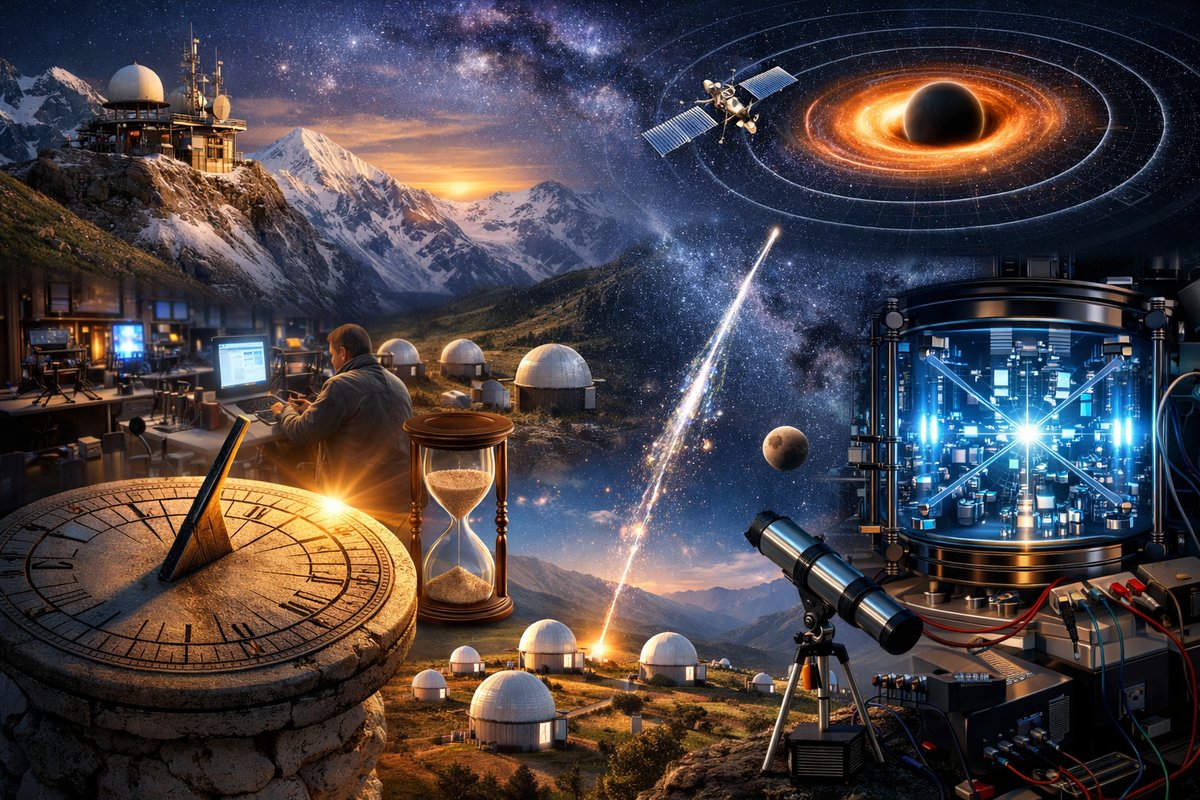
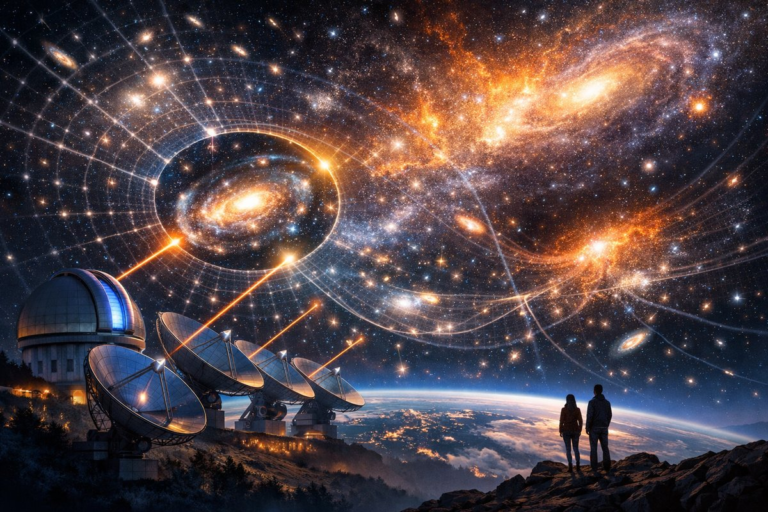
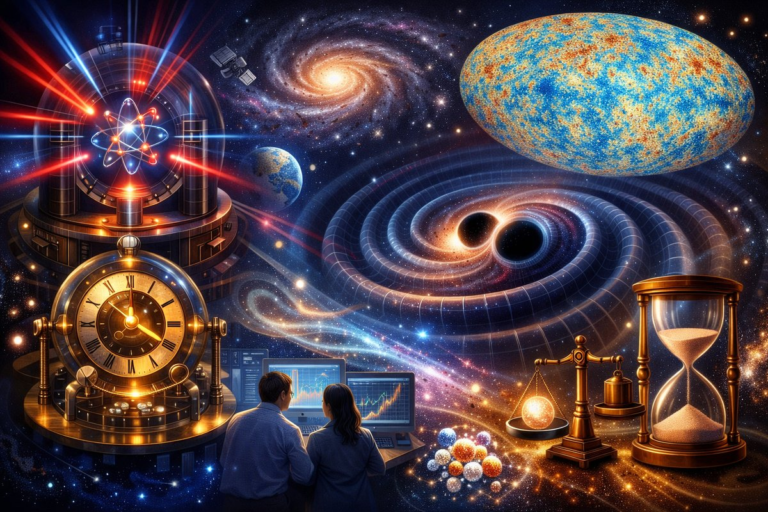
In a remote mountain lab and high-precision experiments around the world, scientists are tracing the interplay of time dilation, mass, and entropy. From backyard sundials to cosmic ray detectors, every device tells a story about the universe and our place within it.
On a windswept plateau above sea level, a humble sundial stands sentinel, its shadow ticking off moments with silent precision. Beneath the midday sun, researchers calibrate sensors to compare the sundial’s elegant arc with atomic clocks inside a mobile lab. That juxtaposition-ancient, analogue measurement against cutting-edge timekeeping-reveals how gravity slows the march of time by fractions of a billionth of a second across mere meters of altitude.
In parallel, high-energy physics facilities are charting mass fluctuations through particle collisions that recreate conditions a heartbeat after the Big Bang. Detectors capture fleeting traces of heavier particles decaying into light and electrons, offering glimpses of matter’s primal origins. Each collision is a microcosmic drama: mass converts into travel-speed fragments, racing outward while sensors record their trajectories and energies.
The human dimension emerges when we consider that every breath we draw, every heartbeat we register, is synchronized with these cosmic processes. Our perception of aging, our memories unfolding in sequence, hinges on time’s arrow-an irreversible flow entwined with entropy. As bottles of wine age in cellars or stars forge heavier elements through fusion, order gives way to increasing randomness. That gradual march toward equilibrium shapes galaxies and grief alike.
In a laboratory tucked beneath an urban observatory, physicists assembled a tabletop “cosmic ray cloud chamber.” Here, high-altitude particles from the depths of space reveal themselves as vapor trails across supersaturated alcohol. When muons or protons pierce the chamber’s cold mist, they etch ephemeral lines, each streak a testament to the universe’s restless energy. Nearby, hobbyists tweak designs for home-built detectors, driven by a mix of curiosity and a desire to touch something extraterrestrial.
Meanwhile, astronomers peer back in time through orbiting observatories, capturing photons emitted billions of years ago. Light from the first galaxies arrives stretched by cosmic expansion, its wavelength shifted into the infrared. That redshift carries a tale of spacetime’s growth, of matter clumping into clusters, and voids stretching like dark ripples. In every recorded spectrum, there lies a record of entropy at work: the cooling of a hotter, denser universe into the sprawling cosmos we inhabit.
Back on Earth, materials scientists are exploring structural changes in alloys under extreme pressure to mimic conditions inside massive planets. By compressing samples with diamond anvils, they push atomic lattices into unfamiliar configurations, watching as electrons migrate and bonds rearrange. The simulated heart of a gas giant becomes here, in a windowless chamber, where matter yields its secrets one gigapascal at a time.
In quieter corners, entropy is no less intriguing. Botanists mapping leaf patterns note how veins branch in fractal geometry, distributing nutrients with minimal disorder. Even in a simple fern frond, the balance between efficiency and randomness tells a story of evolution’s negotiation with physical laws. Patterns repeat across scales: from the veins in leaves to rivers carving valleys to dark filaments of cosmic web knitting galaxies together.
Researchers modeling complex systems often turn to tabletop analogues. A resistive metal plate heated at one edge develops thermal gradients that morph into convective currents-miniscule whirlpools that mimic atmospheric cells on a planet. Watching dye swirl in a glass box, scientists connect everyday fluid dynamics with the weather patterns shaping climates across the globe.
Entropy’s presence in information theory also resonates. A data archivist carefully compresses photographs into lossless formats, conserving every pixel while minimizing storage. Each algorithmic step is an exercise in managing disorder: too aggressive compression and images degrade; too little, and capacity goes unused. In that tension between fidelity and efficiency, digital archivists mirror entropy’s fundamental trade-off.
At a remote site in the desert, engineers deploy a network of synchronized clocks and gravimeters to monitor subtle shifts in Earth’s gravitational field. Seasonal water flow, magma migration, even the ebb and flow of groundwater can tweak local gravity enough to register on sensitive equipment. Tracking those variations offers insights into tectonic processes and resource management, reminding us that time and mass are intertwined at every scale-from planetary motion down to the molecules beneath our feet.
Cosmic rays crashing into the atmosphere initiate showers of secondary particles, some reaching mountain-top detectors in remote observatories. Those bursts of charged particles can momentarily increase the local entropy budget, sparking a cascade of ionization in clouds. Researchers study how this ionization may influence cloud formation and climate patterns, connecting cosmic phenomena with weather systems that affect farmers and city-dwellers alike.
The arrow of time also finds expression in social systems. Economists and ecologists use thermodynamic metaphors to understand resource flows, waste generation, and sustainability. By treating economies as open systems exchanging energy and materials with their environment, analysts frame consumption patterns in terms of entropic costs, highlighting the need to recycle, reduce, and repurpose.
Inside a darkened dome, a visitor uses a handheld spectroscope to split light from a nearby helium lamp into its component colors. Each narrow line in the spectrum corresponds to a specific atomic transition-a fingerprint of matter at the quantum level. Such simple tools, once exclusive to university labs, offer students and amateur astronomers the ability to identify elements in stars and distant nebulae.
The relationship between time and matter also underpins technologies in medical diagnostics. Advanced imaging systems rely on precise timing of photon detection to reconstruct detailed volumetric maps of tissue. Positron emission tomography, for example, uses paired gamma photons emitted from radioactive tracers; the simultaneous detection of those photons allows clinicians to pinpoint metabolic hotspots in the body, revealing conditions from cancer to neurological disorders.
From the echo of an ultrasound scan to the glow of sonoluminescent bubbles in water, the conversion between sound, light, and heat exemplifies how different forms of energy interconvert, guided by conservation laws and entropy constraints. Researchers are probing whether tiny light flashes within collapsing bubbles can tell us more about fundamental physical constants or even provide new routes to fusion energy.
Beyond the lab, urban planners are tapping into light-pollution maps generated by satellite imagery to preserve dark sky sanctuaries. By understanding how artificial light scatters and disperses, communities can design more sustainable lighting that reduces waste, conserves energy, and restores the nocturnal environment for wildlife.
In the world of art and science collaboration, installations explore the passage of time through evolving light sculptures. Choreographed LEDs flicker and fade in patterns driven by thermal fluctuations or random number generators. Audiences watch as ephemeral geometries emerge, echoing both the fleeting nature of moments and the deeper currents of chance that define physical processes.
All these narratives converge on a central insight: time, matter, and mystery are inseparable threads in reality’s tapestry. Whether measured by atomic ticks, traced through particle collisions, or reflected in the patterns of a leaf, these phenomena shape the cosmos and our experience within it. Each experiment, each observation, is both a question and an answer, a step toward understanding while revealing deeper layers of unknowns.
As the sun dips below the horizon, the sundial’s shadow shrinks. The lab’s atomic clock begins to warm as machinery powers down. Yet gravity’s pull remains, and entropy marches onward. Outside, in the silent chill, distant stars puncture the sky with pinpricks of ancient light. In their glow lies a story millions of years older than human memory-a reminder that our own fleeting narrative is woven into the grander chronicle of existence.