Location
Mount Vernon, WA 98274
Location
Mount Vernon, WA 98274

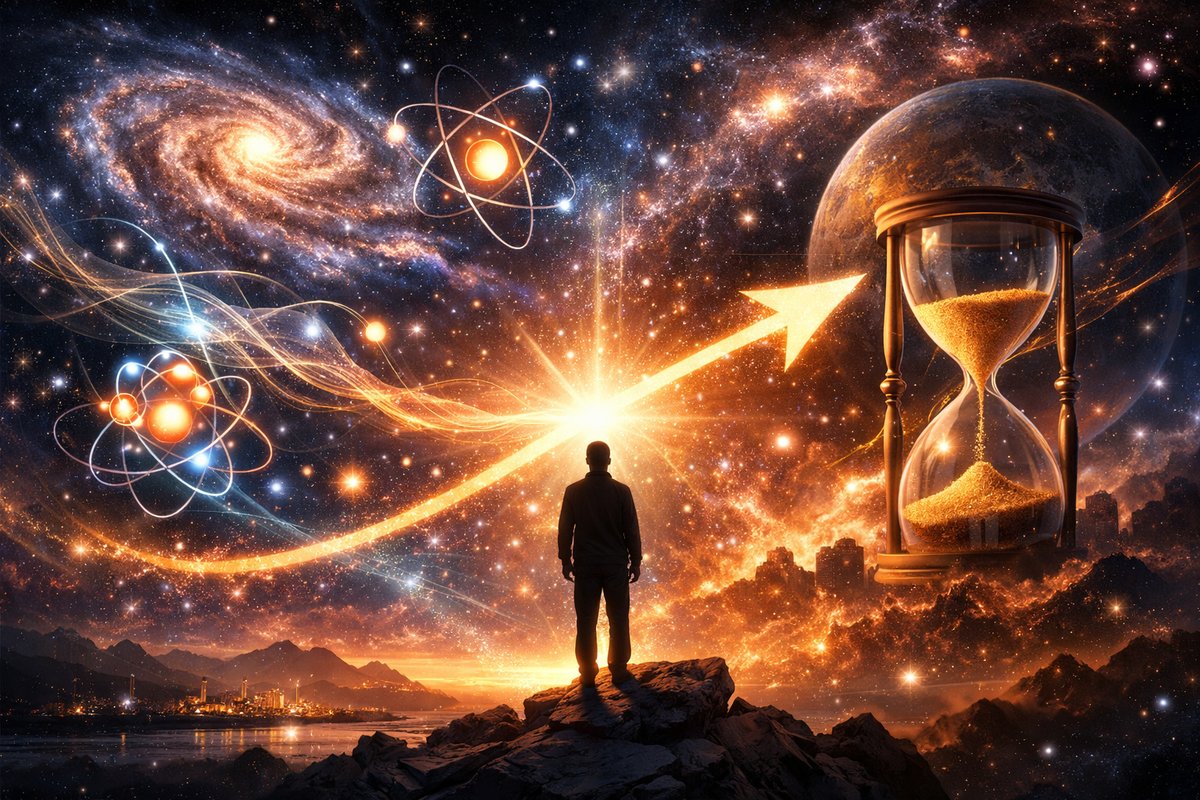
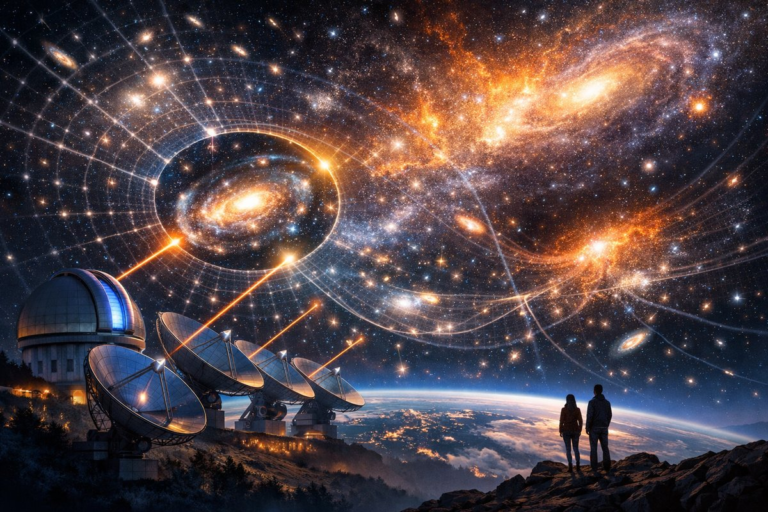
Step into a tale where photons dance, particles whisper, and the arrow of time guides both galaxies and human hearts. This exploration of light, mass, and entropy bridges rigorous physics with the pulse of everyday experience, revealing how the cosmos shapes our own journeys.
From the faint glow of dawn to the boundless stretch of the night sky, our world is woven from threads of light, mass, and entropy. These fundamental elements underpin everything we see, touch, and feel, yet remain cloaked in mystery. When a shaft of sunlight filters through leaves on an autumn morning, that interplay of photons and matter carries echoes of cosmic birth. In the same way, the steady tick of a clock or the swirl of steam rising from a cup of tea speaks to deeper currents in the universe-flows of energy and information that govern change at every scale.
Imagine holding a single photon in your mind’s eye, a tiniest bullet of light racing at unimaginable speed. Its journey began billions of years ago in the furnace of a star, then set off through interstellar emptiness, passing planets, dust clouds, and perhaps the lens of a distant telescope before arriving at your retina. That photon is a time traveler, bridging epochs. It carries in its oscillations the signature of atomic transitions, a fingerprint that physicists decode with instruments called spectrometers. By studying those spectra, they reconstruct stellar compositions and velocities-reading the pages of an ancient cosmic diary.
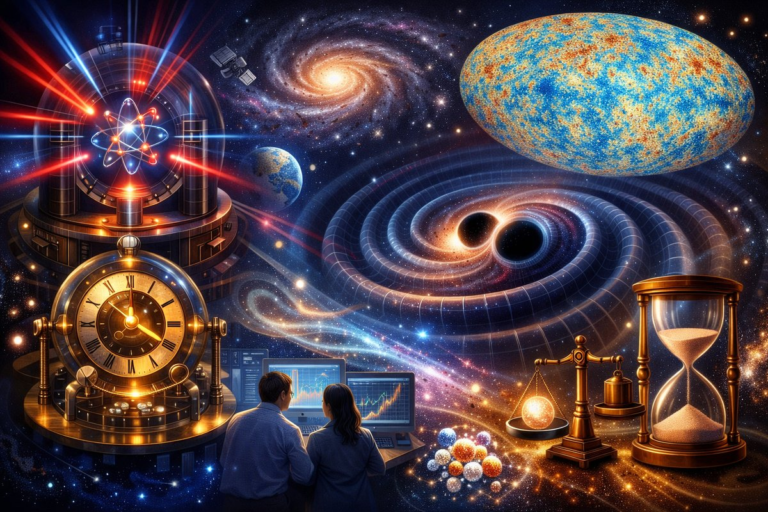
Yet photons mingle with mass in curious ways. Mass, as Einstein taught us, is a form of stored energy. In particle accelerators, protons and electrons collide at near light-speed, converting their kinetic energy into showers of new particles. Out of empty space and swirling fields emerge quarks, gluons, ephemeral resonances that vanish in fractions of a second. These micro-collisions repeat patterns that echo the first instants after the Big Bang, when seething energy crystallized into the matter that ultimately formed planets, oceans, and you.
At human scales, mass feels mundane-your morning coffee, the weight of a book, the solid floor beneath your feet. But trace the origin of every gram to nuclear processes in stars and cosmic furnaces, and that solidity gains poetic resonance. The iron in your blood was forged in supernovae; the calcium in your bones once dwelled in stellar cores. Our bodies are archives of cosmic events, and every heartbeat is fueled by chains of nuclear reactions in the sun-processes that release photons and neutrinos, invisible messengers of energy and information.
Now consider entropy, the cosmic reckoner of change. In thermodynamics, entropy measures how energy disperses and processes become irreversible. A hot object cools; a perfume spreads throughout a room; cream swirls irreversibly into coffee. That spreading is a local echo of a universal tendency: the arrow of time. At the grandest scale, stars exhaust their nuclear fuel, galaxies drift apart, and the universe marches toward maximum entropy, a state of uniform energy distribution sometimes called “heat death.”
Still, entropy is not mere decay. It is the engine of complexity. Living organisms maintain order by exporting entropy to their surroundings. A leaf converts sunlight into chemical energy, assembling sugars while releasing heat. Human societies build intricate structures-cities, computers, works of art-by continuously channeling energy and exporting waste. Our creative spark arises from dancing on the edge of order and disorder, harvesting low-entropy resources to spin new patterns of meaning.
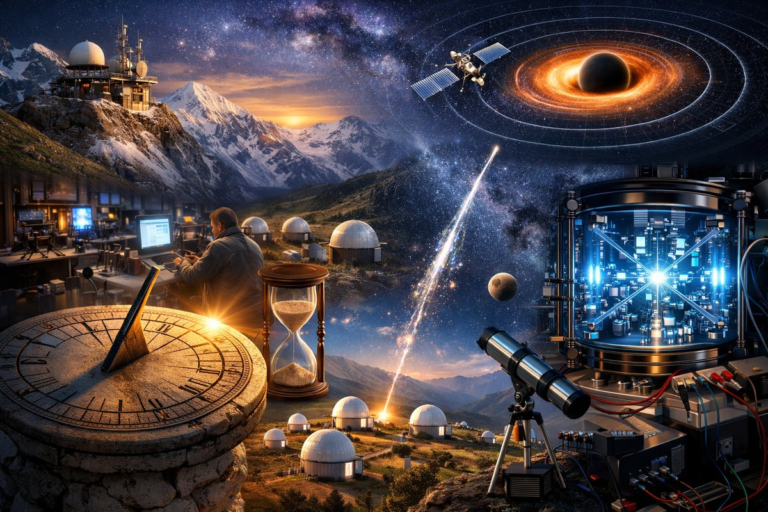
In laboratories and workshops around the world, scientists and enthusiasts build devices to experience these fundamentals firsthand. A home spectrometer kit captures spectra of fluorescent lights or distant sodium streetlamps, revealing their atomic signatures. Cloud chambers allow you to witness cosmic rays etching silvery trails, fleeting reminders of particles that penetrate our atmosphere from the depths of space. Mechanical sundials and quartz clock movements reconnect us with time’s flow, reminding us that each tick is an echo of orbital mechanics and electromagnetic vibrations.
These experiments do more than illustrate textbook concepts-they invite a kind of curiosity that transforms perception. When you see the rainbow pattern of a compact fluorescent bulb, you recognize the discrete energy levels of mercury atoms. When you watch vapor trails form in a cloud chamber, you peer at the ghostly footprints of high-energy particles birthed in distant supernovae. And when you track the shadow cast by a gnomon across a sundial, you engage with the celestial mechanics that have guided explorers for millennia.
Our everyday experiences also whisper of these deep processes. A morning coffee cools as heat dissipates; that entropy flow allows you to savor temperature gradients with every sip. The golden hour of sunset is a fleeting optical phenomenon: sunlight traverses more atmosphere, scattering shorter blue wavelengths and leaving warm reds and oranges to paint the sky. Behind the beauty lies Mie scattering, Rayleigh scattering, and the quantum transitions of atoms in the air.
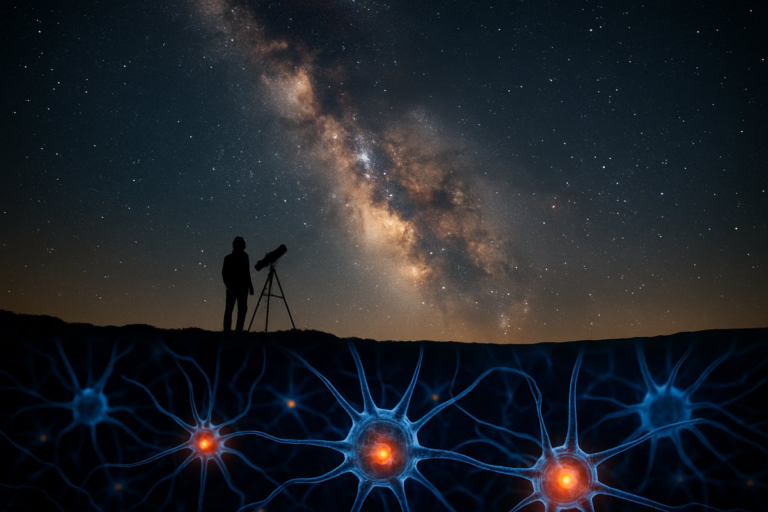
Even in our minds, these themes resonate. Memory is, in a sense, a battle against entropy: networks of neurons maintain finely tuned connections to store information, requiring energy and maintenance. Creativity emerges when we recombine ideas, forging new patterns from older ones. Relationships evolve as we exchange energy-emotional, verbal, physical-and inevitably some entropy creeps in through misunderstandings or fading memories. Yet bonds endure because systems can maintain order locally by investing effort and attention.
On larger scales, humanity grapples with our own thermodynamic footprint. The burning of fossil fuels releases trapped solar energy from ancient biomass, accelerating entropy and driving climate change. Renewable energy systems-solar panels, wind turbines, hydroelectric dams-harvest flows of high-quality energy with lower entropy costs, offering pathways to sustainable complexity. Recycling, circular economies, and innovations in battery technology reflect our efforts to align with cosmic wisdom: use energy wisely, export entropy thoughtfully, and build systems that flourish without degrading their surroundings.
Writers, artists, and musicians draw inspiration from these fundamental threads. A poem about sunset captures more than visual splendor; it echoes quantum leaps in molecules and the thermodynamic arrow that renders moments irretrievable. A symphony may mirror the tension between order and chaos, layering motifs that dissolve and reemerge in unpredictable ways. Science and art converge when both seek to articulate the mysteries embedded in light, mass, and entropy.
Each of us lives at the intersection of these cosmic forces. Our bodies are stardust assembled, our technologies harness energy flows, and our minds weave narratives that give meaning to change. By engaging directly with experiments-measuring spectra, tracking particle trails, building sundials-we enrich our everyday sense of wonder and responsibility. We become not just observers but participants in the grand tapestry of reality.
As night falls and stars emerge, take a moment to witness the photon streams arriving from distant suns. Feel the weight of your own mass as gravity tugs you toward Earth’s center. Reflect on the irreversible passage of time marked by each inhale and exhale. In those simple acts lies a deeper gratitude for the cosmos that shapes us and the human impulse to explore, create, and connect. Within the interplay of light, mass, and entropy, we find both the raw materials of galaxies and the sparks of imagination that propel our shared journey forward.
Embrace the mystery. Let curiosity guide your experiments and your reflections. In every flicker of light and every shift of matter, the universe invites you to unravel its threads-and in doing so, to discover yourself.