Location
Mount Vernon, WA 98274
Location
Mount Vernon, WA 98274

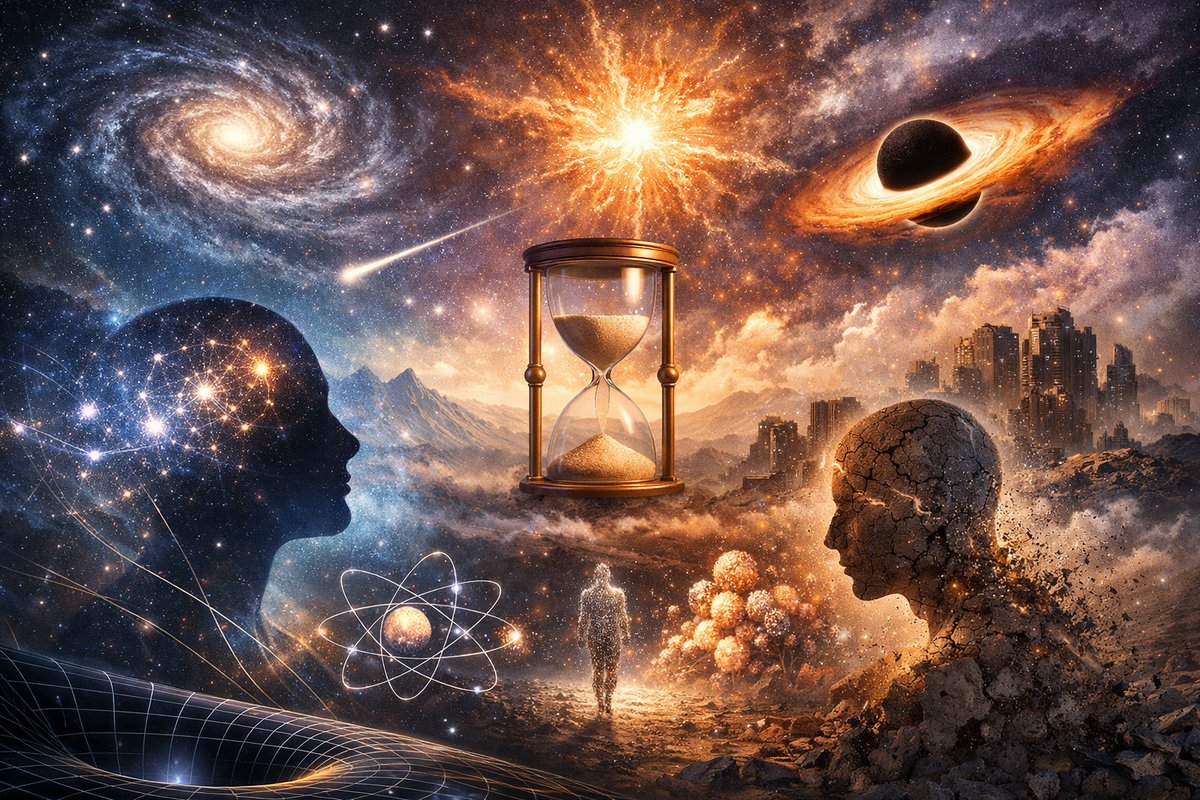
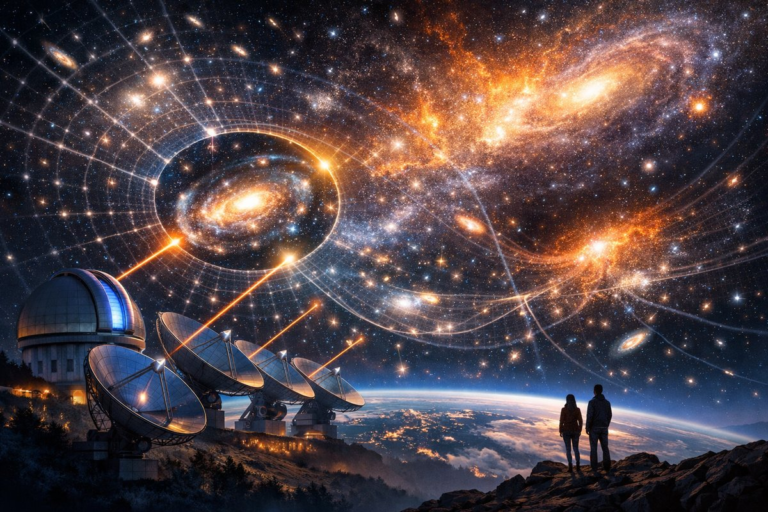
From flickers of starlight to the gradual decay of ordered systems, the universe writes its story in threads of time, mass, and entropy. Dive into the intersections of physics and human wonder-where cosmic forces mirror our own inner landscapes.
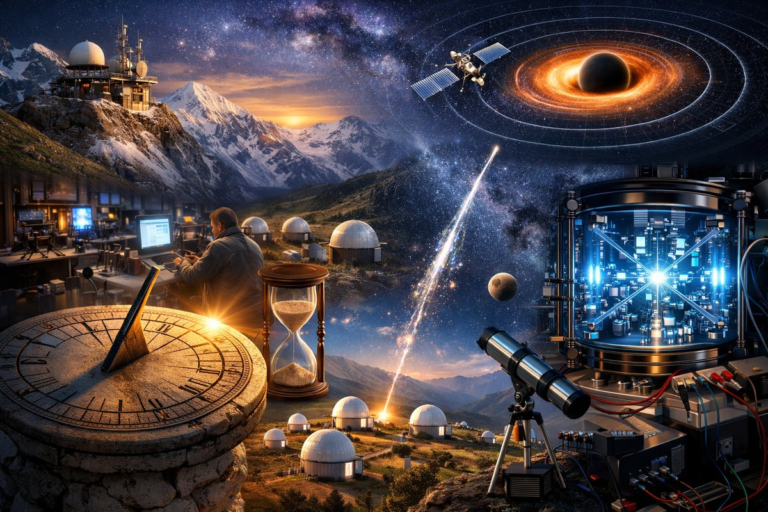
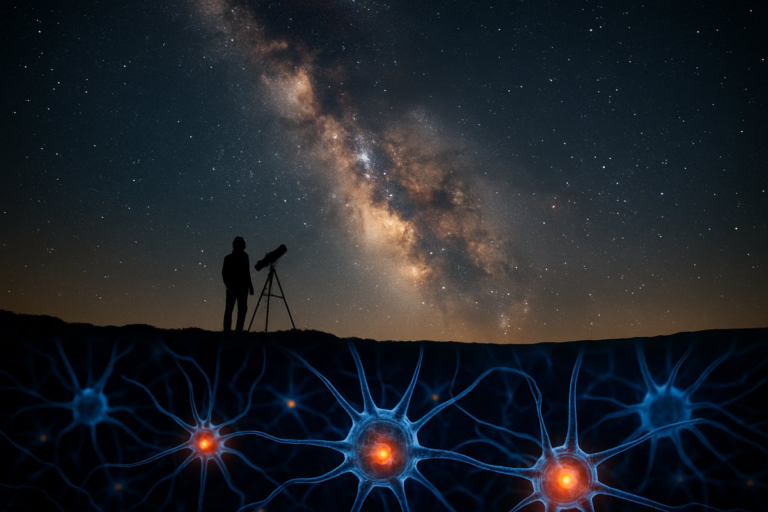
In a remote high-altitude observatory, a solitary researcher trains a telescope on a distant galaxy. Every photon collected carries an ancient message, one that when decoded, unveils how light, mass, and the inexorable flow of entropy have sculpted the cosmos over billions of years. Back on Earth, we sense those same threads in our lives: in the ticking of our watches, in the warmth fading from a cooling cup of coffee, and in the fleeting moments that define memory and meaning.
At the heart of this narrative lies time-a relentless dimension that orders events and nurtures both creation and decay. Time in physics is more than a backdrop for action; it’s woven into the laws of nature. In Einstein’s relativity, time stretches and contracts under the influence of mass and velocity. A clock near a massive object ticks more slowly than one far away. For astronauts circling Earth, time actually runs a fraction of a second faster than for those of us on the ground. What feels abstract to the casual observer becomes crucial when plotting satellite trajectories, synchronizing global communications, or forecasting climatic shifts.
Matter, in turn, serves as the architecture of the universe. The stars that ignite galaxies, the dust that coalesces into planets, and the atoms that build our bodies all obey the same rules. In stellar furnaces, hydrogen nuclei fuse into helium, releasing energy that travels across epochs in the form of light. That light not only illuminates our night sky but also powers photosynthesis, drives weather patterns, and warms our bones. Every sunrise is a reminder that the cosmic cycle of mass and energy is intimately tied to the pulse of life.
Entropy-often misunderstood as mere disorder-reveals a deeper symmetry. According to the second law of thermodynamics, isolated systems evolve toward maximum entropy: energy disperses, structures break down, and ordered arrangements become diffuse over time. Yet out of this drift emerges complexity. Life itself contravenes local entropy increase by harvesting energy, building intricate molecular machines, and maintaining temporary islands of low entropy. A growing forest, a beating heart, a child’s smile all stand as testaments to the universe’s capacity for self-organization within the constraints of fundamental laws.
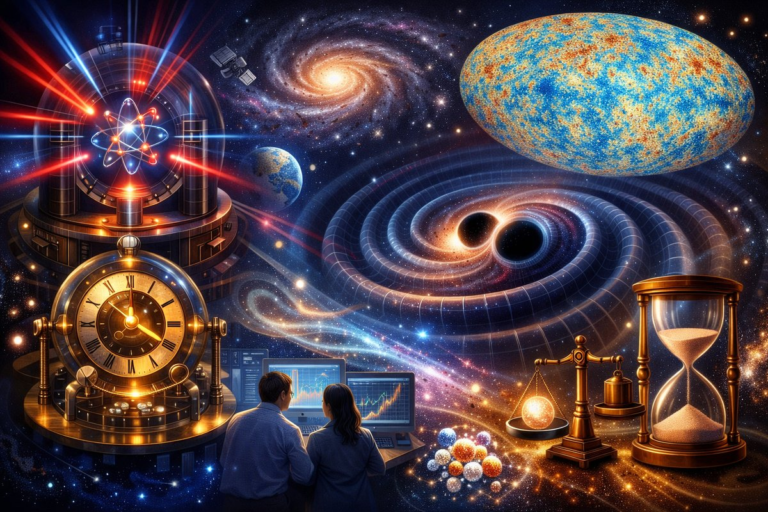
When scientists chart the cosmic microwave background-the afterglow of the Big Bang-they see fluctuations in temperature at the scale of one part in 100,000. Those tiny variations foreshadowed the large-scale structure of galaxies and clusters we observe today. Each fluctuation marked a region where matter and energy would gather, overcome local entropy gradients, and eventually give birth to stars and planets. In that sense, entropy becomes both a driver of decay and a canvas for emergence.
On Earth, entropy plays out in everyday rituals. Your morning coffee loses its scald, ice cubes melt, and electronic devices inevitably degrade. Yet through clever engineering-insulation, refrigeration, and energy storage-we temporarily fend off entropy’s spread. In data centers, massive cooling systems divert heat so that servers can run faster. In deep freezers, cryopreservation slows molecular motion to preserve life or scientific samples. Humanity’s technological story is largely about managing entropy: channeling flows of energy to build, maintain, and transform.
Time, matter, and entropy converge most dramatically around black holes. In their vicinity, intense gravity warps spacetime so severely that time slows almost to a standstill at the event horizon. According to recent theoretical advances, black holes also radiate energy through quantum processes-so-called Hawking radiation-slowly evaporating over unimaginable timescales. That radiation builds on the idea that vacuum fluctuations near the event horizon pair particles and antiparticles; one falls in while the other escapes, carrying energy away.
To someone perched at the threshold of a black hole, entropy takes on a cosmic dimension. The black hole’s entropy is proportional to the area of its event horizon, not its volume-a revelation that hints at deep connections between gravity, quantum mechanics, and information theory. Some researchers even propose that our entire universe may behave like a hologram, with information encoded on a cosmic boundary. If true, our palpable sense of three-dimensional space and the flow of time would be emergent phenomena springing from a more fundamental informational substrate.
Beyond theory, experimental physicists have begun to probe these ideas in laboratories using analog systems. Superfluid helium, ultracold atomic gases, and photonic crystals offer testbeds where phenomena akin to black hole horizons or cosmic expansion can be simulated in miniature. These tabletop experiments allow researchers to track entropy flows, quantum fluctuations, and emergent spacetime analogies in controlled settings. By shrinking the cosmos into petri-dish scales, scientists can tinker with parameters, watch “artificial horizons,” and explore the boundary between order and chaos.
Meanwhile, clockmakers continue to refine timekeeping. Optical lattice clocks-where atoms are trapped in standing waves of laser light-have achieved accuracies to within a second over the lifespan of the universe. Such precision enables new tests of general relativity, geodesy (mapping Earth’s gravitational field), and even searches for dark matter. By comparing clocks separated by just centimeters in altitude, researchers can detect minute differences in gravitational potential. In essence, the very act of measuring time becomes a probe of mass distribution and cosmic geometry.
These breakthroughs ripple into practical realms. Global navigation systems depend on precise time and gravitational corrections to deliver positioning within meters. Financial markets synchronize transactions across continents based on atomic clock signals. Even smartphone cameras use time-of-flight sensors-measuring the time light takes to bounce off objects-to build depth maps for augmented reality. The same principles that describe cosmic evolution are at work in our pocket devices.
Our emotional and philosophical responses to time’s passage and entropy’s embrace are equally profound. We mourn lost youth, treasure fleeting moments, and find beauty in the twilight glow. Artists paint the play of light and shadow, writers weave narratives with rising and falling tension, and musicians modulate tempo to mirror our hearts’ rhythms. The human impulse to create structure-to impose meaning on a transient world-reflects our tension with entropy. We write diaries, build monuments, and download photographs to memorialize the ever-shifting present.
Yet paradoxically, embracing impermanence can kindle richer experiences. A cracking crust on a seasoned record player, the patina of age on a family heirloom, the fading color of petals-all become poignant reminders of temporality. In mindfulness practices, attention to the breath calls us to witness each moment’s arrival and departure. The therapist’s office may frame grief not as mere loss but as testimony to connection and care.
When science meets story, we discover that cosmological and human narratives are woven from the same threads. Whether it’s the evaporation of a microscopic black-hole analog in a lab or the final note of a piano piece lingering in a concert hall, we observe how entropy and time usher events from order toward transformation. Matter acts as both protagonist and stage, gathering into structures that host life, thought, and imagination.
Looking forward, questions abound. Can future quantum technologies harness fluctuations to perform computations beyond classical limits? Will gravitational wave astronomy reveal echoes of cosmic inflation and primordial entropy patterns? Might we someday glimpse the fine-grained informational tapestry that underlies space, time, and matter? Each answer will unfold new mysteries, reminding us that reality is as much a story as it is a set of equations.
In the meantime, each sunrise invites reflection. We measure time by ticking clocks, collect matter in our bodies and communities, and inhabit the space between order and chaos. We become co-authors in the universe’s unfolding tale-shaping the narrative even as it shapes us.