Location
Mount Vernon, WA 98274
Location
Mount Vernon, WA 98274

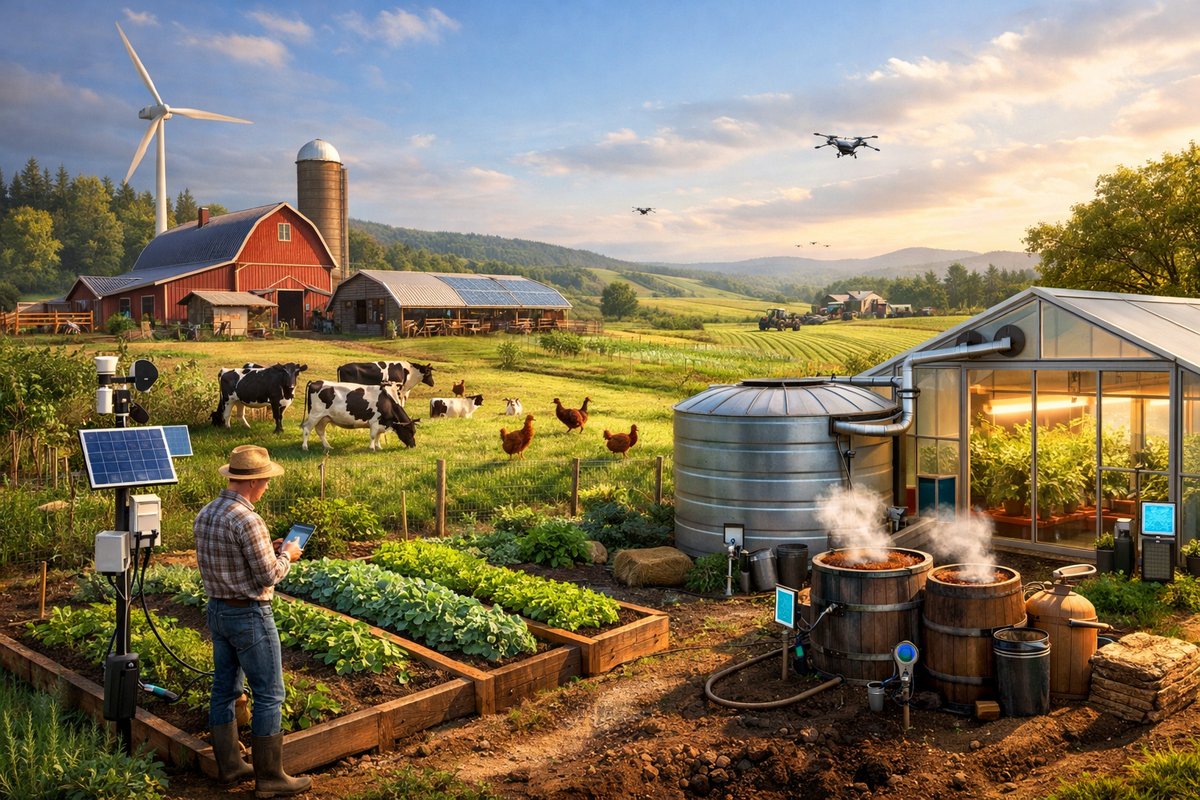
Across rolling fields and barnyards, a quiet revolution is under way: family farms are adopting regenerative practices, renewable energy, and smart technologies to foster healthier soil, happier animals, and resilient rural communities. From rainwater harvesting and compost tea brewing to climate-controlled shelters and precision soil sensors, these innovations are reshaping life at the farm gate and beyond.
A wave of change is sweeping through farmlands worldwide as growers and livestock managers embrace a new vision of agriculture-one that balances productivity with ecological stewardship and animal well-being. No longer content with one-size-fits-all methods, they are weaving age-old traditions like cover cropping with cutting-edge tools such as soil moisture sensors, building a farming model that regenerates the earth even as it feeds communities.
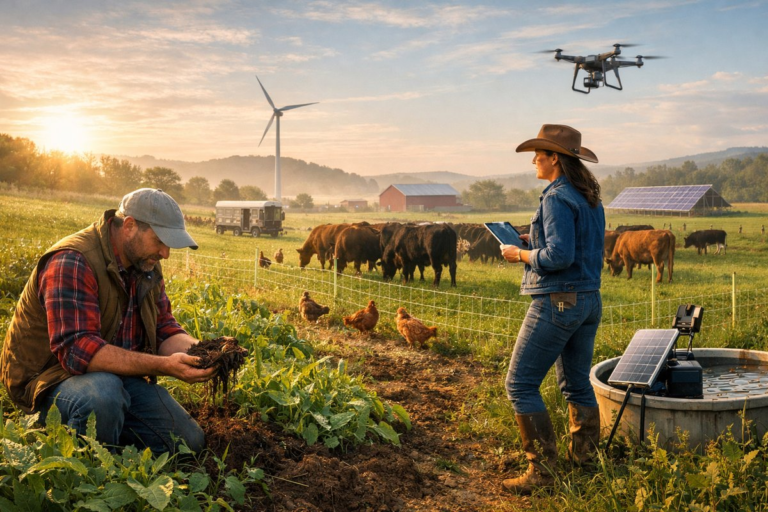
On the outskirts of a small rural town, the Henderson family farm has become a prototype for this movement. Where decades ago row crops and conventional feeding regimes dominated, there are now swaths of clover and cereal rye protecting soil from erosion, and movable paddocks where cattle graze in tight rotation to mimic wild herd behavior. The result is richer, more porous soils that absorb water more readily, reducing runoff and limiting fertilizer loss.
At the heart of these gains is an unwavering focus on soil health. Farmers are turning piles of yard waste, straw, and livestock manure into rich compost tea, applied in liquid form to bolster microbial life underground. Regular soil testing guides them in fine-tuning nutrients, ensuring that nitrogen, phosphorus, and other minerals remain in balance. Where once synthetic fertilizers were the default, now custom blends of organic inputs match what the land truly needs, cutting costs and curbing chemical leaching into waterways.
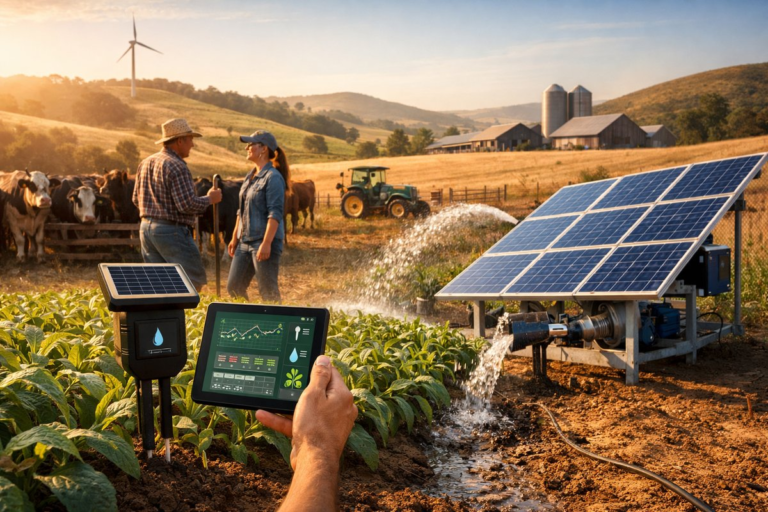
Water management has also evolved beyond the simple till-and-water routine. Many farms now collect rainfall from barn roofs and store it in cisterns for later use, especially during dry spells. Drip-line irrigation delivers moisture directly to root zones, slashing evaporation losses and targeting thirsty plants when they need it most. Some growers have even designed gravity-fed systems, using tanks set on raised platforms to power low-pressure drips without consuming grid energy.
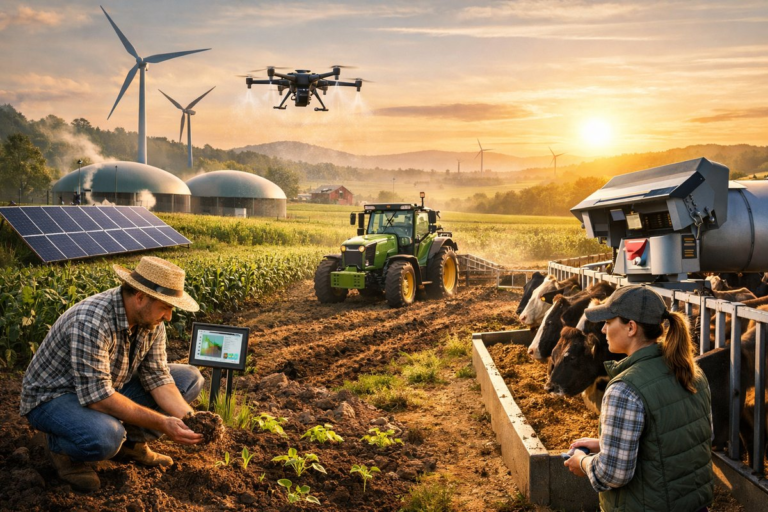
Renewable power plays an increasingly central role on the farmstead. Solar panels mounted on south-facing roofs feed battery banks that keep sensors, lighting, and climate controls running through the night. Energy-efficient LED grow lights extend the grazing season by greening up forage-production greenhouses, while small wind turbines perched on poles supplement building ventilation fans. By insulating barns and retrofitting windows, farmers are cutting heating bills and ensuring livestock comfort with minimal carbon footprints.
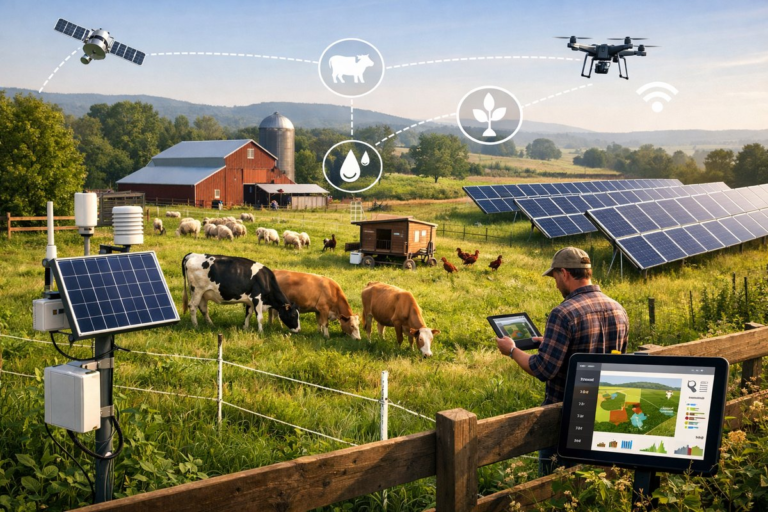
Healthy animals are a pillar of this regenerative ethos. Instead of crowded pens bathed in artificial heat lamps, livestock enjoy open-air shelters with adjustable eave openings and fans that mimic natural breezes. Smart RFID tags track weight gain and movement, alerting caretakers to any health deviations before they become serious. Mobile apps aggregate feed data, pasture conditions, and vaccination records, giving a holistic picture of herd performance and welfare.
Precision agriculture is no longer confined to large commercial operations. Affordable soil moisture probe kits and drone-mounted cameras let even small-scale growers map variability across their fields, tailoring seeding rates and fertilizer applications zone by zone. Digital dashboards display real-time soil moisture, ambient humidity, and leaf temperature, helping farmers decide when to irrigate and when to hold off, preserving precious water resources.
Innovation isn’t limited to open fields. Some forward-thinking producers have installed hydroponic fodder systems in repurposed shipping containers, sprouting wheatgrass and barley for high-protein animal feed in a fraction of the time and space of traditional methods. Climate-controlled greenhouses using vertical racks have emerged as year-round salad and herb producers, bringing fresh produce to local markets and farm stands regardless of winter’s grip.
Community collaboration fuels much of this momentum. Regional cooperatives share compost recipes, bulk-order solar panels, and host workshops on rotational grazing techniques. Local schools invite farmers to teach students about regenerative cycles, inspiring a new generation to consider careers in soil science and agritech. Farmers markets have expanded, linking consumers directly to those who grow their food, bridging the urban-rural divide with transparency and trust.
For many young farmers, this work is deeply personal. They recall childhood summers roaming their grandparents’ pastures and recall stories of droughts that left fields baked and barren. Armed with data-driven tools and a passion for stewardship, they want more than annual yield increases-they aspire to leave the countryside more vibrant than they found it. It’s an emotional commitment, driven by respect for the land and empathy for the animals under their care.
Getting started on this path may feel overwhelming, but many experts emphasize the power of incremental steps. Begin by testing soil and planting a cover crop. Harvest rainwater for garden plots. Try one solar panel on a shed roof, or install a single moisture sensor in a trial field. Track what works, document results, and scale up. What begins as a small pilot can grow into a fully integrated, regenerative system over a few seasons.
Today’s farms are transforming into rural innovation hubs, where age-old wisdom meets cutting-edge technology. From compost tea and rotational grazing to precision sensors and renewable energy, every tool and technique contributes to healthier soils, more content animals, and resilient communities. As more growers adopt these practices, the promise of a truly sustainable food system moves from possibility into practice, ensuring that farms remain productive, profitable, and planet-positive for generations to come.