Location
Mount Vernon, WA 98274
Location
Mount Vernon, WA 98274

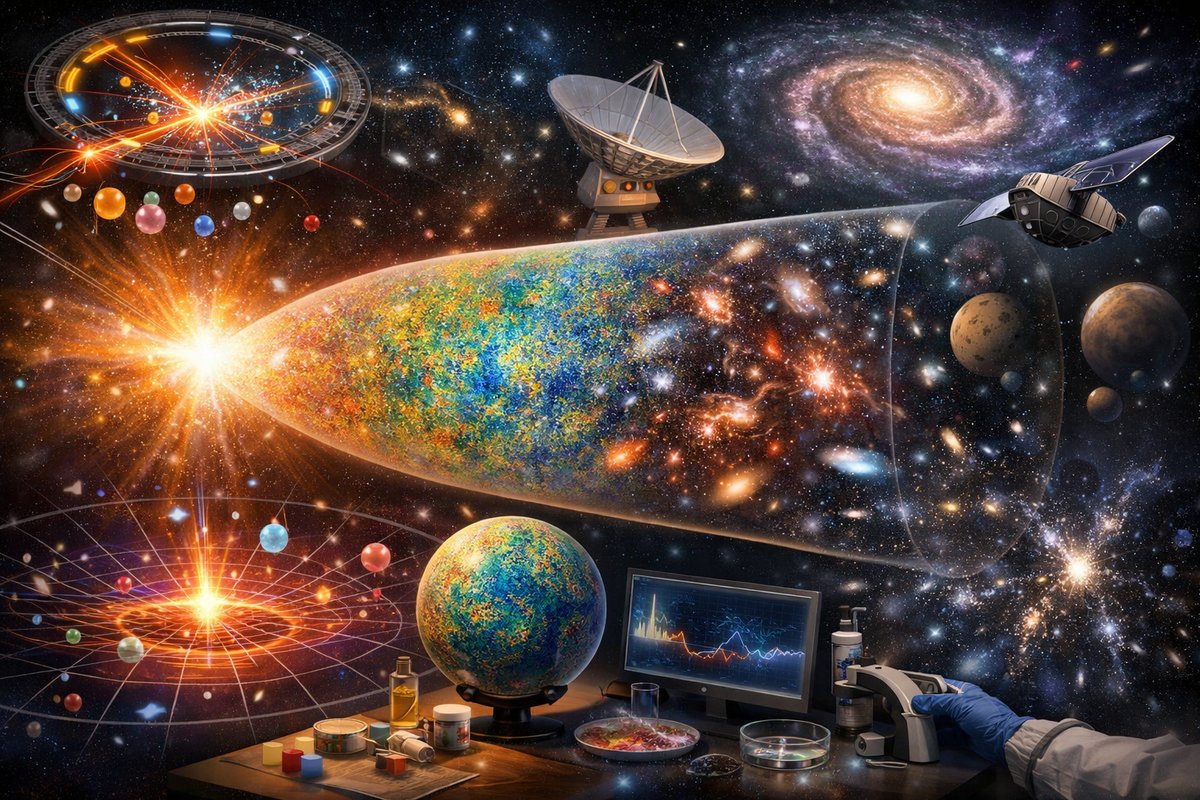
Scientists have unveiled the most detailed picture yet of the universe's infancy, combining novel particle experiments and refined cosmic observations. From quantum fluctuations to dark matter searches, researchers are piecing together the forces and paradoxes that brought everything from galaxies to atoms into being.
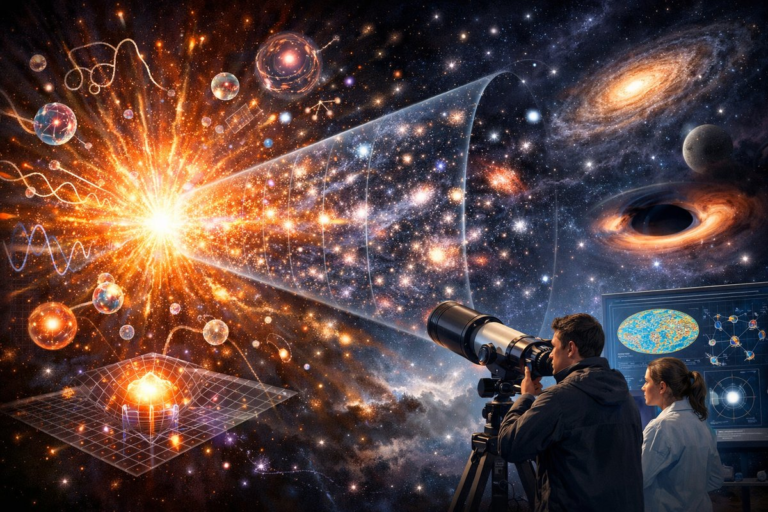
In a dimly lit control room halfway around the world, researchers watched as data streams began to converge on a question that has eluded physics for decades: what happened in the first trillionth of a second after the universe ignited? A recent analysis of background radiation patterns, paired with high-energy particle collisions in underground accelerators, has yielded tantalizing clues about the forces that shaped space, time, and matter.
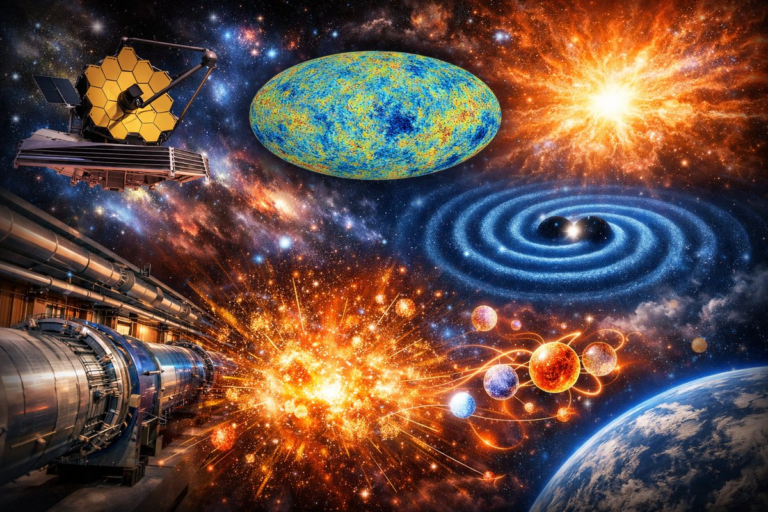
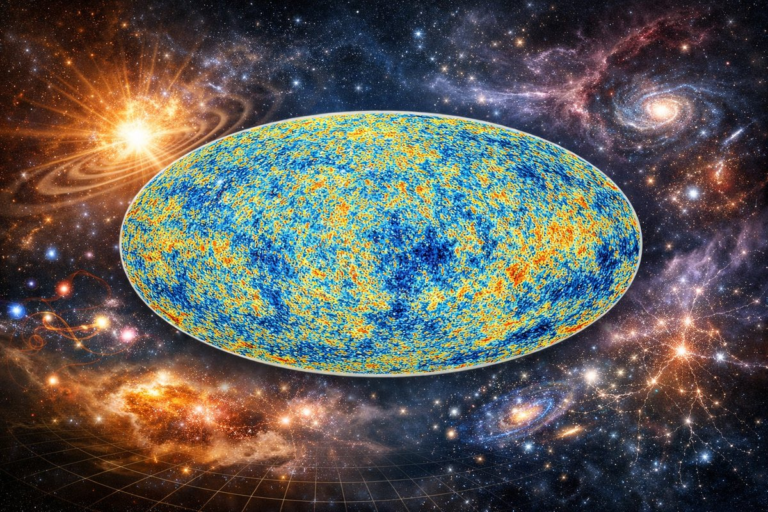
Early this year, a team of astrophysicists released a detailed map of temperature ripples in the ancient glow that fills the cosmos. These faint variations, measured across the sky with unprecedented precision, point to minute quantum jitters stretching to cosmic scales during an explosive growth spurt known as inflation. For years, inflation remained a compelling hypothesis-to explain why distant regions of the universe appear so uniform-yet direct evidence proved elusive. Now, subtle correlations in the radiation map match predictions from a class of quantum field theories, renewing confidence that inflation wasn’t just theoretical but a genuine episode in cosmic history.
Meanwhile, deep beneath mountain ranges, particle physicists have been orchestrating collisions at record energies. By smashing beams of protons and antiprotons together, they replicate conditions a trillion times hotter than the heart of our sun. Detectors surrounding the collision point record showers of exotic particles-some predicted, some entirely unexpected. A handful of rare events hint at the existence of heavy partners to known quarks, potentially pointing to new symmetries of nature or hidden dimensions curled up at subatomic scales.
One particularly persistent anomaly involves an imbalance of certain particle decays that favor matter over antimatter. According to textbook principles, the Big Bang should have produced equal amounts of matter and antimatter, annihilating each other and leaving only radiation. Yet here we are, in a universe dominated by matter. Experiments now show minute asymmetries in how certain unstable particles transform, suggesting that the laws of physics themselves tip the scales ever so slightly toward matter’s survival. If these results hold up under further scrutiny, they could offer the missing link explaining how galaxies, stars, and ultimately life itself emerged from a pristine cosmic fireball.
But the story doesn’t end there. A cadre of international teams is tracking down dark matter-an invisible substance that outweighs ordinary atoms by a factor of five yet interacts only through gravity. Large underground tanks filled with ultrapure liquids sit shielded from cosmic rays and background noise, waiting for an elusive collision between a dark matter particle and a nucleus. While detectors have reported fleeting hints of energy deposits that defy conventional explanations, no definitive signal has been confirmed. Each nondetection, however, helps scientists refine their models, narrowing the range of possible properties for these shadowy constituents of the cosmos.
The most philosophical puzzles arise when these discoveries are woven together. If inflation blew up quantum fluctuations into galaxy-scale density variations, and dark matter shepherded those clumps into halos that birthed stars, what role did exotic particles play during this unraveling? Was there a phase transition that radically changed the behavior of fundamental forces, akin to water freezing into ice? And could there be other universes, each with a different set of physical laws, populating a vast multiverse beyond our observable horizon? These questions blur the line between physics and metaphysics, pushing researchers to develop new frameworks that encompass both hard data and bold speculation.
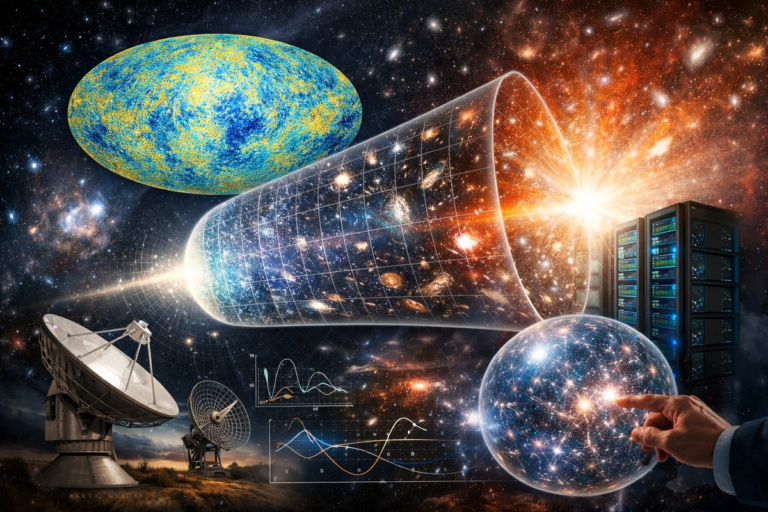
In labs around the globe, theoretical physicists are constructing mathematical models that incorporate higher-dimensional spaces, quantum gravity effects, and novel symmetries. Some propose that the Big Bang was not a singular starting point but a bounce from a contracting predecessor universe. Others suggest that the cosmos might have tunneled from a lower-energy vacuum state, spawning pocket universes with distinct constants of nature. To test these ideas, scientists look for telltale imprints-patterns in background radiation, gravitational wave echoes from primordial phase changes, or tiny deviations in the distribution of galaxies at enormous scales.
Instrumental breakthroughs are driving these efforts forward. Next-generation space telescopes equipped with infrared and millimeter-wave detectors will peer deeper into the cosmic dawn, observing the first stars and black holes as they ignited. Ground-based arrays of radio dishes will scan the sky for faint hydrogen signals, mapping the universe’s three-dimensional structure over billions of years. Meanwhile, upgrades to particle accelerators aim to reach energy regimes never before probed, seeking to recreate conditions a fraction of a second after the universe began.
For the enthusiasts and students who dream of unraveling these mysteries, access to quality resources is more important than ever. Immersive planetarium simulators allow anyone to experience the birth of galaxies in a domed theater. Home astronomy kits offer handheld telescopes and binoculars to track planetary motions and distant nebulae. Comprehensive textbooks guide readers from basic quantum mechanics to the frontiers of cosmology, providing the mathematical scaffolding needed to follow the latest research papers.
This collective push toward understanding our cosmic roots speaks to a fundamental human impulse: curiosity. From ancient stargazers charting the movement of constellations to today’s data analysts sifting through petabytes of detector output, each generation contributes a new piece to the puzzle. The unfolding narrative is one of collaboration, ingenuity, and resilience-qualities that reflect the very nature of the universe itself.
Looking ahead, the next decade promises transformative discoveries. If researchers confirm a direct signature of inflation, it would solidify our picture of the universe’s earliest epoch. Detection of a dark matter particle would rewrite textbooks, unveiling an entire hidden sector of physics. Even negative results carry weight by narrowing theoretical possibilities and sharpening experimental strategies.
In the end, the quest to trace the universe back to its genesis is more than an academic endeavor: it’s a journey to understand where we come from, how the laws of nature conspire to produce complexity, and what our place might be in the grandest of all timelines. Each new observation, each refined model, takes us one step closer to the cosmic dawn-and invites us to imagine what lies beyond the edge of all we know.