Location
Mount Vernon, WA 98274
Location
Mount Vernon, WA 98274

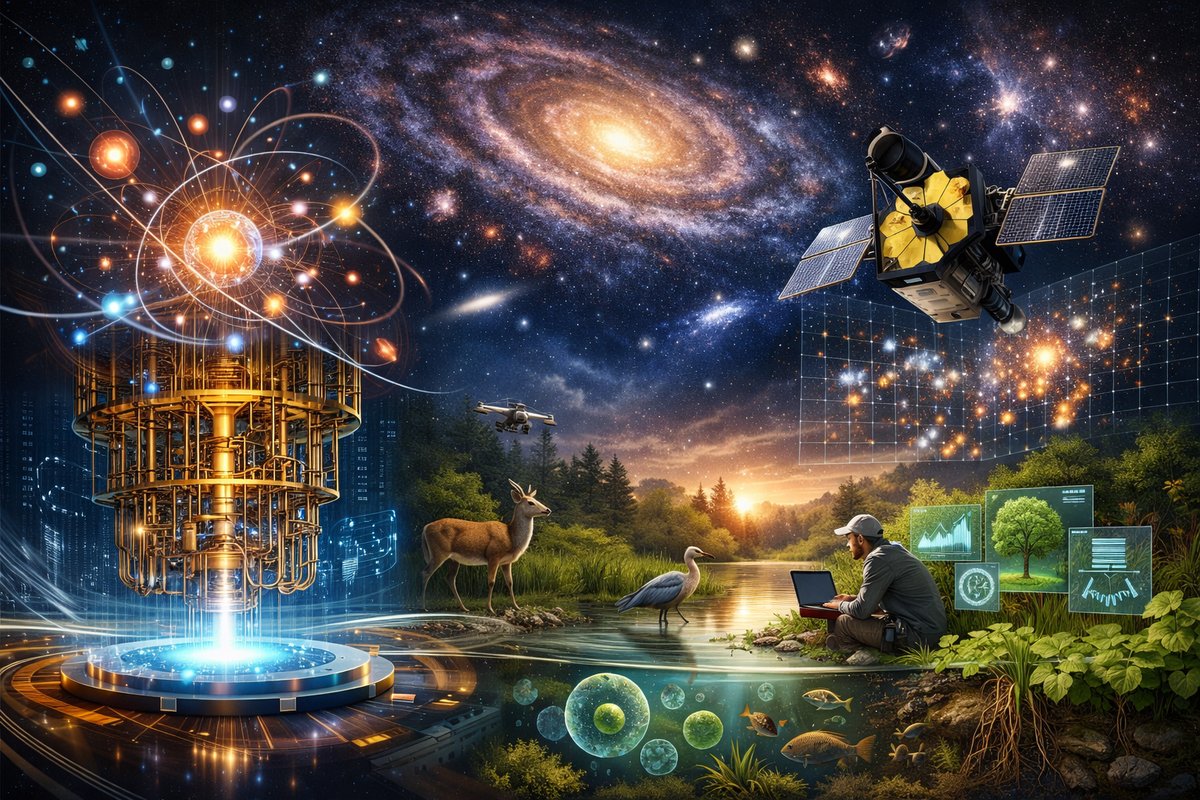
In a wave of recent breakthroughs, scientists are decoding the smallest particles and mapping the most distant galaxies, while AI-driven projects chart ecosystems closer to home. This article delves into the latest advances-from quantum computing prototypes to deep-sky surveys and cellular insights-revealing how each discovery reshapes our understanding of the natural world.
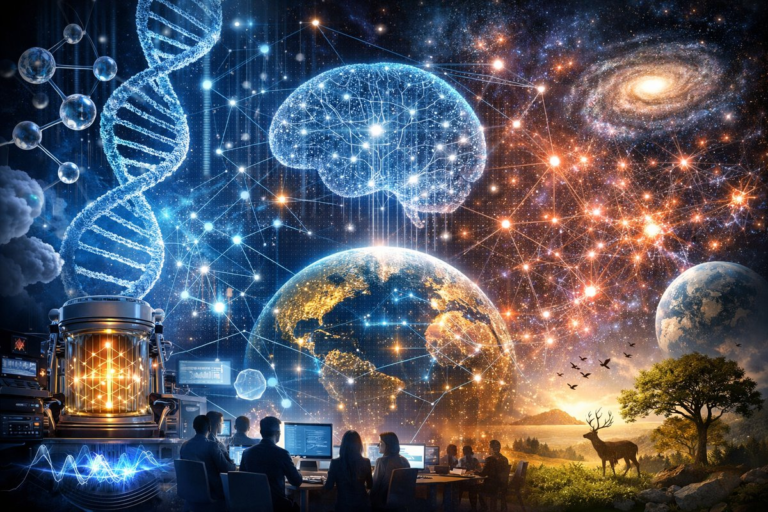
In laboratories around the globe, a fresh surge of discovery is gathering pace. From the imperceptible jitter of subatomic particles to the silent glow of galaxies billions of light-years away, researchers are pushing the limits of precision and perspective. This article weaves together three newsworthy threads-quantum computing milestones, a landmark deep-space survey, and an AI-powered ecosystem mapping initiative-to illustrate how science remains a playground for curiosity and awe.
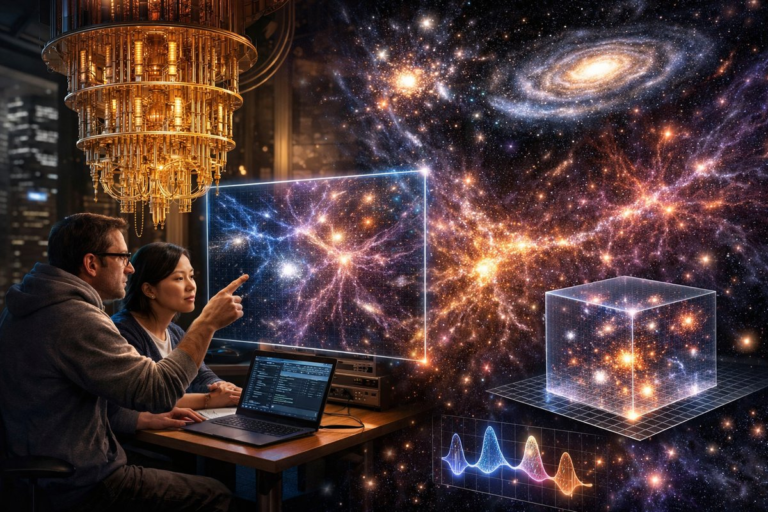
It begins at the quantum level, where a team of physicists has unveiled a new prototype quantum simulator capable of modeling complex molecular interactions in real time. Building on advances in superconducting circuits, their platform harnesses error-mitigation techniques to stabilize qubits long enough to run simulations that previously demanded massive classical supercomputers. In recent demonstrations, the device successfully predicted reaction pathways for a class of organic catalysts, offering a glimpse into drug design workflows that could accelerate the discovery of new pharmaceuticals. According to the research group’s published data, the simulator reached an effective circuit depth more than 50 percent greater than prior records, a leap that underscores how precision control of qubit coherence can unlock computational fields once deemed intractable.
While quantum engines simulate the dance of electrons, telescopes are mapping the large-scale patterns of the universe. Earlier this month, astronomers released the first data set from a multi-year sky survey conducted with a wide-field refractor array situated at a high-altitude observatory. Covering more than one-quarter of the celestial sphere, the survey catalogued faint galaxies and variable stars with unprecedented sensitivity in visible and near-infrared wavelengths. Automated detection software flagged thousands of new supernova candidates and variable quasars. By cross-referencing with archival archives, researchers identified transient phenomena that occurred years ago but went unnoticed until now. The initial data release is already fueling dozens of follow-up studies: probing dark matter distribution, refining cosmic expansion measurements, and tracking the life cycles of distant stars.
At the cellular scale, scientists are not just peering inward-they’re combining machine learning with high-resolution imaging to map the complex networks within living tissues. A collaborative project between computational biologists and bioengineers recently integrated a novel fluorescent tagging method with AI-based image segmentation. This allowed the team to reconstruct three-dimensional vascular structures in organoid models at submicron resolution. Early applications include quantifying how mechanical stress shapes blood vessel growth in developing tissues and modeling cancer metastasis pathways. By correlating structural maps with gene-expression profiles, researchers hope to identify critical junctures where intervention can halt tumor progression or promote tissue regeneration.
These breakthroughs share a common ethos: harnessing synergy between hardware advances and intelligent algorithms. Quantum simulators require finely tuned cryogenic platforms, deep-space surveys depend on ultra-stable telescopes and precise imaging sensors, and cellular mapping relies on custom optical microscopes coupled with high-throughput computing clusters. Each endeavor also highlights the value of open data and collaborative frameworks. The quantum research team has published their control-software libraries under an open-source license, inviting contributions that could refine error-mitigation routines. The sky survey consortium deposited raw and processed images in a public archive, complete with analysis scripts, enabling astronomers worldwide to dive into the catalog. And the bioimaging group released annotated data sets and trained segmentation models, empowering other labs to adapt their pipeline to different cell types or staining techniques.
Beyond the lab bench, these advances ripple into broader society. Quantum-accelerated simulations promise more sustainable chemical processes by pinpointing optimal catalysts, potentially reducing energy consumption in industrial manufacturing. Improved cosmic maps sharpen our grasp of fundamental physics, guiding theories about dark matter and dark energy, and connecting humanity to the grand tapestry of the cosmos. AI-driven tissue models could revolutionize personalized medicine, offering patient-specific insights into disease progression and treatment efficacy.
Yet each frontier brings fresh challenges. Quantum hardware still grapples with scaling beyond a few dozen qubits while maintaining low error rates. Astronomical surveys generate petabytes of data, straining storage and processing infrastructures. Biological imaging pipelines must account for variability in sample preparation and avoid biases in algorithmic interpretation. Addressing these challenges demands interdisciplinary dialogues-physicists collaborating with computer scientists, astronomers teaming with data engineers, biologists partnering with ethicists-to ensure that technology serves both discovery and society responsibly.
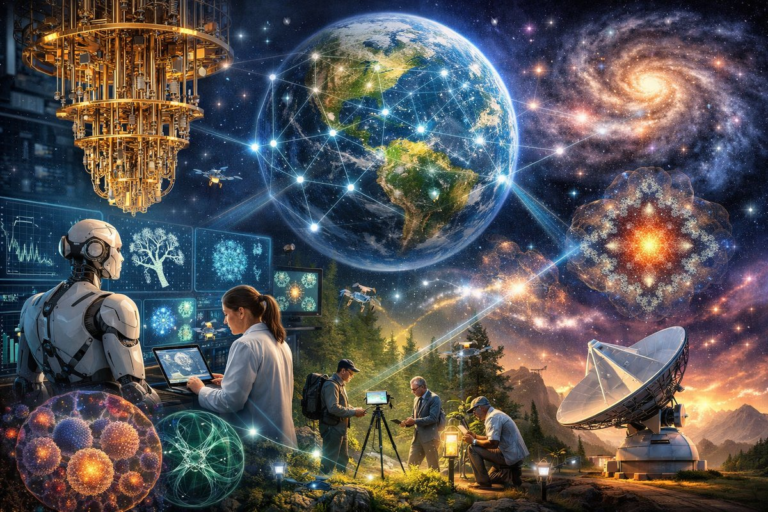
Amid these technical feats, the human impulse to wonder remains at the heart of science. Graduate students huddled around microscopes, engineers fine-tuning superconducting chips, astronomers scanning the night sky-each embodies a blend of tenacity and curiosity. Their collective work reminds us that scientific progress isn’t a solitary pursuit but a tapestry woven from many threads: creativity, rigor, collaboration, and even serendipity. When an unexpected image flickers on a telescope detector or a simulated molecule takes a surprising path, it can spark new questions that drive research in unforeseen directions.
Public engagement also plays a pivotal role. Citizen scientists contributing observations of variable stars, amateur astronomers tracking near-Earth objects, and open-source communities refining control software all extend the reach of formal research. These participatory efforts not only gather valuable data at scale but also cultivate a broader scientific literacy. When non-specialists witness how qubits behave, observe the birth of a distant supernova, or manipulate a 3D model of blood vessels on their home computer, they gain firsthand appreciation for the methods and uncertainties that underpin modern science.
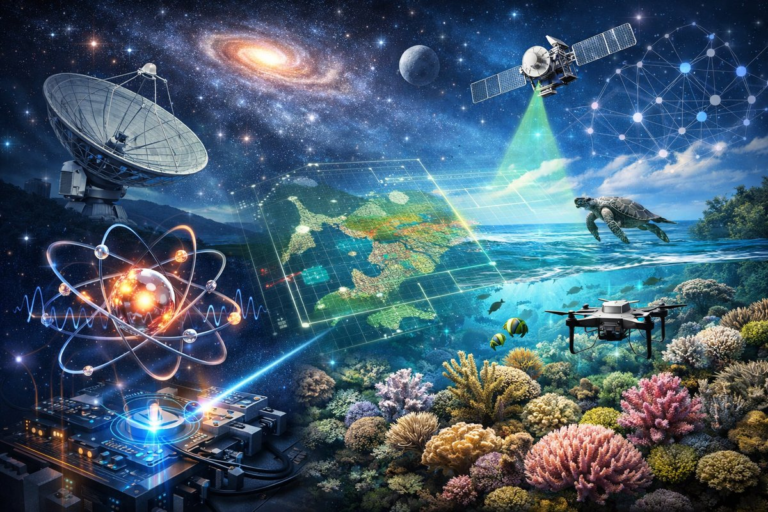
Looking ahead, the next wave of exploration promises even deeper integration across scales. Imagine a platform that uses quantum-enhanced algorithms to process astronomical data in real time, identifying transient events within seconds of detection. Or consider modular imaging devices small enough to be deployed in field labs, empowering ecologists to map microbial networks in remote ecosystems and feed live data streams into AI models. Already, pilots of drone-mounted fluorescence sensors are gathering multispectral scans of coral reefs, offering insights into reef health and species diversity. When combined with advanced analytics, these field systems could guide conservation efforts with unprecedented granularity.
At every turn, science blends precision with poetic resonance. A single qubit can mirror the unpredictability of nature; a far-flung galaxy can illuminate the history of time itself; a cluster of cells in a dish can teach us how life organizes complexity. By traversing these dimensions-from quantum fluctuations to the cosmic web, from protein filaments to planetary ecosystems-researchers reaffirm that no scale is too small or too vast to inspire wonder. And as new discoveries unfold, they extend an open invitation: to think deeply, explore boldly, and marvel at the patterns that shape our world.